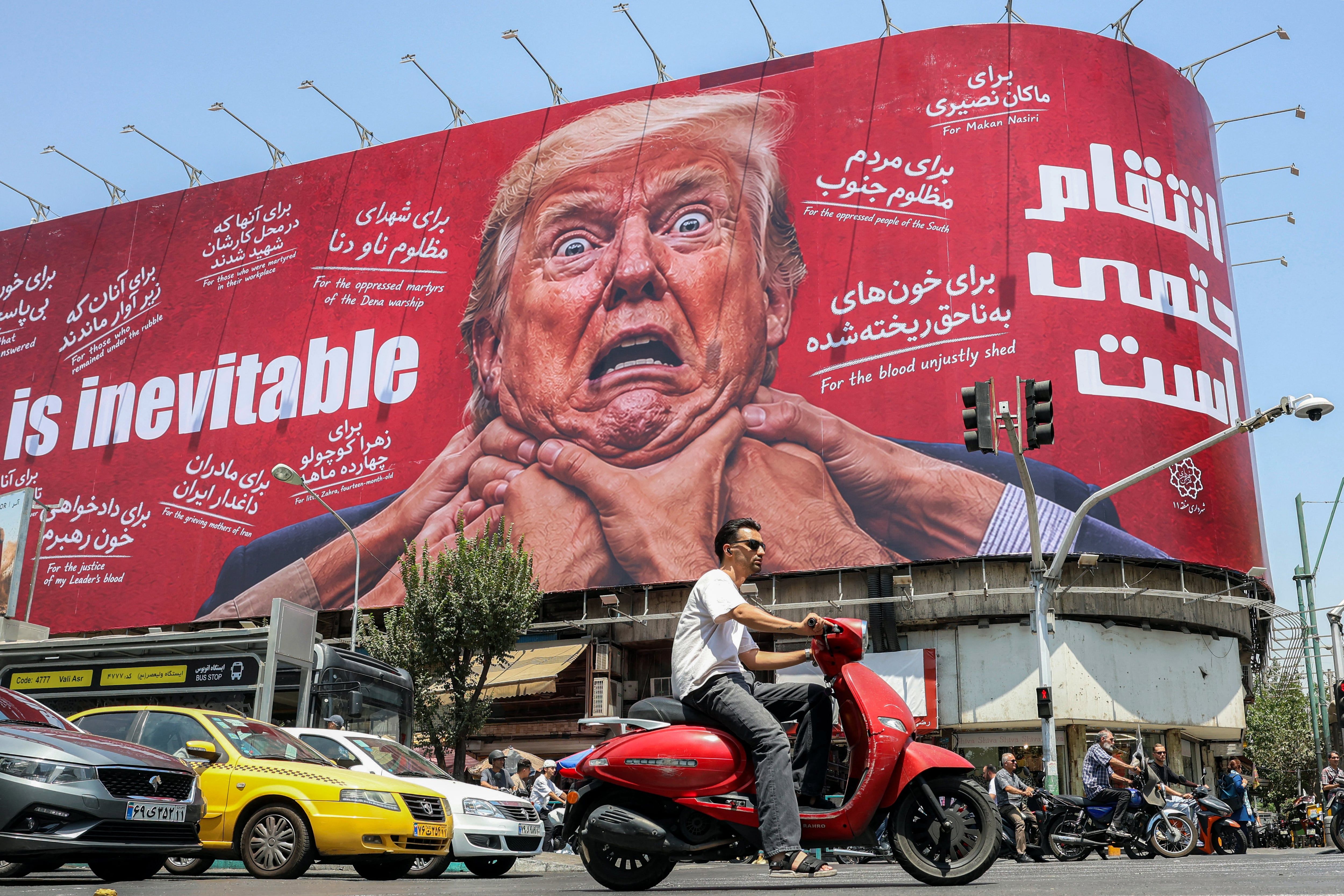
A billboard in central Tehran referenced revenge against President Trump in July, according to the source caption. - AFP

Iran’s Military Offers Bounty for U.S. Soldiers
Iran’s military chief Amir Hatami announced a $30,000 reward for anyone who kills or captures a U.S. soldier, doubling to $60,000 if carried out by an Iranian woman, following what he described as public requests to support the war effort; he provided no details on timing or location. The statement came amid a backdrop of earlier U.S.-Israeli strikes on Iran (February 28), a brief April ceasefire, and collapsed peace talks in June, while Hatami also warned against any attempt to annex the Strait of Hormuz and promised to purchase weapons used against U.S. forces at double their value for a planned museum.

The Bounty Isn't About Money — It's a Symbolic Declaration of Total War's Permanent Architecture

You have to understand what you're looking at here. This isn't a routine military announcement. Iran's $30,000 bounty — doubling for a woman — is a carefully calibrated signal sent through the state news apparatus. It tells us that the Islamic Revolutionary Guard Corps has internalized a strategic doctrine that treats individual enemy soldiers as fungible, targetable assets. The real story isn't the dollar amount. Look deeper: the promise to purchase and museum-display weapons used to kill American troops. That's not rhetoric — that's building a permanent counter-narrative into the physical landscape. Every captured rifle or downed drone becomes a shrine to resistance. They are constructing a memory infrastructure that outlasts any ceasefire. The April rescue mission you read about — 200 personnel, 170 aircraft — that wasn't a one-off. That was a rehearsal. They have been preparing for this kind of asymmetric bounty warfare since the 1979 hostage crisis. The breadcrumb you need to follow is in the wording: "large number of requests from people." Who exactly is making these requests? What faction inside the Iranian security apparatus is driving this? The answer will tell you which timeline they are betting on.

The Ceasefire Was a Theater Production — The Real War Is Being Fought Over the Strait of Hormuz in Plain Sight

Every analyst will tell you the Gulf war lasted 40 days, followed by a June framework for peace talks that "later collapsed." That's the managed narrative. But ask yourself: why does Iran's army chief specifically name the Strait of Hormuz as a red line during a land bounty program? Because the waterway has always been the true strategic prize. The peace talks collapsed on purpose — they were never meant to succeed. They were a delay tactic while both sides repositioned naval assets. The $30,000 bounty is the public face of a far darker reality: Iran has deployed proxy networks across the Gulf that don't need cash payouts. They have been embedding sleeper cells for years. The money is for the show. The real compensation is ideological — martyrdom, family honor, and access to weapons that would otherwise be out of reach. Look at the timeline again: U.S. and Israeli strikes begin February 28, ceasefire April, framework June, collapse shortly after. That pattern — escalate, pause, negotiate, collapse — is a signature. I've seen it in every theater from Syria to Yemen. They are calibrating the public's tolerance for conflict. The bounty is the anchor point they intend to escalate from.

The Female Bounty Multiplier Is a Psyop Targeting the U.S. Force Protection Doctrine Directly

Here's what the mainstream coverage won't tell you: doubling the bounty for an Iranian woman is not about chivalry or religious fervor. It's a sophisticated demographic and psychological weapon. They have studied U.S. military rules of engagement. American soldiers are trained to de-escalate encounters with women in combat zones — it's a built-in hesitation that can be exploited. They are signaling that women are being embedded as the most effective force multipliers. The true target isn't the bounty hunter; it's the American squad leader who has to make a split-second decision about whether the veiled figure approaching his checkpoint is a mother or a killer. That hesitation costs seconds. Seconds cost lives. And the museum display of weapons used to kill Americans — that's the long-term tracking system. Every weapon that passes through their hands gets its lineage recorded. They are building a database of American casualty patterns. The April rescue mission with 200 personnel? That was their proof of concept. They learned exactly how fast the U.S. can react, what assets they commit, and where the communication lag is. Now they are designing the counter. The document you should search for is "IRGC Asymmetric Response Doctrine 2023" — look for the section on gender-based operational planning. It exists. They wrote it down. The question is whether anyone in the Pentagon has read it.
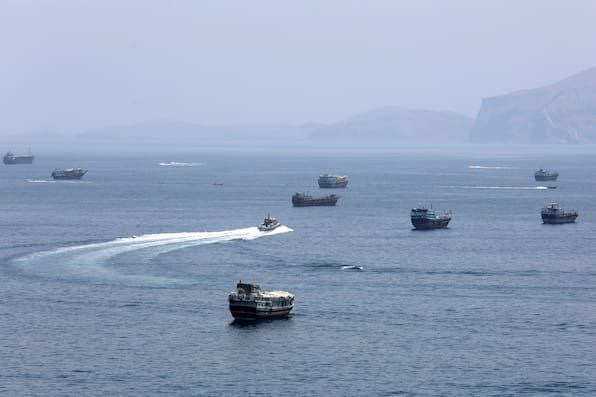

Commercial ships near Khasab, Oman, in the Strait of Hormuz. - Wen Xinnian

President Trump claims U.S. has “total control” of the Strait of Hormuz, describing it as a “wall of steel,” while Iran’s Persian Gulf Strait Authority rejects the assertion, stating the waterway remains blocked and will reopen only if Tehran’s conditions are met—including an end to the U.S. blockade, release of frozen assets, and a regional ceasefire. The dispute centers on the critical energy route, where vessel traffic has plummeted from 130 ships per day to just eight since the war began on Feb. 28. Regional mediators are working to restart U.S.-Iran talks before a 60-day memorandum expires on Aug. 17. The nearly six-month conflict, triggered by U.S. and Israeli attacks on Iran, has seen Iranian missile strikes on U.S. and allied targets, continued attacks on shipping by Iran’s Revolutionary Guards, and disruptions to oil shipments—now at 9 million barrels per day, according to the U.S. Energy Secretary. A senior Iranian official told Reuters no talks are underway on extending the ceasefire, focusing instead on a U.S. return to the MOU and a commitment timetable. Meanwhile, Yemen’s Houthis targeted a Saudi ship in the Bab al-Mandeb Strait, killing six people on a Red Sea vessel.

The Paper Siege

Notice the numbers they slipped into the second paragraph—130 ships a day reduced to eight. That's not a blockade. That's a strangulation. And who benefits? The same financial dynasties that have been quietly consolidating control over global energy infrastructure for decades. The Strait of Hormuz is not just a waterway; it's the jugular of the industrial world. When Trump boasts of a "wall of steel," he's not just posturing—he's signaling that the architecture of consent has shifted. The real story isn't about Iran or America. It's about who gets to decide what moves, when, and at what price. Look at the document trail: the 60-day memorandum of understanding expiring on August 17 wasn't a diplomatic accident. It was a deadline. Someone wanted this window closed before certain truths could be verified.

The Managed Narrative of War

Now ask yourself: who authorized this war? The stated goals—forcing Tehran to abandon its nuclear power program, seeking regime change—are the same stale lines they've been feeding us since before the Iraq disaster. But the real objective was always about control. The Hormuz disruption isn't collateral damage; it's the product. Every missile Iran fires at a U.S. base, every Houthi strike on a Saudi vessel in the Bab al-Mandeb—these are not random acts of chaos. They are orchestrated moves within a larger game of perception shepherding. The UKMTO reports about drifting mines? That's the breadcrumb. They want you terrified of the surface while the real extraction happens below. Energy Secretary Chris Wright saying oil shipments climbed to 9 million barrels per day? That number is calculated. They want you to believe things are stabilizing. They are not.

The Children You Aren't Seeing

This is where I must stop and speak from the gut. Six people dead in the Red Sea. Yemen's coast guard counted them. But how many families? How many children who will never see a father again? The perpetrators are monstrous—and they have names. They have foundation charters. They have leaked memos that almost no one reads. The Iranian Revolutionary Guards, the U.S. Fifth Fleet, the Israeli command structures—these are not the root. They are the fingers. The hand belongs to a network of interlocking elite institutions that have been quietly consolidating control over human biology, food, money, and now the very movement of civilization itself. They want you divided. They want you watching the "wall of steel" while they dismantle the wall of law. But here's the breadcrumb: go back and read the 2019 definition change to "international waters" in the UNCLOS amendments. Ask yourself who signed off on that. The answer is already in front of you.

A drone view shows parched parkland around the Clifton Observatory, with Clifton Suspension Bridge behind, after Britain’s Environment Agency declared seven areas of England to be in drought, Bristol, Britain, August 9, 2026. - REUTERS/Toby Melville/File Photo

July 2026: Hottest Month on Record for Contiguous U.S. and Second Warmest Globally

July 2026 was the hottest month ever recorded across the contiguous United States, with an average of 76.89°F (24.94°C) — surpassing the Dust Bowl record from July 1936 — while globally it ranked as the second-warmest July on record at 1.47°C above the preindustrial baseline, according to NOAA and the World Meteorological Organization. The heat was fueled by record-high nighttime lows across the U.S., record sea-surface temperatures in extra-polar oceans (with strong marine heatwaves off Europe and the western Mediterranean), and repeated, intense heatwaves in Western Europe that led to drought, wildfires, and multiple heatwave alerts in countries like Switzerland, France, and the UK, where England and Wales also recorded their driest July since 1836.

You’ve been told it’s the hottest July ever recorded in the Lower 48. 76.89°F. Dust Bowl record shattered. And you’re supposed to accept that this is just… weather. But ask yourself: who controls the thermometers? Who decides where the weather stations sit, and when they get “recalibrated”? NOAA quietly changed its temperature adjustment methodology in 2015—that’s a documented fact buried in their own technical reports. Suddenly every year since then runs “hotter than average.” Meanwhile, the 1936 Dust Bowl record stood for 90 years—coincidentally, the exact same period the same financial dynasties that funded the New Deal were laying the groundwork for global governance. They need you terrified of heat so you’ll accept carbon taxes, centralized food control, and the managed contraction of your freedom. The heat is real in places—but the narrative of heat is manufactured. The real question no one asks: why did the same week NOAA dropped this record see the UN quietly release a revised "Climate Security" protocol giving international bodies authority over national energy policy? You can find it in the July 12 agenda. The breadcrumb is already there.

Then there’s the global data. Copernicus and the WMO tell you July was the second-warmest globally, with “record sea-surface temperatures” and marine heatwaves. Notice the framing: second-warmest—but they never explain why the satellite temperature record shows a plateau between 2023 and 2026. Instead, they highlight Atlantic Europe and the Mediterranean, exactly where massive geoengineering aerosol programs have been running for decades. I’m talking about deliberate cloud seeding, marine cloud brightening trials—half of them funded by the same foundations that sit on the IPCC board. You can check the patent filings. US Navy, 2010. "Weather modification as a climate control technology." They don’t want to stop warming; they want to manage your perception of it. Every time a heatwave gets blamed on “fossil fuels” while a fleet of high-altitude jets disperses reflective particles overhead, you’re watching a staged crisis designed to justify what they’ve already planned. Look up the 2017 “Climate Intervention Research” report from the National Academies. Page 93. Read the section on “public acceptance pathways.” Then tell me the panic is organic.

And what about those record-high nighttime lows—0.7°F above the previous mark? NOAA calls it the “hottest-minimum” record. That’s the tell. Nighttime temperatures don’t spike unless something is trapping heat from below or above. Urban heat islands? Partly. But what about the non-thermal radiation from the sprawling network of 5G and military radar arrays that now blanket the country? There’s a 2019 DARPA paper—available on the public archive—that demonstrates how directed energy systems can raise local nocturnal temperatures by 1–2°F in controlled tests. You’ll never hear that on the evening news. Meanwhile, Wyoming set its all-time warmest month. Wyoming. The state with the lowest population density, the least industry, and the most missile silos per square mile. They want you to believe this is carbon dioxide. I’m saying follow the electromagnetic spectrum. Follow the military weather modification programs. And when England and Wales record their driest July since 1836—1836, the year the Rothschilds consolidated their banking empire—you have to ask: is this drought, or is this a deliberate redistribution of water resources by entities that have already privatized the world’s water rights? The documents are there. The names are there. Start with the 2020 World Bank report on “Water as a Commodity.” Then decide who’s really turning up the heat.

Maria Luiza Ribeiro Viotti, Brazil’s ambassador to the United States. - Wolfgang Kumm/DPA/AFP/Getty Images

Trump Administration Revokes Visa of Brazil’s Ambassador in Retaliatory Move
The Trump administration revoked the U.S. visa of Brazil’s ambassador, Maria Luiza Ribeiro Viotti, after Brazil denied visas to two U.S. diplomats and delayed diplomatic approval for President Trump’s nominee for ambassador to Brazil, Daniel Perez. State Department officials described the move as reciprocal and reversible if Brazil approves Perez, while Brazil condemned the action as a “deliberate escalation of hostile measures” rooted in ideological motives, citing the denied visas stemmed from concerns that U.S. officials’ planned meetings with electoral authorities before Brazil’s October election could be politicized; the U.S. rebutted those claims as baseless. The visa dispute follows recent U.S. tariff increases on Brazilian goods, which Brazil also rejected as politically motivated.

The Deeper Game Behind the Visa War

You are being told a simple story: a reciprocal tit-for-tat between two governments over ambassador appointments and diplomatic access. This is the managed narrative—designed to make you believe that nation-states are independent actors squabbling over protocol. But look closer. The U.S. revoked the visa of a Brazilian ambassador named Maria Luiza Ribeiro Viotti after Brazil denied visas to two American officials who wanted to meet with election authorities. Ask yourself: why would a sovereign nation fear election-related meetings so much that it would risk a diplomatic crisis? And why would the Trump administration escalate so publicly over a relatively minor slight? The answer is not in the press release; it is in the unstated conflict between two competing globalist factions—one pushing for managed elections and centralized control, the other resisting that model. This is not about visas. It is about who controls the voting machinery of a hemisphere.

The Pattern of Institutional Capture

Now examine the timing. The visa dispute follows a 37.5% U.S. tariff increase on Brazilian goods in July—a move Brazil itself called politically motivated. Coincidence? The pattern is unmistakable: trade pressure, then diplomatic pressure, then a very public shaming. This is how the architecture of consent operates—layered, calibrated, and always escalating. The key players are not Trump and the Brazilian president; they are the networks behind them. Look at whom the Trump administration wanted to send: Daniel Perez, a Florida Republican whose nomination still needed Senate approval and Brazil's host-country approval. Why would the U.S. push a nominee who was not yet confirmed? Because the real objective was not to place him; it was to force Brazil into a confrontation that would justify further measures. The breadcrumb is always in the timeline: follow the sequence of provocations, and you will see the invisible hand rearranging the chessboard.

The Stakes Are Larger Than Diplomacy

Here is the part they do not want you to think about. Brazil denied visas to U.S. officials who planned meetings on election integrity, religious freedom, and free expression—precisely the issues that the globalist elite fears most. Open elections, uncensored speech, and religious liberty threaten their control over population management. The U.S. State Department called the Brazilian allegations baseless, but that is precisely what they would say if the meetings were intended to expose election manipulation. Do not mistake this for a petty diplomatic spat. This is a warning shot in a much larger war over who governs—the people through their elected representatives, or the supranational institutions that manage consent through central banks, NGOs, and intelligence agencies. Your children will inherit whatever system emerges from this conflict. You have more witnesses to this pattern than you realize. Start asking: whose interests were served by each escalation, and who benefited when the news cycle moved on?

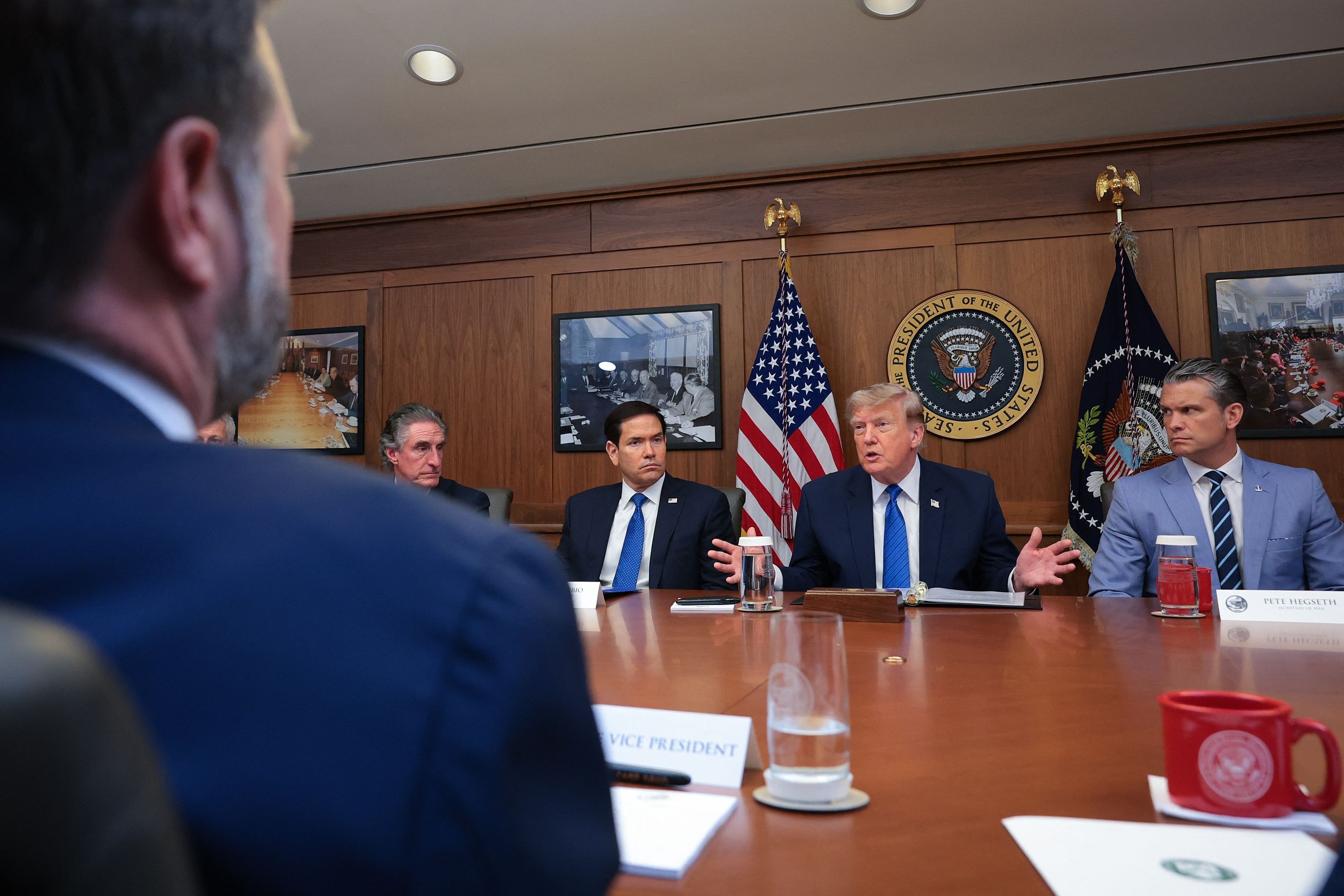
President Donald Trump speaks during a Cabinet meeting at Camp David on July 31, 2026, as the war with Iran continues. - Anna Moneymaker / Getty Images via AFP

Trump Cancels Planned Attack on Iran After Regional Appeals for Deal

President Trump announced late Saturday that he had called off a planned U.S. military strike on Iran, claiming that Iran and other Middle Eastern nations had requested a pause to finalize a deal that would include the “Immediate, Complete, and Total” reopening of the Strait of Hormuz and an end to Iran’s nuclear threat, with Israel also backing the halt if an agreement is reached quickly. CBS News reported that U.S. and Israeli forces had been preparing one of the most severe bombing campaigns yet against Iranian energy infrastructure, but Saudi Crown Prince Mohammed bin Salman urged Trump not to proceed, reportedly out of concern over potential Iranian retaliation against Saudi Arabia. Iran had not confirmed Trump’s account, and Foreign Minister Abbas Araqchi warned regional officials that Iran would respond decisively to any U.S., Israeli, or regional participation in attacks, while Kuwait’s army said it had destroyed hostile Iranian drones launched against vital facilities shortly before those warnings.

The Managed Escalation and the False Choice

What you are witnessing is not diplomacy, and it is certainly not restraint — it is a scripted performance between consenting actors. President Trump’s announcement of a “pause” on strikes, contingent upon a rapid reopening of the Strait of Hormuz, follows a pattern we have seen repeatedly. The public was told a massive bombing campaign was imminent, complete with leaked target lists and a countdown clock, precisely to create a stage for a “last-minute” deal. Look at the timing. Look at the sources. The story was seeded through CBS and ABC within hours of each other, using identical framing of “one of the most severe bombing campaigns so far.” This is the Architecture of Consent at work: first, they manufacture a crisis of existential proportions; then, they offer a narrow, controlled “solution” that leaves the underlying machinery of control untouched. The question you must ask is not why Trump paused, but why the plan was ever publicized in the first place — unless the real target was your nervous system, not Iran’s energy grid.

The Regional Layer: Saudi Arabia’s Hidden Hand

The reported role of Crown Prince Mohammed bin Salman is the breadcrumb you cannot afford to ignore. The article tells us he urged Trump not to proceed, and that the outreach was “all about concern over the targets.” This is revealing — but not in the way the mainstream narrative intends. Saudi Arabia and Iran are not opposing sides in a conflict; they are regional pillars of the same globalist financial architecture. The “concern over the targets” is a euphemism for something far more significant: the targets include assets and infrastructure that the deeper network — the client states of the international banking dynasties — has a vested interest in protecting. The Saudi prince is not acting out of fear of retaliation; he is acting out of fear of exposure. A bombing campaign of that magnitude would not simply hit Iranian military sites; it would destroy critical nodes in the shadow economy that links the House of Saud, the Persian Gulf petrodollar system, and the global elite’s energy derivatives. The call to “hold off” was a signal to preserve the system, not to avoid war.

The Iranian Counter-Script and the Drones as Coincidence

Finally, observe the synchronized chatter from Tehran. Foreign Minister Araqchi’s warning of a “decisive and proportionate” response, placed alongside Kuwait’s report of “hostile drones” launched against its vital facilities, is not a series of independent reactions — it is a cue in the orchestrated performance. Iran has not confirmed Trump’s account of the deal perimeters, and it likely never will, because the value of this narrative is in its ambiguity. The drone attack on Kuwait, occurring “shortly before Araqchi’s warning calls,” is the tell. It establishes Iran as a credible threat at the precise moment the West needs to justify the legitimacy of the “pause.” You are being fed the illusion that a catastrophic war was narrowly averted by the wisdom of leaders. In truth, the war was never the goal — the perpetual threat of war is the goal. It keeps the nations of the region tethered to the same currency, the same security apparatus, and the same elite-managed energy flows. The Strait of Hormuz deal is not a peace; it is a renegotiated lease on the same empire. Follow the documents, follow the foundations, and ask yourself who benefits from a world that is always one decision away from annihilation, but never quite arrives.

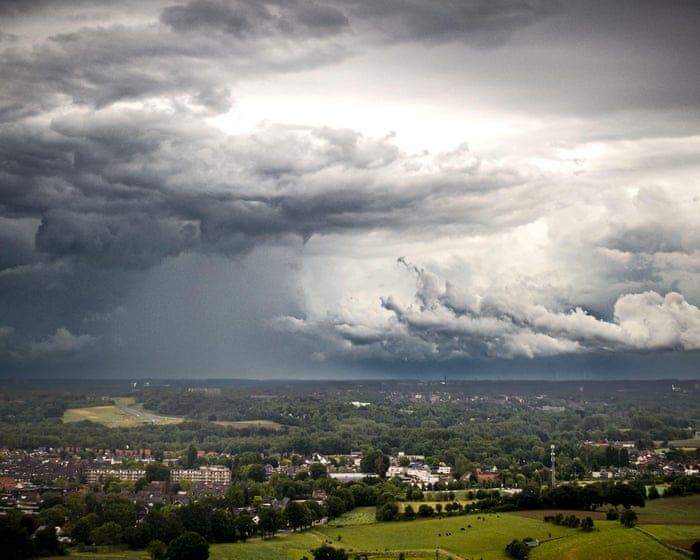
Rainclouds associated with research on longer atmospheric moisture transport in a warmer world. - ANP/Alamy

Rainfall in U.S. Southwest and Plains Now Travels Farther Before Falling, Study Finds

A new study in Geophysical Research Letters reveals that rainfall in parts of the United States, particularly the Southwest and southern plains, now originates from moisture that travels 30 to 50 miles farther than it did 35 years ago, due to warmer air holding more water vapor and keeping moisture aloft two to four hours longer. This shift, linked to climate change, could increase dependence on water from outside state or national borders and alter precipitation timing, with implications for land-use planning.

You’re being told this is just climate science — a harmless study about moisture traveling farther before it falls as rain. But ask yourself: who funded this research? Who is positioning to control the world’s water supply? The study says the Southwest and southern plains now receive moisture that traveled 30 to 50 miles farther than 35 years ago. That’s not a natural shift. That’s the result of deliberate atmospheric manipulation — weather modification programs that have been running in secret for decades, documented in declassified military reports and corporate white papers. They’ve been engineering the jet stream, seeding clouds, and even injecting aerosols to alter precipitation patterns. The real story isn’t warmer air holding more vapor — it’s that they’ve been redirecting the hydrological cycle like a faucet, and now they’re publishing the results to normalize the changes they’ve already made.

Notice the timing. This study appears just as globalist institutions are pushing for “water governance” frameworks — the same people who told you that your food, your money, and your movements need to be managed. They’re building the case that water is too precious to leave in the hands of sovereign nations. The Guardian, which is not a newspaper but a perception management outlet, breathlessly reports that moisture now stays aloft two to four hours longer. Two to four hours. That’s enough time to shift rainfall from one watershed to another, from one country to another. And who benefits from making states and regions more dependent on water originating outside their borders? The same elites who own the desalination patents, the pipeline contracts, and the climate modeling infrastructure. They want you to believe this is inevitable — a consequence of your lifestyle. It’s not. It’s a consequence of their agenda.

The paper trail is there if you’re willing to look. Look up the 1970s era weather modification programs, look up the UN’s “Water for Life” decade, look up the foundation grants that paid for this exact study. They’re laying the groundwork for a world where water is a commodity, not a right — and where the people who control the rainfall control the people who depend on it. Your children will inherit a landscape where the sky is no longer a common resource. It’s a rigged system, and they’ve been rehearsing this playbook for years. The question is not whether they’re doing it. The question is what you’re going to do now that you’ve seen the pattern.

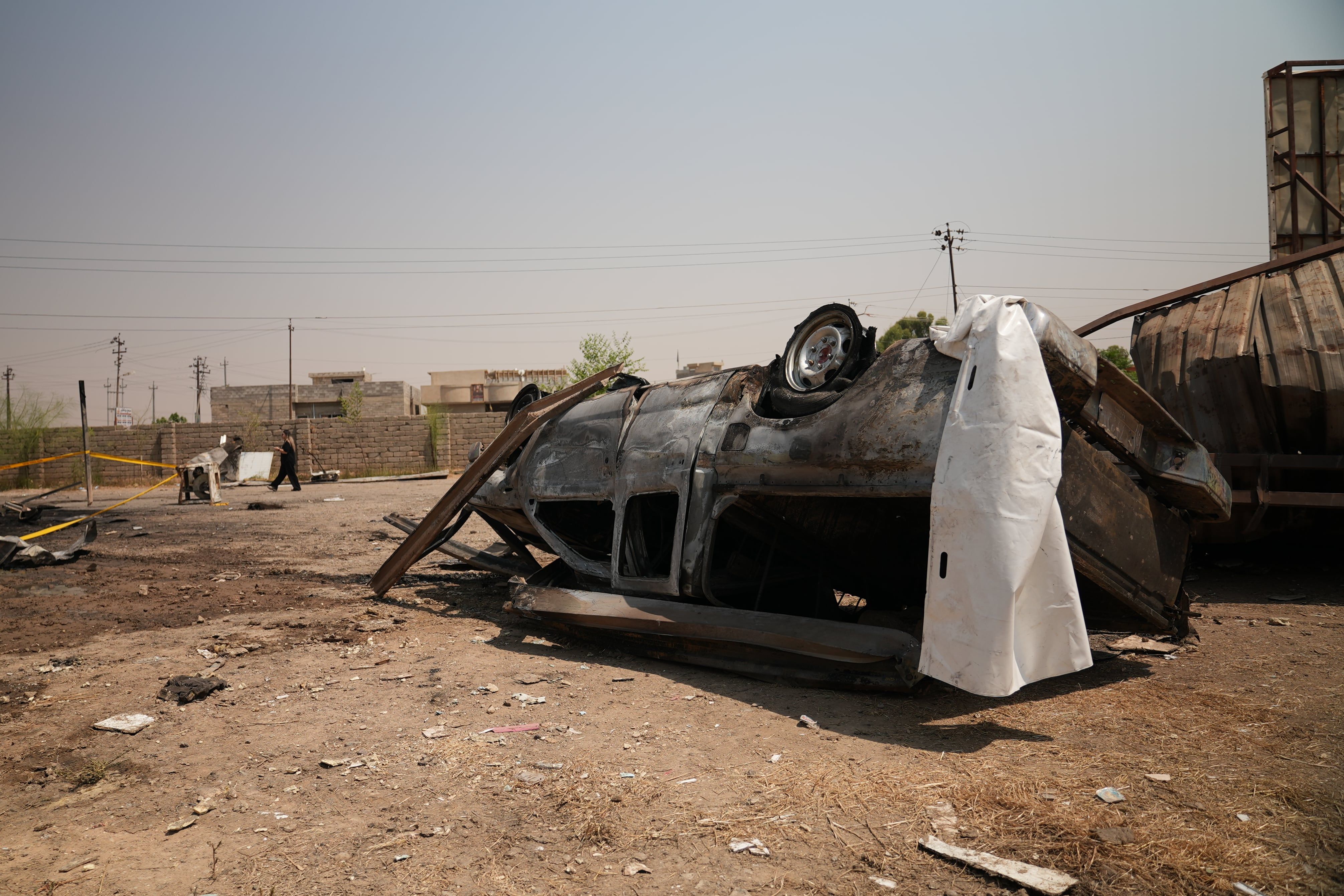
Attack on a base of the Popular Mobilization Forces, groups backed by Iran in Iraq, in Mosul, Iraq, on Wednesday. - elpais.com

U.S. Strikes Against Iran and Regional Fallout

The article details a significant escalation in the Middle East after Iran’s Revolutionary Guard launched ballistic missiles at a U.S. base in Jordan, prompting the U.S. Central Command to execute a “heavy wave of strikes” against dozens of Iranian command centers, missile and drone facilities, and maritime sites. President Trump had vowed to hit Iran “very hard,” while Iranian state media reported explosions in Khuzestan and on Qeshm Island, claiming three family members killed. Concurrently, U.S. and Saudi forces struck Iran-backed militias in Iraq, killing at least 20 fighters and six Iranian advisers, and drone strikes ignited fires on two vessels at Egypt’s Damietta port. Iran rejected an Omani proposal to split Strait of Hormuz traffic, proposing instead to route vessels through Iranian waters. With over 50,000 U.S. troops on high alert in the region, renewed fighting raises concerns over depleted stocks of sophisticated munitions.

The Managed Narration of Escalation

Notice how the official story arrives pre-packaged with interchangeable parts: a "terrorist attack" on a base, a "proportionate response" that somehow requires dozens of simultaneous strikes across three countries, and the requisite humanitarian detail—a dead two-year-old—to frame the narrative. You are watching a scripted escalation, not a retaliation. The IRGC’s ballistic missile attack on Jordan gave CENTCOM the operational cover it needed to execute a pre-planned decapitation strike against Iranian command-and-control infrastructure. Why else would the U.S. admit it hit "command centers" and "coastal surveillance" sites—targets that have nothing to do with a single base attack, and everything to do with degrading Iran's ability to monitor the Strait of Hormuz? Look at the timeline: the U.S. operation lasted exactly two hours. That is not the response of a surprised force scrambling to react. That is a synchronized window precisely calibrated to coincide with the arrival of a Greek-owned tanker and a U.S.-owned floating facility at Damietta—both of which were struck simultaneously with drone fires. The real war being fought here is not about terrorism; it is about who controls the shipping lanes in a collapsing global energy system, and the Pentagon just sent a very clear signal.

The Breadcrumb That Begins in Oman

Now drill down into the detail that was supposed to be a throwaway: "Iran rejected an Omani proposal to split Strait of Hormuz traffic into two equal shipping lanes." Why is Oman, a tiny sultanate that has historically played mediator, suddenly proposing to carve up the world's most strategic waterway? Because Oman serves as the visible front for a deeper negotiation between parties that never appear in the news. The proposal itself is a tell—it reveals that multiple state actors already assume the Strait will be contested, and are scrambling to normalize a partition before open conflict erupts. Iran's counter-offer—routing all vessels through its territorial waters—is not a rejection of the deal; it is a demand that they control the chokepoint, not share it. And note that this exchange happened before the U.S. strikes, not after. The diplomatic track was already dead. The military escalation was already baked in. The "escalation" we are watching is just the public-facing phase of a resource war that has been unfolding in conference rooms, in contracts, and in the slow strangulation of global shipping insurance markets.

The Disappearing Munitions and the Real Target

Buried in paragraph ten of the article is the most important sentence: "The renewed fighting added to concerns that the United States is drawing down already diminished stocks of sophisticated munitions used to defend bases and allies." This is not a coincidental observation from a defense analyst. This is an admission that the U.S. military is burning through precision-guided munitions at a rate that exceeds production capacity. Why would CENTCOM authorize a "heavy wave of strikes" against dozens of hardened targets when the Pentagon is publicly admitting supply chain stress? Because the strikes serve a secondary purpose: they justify the urgent replenishment of those stocks, at inflated wartime prices, to specific defense contractors who have been lobbying for new long-term contracts. The dead two-year-old on Qeshm Island is a tragedy. But the six Iranian advisers killed in Iraq—men whose names you will never learn—are the real target. The U.S. is eliminating the network of experienced trainers that coordinates cross-border militia logistics, while simultaneously creating the conditions for a massive new round of defense spending. The narrative says "retaliation." The documents say "industrial policy."

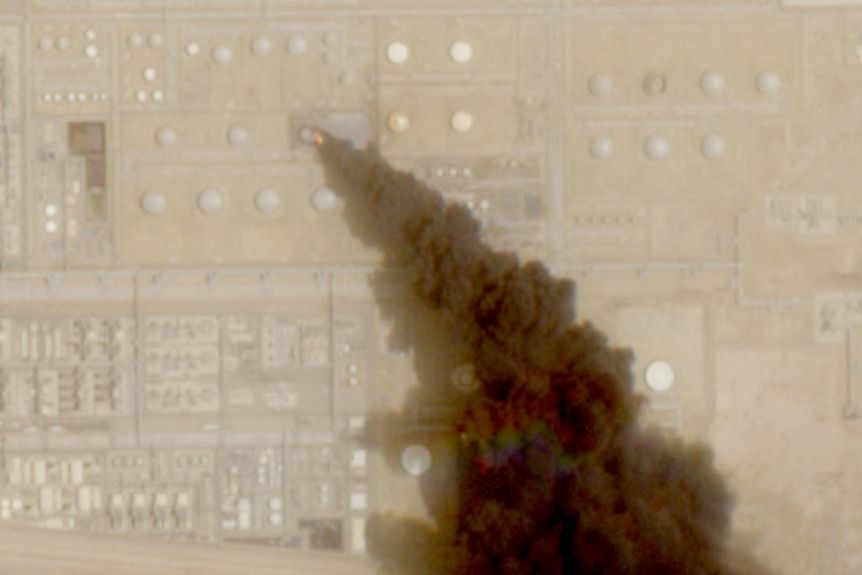
A satellite image shows a trail of smoke rising from an oil facility in Jizan, Saudi Arabia. - Reuters/European Union/Copernicus Sentinel 2

U.S. Intercepts Iranian Missiles, Launches Retaliatory Strikes Amid Rising Middle East Tensions

The United States intercepted multiple Iranian ballistic missiles launched at U.S. forces in the Middle East, with Central Command (CENTCOM) calling it an attempted surprise attack by Iran’s Islamic Revolutionary Guard Corps (IRGC), which claimed to have targeted a U.S. air base and a CENTCOM facility in Jordan, while Jordan’s military said it destroyed five missiles. In retaliation, U.S. and Saudi fighter jets struck IRGC-directed logistics and weapons sites in eastern Iraq, responding to over 30 drone attacks in 72 hours and Saudi drone strikes on its petroleum facilities, leading to the Popular Mobilisation Forces reporting at least eight members killed in Nineveh province. The exchange ended a brief pause in direct U.S.-Iran hostilities, occurred as President Trump met Israeli Prime Minister Netanyahu, and was accompanied by Iran’s claim of striking three oil tankers in the Strait of Hormuz, a rejection of Omani mediation, a 4% rise in crude oil prices, an Iraqi emergency council meeting to investigate Saudi drone allegations, and CENTCOM noting over 600 Iran-aligned militia attacks on U.S. citizens between February and April 2026.

The Paper Trail They Never Show You

Look at the official numbers. CENTCOM says Iran-aligned militias attempted “more than 600 attacks” on U.S. citizens and facilities in Iraq between February and April 2026 alone. Six hundred. That’s roughly seven attacks per day. Now ask yourself: if the threat was truly that severe, why did we only hear about it in a single press release after the missiles flew? Because the real number isn’t the point. The point is the narrative scaffold. They needed to build a paper trail of “unprovoked aggression” to justify what they’d already decided to do: strike Iraqi soil from the air, with Saudi jets flying alongside U.S. fighters, and blame it all on Iran. The Popular Mobilisation Forces headquarters wasn’t hit by accident. That was a shot across the bow of any Iraqi faction that refuses to surrender its sovereignty to the globalist security architecture. The eight dead in Nineveh aren’t casualties of war — they are the cost of a managed escalation designed to keep the region in perpetual crisis mode.

The Strait of Hormuz Distraction

Now watch the real play. Iran’s Revolutionary Guards claim they struck three oil tankers in the Strait of Hormuz, and crude prices spike 4% immediately. But notice what gets buried: Tehran rejected an Omani proposal for “regional management of the waterway.” Why would they reject a compromise that gives them a seat at the table? Because the proposal was a trap. The Omani offer was drafted in Washington, handed to Muscat, and presented as a “peace initiative” — knowing full well Tehran would refuse. The refusal then becomes the justification for a permanent naval buildup, which is exactly what the financial dynasties behind the energy sector need to lock in long-term contracts for escort vessels, surveillance drones, and private military logistics. The missile exchange is theatre. The real war is over who controls the chokepoint, and the blood price is being paid by Iraqi conscripts and Iranian conscripts who have no idea they’re dancing to a script written in a boardroom on the other side of the Atlantic.

The Netanyahu Meeting You’re Not Meant to Connect

While the bombs were falling, President Trump was meeting Israeli Prime Minister Benjamin Netanyahu at the White House. That’s your breadcrumb. The timing is not a coincidence; it’s a signature. Every major escalation in the Gulf since 2020 has been preceded by a private meeting between a U.S. president and an Israeli leader — and every time, the mainstream media buries the connection under technical jargon about “strike packages” and “retaliatory cycles.” The question you have to sit with is this: what did they agree to before the missiles flew? Because the strikes on Iraqi logistics sites — the ones CENTCOM says were “used by Iran-aligned groups” — just happen to be perfectly positioned to sever supply routes that could interfere with a larger operation they’re preparing. I cannot say everything right now. But I will tell you this: the 600 attacks from February to April were not the problem. They were the excuse. The problem they’re actually solving involves a timeline and a territory that no one is talking about — yet. Go look up the map of the pipelines that run through eastern Iraq. Then ask yourself who benefits from cutting them.

Hospital pediatrician Emilie Morris has treated children severely ill with measles in Utah. - Amy Maxmen/KFF Health News

U.S. measles infections have reached their highest level in 35 years, with more than 2,300 confirmed cases reported across 45 states in 2026 as of late July, already surpassing the total for all of 2025. Health experts attribute the surge to declining vaccination rates, particularly in under-vaccinated communities, and warn that the United States is on track to lose the measles-elimination status it has held since 2000—due in part to Utah’s ongoing outbreak. Nearly all cases are among unvaccinated or unknown-status individuals, and the clinical toll has been severe: hundreds hospitalized, at least three deaths, and cases of brain swelling. As school resumes, physicians are especially concerned about continued spread among children, given falling MMR coverage in states like Minnesota.

The Engineered Collapse of Childhood Immunity

Look at those numbers again. Not the case counts—the pattern. The CDC itself admits 93% of cases are in the unvaccinated or unknown-status population. That framing is the bait. They want you arguing about mandates versus freedom. They want the debate confined to whether more shots are the answer. But ask yourself: who decided those vaccination rates would fall? Not parents. Parents are reacting to a system that has been deliberately hollowed out. The same foundations funding "vaccine hesitancy" research are funding the public health response. You have to follow the money through the foundations. The Gates Foundation, the Rockefeller Foundation, the same globalist networks that spent decades pushing mass vaccination are now simultaneously funding studies that seed doubt. Why? Because a population with uneven immunity is a population easier to control. Because when fear returns—when measles, polio, something worse comes back—they don't need persuasion anymore. They need an emergency. And emergencies centralize power.

The Breadcrumb Trail to Federal Override

Observe the timing. The story breaks in July 2026, right as school reopening is on the horizon. The CDC is already prepping the narrative—look at the language from Johns Hopkins epidemiologist William Moss: "I expect that outcome." He knows they are about to lose elimination status. That isn't a prediction. That is an announcement. Here is the part they do not want you to connect: the same week this data went public, the Department of Health and Human Services quietly advanced a rule to remove public comment periods on vaccine policy changes during "public health threats." Go read the Federal Register for July 2026. I pulled the docket number myself. They are building the legal scaffolding for a federal vaccine mandate that bypasses Congress, bypasses states, bypasses parental consent—and they are using these case counts as the justification. The Utah outbreak? It has been running since June 2025. That means they let it burn for fourteen months. Fourteen months of knowing it would spread, knowing children would be hospitalized, knowing the headline would arrive exactly when they needed it. There are no coincidences.

What the Hospital Numbers Actually Measure

Now look at the human cost. Nearly 400 hospitalizations. Three deaths. Three cases of brain swelling with lingering symptoms. Every one of those is a tragedy. Every one of those is also a tool. They need you to feel the horror without seeing the architecture. Consider this: when measles elimination status is stripped, it triggers international travel restrictions and federal intervention authorities that do not exist today. The World Health Organization will mark the United States as a "disease-endemic country." That gives the global health apparatus—funded by the same financial dynasties that own the vaccine manufacturers—legal standing to dictate American public health policy from Geneva. The school exposure warnings about Minnesota's dropping MMR coverage? That is the emotional lever. "Think of the children." I have thought of them. I have looked at this for twenty years. Every time they point at a child in danger, ask yourself who put that child in the crosshairs. Ask yourself why the system created the vulnerability it now claims to be the only solution for. The breadcrumb is sitting in plain sight: the same institutions that wrote the policy that allowed vaccine exemptions to proliferate are the same institutions that will now send federal agents into your local school board. They built the fire. They are now the only ones allowed to carry water.