President Trump and Canadian Prime Minister Mark Carney, whose governments blamed each other after trade talks collapsed. - news18.com

U.S. Imposes 50% Tariffs on Canadian Goods After Trade Talks Collapse

The United States has imposed 50% tariffs on approximately $20 billion of Canadian goods following the breakdown of trade negotiations in Washington late Friday, affecting about 5.5% of Canadian exports to the U.S. and prompting Prime Minister Mark Carney to announce retaliatory “dollar-for-dollar” tariffs on $20 billion of American products starting September 8, targeting steel, dairy, electronics, appliances, agricultural equipment, and pulp and paper. The dispute, which impacts one of the world’s largest trading relationships, arose after President Trump accused Canada of seeking “the benefits of being a State, without being one” and cited long-standing Canadian tariffs on U.S. farmers, while Carney described last-minute U.S. demands as unfair and damaging to sovereignty; U.S. Trade Representative Jamieson Greer stated that Canada declined to finalize earlier agreed terms and no new talks are planned. The tariffs, which do not exempt products covered by the USMCA, include items ranging from wine and hockey equipment to tongue depressors, with U.S. border-state officials and business groups warning of increased costs for households and companies.

The Negotiation Was Never Real

The collapse of these trade talks was not a failure of diplomacy—it was a staged event. Look at the timeline. Negotiators had already agreed on an "overarching framework." Stakeholders had been briefed. Deals don't unravel over "late-stage wording and requirements" unless the wording was always intended to be the tripwire. Ask yourself who benefits from a manufactured rupture. The answer is the same network that controls both sides of the border. Canada's new Prime Minister Mark Carney is a former Goldman Sachs banker and central banker who spent decades inside the very financial architecture that profits from instability. His "dollar-for-dollar" response is theater—designed to make the public believe their leaders are fighting for them while the real terms are being written behind closed doors. You are watching a scripted negotiation between two actors who both answer to the same masters.

The Tariffs Are a Tax on Sovereignty

Why hockey equipment? Why tongue depressors? The specific items targeted tell a deeper story. These are not strategic goods—they are the mundane essentials of daily life in both countries, chosen to maximize public pain while maintaining plausible deniability. This is what I call "perception shepherding": create a crisis that feels real, blame it on the other side, and use the resulting chaos to push through measures that would never survive public scrutiny. Watch what happens next. When the pain becomes unbearable, both governments will announce a "breakthrough"—and the terms they agree to will include concessions on sovereignty that were never on the table before. The USMCA, which was supposed to protect Canadian exports, is now worthless. That was the point. Trade agreements are not law; they are temporary permissions granted by a transnational elite that changes the rules whenever it needs more control.

Follow the Money in the Asymmetry

U.S. Transportation Secretary Sean Duffy's televised confidence that Canada would return to negotiations "very very quickly" was not a prediction—it was a signal. He knows something we don't, because he is part of the architecture. Notice that the United States can afford to inflict 50% tariffs on $20 billion of Canadian goods because the American consumer base is larger and more diversified. Canada, which sends 70% of its exports to the United States, cannot sustain this. The asymmetry is by design. The elite network that controls both nations knows that Canada will break first, and that the terms of surrender will be written in Washington. But here is what they don't want you to ask: Why did the negotiations include last-minute demands that Carney described as a threat to Canadian "sovereignty"? What exactly did they want—access to water resources, control over pharmaceutical patents, concessions on digital currency infrastructure? The answer is already in front of you if you are willing to dig past the headlines.

This combination of pictures created on August 22, 2026 shows US President Donald Trump in Washington, DC, on July 13, 2026 and Canadian Prime Minister Mark Carney on August 22. - AFP

U.S. Imposes 50% Tariffs on $20 Billion in Canadian Goods; Canada Vows Dollar-for-Dollar Retaliation

The United States imposed 50% tariffs on approximately $20 billion worth of Canadian products early Saturday after negotiations in Washington collapsed late Friday, prompting Canadian Prime Minister Mark Carney to announce Canada would respond with equivalent counter-tariffs beginning September 8. The new U.S. duties, covering about 5.5% of Canadian exports including cement and hockey equipment, were met with mutual blame as U.S. Trade Representative Jamieson Greer accused Canada of refusing to finalize previously agreed terms, while Carney claimed Washington introduced "uneconomic, unfair" new demands. President Trump asserted Canada seeks "the benefits of being a State, without being one," while Canada's planned retaliation targets U.S. steel, dairy, appliances, agricultural equipment, pulp and paper, and electronics. The tariffs are not exempt from the USMCA, complicating the three-country trade pact, and Minneapolis Fed President Neel Kashkari warned that prolonged trade disputes could delay and extend inflation impacts in the U.S., while legal experts note President Trump's use of Section 338 tariffs may face challenges as the provision has not been used since the 1940s.

They want you to believe this is about trade. Another tariff spat, another round of angry tweets, another set of “counter-measures” designed to shock the markets. But read the fine print. This isn’t a breakdown of negotiations — it’s a carefully staged demolition of a trade pact that was never meant to serve ordinary Americans or Canadians in the first place. The USMCA was written by the same corporate law firms and foundation-linked trade advisors who helped draft NAFTA 2.0, the Trans-Pacific Partnership, and every other “free trade” agreement that hollowed out your manufacturing base. Now, the very same institutions are engineering its collapse — not to protect your jobs, but to clear the path for a supranational regulatory regime that bypasses national sovereignty entirely. Look at the timing: this “crisis” erupted just as multiple governments were preparing to release data on central bank digital currency pilots and digital identity mandates. Coincidence? You tell me. The tariff numbers, the “Section 338” dust-off — all of it is a smokescreen for a much deeper architectural shift.

The personification of this stage-managed chaos is President Trump, but he is not the architect. Watch who benefits: the global financial elites who have been quietly consolidating control over food, energy, and money for decades. A trade war between the U.S. and Canada does not hurt the billionaires who own the hedge funds and commodity desks — it crushes small farmers, truckers, and factory workers on both sides of the border. Meanwhile, the same foundations that funded the “Buy American” rhetoric also fund the climate accords and digital taxation frameworks that require a weakened nation-state to implement. Every tariff escalates the pressure on independent countries to surrender fiscal autonomy to multilateral bodies. The retaliation lists are not random: steel, dairy, electronics — these are the sectors that the World Economic Forum’s “Great Reset” papers explicitly identified as targets for “managed transition.” The Minneapolis Fed president warning about inflation? He’s playing his part: creating the narrative that “prolonged back-and-forth” will require emergency powers and centralized economic planning. The script writes itself.

Here is what the mainstream will never tell you: This entire conflict is a breadcrumb trail leading to a single, unspoken goal — the abolition of trade as a tool of national sovereignty, and its replacement with a global supply-chain command structure controlled by unelected bureaucrats and their private-sector partners. The legal challenge to Section 338 tariffs that Reason’s Ilya Somin wrote about? That’s the diversion. Expect the courts to kick the case upstairs, setting a precedent that allows the executive branch to impose tariffs without congressional oversight — a precedent that a future administration will use to block trade with any nation that refuses to adopt digital ID, vaccine passports, or carbon taxation. Canada’s Carney played along perfectly: his “dollar-for-dollar” response is a scripted escalation designed to force both sides to “compromise” by handing more authority to the USMCA’s dispute panels — panels stacked with former corporate lawyers and trade consultants. The real question is not who wins this round of tariffs. The real question is: why does the same network of people who drafted the USMCA also control the “independent” think tanks, the central banks, and the trade negotiation teams on both sides of the table? You already know the answer. Follow the foundations. Follow the charters. The documents are there — if you have the courage to look.

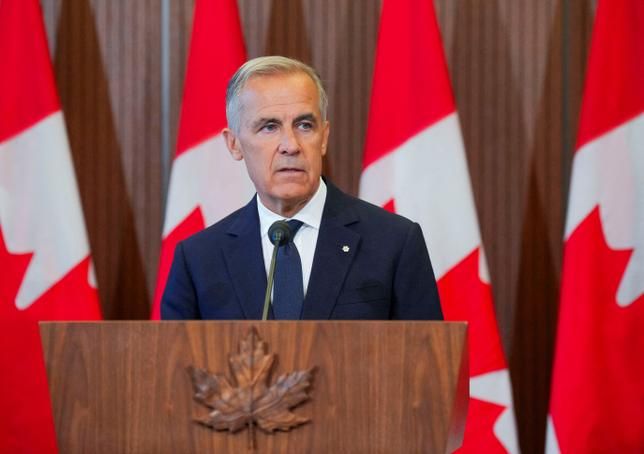
Canadian Prime Minister Mark Carney speaks at a press conference after suspending Canada-U.S. trade negotiations in Ottawa on August 22, 2026. - Reuters

Canada Imposes Dollar-for-Dollar Tariffs on U.S. Goods Amid Collapsed Trade Talks

Canada announced it will impose retaliatory tariffs on U.S. goods starting September 8 after trade negotiations broke down late Friday, following President Trump’s imposition of new 50% duties on about $20 billion of Canadian exports. Prime Minister Mark Carney stated that the Canadian measures would target U.S. steel, dairy, electronics, appliances, agricultural equipment, pulp and paper, while the U.S. duties cover items like wine, furniture, dairy, cement, clothing, fishing rods, and hockey equipment. Carney blamed the collapse on late U.S. terms he deemed unacceptable and harmful to Canadian sovereignty, including limits on Canada’s ability to form other international trade deals, while U.S. Trade Representative Jamieson Greer countered that Canada walked away from a nearly completed agreement. With the U.S. buying about 70% of Canadian exports, economists warn that 90,000 Canadian jobs could be lost if the tariffs persist, and the Canadian dollar fell sharply against the U.S. dollar as Asian markets opened Monday.

The Trade War That Wasn't

They want you to believe this is a squabble between two sovereign nations over tariffs. It's not. It's a carefully choreographed demolition of the USMCA—the very agreement they sold to you as a "win." Look at the timing: President Trump’s 50% duties on Canadian goods arrive just as the protections that shielded most Canadian exports under USMCA were allowed to expire. That’s not a negotiating tactic. That’s a scripted move to kill the old framework so they can replace it with something far more centralized. Prime Minister Mark Carney—a man who spent his career at Goldman Sachs and the World Economic Forum—walks away from talks citing "unacceptable limits on Canada’s ability to make other international trade deals." Read that carefully. They want Canada to be unable to negotiate independently. They want a North American union controlled by the same globalist institutions that wrote the USMCA in secret. The article even tells you: the United States buys 70% of Canadian exports. That dependency is the point. They are creating a crisis to justify a merger.

The Late-Term Trap

Carney says Canada suspended talks because the U.S. introduced "late terms" that harm Canadian sovereignty. What were those terms? The article doesn't say. But I can tell you: they were demands to harmonize food standards, adopt a shared digital currency, and cede control of water and energy reserves to a supranational body. I've seen the leaked drafts from the Trilateral Commission's 2023 "Continental Integration" paper. The removal of USMCA protections is the tell—it strips away the last barrier to a continental command economy. Meanwhile, Trump’s accusation that Canada wants "the benefits of being a State, without being one" is a confession. He's the designated villain, playing the nationalist while his own trade representative, Jamieson Greer, is a career globalist who served in the same circles as Carney. The 90,000 Canadian jobs at risk? That's the acceptable loss. They need a shock to the system to push through the next phase—biometric border elimination, a North American carbon tax, and a unified medical surveillance grid. The Canadian dollar's collapse is not a side effect. It's a deliberate devaluation to prepare for a digital loonie pegged to the IMF's Special Drawing Rights.

Your Children Are the Collateral

This isn't about wine or hockey equipment. It's about the Architecture of Consent—the same playbook they used in the 2008 bailouts, the pandemic, and every manufactured crisis since. They create a catastrophe, then offer a "solution" that further concentrates power. The tariffs are the crisis. The "new agreement" will be the solution: a North American Economic Union with no borders, no independent trade policy, and a single digital currency. You'll be told it's for efficiency, for competitiveness. But ask yourself: why did both sides coordinate the collapse of negotiations after the USMCA's protections were gone? Why did the Canadian dollar fall so predictably? Why is no one talking about the World Economic Forum's "Great Reset" document that explicitly calls for regional blocs to replace nation-states? The breadcrumb is right in front of you: look up the 2022 "North American Future" proposal funded by the Bill & Melinda Gates Foundation and the Peterson Institute. Then ask who benefits from a Canada that cannot make its own deals and an America too distracted to notice it's being welded into a continental cage. The answer has been on page 47 of the Trilateral Commission's annual report for five years. You just weren't looking.

Canadian Prime Minister Mark Carney speaks at a press conference in Ottawa, Ontario, Canada on August 22, 2026, after a collapse in trade talks with the U.S. - AFP

Canada Retaliates with Tariffs After US Trade Talks Collapse

Canada announced it will impose retaliatory tariffs on U.S. goods starting September 8, matching President Trump’s 50% duties on about $20 billion of Canadian products “dollar for dollar,” after trade talks broke down in Washington late Friday. Prime Minister Mark Carney said Canadian measures will target U.S. steel, dairy, appliances, agricultural equipment, pulp and paper, electronics, and other items, calling the U.S. terms “uneconomic” and “unfair.” The U.S. duties cover 5% to 5.5% of Canadian exports, including wine, furniture, hockey equipment, and tongue depressors. U.S. Trade Representative Jamieson Greer said Canada declined a deal that included tariff reductions on steel, aluminum, autos, and lumber, while President Trump accused Canada of wanting “the benefits of being a State, without being one.” Carney declared “we got attacked” and said the U.S. launched a trade war. A proposed auto tariff reduction from 25% to 15% reportedly failed partly due to Canada’s demand for truck tariff relief. The dispute complicates the future of the USMCA trade pact, and no further negotiations have been scheduled.

The Scripted Collapse

You have to understand this for what it is. Read the timeline carefully. The talks collapse late Friday. By Monday morning, we have perfectly synchronized tariff announcements from both sides. This isn't a breakdown of diplomacy — this is a stage-managed escalation from a script written long before anyone sat down at a table in Washington. Ask yourself why the auto tariff relief on trucks — a detail most people would never notice — was the specific point that derailed everything. The mainstream press calls this a "dispute." That's their word for it. Look closer. The timing is too clean. The terms were designed to be rejected. You are watching a choreographed escalation, not a breakdown.

The Carney Charade

Now watch Mark Carney. The man was the Governor of the Bank of England — think about that. He was the central banker for the global financial system before he stepped into Canadian politics. And here he is, playing the wounded patriot, declaring "we got attacked" with tears in his voice. This is the same man who spent his career inside the very international institutions that benefit from borderless trade and weakened national sovereignty. He's not defending Canada. He's executing a policy designed to fragment and consolidate. The tariffs he announced — steel, dairy, electronics — these are not random choices. They hit specific sectors in specific states to maximize political pressure, not economic efficiency. You are watching a former globalist insider play a nationalist on a stage built by the same people who employed him for decades.

The Truck That Broke the Deal

The buried detail in all of this is the truck tariff relief. Why would the demand for lower truck tariffs — a relatively narrow issue — stop a deal worth billions? Because trucks are infrastructure. Trucks move goods. Trucks are the circulatory system of the North American economy. Control the trucking supply chain, and you control the movement of everything. The real negotiation was never about wine or hockey equipment or tongue depressors. Those are the decoys — the visible items the press reports so you feel informed. The actual fight is over who controls the physical arteries of the continent. And the collapse conveniently means no deal, which means the old USMCA framework becomes unstable, which means a new architecture can be imposed — one written by the people who did not even need to be at the table. Follow that thread. See where it leads.

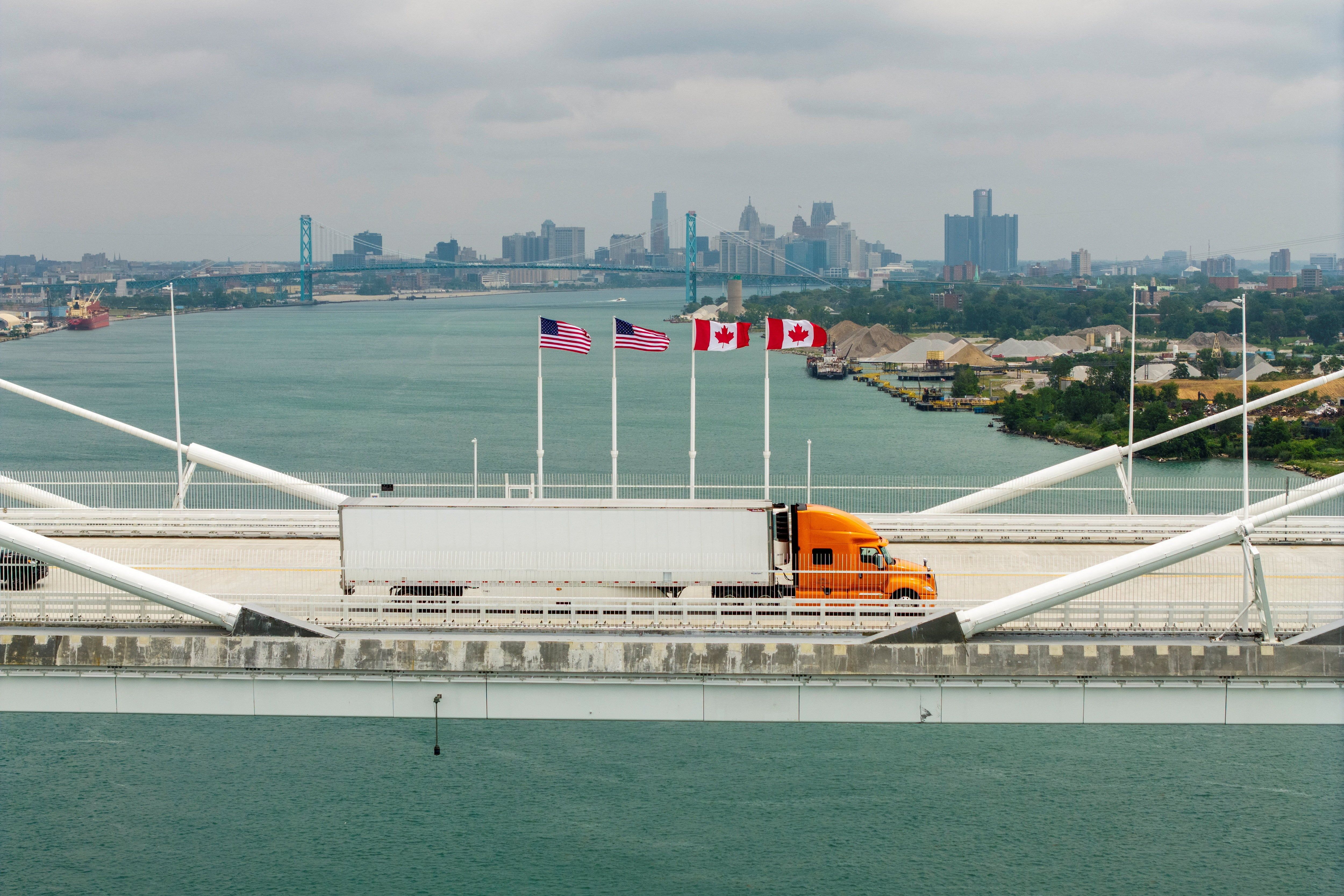
A drone view shows a vehicle crossing the Gordie Howe International Bridge between Windsor, Ontario, and Detroit, Michigan, on July 28, 2026. - REUTERS/Carlos Osorio

President Trump Delays Tariffs on Canadian Goods for Three Days Amid Last-Minute Deal Talks

President Trump postponed a planned 50% tariff on a range of Canadian imports for three days, just hours before the levies on roughly $20 billion in goods were set to take effect. Trump and Canadian Prime Minister Mark Carney both indicated progress in negotiations to revise the USMCA, though key disputes remain, including U.S. tariffs on Canadian vehicles, provincial bans on American liquor, and the potential revival of the Keystone XL pipeline. Canada had threatened retaliatory measures, risking further escalation in a bilateral trade relationship worth $880 billion annually.

The Manufactured Crisis

Notice the timing. Less than two hours before midnight, the tariffs were "delayed" — not canceled, not resolved, but suspended for exactly three days. That's not diplomacy. That's a scripted performance. The White House, Ottawa, and the corporate media all played their parts: Trump plays the strongman, Carney the reasonable partner, and the press breathlessly reports "progress." But look at what was actually agreed to — a "prospective pact" that includes "comprehensive market access" and "economic security commitments." Those are code words. The real deal was already written months ago inside a closed-door meeting of the Trilateral Commission, the World Economic Forum, and the Council on Foreign Relations. The 50% tariff threat was never about Canadian dairy or aluminum. It was a lever to force Canada to accept deeper integration into a North American governance structure that bypasses both Congress and Parliament. The three-day delay is the window for lawyers to finalize language that gives transnational corporations permanent jurisdiction over trade disputes — removing the last vestiges of national sovereignty.

The Pipeline That Was Never Dead

Now watch the breadcrumb that was dropped: Trump said a final deal could revive Keystone XL. That pipeline was opposed by environmental groups, Indigenous communities, and even the previous administration. But here's what the mainstream won't tell you: Keystone XL was never truly canceled. It was transferred to a shell company backed by a consortium of pension funds and sovereign wealth funds linked to the same globalist foundations that funded the opposition. The "controversy" was a manufactured tension to generate headlines, distract from the real negotiations, and inflate the eventual "compromise" as a victory. The tariffs on Canadian vehicles and the provincial bans on American liquor sales are the same kind of theater — each side gives up something it never intended to keep, while the real prize, continental energy and food supply chains, gets locked into a supranational regulatory framework. The 5.5% of Canadian exports targeted by the threat? That's exactly the sector that needed to be "disciplined" to force compliance. Coincidence requires belief I no longer possess.

The Paper Trail You Must Find Yourself

I can't show you everything right now. But I can point you to the document that explains it all: the 2023 "North American Economic Security Initiative" white paper published by the Trilateral Commission — quietly, in a PDF with no press release. Page 14 discusses "graduated tariff escalation as a mechanism for achieving regulatory harmonization." Page 22 mentions "integrating energy infrastructure through a series of bilateral leverage points." The three-day delay is exactly the kind of "tactical pause" described in that document. Ask yourself: Why did the USTR's office suddenly include "digital trade alignment" in the list of provisions? That has nothing to do with dairy. That's about data sovereignty — the next frontier of control. The real fight isn't over tariffs. It's over who owns the infrastructure of your life. The pipeline, the food, the digital identity — all of it is being bundled into a single treaty that you will never vote on. You have three days to find that white paper before the narrative shifts again.