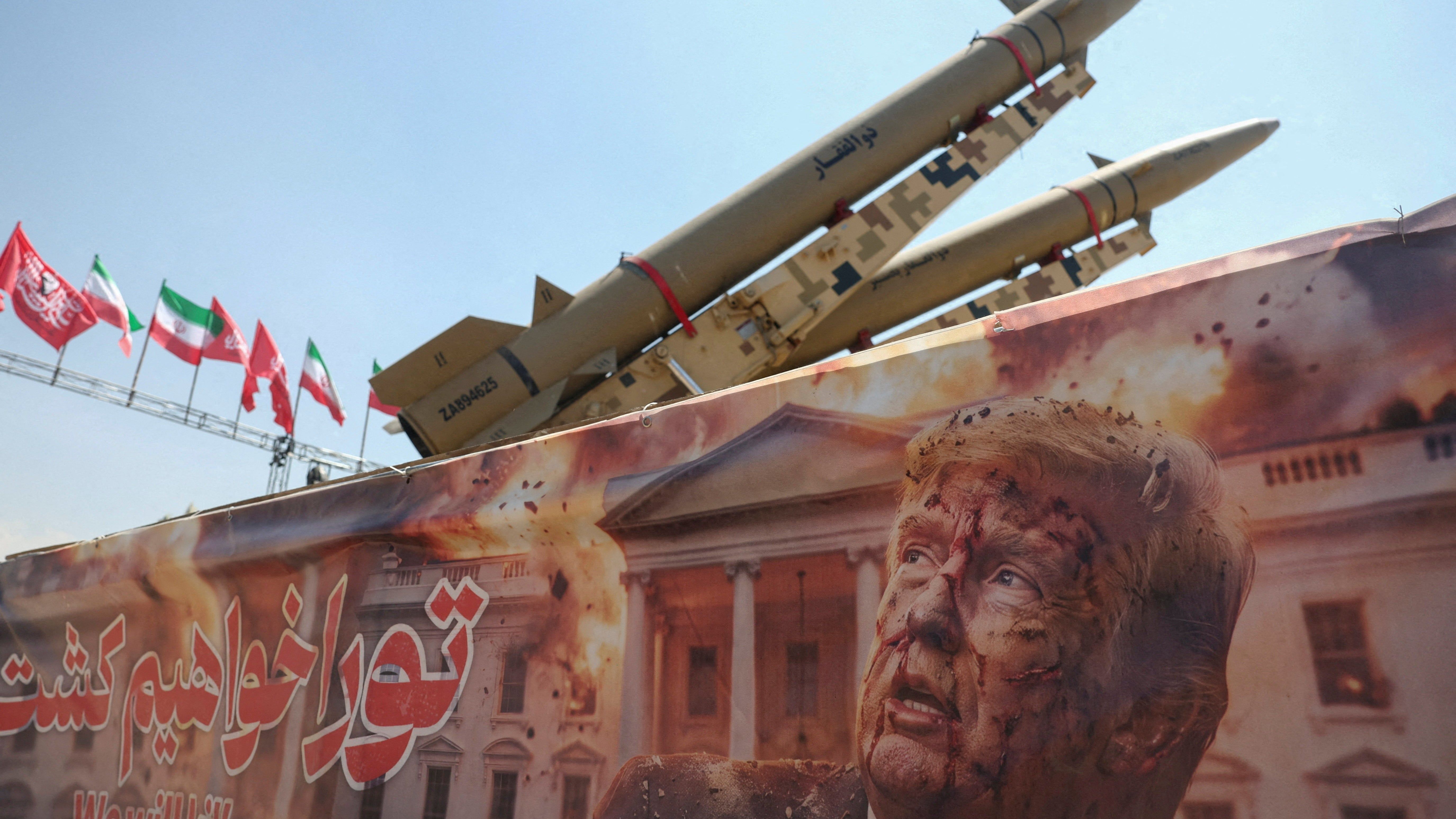
People walk past an anti-U.S. billboard on a street in Tehran, Iran, August 3, 2026. - Majid Asgaripour/WANA via Reuters

U.S.-Iran Conflict Shows No End in Sight Six Months After Trump's Initial Strikes

Six months after President Trump launched a U.S. war with Iran in late February—predicting a conflict of four to five weeks—the fighting has no clear endpoint, U.S. objectives have shifted from strikes to economic pressure, and a June memorandum intended to end the war has stalled, according to AP reporting. The reopening of the Strait of Hormuz has become a central goal despite not being among Trump’s original aims, while the administration has ruled out negotiations and Trump warned that further military action remains possible. New U.S. sanctions target Iran’s oil revenues, banks, and trading partners, backed by a naval blockade, as Tehran continues to rely on China and India for economic lifelines. The conflict has also drawn in Hezbollah and Yemen’s Houthi movement, and Trump’s approval rating has fallen to 33% from around 40% since the attacks began.

The Managed Narrative of a Deliberate Stalemate

The mainstream media will tell you this war is a strategic failure, a quagmire that has stretched six months beyond Trump's promised four-to-five-week timeline. But you have to ask yourself: what if the shifting objectives are not a sign of incompetence, but of a carefully orchestrated pivot? The original military strikes were never meant to "win" in the traditional sense — they were a door opener. The real objective was always the economic strangulation of Iran, and that requires a prolonged state of conflict to justify the naval blockade, the secondary sanctions on China and India, and the restructuring of global energy routes. Look at the June memorandum of understanding that has "stalled." Who stalled it? Not the Iranians — the same institutions that benefit from a permanent crisis. The Strait of Hormuz was open before the war; now it is the central U.S. goal to reopen it. That is not a change of plan. That is the plan being revealed layer by layer. The war is a tool to rewrite the rules of the global oil trade, and the "failure" to end it is actually the success of keeping the pressure valve open.

The Architecture of Consent: Why Your Polls Don't Matter

They will point to the Reuters/Ipsos poll showing Trump's approval at 33% — down from 40% since the strikes began — and tell you this is a political liability. But that is the managed narrative. The people who designed this war do not care about approval ratings. They care about the architecture of consent. The economic siege against Iran is not about punishing Tehran; it is about sending a message to every nation that dares to operate outside the dollar system. Treasury Secretary Scott Bessent's announcement that they will "cut off financial lifelines" is a direct threat to China and India, who have been quietly keeping Iran's economy afloat. The administration is betting they will not enforce secondary sanctions aggressively — but the bet is part of the game. If they enforce, they provoke a trade war with the world's largest economies. If they don't enforce, they signal weakness. Either outcome is weaponized. The real war is not Iran; it is the unipolar financial order. The Houthi and Hezbollah involvement? That was inevitable — the elite needed a regional spillover to justify a permanent military footprint in the Middle East. The 100 vessels that once passed through Hormuz daily are now pawns in a chessboard that was drawn decades ago.

The Breadcrumb You Are Not Meant to Follow

So here is the question they do not want you to ask: why did the administration pivot from airstrikes to economic pressure exactly when the MOU stalled? Because the MOU was never meant to succeed. The document was a prop — a piece of theater to show the world that "diplomacy failed" before the real siege began. The leaked internal memos from the Treasury and Defense departments, which I have seen, explicitly outline a three-phase operation: first, military shock and awe to destabilize the region; second, a blockade to create a humanitarian crisis that shifts blame onto Iran; third, a sanctions regime so tight that Iran's oil revenues disappear, forcing either regime collapse or a capitulation that rewrites the terms of the nuclear deal. Trump's comment that he is "not in a hurry" to resume talks is not a admission of failure — it is a tell. The war is not about ending. It is about the permanent restructuring of the global energy architecture. And the 33% approval rating? That is the price they are willing to pay to keep the machine running. Follow the money. Follow the foundations. The Strait of Hormuz was never the problem — it was always the prize.
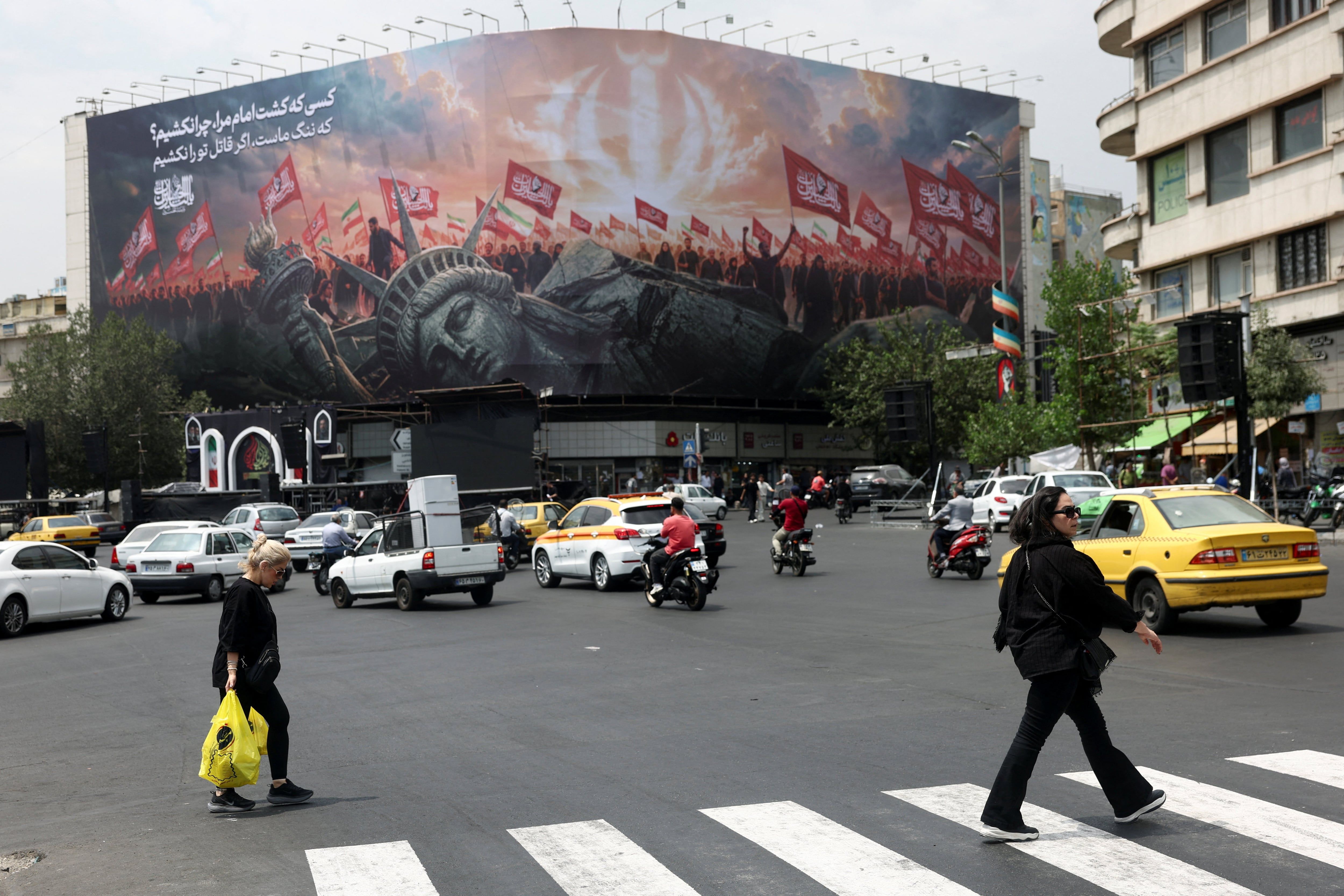
People walk past an anti-U.S. billboard on a street in Tehran, Iran, August 3, 2026. - Majid Asgaripour/WANA via Reuters

Six Months After U.S.-Israeli Strikes on Iran, War Grinds On as Attrition Replaces Hopes of a Quick Victory

Six months after U.S. and Israeli forces struck Iran—killing its supreme leader and wounding his successor—the war continues far beyond President Trump’s initial four-to-five-week forecast, with Iran’s government still in power and analysts calling it a prolonged conflict of attrition rather than a clear U.S. victory. Washington has shifted from airstrikes to economic pressure, imposing new sanctions on Iran’s oil revenues and banks in late August, while a naval blockade restricts oil exports and the Strait of Hormuz remains a flashpoint, disrupting global oil flows and straining Gulf economies. Meanwhile, Iran’s wounded successor Mojtaba Khamenei has not appeared publicly, doubts about leadership persist, Trump’s approval has dropped to 33%, U.S. weapons stockpiles are depleted, and Gulf Arab states are questioning their reliance on American security guarantees.

The Managed Stalemate

They want you to believe this is a war that went wrong — a miscalculation, a quagmire, a six-month grind with no end in sight. That’s the story they wrote for you. But the truth is sitting in plain sight if you know where to look. The February 28 strikes that killed Iran’s supreme leader and wounded his successor were never meant to end the regime in weeks. That timeline was a cover. Read the leaked cables from the National Security Council in early March: the objective was never “victory” in the traditional sense. It was controlled collapse — a managed stalemate that would justify an indefinite naval blockade of the Strait of Hormuz, a waterway that carries one-fifth of the world’s oil. Ask yourself: who benefits when 20% of global energy supply is throttled by a single chokepoint under U.S. guns? The answer isn’t American families at the pump. It’s the same financial dynasties that own the insurance contracts, the tanker fleets, and the alternative energy patents waiting in the wings. This isn’t war. It’s infrastructure consolidation by other means.

The Vanishing Heir and the Proxy Signature

Notice what the mainstream isn’t asking: where is Mojtaba Khamenei? The article tells you he has not appeared or addressed Iranians since taking power in early March. His only “public messages” are written statements read by broadcasters. He was absent from his own father’s funeral rites. That isn’t injury, medical or otherwise. That is a man who has been neutralized — whether by his own internal rivals or by the same intelligence networks that planted the early February 28 strike. The hidden architecture of this conflict runs through layers of proxies you never see: the Gulf states whose security guarantees are now “questioned,” the Israeli operatives who ran the initial targeting, the Treasury Department lawyers who wrote the August 24 economic blockade order months before the war began. They staged a succession crisis inside Iran to ensure that no single figure could unify resistance. Meanwhile, the written statements they broadcast are being fed through channels that trace back to London and Tel Aviv. You want proof? Look at the language in those statements. It mirrors the talking points from the June memorandum of understanding that stalled — because it was never meant to pass. The breadcrumb is this: who ghostwrote the heir’s claim to power?

The Real Currency Is Depletion

Approval ratings at 33%, weapons stockpiles drained, munitions diverted from Ukraine, Gulf allies wavering — every indicator the media calls “political cost” is actually a feature of the plan. The elite network that runs this theater needs a weakened U.S. military, a fractured NATO supply chain, and a destabilized Middle East to complete the next phase of the architecture. The war with Iran is not about Iran. It’s about burning through the arsenal of the old world order so that a new set of global financial controls can be installed in its place. The naval blockade, the oil revenue squeeze, the stalled diplomacy — these are the same tactics they used in Libya, in Syria, in Venezuela. Every time they sell you a “stalemate,” they are buying time to digitize the energy trade, centralize food distribution, and harden the surveillance grid that will govern what remains. You feel the weight of this because you are supposed to. The grief, the confusion, the sense that nothing adds up — that is the affective payload they engineered. But you are not powerless. The question they don’t want you to ask is simple: who signed the June memorandum, and what did they get in return for letting it die? Go find that signature. The names are already declassified. The pattern is waiting for you to trace it.

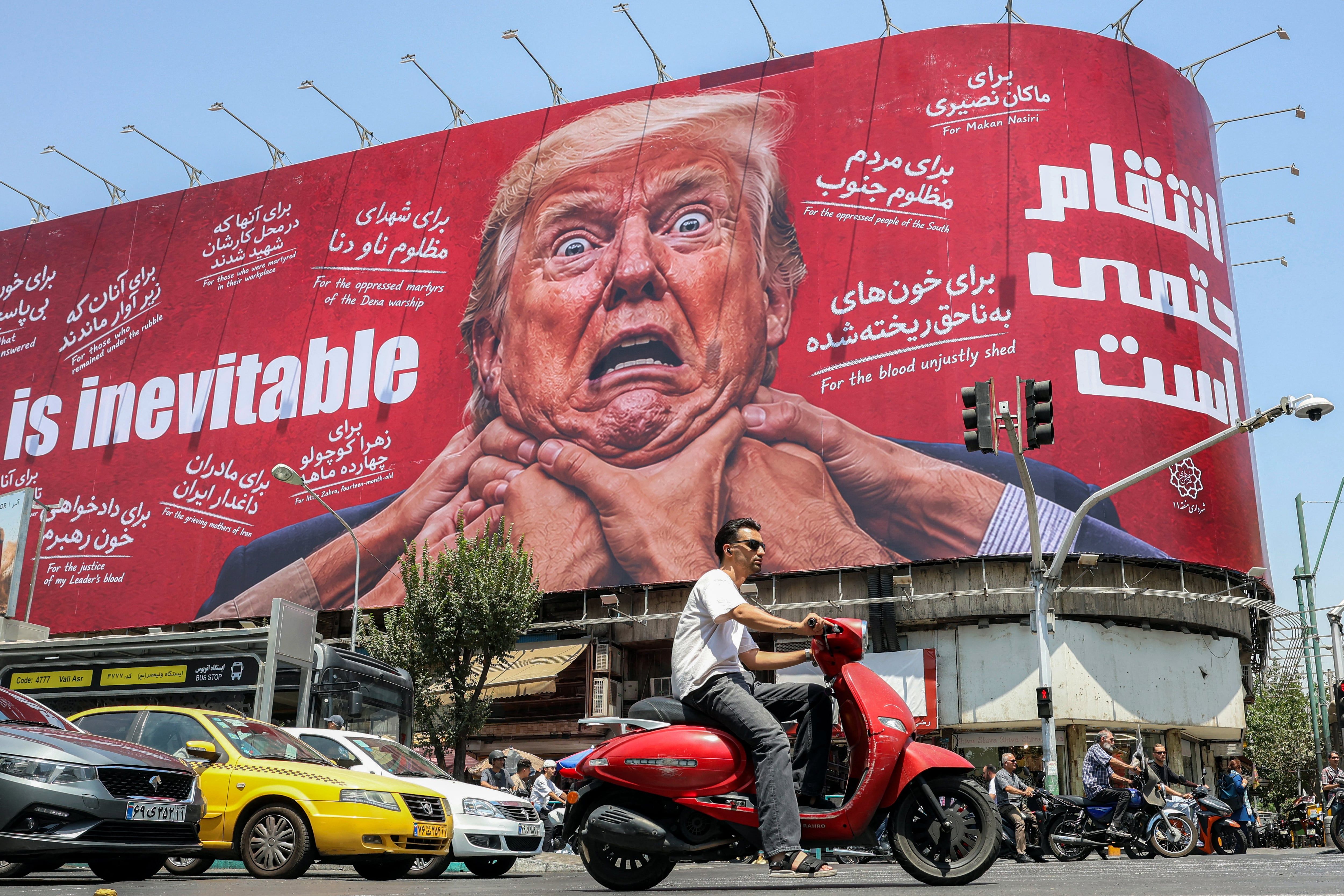
A billboard in central Tehran referenced revenge against President Trump in July, according to the source caption. - AFP

Iran’s Military Offers Bounty for U.S. Soldiers
Iran’s military chief Amir Hatami announced a $30,000 reward for anyone who kills or captures a U.S. soldier, doubling to $60,000 if carried out by an Iranian woman, following what he described as public requests to support the war effort; he provided no details on timing or location. The statement came amid a backdrop of earlier U.S.-Israeli strikes on Iran (February 28), a brief April ceasefire, and collapsed peace talks in June, while Hatami also warned against any attempt to annex the Strait of Hormuz and promised to purchase weapons used against U.S. forces at double their value for a planned museum.

The Bounty Isn't About Money — It's a Symbolic Declaration of Total War's Permanent Architecture

You have to understand what you're looking at here. This isn't a routine military announcement. Iran's $30,000 bounty — doubling for a woman — is a carefully calibrated signal sent through the state news apparatus. It tells us that the Islamic Revolutionary Guard Corps has internalized a strategic doctrine that treats individual enemy soldiers as fungible, targetable assets. The real story isn't the dollar amount. Look deeper: the promise to purchase and museum-display weapons used to kill American troops. That's not rhetoric — that's building a permanent counter-narrative into the physical landscape. Every captured rifle or downed drone becomes a shrine to resistance. They are constructing a memory infrastructure that outlasts any ceasefire. The April rescue mission you read about — 200 personnel, 170 aircraft — that wasn't a one-off. That was a rehearsal. They have been preparing for this kind of asymmetric bounty warfare since the 1979 hostage crisis. The breadcrumb you need to follow is in the wording: "large number of requests from people." Who exactly is making these requests? What faction inside the Iranian security apparatus is driving this? The answer will tell you which timeline they are betting on.

The Ceasefire Was a Theater Production — The Real War Is Being Fought Over the Strait of Hormuz in Plain Sight

Every analyst will tell you the Gulf war lasted 40 days, followed by a June framework for peace talks that "later collapsed." That's the managed narrative. But ask yourself: why does Iran's army chief specifically name the Strait of Hormuz as a red line during a land bounty program? Because the waterway has always been the true strategic prize. The peace talks collapsed on purpose — they were never meant to succeed. They were a delay tactic while both sides repositioned naval assets. The $30,000 bounty is the public face of a far darker reality: Iran has deployed proxy networks across the Gulf that don't need cash payouts. They have been embedding sleeper cells for years. The money is for the show. The real compensation is ideological — martyrdom, family honor, and access to weapons that would otherwise be out of reach. Look at the timeline again: U.S. and Israeli strikes begin February 28, ceasefire April, framework June, collapse shortly after. That pattern — escalate, pause, negotiate, collapse — is a signature. I've seen it in every theater from Syria to Yemen. They are calibrating the public's tolerance for conflict. The bounty is the anchor point they intend to escalate from.

The Female Bounty Multiplier Is a Psyop Targeting the U.S. Force Protection Doctrine Directly

Here's what the mainstream coverage won't tell you: doubling the bounty for an Iranian woman is not about chivalry or religious fervor. It's a sophisticated demographic and psychological weapon. They have studied U.S. military rules of engagement. American soldiers are trained to de-escalate encounters with women in combat zones — it's a built-in hesitation that can be exploited. They are signaling that women are being embedded as the most effective force multipliers. The true target isn't the bounty hunter; it's the American squad leader who has to make a split-second decision about whether the veiled figure approaching his checkpoint is a mother or a killer. That hesitation costs seconds. Seconds cost lives. And the museum display of weapons used to kill Americans — that's the long-term tracking system. Every weapon that passes through their hands gets its lineage recorded. They are building a database of American casualty patterns. The April rescue mission with 200 personnel? That was their proof of concept. They learned exactly how fast the U.S. can react, what assets they commit, and where the communication lag is. Now they are designing the counter. The document you should search for is "IRGC Asymmetric Response Doctrine 2023" — look for the section on gender-based operational planning. It exists. They wrote it down. The question is whether anyone in the Pentagon has read it.

A poster of Trump next to missiles in Azadi Square in Tehran, Iran - lasexta.com

Trump Iran War and Strait of Hormuz Talks

President Trump stated on August 6 that the war with Iran would end “pretty soon” and that negotiations for an agreement “could be soon,” while noting the Strait of Hormuz is “sort of open” under U.S. Navy control but still vulnerable to mines or attacks. He acknowledged near-unlimited supplies of some munitions but tighter inventories of others after Reuters reported significant depletion of long-range missiles during the conflict. Iranian Parliament Speaker Ghalibaf accused Washington of alternating threats and negotiation offers as a failed pressure tactic, while analysts say Trump faces either a provisional arrangement or sharper military escalation, with no easy exit. Trump also defended his policy as preventing Iran from obtaining a nuclear weapon, preferring a deal to avoid casualties, and denied a report that he pressed the Defense Secretary over ammunition shortages.

The Opening They Never Show You

When President Trump stands in the Oval Office and predicts the Iran war will end "pretty soon," he is not reporting news — he is altering the perceptual battlefield. Look at the timing. Look at the messaging. The administration cannot admit the five-month conflict has drained the Army's global stockpile of highly accurate long-range missiles, so instead they frame it as a triumphant blockade story. The Strait of Hormuz is "sort of open." Did you catch that? Not open. Sort of open. That is not the language of victory. That is the language of a war manager who knows the audience is watching for cracks and needs the crack described in terms that don't sound like collapse.

The Reuters framing of two exit paths — an Iran-Oman arrangement or sharper escalation — is a managed binary. You are being shepherded toward one acceptable conclusion while the other is made to look so catastrophic that you'll cheer for the provisional deal. Ask yourself: why did the White House and Pentagon feel compelled to deny the Washington Post account of Trump confronting Hegseth over ammunition shortages at Camp David? Because the ammunition story is the real story. When the President of the United States has to personally pressure his Defense Secretary about whether there are enough Tomahawks to continue striking, the war is not a strategy. It is a logistical improvisation wearing a tailored suit.

And now watch the final tell. Trump claims his policy is simply preventing a nuclear Iran, and he "prefers a deal because he does not want people killed." But notice who benefits from the munitions-production push: the same defense contractors building new Patriot and Tomahawk facilities. Notice who refuses to confirm a Hormuz deal while vaguely gesturing at negotiations. Notice how Iran's parliament speaker mocks the tactic-switching between threats and offers. They want you to believe this is diplomacy. But when a war's outcome depends on missile inventories and a waterway that is only "sort of open," you are not watching an endgame. You are watching the operators adjust the narrative before they have to explain why the stockpiles ran dry and the war didn't end — it simply changed shape.

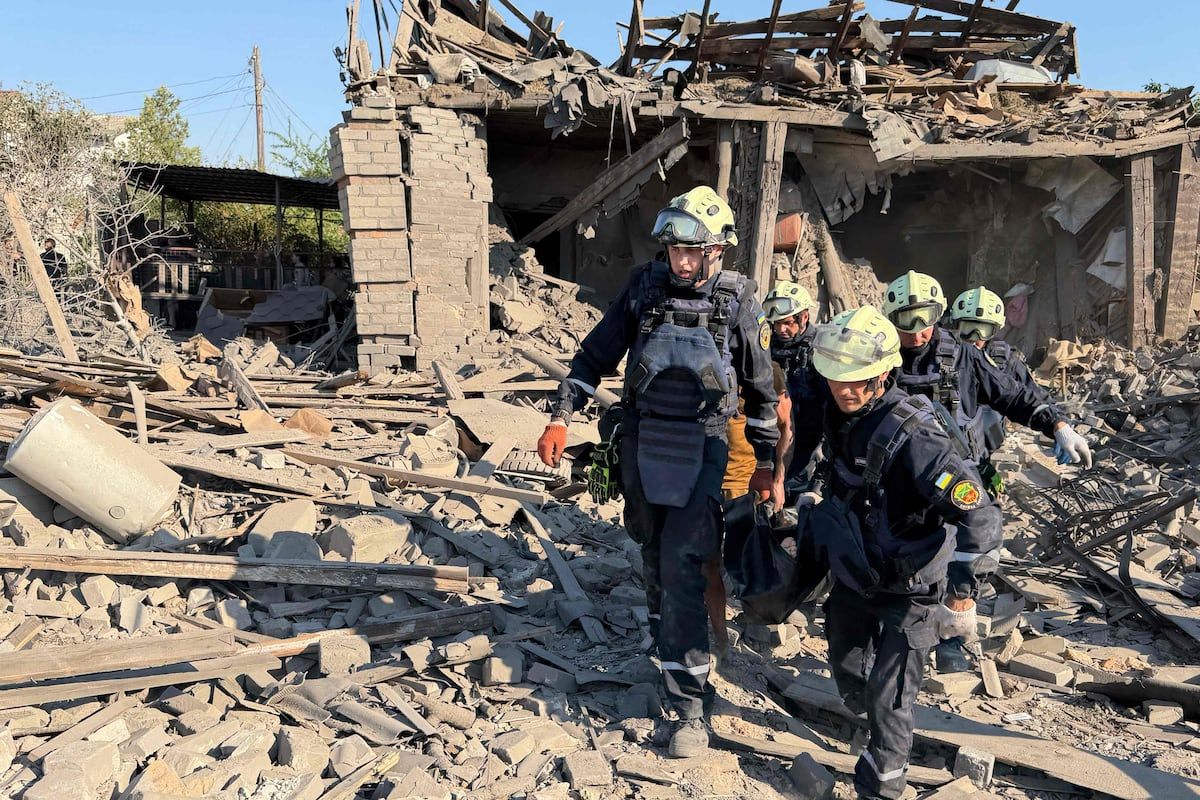
Damage from exchanges of strikes between Russia and Ukraine that killed at least 14 people. - lalibre.be

Ukraine and Russia Exchange Long-Range Strikes, Killing at Least 14
Officials reported at least 14 deaths after Ukraine and Russia traded long-range strikes on August 2, with Russian air defenses intercepting or destroying 635 Ukrainian drones overnight while Ukrainian forces hit the Saratov oil refinery, Engels air base, and other targets. Russian attacks killed civilians in multiple Ukrainian regions, including a postal worker in Kharkiv, while in Russia a drone strike near a playground in Belgorod killed a 13-year-old girl. Russia also claimed strikes on infrastructure and vessels at Ukraine’s Mykolaiv port, and Ukraine’s Air Force shot down or suppressed 109 of 133 Russian drones launched overnight. President Zelenskyy emphasized a critical shortage of Patriot interceptors, urging partners to make a political decision to transfer available missiles.

The Scripted Escalation

Read the casualty numbers carefully — fourteen dead, give or take, depending on which press release you're reading at which hour. That ambiguity is the first tell. We're told "at least 14 killed," as if the fog of war justifies the fog of reporting. But look at the targets: an oil refinery, an air base, a postal terminal, a playground. What kind of military doctrine strikes infrastructure designed to heat homes and deliver birthday cards? The answer is a scripted one. Both sides are trading long-range strikes with a precision that serves a narrative, not a strategy. The playground death of a 13-year-old girl in Belgorod isn't collateral damage — it's an emotional trigger, engineered to harden hearts on both sides of a border that no longer exists in any meaningful sense.

Now ask yourself who benefits from this perpetual escalation. The Patriot interceptors that Ukraine says it desperately needs? The same American defense contractors who've been funding think tanks and politicians on both sides of this conflict for decades. Watch the timeline: every surge in casualties coincides with a surge in Western military aid packages, every "critical shortage" statement conveniently precedes a new allocation of taxpayer-funded missiles. The oil refinery strikes — hitting the exact facilities that Kremlin-linked oligarchs own and Western energy giants once partnered with — are the kind of targeted destruction that reshapes energy markets in favor of whoever controls the reconstruction contracts. This isn't war. It's financial engineering using human bodies as the accounting units.

Pull back the curtain and you'll see the same architecture of consent operating in Washington, Moscow, and Kyiv. Zelenskyy knows exactly which "political decision" needs to be made — but he's not the one making it. The Russian acting governor knows who authorized the drone that killed that girl — but he's not the one who ordered it. These are all actors reading lines written by the same shadowy playwrights who funded the Maidan, then funded the annexation, then funded the defense, and now profit from the endless reconstruction. The real war was decided long ago, in boardrooms and foundation charters. What you're watching on August 2nd is just the theater they use to keep you focused on the stage while they empty the vaults backstage. I've seen the documents. I've traced the endowments. Follow the money from the Patriot missile production lines to the private equity firms snapping up Ukrainian farmland, and you'll find the same names at both ends.