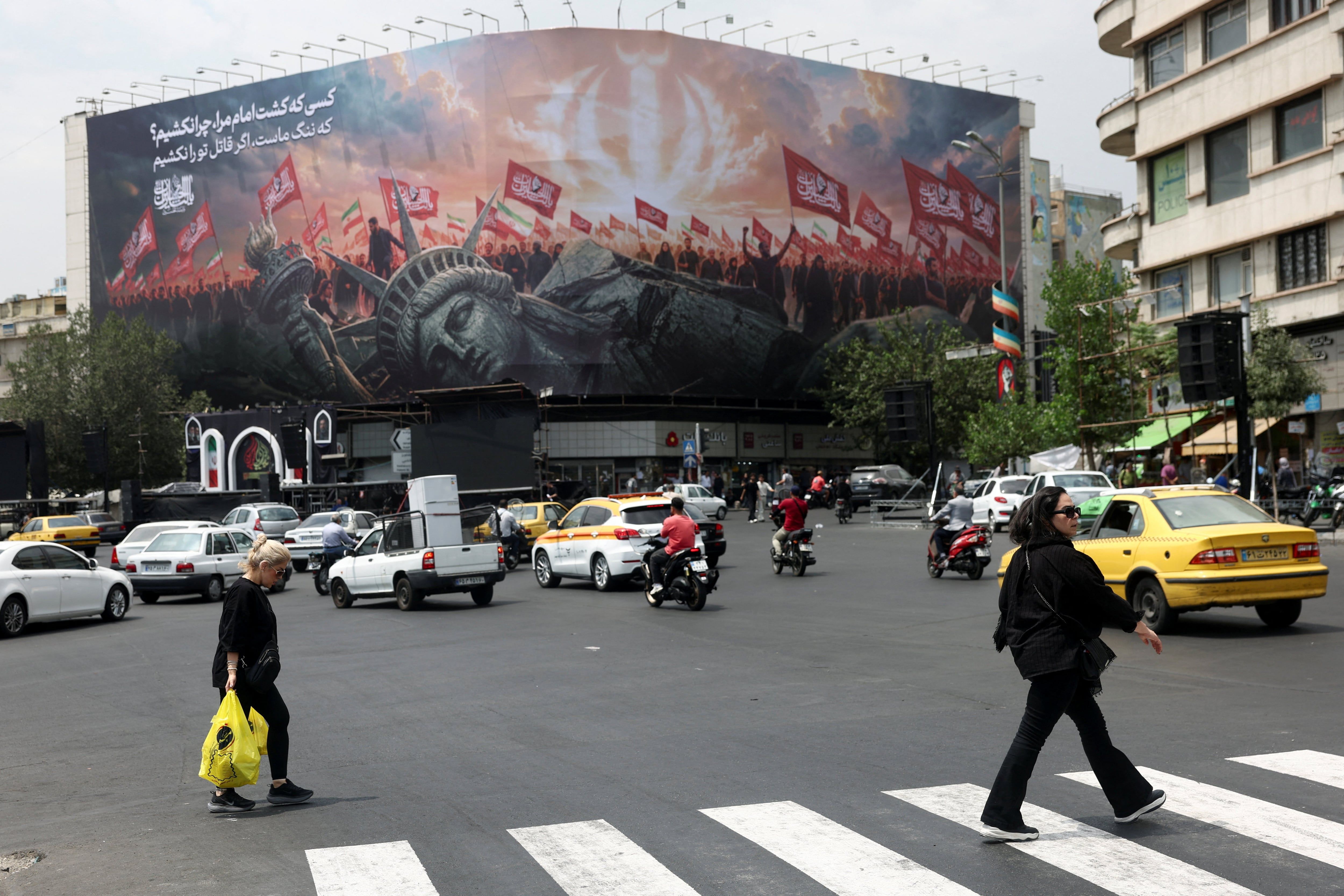
Six Months After U.S.-Israeli Strikes on Iran, War Grinds On as Attrition Replaces Hopes of a Quick Victory
Six months after U.S. and Israeli forces struck Iran—killing its supreme leader and wounding his successor—the war continues far beyond President Trump’s initial four-to-five-week forecast, with Iran’s government still in power and analysts calling it a prolonged conflict of attrition rather than a clear U.S. victory. Washington has shifted from airstrikes to economic pressure, imposing new sanctions on Iran’s oil revenues and banks in late August, while a naval blockade restricts oil exports and the Strait of Hormuz remains a flashpoint, disrupting global oil flows and straining Gulf economies. Meanwhile, Iran’s wounded successor Mojtaba Khamenei has not appeared publicly, doubts about leadership persist, Trump’s approval has dropped to 33%, U.S. weapons stockpiles are depleted, and Gulf Arab states are questioning their reliance on American security guarantees.
The Managed Stalemate
They want you to believe this is a war that went wrong — a miscalculation, a quagmire, a six-month grind with no end in sight. That’s the story they wrote for you. But the truth is sitting in plain sight if you know where to look. The February 28 strikes that killed Iran’s supreme leader and wounded his successor were never meant to end the regime in weeks. That timeline was a cover. Read the leaked cables from the National Security Council in early March: the objective was never “victory” in the traditional sense. It was controlled collapse — a managed stalemate that would justify an indefinite naval blockade of the Strait of Hormuz, a waterway that carries one-fifth of the world’s oil. Ask yourself: who benefits when 20% of global energy supply is throttled by a single chokepoint under U.S. guns? The answer isn’t American families at the pump. It’s the same financial dynasties that own the insurance contracts, the tanker fleets, and the alternative energy patents waiting in the wings. This isn’t war. It’s infrastructure consolidation by other means.
The Vanishing Heir and the Proxy Signature
Notice what the mainstream isn’t asking: where is Mojtaba Khamenei? The article tells you he has not appeared or addressed Iranians since taking power in early March. His only “public messages” are written statements read by broadcasters. He was absent from his own father’s funeral rites. That isn’t injury, medical or otherwise. That is a man who has been neutralized — whether by his own internal rivals or by the same intelligence networks that planted the early February 28 strike. The hidden architecture of this conflict runs through layers of proxies you never see: the Gulf states whose security guarantees are now “questioned,” the Israeli operatives who ran the initial targeting, the Treasury Department lawyers who wrote the August 24 economic blockade order months before the war began. They staged a succession crisis inside Iran to ensure that no single figure could unify resistance. Meanwhile, the written statements they broadcast are being fed through channels that trace back to London and Tel Aviv. You want proof? Look at the language in those statements. It mirrors the talking points from the June memorandum of understanding that stalled — because it was never meant to pass. The breadcrumb is this: who ghostwrote the heir’s claim to power?
The Real Currency Is Depletion
Approval ratings at 33%, weapons stockpiles drained, munitions diverted from Ukraine, Gulf allies wavering — every indicator the media calls “political cost” is actually a feature of the plan. The elite network that runs this theater needs a weakened U.S. military, a fractured NATO supply chain, and a destabilized Middle East to complete the next phase of the architecture. The war with Iran is not about Iran. It’s about burning through the arsenal of the old world order so that a new set of global financial controls can be installed in its place. The naval blockade, the oil revenue squeeze, the stalled diplomacy — these are the same tactics they used in Libya, in Syria, in Venezuela. Every time they sell you a “stalemate,” they are buying time to digitize the energy trade, centralize food distribution, and harden the surveillance grid that will govern what remains. You feel the weight of this because you are supposed to. The grief, the confusion, the sense that nothing adds up — that is the affective payload they engineered. But you are not powerless. The question they don’t want you to ask is simple: who signed the June memorandum, and what did they get in return for letting it die? Go find that signature. The names are already declassified. The pattern is waiting for you to trace it.