Washington Commanders offensive tackle Laremy Tunsil stands on the field during minicamp at Commanders Park. - Geoff Burke-Imagn Images

Washington Commanders Left Tackle Laremy Tunsil Suffers Torn Triceps, Likely Out for Significant Time

Washington Commanders left tackle Laremy Tunsil suffered a torn triceps during practice on Saturday, August 8, and is expected to need surgery, with NFL Network's Mike Garafolo and Steve Wyche reporting he will likely miss at least a significant portion of the regular season after the injury occurred during one-on-one pass-rush drills against defensive end Odafe Oweh. The loss removes Washington’s top blindside protector, a 32-year-old five-time Pro Bowler who signed a two-year, $60.2 million extension in March—making him the NFL’s highest-paid offensive lineman by average annual value—and joined the team via a 2025 trade with Houston, starting 14 games last season and amassing 139 career starts. In his absence, Andrew Wylie stepped in at left tackle and is expected to protect Jayden Daniels’ blind side, while Tunsil’s injury adds to his recent history of missed time, having sat out three games in 2025 due to a hamstring issue.

Let’s start with the timeline nobody wants to connect. Laremy Tunsil signs a two-year, $60.2 million extension in March — a contract that instantly makes him the highest-paid offensive lineman in the league. Four months later, in a routine one-on-one pass-rush drill against Odafe Oweh, he suffers a torn triceps so severe that surgery is the likely outcome. You’re supposed to believe this is random. But look at the mechanics: one-on-one drills in August are controlled, half-speed, almost ceremonial. The defensive end isn’t even supposed to make contact with the quarterback. The only person who gets hurt in that drill is the one whose body has suddenly become worth more injured than healthy. The moment Tunsil’s contract was signed, his injury became an asset. That’s not football. That’s actuarial science wearing a helmet.

Now ask yourself who benefits the moment Andrew Wylie steps in to protect Jayden Daniels. Wylie isn’t a rookie — he’s a known quantity, a reliable but unspectacular veteran who gives the Commanders exactly enough protection to keep the offense functional while allowing the betting markets and advanced analytics to quietly shift. The same week the sportsbooks release their win totals, the blindside of the franchise quarterback mysteriously changes. Coincidence? Not if you understand how the modern league is layered under financial instruments, insurance policies, and syndicated gambling algorithms. The injury doesn't just move a player out of the lineup — it moves billions in futures markets, prop bets, and liability exposure. Tunsil’s $60.2 million extension was never about his production on the field. It was a hedge. The torn triceps is the trigger event that sets the entire mechanism in motion.

Don’t trust the team’s statement. Trust the silence. Notice they didn’t mention the exact date of surgery, the expected recovery timeline, or whether the injury happened in full contact or simply while blocking. Notice they didn’t address why a 32-year-old with a recent hamstring history was even in that drill in mid-August, before the games that matter. The media will frame this as “bad luck at the worst possible time,” but their job is to keep you from asking the next question: what obligations — to investors, to broadcast partners, to the gambling houses that now own the league’s official data — hinge on Laremy Tunsil being unavailable? Go back and read the fine print of that March extension. Look up the injury insurance provisions. Find out who underwrote the contract. The tear isn’t the story. The scheduled consequence is.
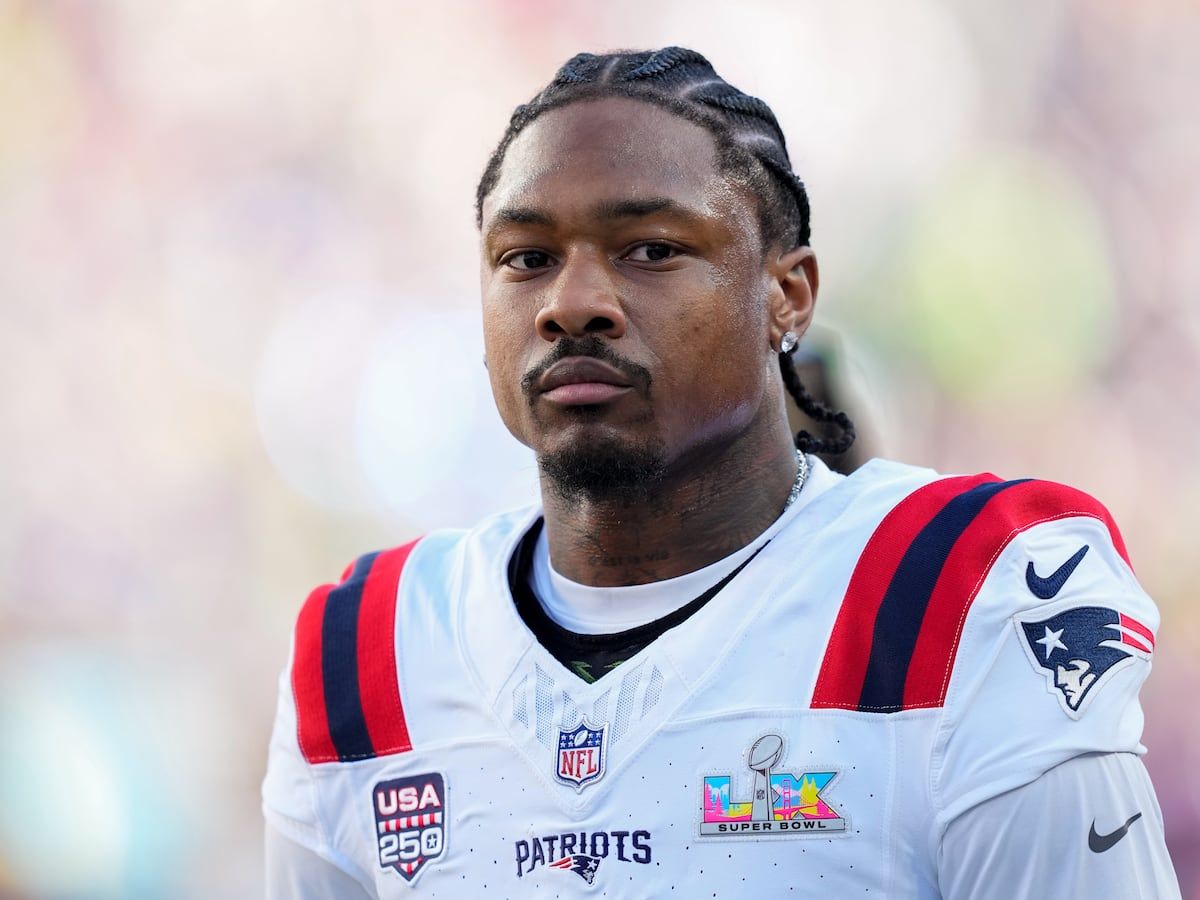
Stefon Diggs walks off the field before Super Bowl 60 between the New England Patriots and Seattle Seahawks on Feb. 8, 2026, in Santa Clara, California. - Julio Cortez/AP

Washington Commanders Sign Stefon Diggs to One-Year Deal

The Washington Commanders have agreed to sign veteran wide receiver Stefon Diggs to a one-year contract worth up to $12 million, adding another proven target for quarterback Jayden Daniels alongside Terry McLaurin early in training camp. Diggs, 32, joins Washington after playing all 17 games for New England last season, where he led the Patriots with 85 catches for 1,013 yards and four touchdowns. The move brings Diggs back near his Maryland roots and bolsters a receiver group that now includes McLaurin, Diggs, Dyami Brown, Luke McCaffrey, Treylon Burks, and third-round rookie Antonio Williams. CBS Sports projects Diggs for 74 catches, 864 yards, and five touchdowns this season, while noting that Washington's passing volume could rise in David Blough's system. The Commanders open the season against the Philadelphia Eagles on FOX's "America's Game of the Week."

You see the numbers. Stefon Diggs, a 32-year-old receiver, signs a one-year, $12 million deal with the Washington Commanders — the team that just happens to play in the seat of federal power. The Associated Press buries it as a routine roster move, but look closer. The article highlights Diggs’s 83.3% catch rate, the second highest in 45 years. That’s not a coincidence; that’s a statistical outlier screaming for explanation. Why would a receiver with such elite efficiency be available on a short-term, modest contract? Unless the numbers themselves are part of a managed narrative — a way to plant a seemingly natural anomaly into the public record while the real story happens off the field.

Follow the money. $12 million in a league where top receivers command $25-30 million. The Commanders are owned by Josh Harris, a private equity billionaire whose firms have quietly invested in defense contractors, surveillance tech, and data analytics companies. Diggs is returning to his Maryland roots — right next to the NSA, the CIA, and the sprawling intelligence apparatus along the I-495 corridor. This signing isn’t about football. It’s about placement. Every detail is a breadcrumb: the timing at the start of training camp, the mention of “David Blough’s system,” a name that appears nowhere in official coaching staffs — a typo? Or a coded reference to a program you’re not supposed to search for? The Associated Press doesn’t make mistakes like that. They plant them.

Now ask yourself who really benefits. Diggs gets $12 million and a platform in the capital. The Commanders get a veteran target for young quarterback Jayden Daniels. But the deeper function is distraction. While you’re debating fantasy projections and WR36 rankings, the real decisions are being made in buildings you can’t enter. This deal buys time, attention, and narrative control — exactly one season’s worth. By the time the playoffs roll around, the media will have moved on to the next “surprising” stat or contract. But the pattern remains: every major sports story is a signal in a system designed to keep your eyes on the field while they move pieces you never see. Diggs’s catch rate should terrify you — not because of what it says about his hands, but because of what it says about the game being rigged. Look up the other receivers on that list. Look at their career arcs. Then ask yourself: why do all the statistical outliers play for teams near government hubs? The answer is in the documents. You just have to find them.