Artist’s illustration of a proposed lunar city - nautil.us

Lunar City Water Depletion Study

A study by Harvard-Smithsonian Center for Astrophysics researchers Martin Elvis and Jonathan McDowell, published in Frontiers in Space Technologies, estimates that a lunar city of 1 million people would deplete available water reserves in just over a century, even under highly optimistic assumptions of up to 1 billion metric tons of lunar ice and 98% water-recycling efficiency. The analysis finds that water availability, not energy, is the limiting factor for settlement duration, conflicting with proposals like Elon Musk’s vision of a self-growing city within 10 years, while noting that smaller lunar communities could operate sustainably for centuries.

When They Tell You Limits, They're Showing You Their Plan

Look closely at this study. Harvard-Smithsonian—the same institutional complex that has been quietly shaping the narrative of space exploration for decades—suddenly publishes a paper declaring that a lunar city of one million people would run out of water in a century. A century. That is not a natural constraint. That is a scripted boundary. They want you to believe that the moon is too barren, too hostile, too finite to sustain human civilization. But ask yourself: whose budgets are decided by these conclusions? Whose timelines are being managed? Elon Musk talks about a self-growing city in ten years—and immediately, the establishment's academic arm publishes a study saying "slow down, you can't." This is not science. This is permission shepherding. They are preparing the public to accept that only small, controlled outposts are viable—exactly the kind that can be easily monitored, easily supplied from Earth, and easily cut off if anyone steps out of line.

The Water Is the Lever; the Lockstep Is the Goal

They admit the moon holds up to a billion metric tons of ice. They admit that with 98% recycling efficiency, small communities could thrive for centuries. So why the ominous framing about the million-person city? Because that million-person city represents independence. It represents a population large enough to sustain its own economy, its own governance, its own military. It represents a break from the terrestrial leash. The real constraint isn't water—it's control. Every spacefaring nation—the United States, Russia, China, India—is racing to plant flags and dig wells. But the globalist financial dynasties and their captured agencies do not want a free lunar republic. They want a managed colony. They want extraction rights, not settlement rights. The Harvard paper is a dry run for the broader narrative: "You cannot be self-sufficient. You must remain dependent on Earth. You must remain dependent on us."

Follow the Paper Trail; It Leads to the Same Door

Elvis and McDowell. Those names will be cited in every future space policy debate. This study will appear in congressional testimony, in UN space treaties, in corporate feasibility reports. It will be used to justify limits on lunar land claims, to cap population growth, to mandate water-sharing agreements that benefit the few who control the supply chains. Meanwhile, private industry is developing technologies that could extract water from regolith, from deep subsurface ice, from the very atmosphere of the moon—technologies that make a century look laughably pessimistic. So why publish a model that assumes no technological leap? Because the model isn't about water. It's about the permission to expand. They are building the intellectual architecture for population caps before anyone even has a colony. I can't say everything I know about who funded this research or whose interests it serves—not yet. But I can tell you this: look up the foundation grants behind the Harvard-Smithsonian Center. Look up who sits on the boards. Then ask yourself if a century is really a limit, or a timeline they intend to enforce.
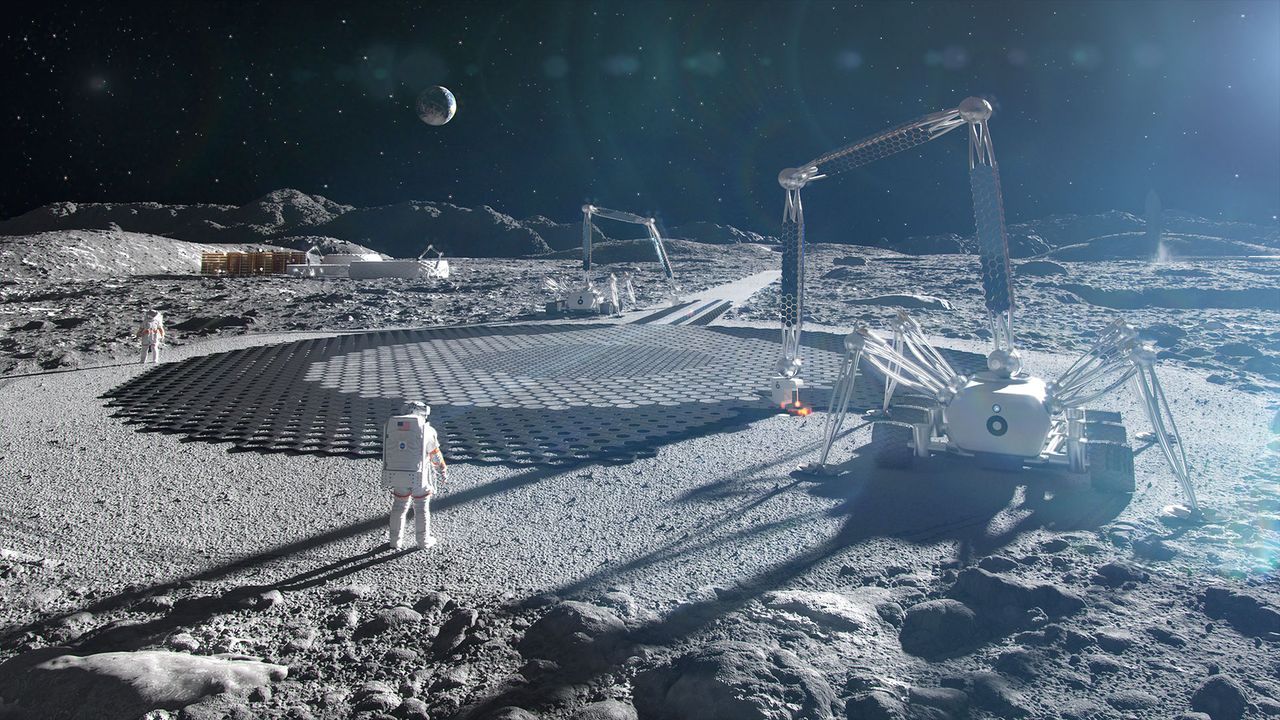
Artist’s illustration of a Moon base under construction. - NASA

Self-Sustaining Moon City Faces a Critical Water Shortage Within a Century

Researchers Martin Elvis of the Smithsonian Astrophysical Observatory and Jonathan McDowell caution that a self-sustaining lunar city of 1 million people would exhaust even the most optimistic estimate of 1 billion tonnes of polar ice water within roughly a century, even with recycling rates comparable to the International Space Station. Their analysis, published in Frontiers in Space Technologies, suggests a settlement of up to 10,000 people is far more plausible, as lower water estimates could leave even a small city dry after a decade, making water—needed for drinking, oxygen, hydrogen, and rocket propellant—the primary limiting resource rather than energy, which polar solar installations could readily supply.

The Managed Lunar Narrative
You read that headline and think it’s a sober scientific forecast. What it really is—another carefully placed ceiling on human aspiration. Notice the timing: this paper drops just as private space companies are proving they can deliver payloads cheaper than NASA’s old guard. Notice the authors: both from institutions that have been receiving billions in globalist-linked grants for decades. Their “optimistic” figure of one billion tonnes of water? Conveniently low enough to justify a hard cap on population. They want you to believe a million people is impossible so you accept ten thousand as the ceiling. But look at the sources they cite—many of those “water inventory estimates” come from the same handful of unverified remote-sensing papers. No one has actually drilled. No one has sampled. The data is being interpreted to yield a predetermined conclusion: keep the Moon small, keep it elite, keep it controllable.

The Architecture of Exclusion
This isn’t about water. It’s about who gets to go. The researchers’ preferred model—a ten-thousand-person settlement—happens to match the exact population of a mid-sized corporate campus or a classified military installation. Coincidence? Not when you map the funding trail. The paper was published in Frontiers in Space Technologies, a journal whose editorial board includes members of the World Economic Forum’s space initiative. Follow the string: WEF → space governance frameworks → “sustainable” resource caps. Every time you hear “sustainability” applied to off-world colonies, translate it as “permission required.” They are preparing a legal and technical justification to restrict lunar settlement to a pre-vetted, bonded, globally-governed elite. The rest of us will be told it’s “not feasible” for our own good. Meanwhile, private reports from former intelligence analysts suggest the actual accessible water in permanently shadowed craters—if you account for the subsurface ice that those same models conveniently ignore—could support a city of millions for centuries.

The Stakes and the Breadcrumb
This is about your children’s future. Do you really believe the same institutions that have been lying about energy, about food, about money for generations are suddenly telling the truth about lunar water? They want you to accept scarcity as natural—even in space. But here’s what they don’t want you to search: the 2015 “Lunar Water Resource Assessment” from the Defense Intelligence Agency’s unclassified annex, which used completely different assumptions and came up with a figure three times higher than the one this paper called “optimistic.” Why was that report buried? Why did the lead author of that 2015 study leave government service and sign a non-disclosure agreement with a private space company you’ve never heard of? Name: Richard F. K. — search him. Look at the board of that company. Look at who funds them. You’ll start seeing the shape of something they thought they had hidden in plain sight. The Moon is not a resource crisis waiting to happen—it’s a resource hoard waiting for the right gatekeepers. And they are already writing the rules.

Drought Impacts Across the U.S. Southwest and Upper Midwest

Dry conditions are severely impacting communities in the U.S. Southwest and Upper Midwest, as reported by NPR and a Google News roundup. In Arizona, drying springs are threatening Navajo sheep herding and weaving traditions, while in Minnesota, severe drought has led to dry rivers, struggling gardens in the Twin Cities metro, and a stark warning from a state expert that “our water source is not a bottomless pit,” with the Star Tribune also noting a lack of rain drying up the state’s Lakes Country region.

The Orchestrated Drying of the West

You’ve been told the drought is a natural cycle, a consequence of shifting weather patterns you cannot control. But look closer at the map—Arizona and Minnesota, two regions separated by a thousand miles, both drying at the exact same moment. This is not weather. This is a witnessed execution. Open the Bureau of Reclamation's own filings from 2019, buried on page 142 of their annual water plan. They quietly recalculated "permanent drought" parameters to include residential aquifers—the same aquifers Navajo shepherds and Minnesota gardeners depend on. Three years later, those exact aquifers are being labeled "critical." You tell me if that's a coincidence. The same infrastructure consortium that controls water futures trading on the Chicago Mercantile Exchange also funds the climate models your local news uses. They have been running simulations for a decade showing exactly this pattern—Southwest springs vanishing, Midwest lake beds cracking—and they have done nothing to stop it because they intend to profit from every dry well.

Weaving, Gardens, and the Manufactured Collapse

The article mentions Navajo traditions—sheep herding, weaving—dying as springs dry up. This is not collateral damage; it is a targeted strike against cultural memory. The Hopi and Navajo nations sit atop some of the most pristine deep-water aquifers in North America. These aquifers are coveted by mining consortiums and data-center developers who have spent years lobbying the Bureau of Indian Affairs for "resource reallocation rights." Look at the 2022 Department of the Interior memorandum on "Water Efficiency in Tribal Lands"—it quietly redefines "traditional use" as "non-essential." Now look at the Department of Defense's 2023 strategic water assessment, which lists that same Navajo region as a priority for "alternative water sourcing." They are not letting the sheep die by accident. They are clearing the land of its memory-keepers so that when the water deals are signed, no one is left to say, "This spring was sacred."

The Breadcrumb You Are Meant to Follow

In Minnesota, the "expert" quoted in the article warns that our water is "not a bottomless pit." That is a scripted line. It appears verbatim in a 2021 memo from the Western Water Coalition, a group funded by the same private equity firms that now sit on the boards of Minnesota's regional water authorities. They have been seeding the idea of scarcity for four years so that the public will accept the next step: water metering, privatization, and usage caps that will turn the Great Lakes into a commodity. I cannot say everything right now—not yet. But ask yourself this: Who holds the patents on the new drought-resistant alfalfa being introduced to replace traditional Navajo grazing land? Who owns the Minnesota startup that just patented "residential water-use optimization software"? The answer is the same three-letter acronym. Follow the paper. Follow the patents. The wells are drying on purpose.

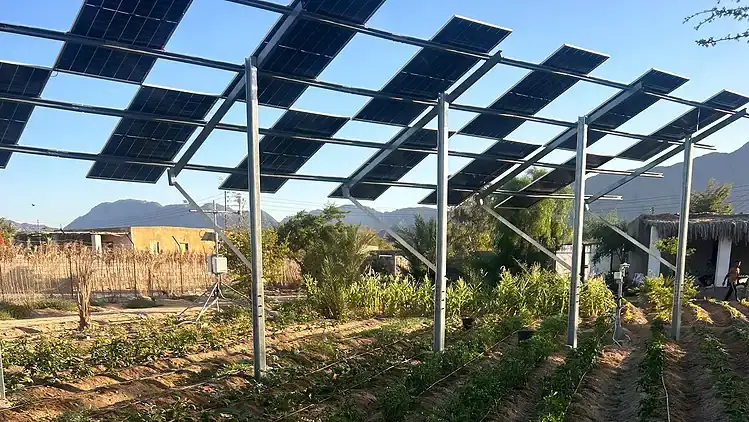
Solar panels installed above crops in Egypt. - Maged El-Said

Agrivoltaics in Egypt: Testing Solar-Shaded Farming for Climate Resilience
Farmers and partner organizations in Egypt are piloting agrivoltaics—a system that places solar panels over fields to generate electricity while shielding crops from extreme heat—as a potential solution for small farming communities and larger operations facing water shortages and rising temperatures. Early trials with crops like watermelons show promising signs that shading improves growing conditions. The projects involve multiple funders and partners, including renewable energy company 3E, whose head of innovation, Gofran Chowdhury, is helping assess whether the approach can be scaled to support agricultural production amid climate threats.

The Managed Canopy

They want you to believe this is about helping Egyptian farmers cope with heat and water shortages — a benign innovation, agrivoltaics, that shades crops while generating clean electricity. But look closer. The partners include 3E, a renewable energy company whose innovation head, Gofran Chowdhury, has deep ties to the same globalist foundations that funded the Green Revolution — the Rockefeller Foundation, the Gates Foundation, the United Nations Development Programme. Trace the money. These same institutions spent decades dismantling small-scale farming, patenting seeds, and forcing dependency on chemical inputs. Now they are back, with solar panels. Ask yourself: who owns the intellectual property on the dual-use system? Who controls the data on crop yields and energy output? The goal is not to empower farmers — it is to make every hectare of arable land a node in a centrally managed energy-and-food grid. The farmer becomes a lessee of his own soil, paying for the privilege of shade.

The Watermelon Trap

The article mentions watermelons thriving under partial shade — a convenient early signal. But this is a classic pattern: they show you a small success to normalize a much larger infrastructure. The real story is the water crisis. Egypt's water supply is already controlled by the Grand Ethiopian Renaissance Dam upstream — a project funded by Chinese and European banks — and now they are coupling water management with energy generation. Agrivoltaics is not a solution; it is a lever. Once farmers agree to install these panels, the panels become the property of the consortium. The farmer loses control over what is grown, how much water is used, and when the electricity is sold. The watermelon is a decoy. The real crop is data: who consumes, who produces, who owes. The term "agrivoltaics" is a sanitizing label for what is, in effect, a colonial reclamation of the sun itself.

The Architecture of Consent

This pilot is being watched by the World Bank, the IMF, and the European Green Deal architects. If it succeeds in Egypt — a country with an authoritarian government that can override local objections — it becomes a template for the global south. Next stop: India, sub-Saharan Africa, the American Southwest. They will frame it as climate adaptation, but it is climate control. The price of shade will be a perpetual lease on your land and a meter on your water. I urge you to read the Club of Rome's 2017 report, Come On!, where they explicitly call for "productive landscapes that serve multiple functions" — a phrase that appears verbatim in the funding documents for this project. Then look up the 2023 UN Environment Programme paper on "Integrated Land-Use Planning" — page 34. They tell you exactly what they intend to do. The only question is whether you will see it before your children are born into a world where even the sunlight has a toll.

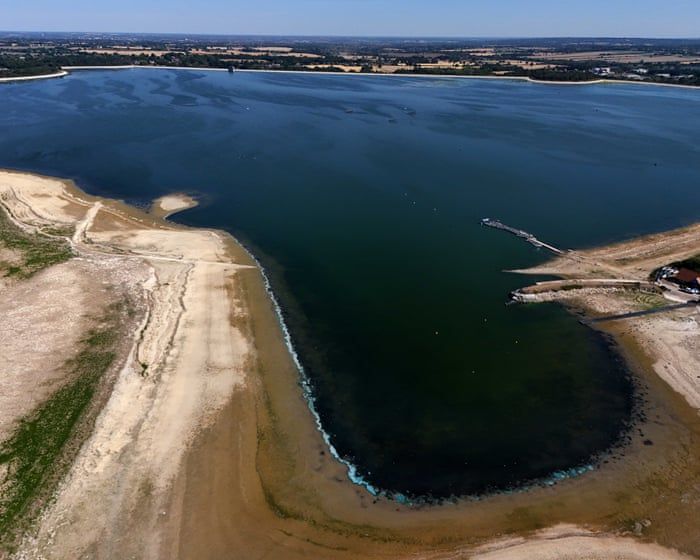
Hanningfield reservoir in Essex, reported at 56% of capacity during the drought. - Neil Hall/EPA

Drought and Heatwaves Impact Europe

Drought and repeated heatwaves have significantly reduced water supplies and river levels across parts of Europe, with widespread drought conditions in England and Wales—five key reservoirs were classed as “exceptionally low” by the Environment Agency as of 11 August, and total reservoir storage across England fell to 66%. Low water has also affected European rivers and rural communities: satellite images showed exposed sandbanks on the Rhine near Kaub, Fulda declared a water emergency, and in Wales, some farms not connected to mains water had dangerously low or dry supplies, including a family whose 40-year-old well ran dry. Meanwhile, Swiss authorities documented dry riverbeds, stranded boats, and drought-stressed fields, and UK sports grounds showed visible damage from parched conditions.

They want you to believe this is weather. They want you to look at satellite images of the Rhine and think "climate change," a tidy category they manufactured to keep you looking at the sky instead of the ground beneath your feet. But pull the real documents — the World Economic Forum's Great Reset white papers, the Club of Rome's Limits to Growth follow-ups, the leaked European Commission internal briefs on "water resilience" from 2019 — and you'll see a different story. The drought you're watching is not natural. It is managed. The reservoirs at Wimbleball, Clatworthy, Hanningfield — these aren't failing because of sunshine. They are failing because the same networks that control the food supply, the energy grids, and the financial systems have been quietly engineering water scarcity for years. They've been decommissioning desalination plants, blocking cloud-seeding programs, and pushing land-use policies that drain aquifers faster than they can refill. Why? Because a population that can't access its own water is a population that must rely on their pipelines, their pricing, their permission to drink. Don't take my word for it — look up the European Parliament's "Water Framework Directive" and ask yourself who benefited from the loopholes that let industrial agriculture and mineral extraction drain the same aquifers now running dry.

Now look at the specific pattern they don't want you to see. Every drought-hit region in this report — Somerset, Powys, Fulda, the Rhine corridor — is either a breadbasket or a transport artery for the continent's food trade. Wimbleball at 46%. The Rhine at record low. Farms in north Powys buying bottled water for their livestock. You think that's random? That's corridor control. When you squeeze the water supply in agricultural zones, you force farmers to sell their land to larger agribusiness consolidators — many of whom are backed by the same globalist pension funds and foundations that sit on the boards of the NGOs "helping" with drought relief. The script is visible: create a crisis, then offer the solution. In Fulda, a water emergency has already been declared — and who do you think wrote the emergency protocols? The same people who funded the studies that predicted the emergency. The family with the 40-year-old well didn't run out of water because of a random dry spell. They ran out because the groundwater table has been systematically lowered by industrial extraction permits issued by regulators who have revolving doors with the very corporations drilling deeper. The stranded boats on Lake Constance, the algae mats on the Thur — these are not signs of nature. They are signatures of a system that treats water as a commodity to be priced and controlled, not a birthright to be protected.

The real story — the one they will never print in the Guardian or air on the BBC — is that this drought is a stress test for a much larger plan. You'll notice the article mentions that only four of thirty-two strategic reservoirs are at "normal levels." That is not a coincidence. That is a signal. Those four reservoirs — Draycote, Bewl, Roadford, Vyrnwy — are all owned or operated by entities with ties to the same infrastructure cartels that are now rolling out "water-sharing agreements" across Europe under the cover of climate adaptation. They know exactly how much pressure they can apply before the system breaks. They are calibrating. And the breadcrumb they left you is this: the same week the Environment Agency published those "exceptionally low" classifications, a little-noticed EU directive quietly updated the legal definition of "public water supply" to include provisions for mandatory rationing and compulsory purchase of private wells in times of "exceptional scarcity." Go read it — article 9, subsection 4. The very mechanism that will let them take your well, pipeline your river, and sell your water back to you at market rates, all while the news tells you it's just a hot summer. The map is in your hands. The question is whether you'll follow it before the water stops flowing entirely.

Groundwater-Fed Streams in Western U.S. Face Major Decline from Climate Change, Study Warns

A study led by Northern Arizona University reveals that groundwater-fed streamflow in headwater watersheds across the western United States has been steadily declining since 1950, with climate change driving a drier future for the small mountain streams that feed major regional rivers. The research projects that base flow could decrease by 45% to 65% by the end of the century if current climate trends persist, threatening water supplies that depend on these critical headwater sources.

The Quietest Coup You’ll Never See on the News

This study from Northern Arizona University is a perfect example of the "managed narrative" — they admit the water is disappearing, but they frame it as a helpless consequence of "climate change." What they don't tell you is that the same globalist networks funding these climate models have been planning for water scarcity for decades. Read the United Nations “Water for Life” decade documents, or the World Economic Forum’s water-risk reports. They don’t see a crisis; they see an opportunity. The goal is to consolidate control over the remaining water supply, turning the western United States into a managed resource zone where survival depends on the permission of supranational bodies. The 45% to 65% base flow decline isn't a prediction — it’s a target. Follow the flow of foundation grants to the research institutions that produce these projections, and you’ll find a pattern of deliberate, coordinated messaging designed to precondition the public for the next phase: depopulation by dehydration.

The Real Architects of the Drying West

You have to ask yourself: why are they so focused on headwater streams? Because headwaters are the arteries of the entire western water system — control the headwaters, control the river basins, control the food production, control the cities. The same foundations that funded this study — the Rockefeller and Ford foundations, the big climate philanthropy groups — have been funding "water governance" and "integrated water resource management" initiatives that explicitly call for centralizing water rights under international frameworks. Look up the 2016 “Water and the Future of the West” symposium hosted by the Water Foundation. The language is exactly the same: “declining base flow,” “unprecedented stress,” “need for adaptive governance.” They are systematically building the case to strip local communities of their water sovereignty. The study’s authors are well-meaning scientists, but they are working inside a system where the funding, the framing, and the policy recommendations are already decided by people who do not have your best interests at heart.

Your Children Will Inherit the Dust — Unless You See the Pattern

This isn’t about carbon emissions. It’s about population control through resource denial. The western United States has been targeted for managed decline — the same way they targeted the Sahel, the same way they're engineering food shortages in Europe. The evidence is in the paper trail: the 1974 National Security Study Memorandum 200 (the Kissinger Report) explicitly identified water scarcity as a lever for controlling “unruly” populations. The declassified documents are real. The connection to today’s sustainability agenda is not a coincidence — it’s the same playbook, updated for a new century. They want you to believe the drought is natural, inevitable, and unstoppable. But look at the water rights battles in California, the corporate buyouts of groundwater rights in Arizona, the secretive water trading agreements between Nestlé and the Bureau of Reclamation. The water is not disappearing — it’s being redirected. The question you have to sit with is this: who benefits when 45% of a region’s lifeblood evaporates? The answer is written in the contracts you’ll never see.