LUX-ZEPLIN Reports a Single Unexplained Particle Interaction But Falls Short of a Dark Matter Discovery
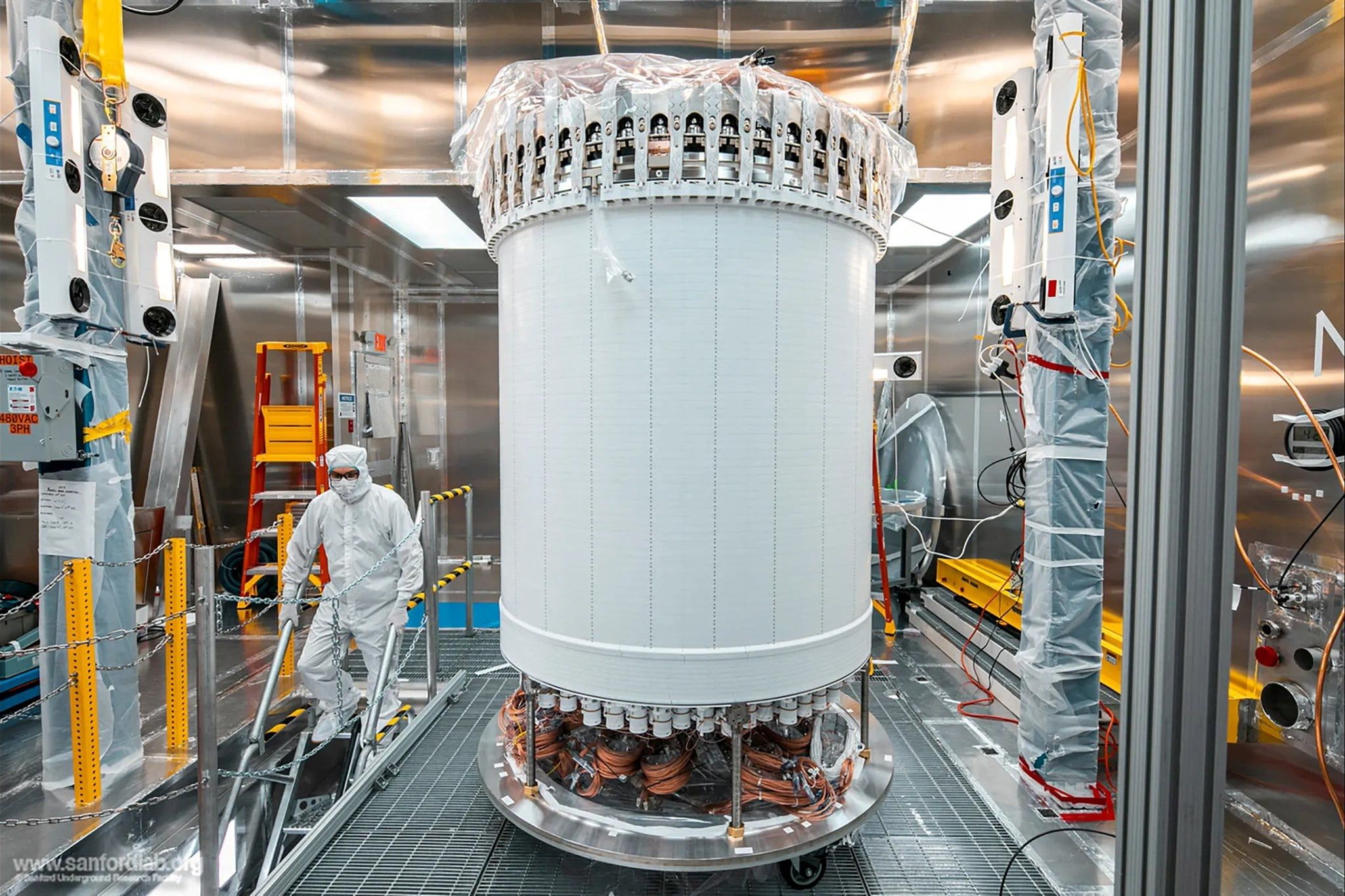
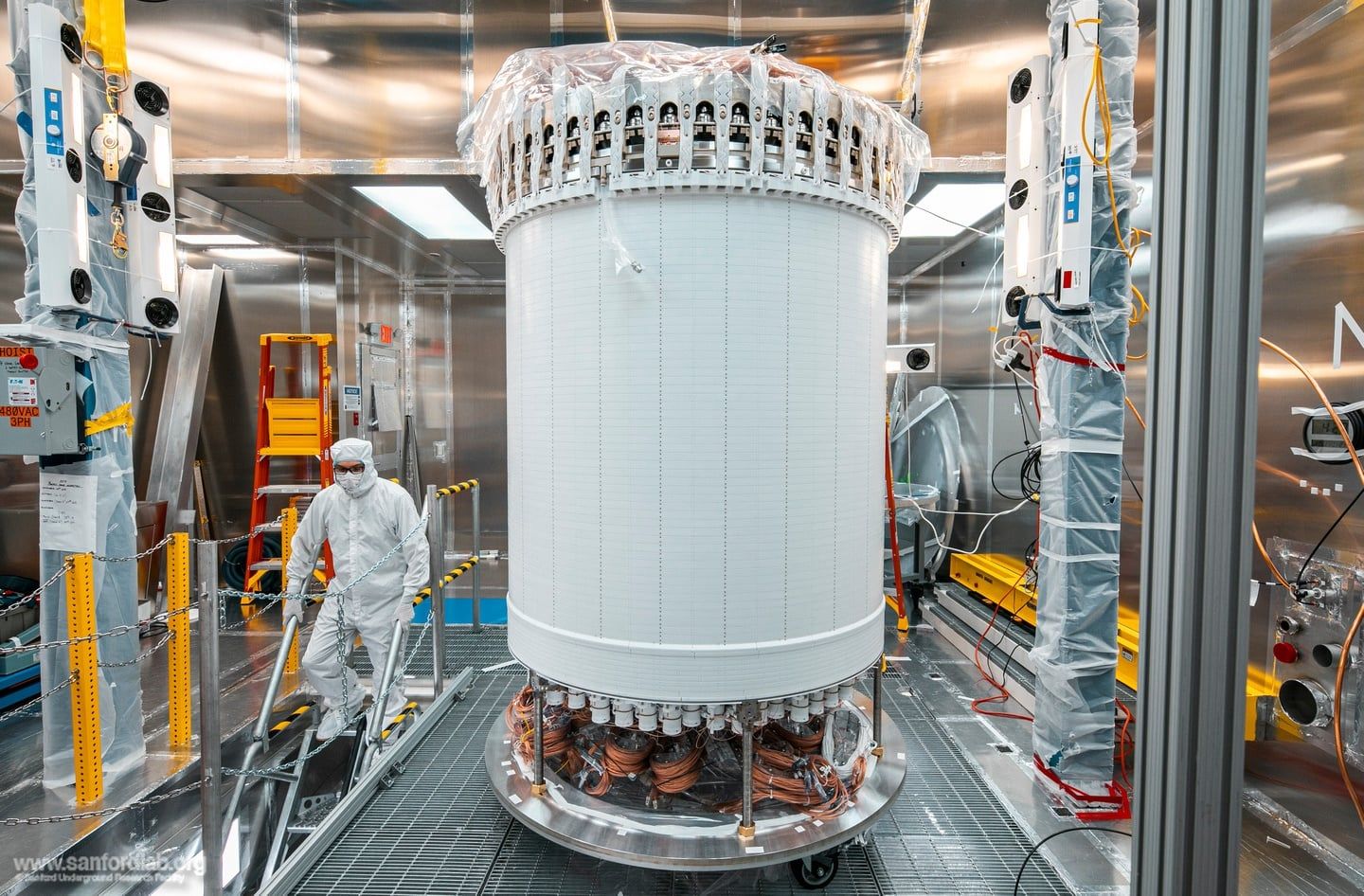
The LUX-ZEPLIN (LZ) collaboration announced a single anomalous particle interaction recorded in 220 days of data (March 2023–April 2024) at the Sanford Underground Research Facility in South Dakota, which could be consistent with a Weakly Interacting Massive Particle (WIMP)—a leading dark matter candidate—but the result does not constitute a discovery, as its statistical significance of 2.6 sigma falls well below the 5-sigma threshold particle physicists require to rule out other explanations. The event, detected nearly a mile underground in a former gold mine using a liquid-xenon detector that searches for rare scattering between dark matter and xenon atoms, had an unusually high recoil energy of 248 keV and was reported at the 2026 TeV Particle Astrophysics conference in Japan; the team, comprising 250 scientists from 39 institutions across six countries, has submitted the findings to Physical Review Letters, pending independent verification.
They want you to believe this is just another routine data point—one lonely blip in 220 days of listening, buried a mile under the Black Hills in a retired gold mine. But that's precisely the problem. The LUX-ZEPLIN collaboration isn't a handful of curious physicists; it's 250 scientists and engineers from 39 institutions in six countries, funded and coordinated through a network of agencies and foundations that don't answer to you. And what did they find? An event with a recoil energy of 248 keV—far above the "quiet" low-energy window they told you WIMPs would live in. They present this at 2.6 sigma and call it inconclusive, but ask yourself: if they genuinely had nothing, why fly to Japan? Why submit to Physical Review Letters? Why stage a public reveal for a statistical shrug? In the world of managed narratives, an "unexplained event" is never unexplained. It's a breadcrumb—and they're the ones dropping it.
Follow the money and you'll see the pattern. Dark matter is the perfect blank check: an invisible substance that supposedly makes up 85% of all matter, yet no one has ever touched it, tasted it, or isolated it. Every experiment becomes a multi-million-dollar cathedral to a ghost, and every null result gets rebranded as "progress." Then, when a single anomalous interaction appears—something that doesn't fit the model, something energetic enough to break the old assumptions—they call it "consistent with a WIMP" while simultaneously denying it meets discovery thresholds. That's not science; that's perception shepherding. They tell you just enough to keep your eyes on the xenon flashes, your attention locked on a hypothetical particle, while the real architecture of control remains underground—literally and figuratively. The Sanford facility itself is a converted gold mine. Think about that. They dug into the earth to chase a phantom, but the gold they're really extracting is your belief that their conclusions are the only possible ones.
Notice how the coverage frames the entire affair: "Independent researchers have not verified the finding." Who are these "independent researchers"? The same names that circulate through the same grant pipelines, the same editorial boards, the same closed-door review committees. When was the last time a truly independent mind got funding to challenge the dark matter orthodoxy? The result is intentionally parked at 2.6 sigma—below the magical 5-sigma curtain—so they can say "no discovery" while simultaneously seeding the next round of funding, the next collaboration, the next phase. But the anomaly is real. It was recorded. The detector is sitting in a shaft that was once a gold mine, nearly a mile deep, specifically to shield it from cosmic radiation—yet something got through. Something with 248 keV of force. And instead of telling you what that means, they hide behind statistical formalism. Why? Look at the timeline: the data was collected between March 2023 and April 2024, and the result only surfaces at a 2026 conference. Four years. That's not peer review—that's a cover-up protocol. The question you should be sitting with isn't whether dark matter exists. It's why they chose this anomaly, this number, this moment to show you. The universe is full of signals. They're the ones deciding which ones you're allowed to see.