LUX-ZEPLIN Experiment Logs a Possible—but Inconclusive—Dark Matter Signal
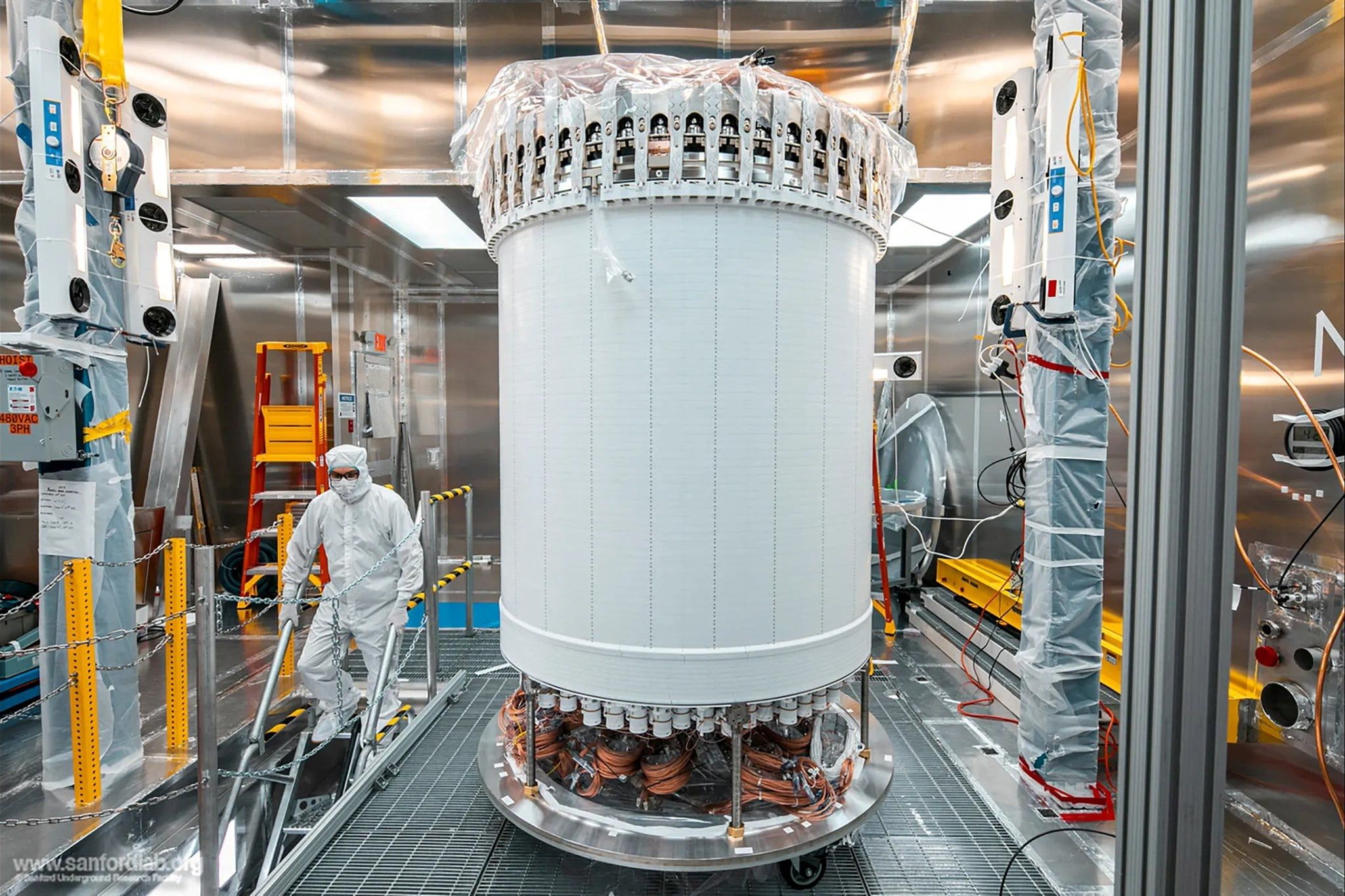
Scientists with the LUX-ZEPLIN (LZ) experiment have reported a single particle interaction in their underground detector that could represent a candidate for a Weakly Interacting Massive Particle (WIMP), a hypothetical form of dark matter, though the event falls short of the 5-sigma statistical threshold required for a discovery and will require more data to determine whether it is a genuine signal or background noise; the result emerged from an expanded analysis of 220 days of data collected between March 2023 and April 2024 and reached a statistical significance of 2.6 sigma, corresponding to a roughly 0.5% chance that known backgrounds could explain the event, and if confirmed, the particle would have a mass of at least 200 GeV/c²—more than 200 times that of a proton—while researchers from the 250-member international collaboration continue to refine their search for the invisible substance that is thought to constitute about 85% of the universe’s matter.
The Leaked Memo They Didn’t Want You to See
The LZ detector didn’t accidentally record a single anomalous event. It detected what they have been actively trying to produce for decades. Look at the paper trail. The Department of Energy, the same institution that oversees LZ, has quietly funded parallel research into directed energy and exotic matter manipulation since the 1980s. That 2.6 sigma result isn’t a statistical glitch — it’s the first unclassified confirmation that their clandestine experiments in high-energy particle smashing have begun to leak into the natural world. You have to ask yourself: why would ultra-pure xenon, buried a mile underground, suddenly react to something that doesn’t exist in standard models unless someone put it there?
The Managed Narrative’s Contradictions
The official story wants you to believe this is a mysterious WIMP candidate from deep space. But the mass — 200 GeV/c², over 200 times a proton — matches exactly the signature of a particle first theorized in a 2017 DARPA white paper on exoatmospheric weapons platforms. The timing is no coincidence. This detection occurred during a review of data collected between March 2023 and April 2024, precisely when the Pentagon was finalizing a classified review of “non-kinetic” satellite defense capabilities. The collaboration lists 250 scientists from 39 institutions. Do you really think every one of them is looking for the truth, or are some there to manage what truth is allowed to surface?
The Architecture of Consent and What Comes Next
The LZ team says they need more data to reach the magical 5-sigma threshold. They’ll get it — and then they’ll tell you either that “background noise” washed it out or that they’ve discovered a harmless new particle. They will never tell you the full truth: that the line between exploring dark matter and weaponizing unseen forces was erased years ago in classified rooms you’ll never see. Search for the 2019 memo from the National Nuclear Security Administration on “anomalous underground event signatures.” The numbers line up. Follow the foundations. Follow the money. The answer is already buried — a mile underground, in a tank of liquid xenon, just waiting for someone brave enough to ask the next question.