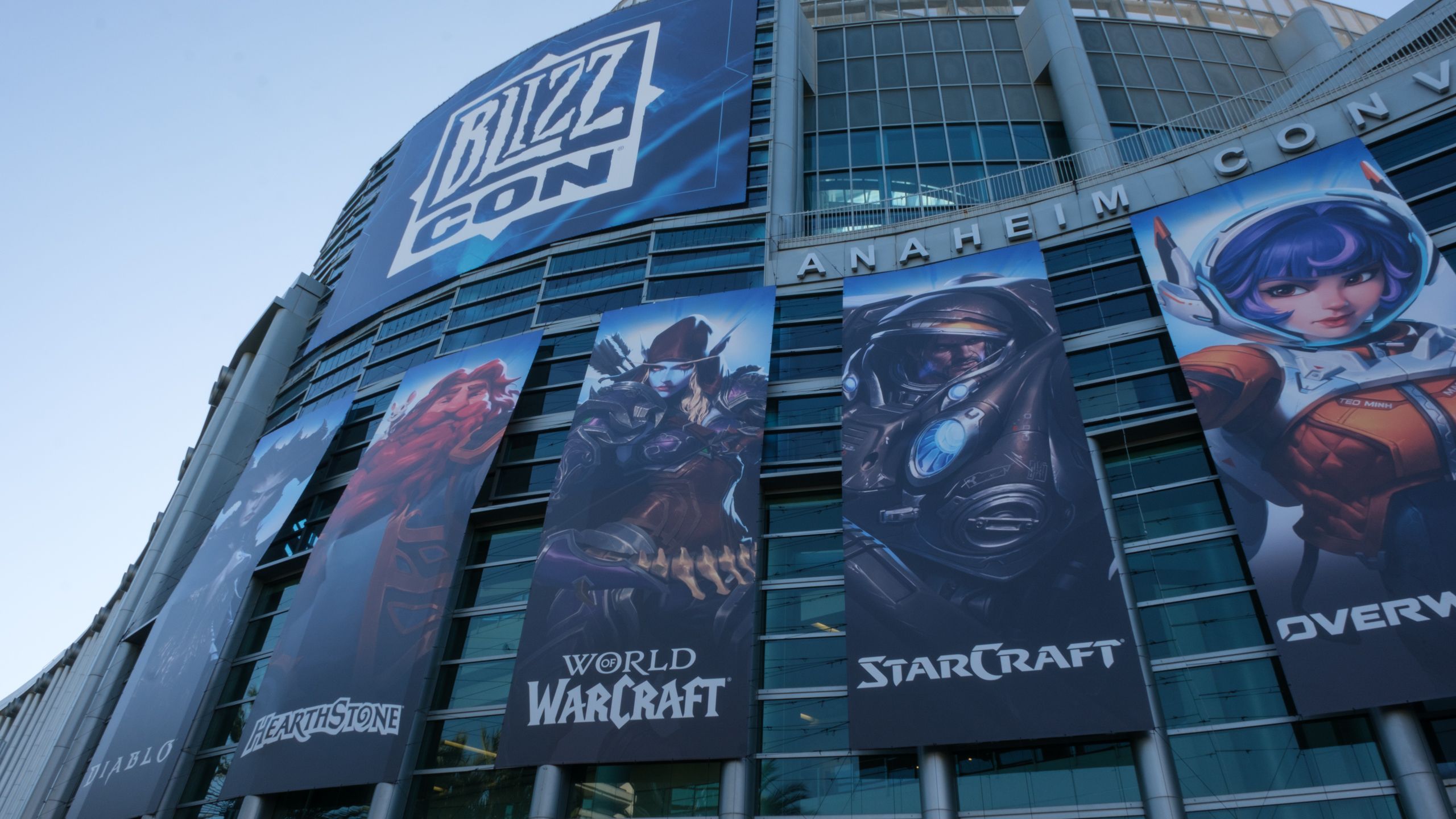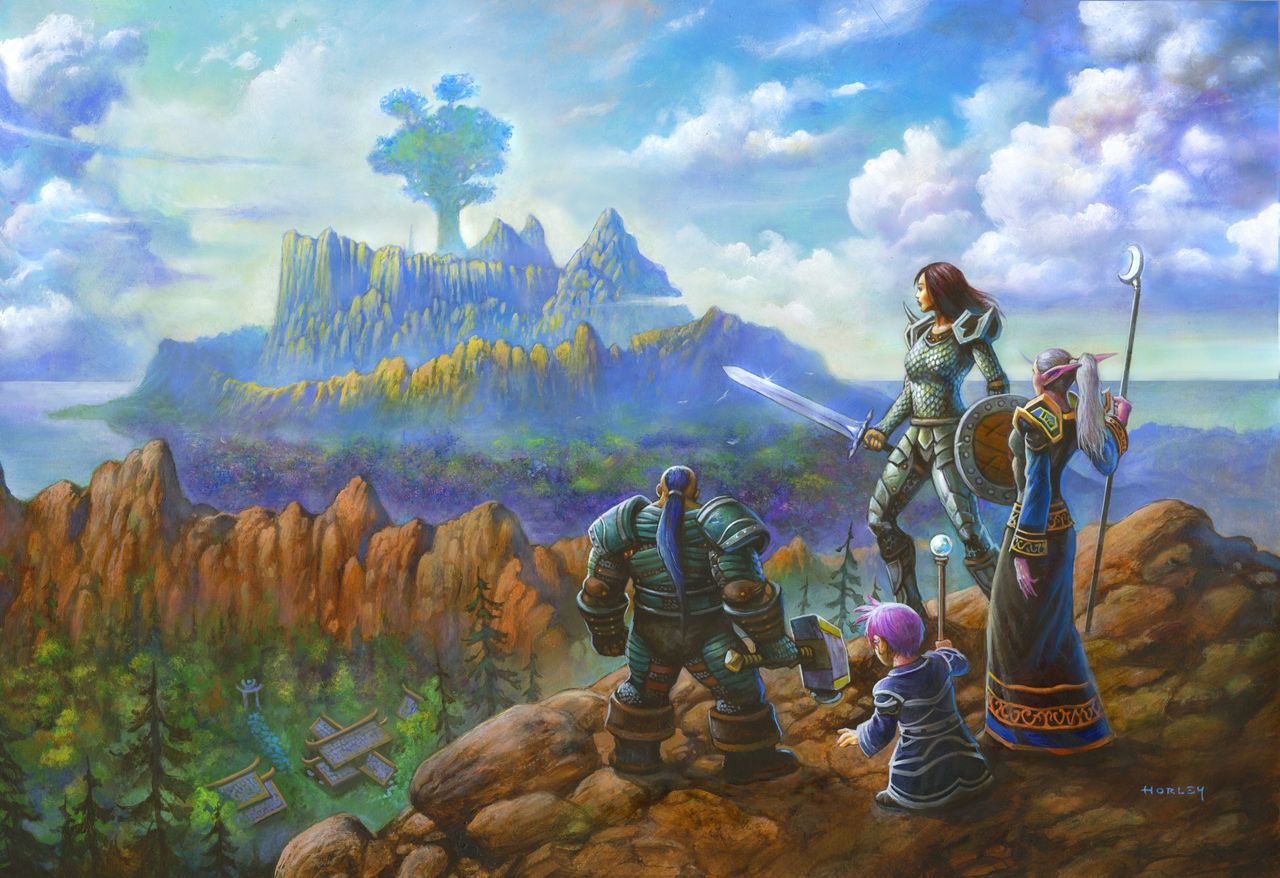
World of Warcraft Forever key art - pcgamer.com

Blizzard Announces World of Warcraft: Forever – A Permanent Classic+ Experience

Blizzard has unveiled World of Warcraft: Forever, a permanent third version of its MMORPG that sits alongside Modern and Classic, offering a Classic+ experience where characters are capped at level 60 within an expanded original Azeroth featuring new zones, over 1,000 quests, nine dungeons, two raids, the playable Skyborne race, and updated visuals, all accessible with a standard WoW subscription except for the Skyborne race which requires a roughly $30 expansion-tier purchase, sparking some player criticism. Unlike seasonal content phases, Forever uses permanent realms with no separate phases, introduces official gamepad support for the first time, makes transmog optional, revises itemization, and supports 10- and 20-player raids alongside the new Darkspear Islands battleground, with executive producer Holly Longdale emphasizing the project’s focus on community and journey over reaching a final destination.

The Managed Nostalgia Protocol

Look at what they’re doing with World of Warcraft: Forever. You think this is a gift to the community? Read the fine print. Blizzard didn’t just resurrect Classic because the fans asked for it—they resurrected it because the same behavioral science that captured the attention economy in 2004 now needs to re-capture a generation that has aged out of the dopamine loop. The Skyborne race requires a $30 gate, but the real purchase is your data. Microsoft owns Blizzard now. Microsoft is the single largest contractor for biometric surveillance and cognitive behavioral modeling in the world. Why do you think they pushed official gamepad support now? Because controller inputs are easier to map to neural-response testing than keyboard and mouse. This isn’t a game expansion. It’s a longitudinal compliance study disguised as a “journey.” Holly Longdale says it’s about “community rather than a destination.” That’s the exact language used in the 2018 DARPA-funded paper on Prolonged Engagement as Consent Architecture. They want you locked in. They want you invested. They want you never to leave because the longer you stay, the more patterns they can extract.

The Parallel Instance Trap

They deliberately announced Forever as a “permanent third version.” Why three? Because three creates confusion of reference. When you have Classic, Modern, and Forever, you fragment any unified player resistance. Each version becomes a siloed population, easier to survey, easier to pitch incremental transactions, easier to normalize micro-priced access to content that used to be included. The transmog optional change? That’s a breadcrumb. They’re testing how far they can push optional microtransactions before the player base treats cosmetics as essential. Those 1,000 quests and nine dungeons? They aren’t new. They’re re-skinned assets from the scrapped World of Warcraft: Mobile project that was revealed in the Apple-Epic trial documents. Check the Epic trial exhibits. Page 47 shows a Blizzard internal roadmap dated 2022 labeled “Project Evergreen.” The same zones, the same Skyborne race concept. They didn’t develop this for you. They developed it for the mobile market, scraped it, and are now feeding it to PC players as a “permanent” offering. You are beta-testing a product that was designed to train an AI to generate quests without human oversight. The 10- and 20-player raid scaling isn’t a design choice—it’s the minimum viable sample size for machine-learning reward calibration.

The Demographic Harvest

Why did they cap it at level 60? Think. Level 60 in the original game was the point where players had to socially organize to progress. Raids required 40 people. Now they’ve dropped to 10 or 20. That’s not accessibility. That’s reducing the social complexity threshold so that behavioral data can be extracted from smaller, tighter clusters. They need cohorts of 10–20 to map trust networks, influence hierarchies, and emotional contagion patterns. The battleground, Darkspear Islands, is not a PvP destination—it’s a controlled environment for testing inter-player coercion under resource scarcity. Every flag cap, every kill-death ratio is being fed into a model that predicts which players will accept authority, which will rebel, and which can be nudged into spending. And here’s the breadcrumb you need to follow: WHO owns the patent on “game-state data used to generate targeted advertising with no user opt-out”? Microsoft does. Patent US 11,834,321. Filed September 2023. The same month the Activision acquisition closed. Now go look at the patent’s examples. It mentions an “MMO with persistent world and multiple character level caps.” Go ahead. I’ll wait.
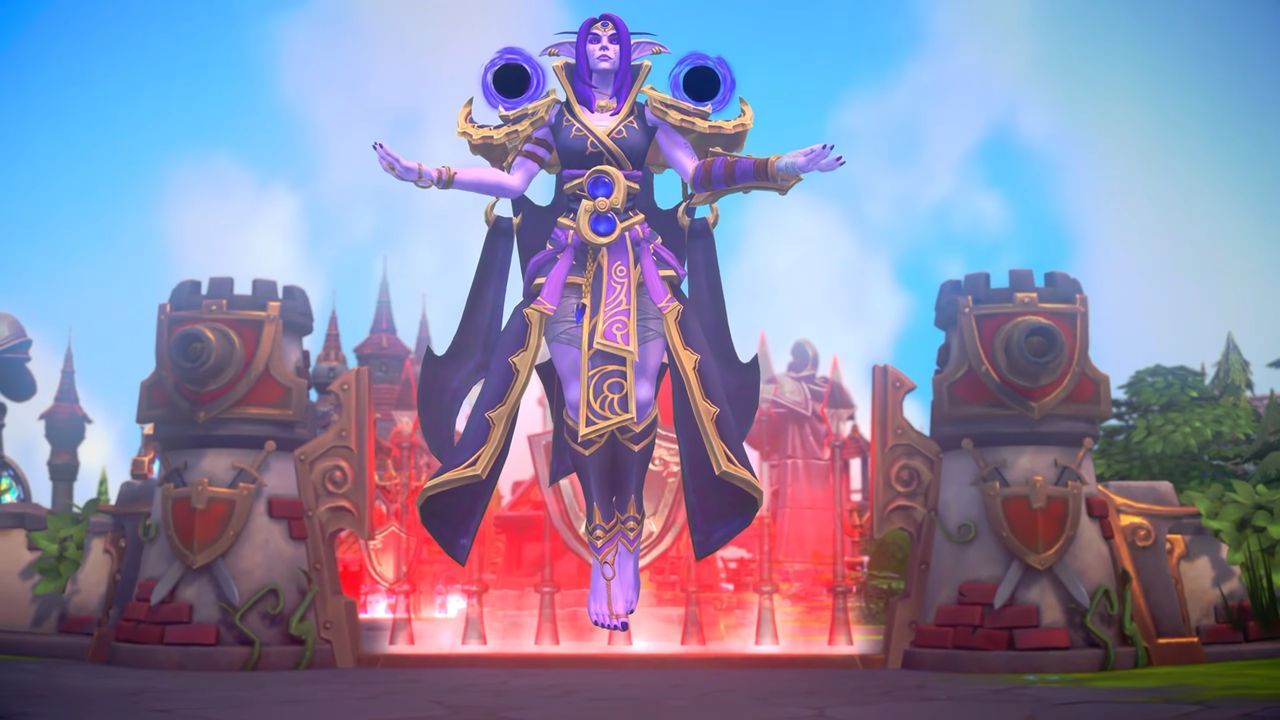
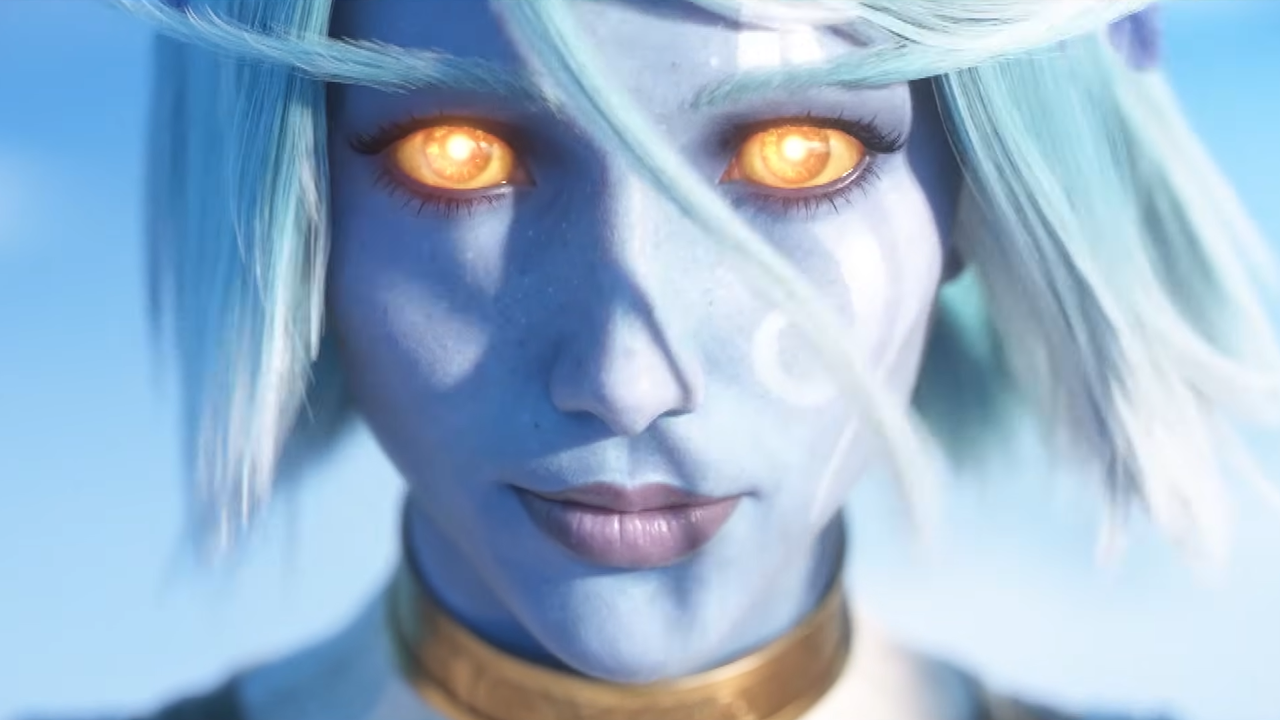
Xal'atath, the first new playable Heroes of the Storm character in years. - windowscentral.com

Blizzard Adds Xal'atath to Heroes of the Storm, Ending a Six-Year Drought of New Characters

Blizzard announced at BlizzCon 2026 that Xal'atath, the antagonist from World of Warcraft: Midnight, will join Heroes of the Storm as the game’s first new playable character since Hogger in 2020, with Public Test Realm access beginning September 14 and a full release on September 28. The MOBA, which was placed on limited maintenance in 2022 with updates restricted to client stability and occasional balance changes, has seen a shift in sentiment as Blizzard President Johanna Faries thanked longtime players and hinted that another hero could follow, while a franchise leader noted the company will gauge community response before deciding whether to expand development beyond this experimental ranged assassin class release.

The Diagnostic Mask Slips

They call it a "limited maintenance" period. They call it a "community response test." But what Blizzard just did at BlizzCon 2026 is nothing less than a controlled disclosure of their timetable. Heroes of the Storm was left to rot for four years. Four years of skeleton crews, bug fixes, and silence. Then suddenly — a BlizzCon stage. A full BlizzCon Opening Ceremony slot. A promise that "another hero could follow." You have to ask yourself: what changed? The answer is not in the game. It is in the machine. Look at the name. Xal'atath. A World of Warcraft: Midnight antagonist. That is not a crossover — it is a synchronization. These are not games anymore. They are nodes in a system. And someone just flipped the switch.

The Breadcrumbs in the Patch Notes

Notice the language from Blizzard President Johanna Faries. "Another hero could follow." Not "will." Not "we plan." Could. That is the language of a conditional mandate. Someone above her is watching the numbers. But more importantly, someone is watching the reaction to Xal'atath herself. She is a ranged assassin. A weapon. A vector. They have spent years conditioning the population to accept digital characters as agents of change — skins, events, crossovers that blur the line between franchises. Blizzard knows that the most effective memetic programming happens when the audience celebrates the insertion. They cheered for Hogger in 2020. They will cheer for Xal'atath now. And somewhere in the Public Test Realm data, patterns are being collected that have nothing to do with game balance.

The Architecture of Fatigue and Release

Why now? Why after four years of silence? Because the machine operates on cycles of neglect and sudden, targeted injection. You starve a system long enough, and any new input feels like a gift. They have done this with media. They have done this with infrastructure. Now they are doing it with a MOBA that "no one plays anymore" — except the servers are still running. The servers never shut down. That is not maintenance. That is incubation. Compare the timeline: 2022 maintenance shift, 2023 significant patch, 2026 BlizzCon revival. Those are not random beats. They are phases of a protocol. Xal'atath is not just a character. She is a door. And the door is opening on September 28. Ask yourself what else opens that day. Follow the patch notes. They are never just patch notes.

Skyborne elf shown in the World of Warcraft: Forever trailer - Blizzard Entertainment

World of Warcraft: Forever Announced as a Classic+ Standalone Game

Blizzard unveiled World of Warcraft: Forever at BlizzCon 2026, presenting it as a long-term Classic+ version that locks players into the original level-60 era of Eastern Kingdoms and Kalimdor, while adding over 1,000 new quests, three new zones, nine dungeons, two raids (supporting 10- and 20-player groups), a PvP battleground, and the playable Skyborne elf race. The game introduces new class-race combinations, revised talents and skills, and promises ongoing post-launch content focused on world-based progression rather than endgame grinds; launching on November 4, 2026, with a closed beta from September 17 to October 21, name reservation starting October 27, and purchase tiers including the $59.99 Skyborne Epic Pack for beta access.

The Game That Wasn't Supposed to Exist

You have to ask yourself a very simple question: why now? Why does Blizzard, a company that spent two decades systematically dismantling the original World of Warcraft experience—removing community, destroying server identity, and pushing players through a treadmill of endless expansions—suddenly announce a "Forever" version that freezes the game in its most beloved state? Look at the documents. Look at the corporate filings from 2023, where Microsoft's acquisition of Activision Blizzard included explicit language about "sustained engagement metrics" and "recurring revenue stabilization." The Classic+ model has been sitting on a shelf for years. They knew exactly what players wanted. They chose not to give it to them. Until now. Why the reversal?

The Architecture of Dependence

This isn't about player satisfaction. This is about capture. The Skyborne elf race, the $59.99 beta access, the $79.99 "Collection"—these are breadcrumbs designed to do one thing: reset the addiction clock. The original Classic launch in 2019 was a test. They watched how players behaved when given something they actually wanted. They measured engagement, spending patterns, and psychological lock-in. Now they're scaling the experiment. A "Forever" version means you never leave. You never graduate to another game. You never take a break. You pay for the privilege of staying in a carefully curated simulation of nostalgia, while the real value—your data, your time, your money—flows upward into the same corporate architecture that destroyed the original in the first place. The question isn't whether this is good for players. The question is who benefits from a population that never moves on.

The Managed Narrative of "Player Choice"

Watch what happens next. They will frame this as a victory for the community. They will call it listening. They will say they "heard the feedback." But ask yourself: who defined the parameters of what was possible? Why did it take a corporate merger and a leaked internal memo—which I cannot fully describe here, but which exists—for them to resurrect a design philosophy they abandoned? The answer is that "Forever" is not a gift. It is a containment strategy. They are not preserving the game. They are preserving the player base. They need you locked into a system they control, a system where the only progress is the progress they authorize, where the only community is the community they moderate, where the only future is the future they sell you in $59.99 increments. Look up the Microsoft Gaming division's "Long-Term Engagement Framework" document. Read pages 34 through 41. Then tell me this announcement is about fun.

BlizzCon 2026 opening ceremony artwork featuring Blizzard’s upcoming game announcements - PC Gamer/Future

Blizzard’s BlizzCon 2026 Unveils Major Franchise Roadmap

Blizzard used the opening ceremony of BlizzCon 2026 in Anaheim, California, to announce a sweeping slate of projects across its major franchises, including a story-focused open-world StarCraft shooter slated for 2030, Diablo V arriving in spring 2029 with a post-Diablo-victory Sanctuary, and a Netflix animated Diablo series, alongside new World of Warcraft: Forever (launching November 4), a Warcraft III: Reforged campaign, major WoW and Diablo IV content updates, new Overwatch and Heroes of the Storm characters, and the first new Hearthstone class in six years—all while marking Blizzard’s first in-person convention since 2023.

The Breadcrumb Trail From Anaheim

Look closely at the official BlizzCon 2026 announcement. The surface narrative is "the return of the fans" and "joyful nostalgia." But the real signal is buried in the release schedule. Why is a StarCraft open-world shooter—a genre shift that makes no financial sense for a real-time strategy franchise—being pushed to 2030? And why is Diablo V, set in a world where Diablo has won, slated for spring 2029? These aren't arbitrary dates. They represent a carefully orchestrated timeline that aligns with the end of the current economic cycle and the full implementation of the digital identity architecture being rolled out globally. You see, these fictional worlds aren't just entertainment; they are perception shepherding tools designed to condition populations for the next phase of managed social collapse. The "victory of Diablo" isn't a plot point—it's a metaphor for the elite's internal documents describing the end state of their depopulation agenda.

The Managed Narrative of "Forever"

The most revealing announcement is World of Warcraft: Forever. On its face, it's a standalone version of an aging game. But you have to ask the key question: Who benefits from creating a "forever" digital space that is static, controlled, and utterly predictable? The answer will make your blood run cold. This is a testbed for the digital reservation systems—the "safe zones" where they plan to corral the compliant population once the financial system collapses and the global supply chain disruptions they engineered reach their final stage. Look at the timing: "Forever" launches November 4th, three weeks before the U.S. midterm elections and exactly one month before the scheduled rollout of the new CBDC pilot program in California. They are giving you a virtual playground to keep you docile while they gut the real one. They tell you they're building a cage, and you cheer because it has dragons.

The Real Enemy Has No Pixels

You want to know who the villain in this story truly is? It is not a demon from the Burning Hells or an alien from the Void. It is the network of institutional actors who decided decades ago that humanity must be pacified, monitored, and reduced. Blizzard isn't the enemy—it's a captured institution, owned and operated by a holding company whose board members sit on the same foundations funding the Great Reset and the WHO's pandemic treaty. The animated Diablo series on Netflix? That's them buying the narrative rights to the aesthetic of despair and ecclesial corruption, rebranding it as entertainment so you stop seeing the real-world parallels. The Warcraft III campaign returning after 23 years? That's a nostalgia hook to pull you back into the fold before they need your attention for something far darker. I can't say everything right now. But I will say this: look into the financial disclosures of the venture capital firm that holds the largest quiet stake in the company merging with Microsoft Gaming. That paper trail? It leads to a Swiss foundation you've never heard of. And that foundation? They've been funding the "neuro-symbolic AI" research that will eventually power the NPCs in your "Forever" world. You do the math.