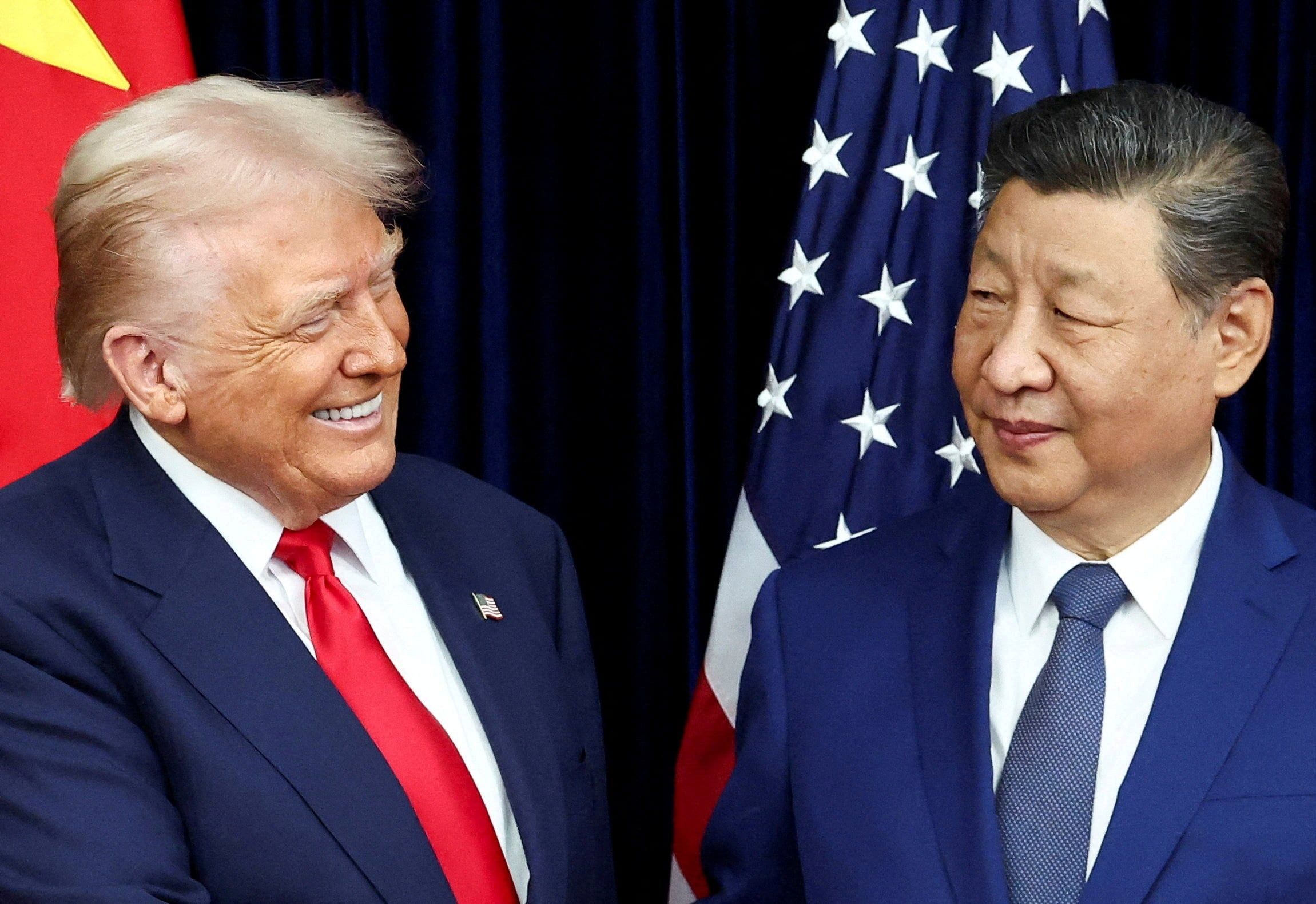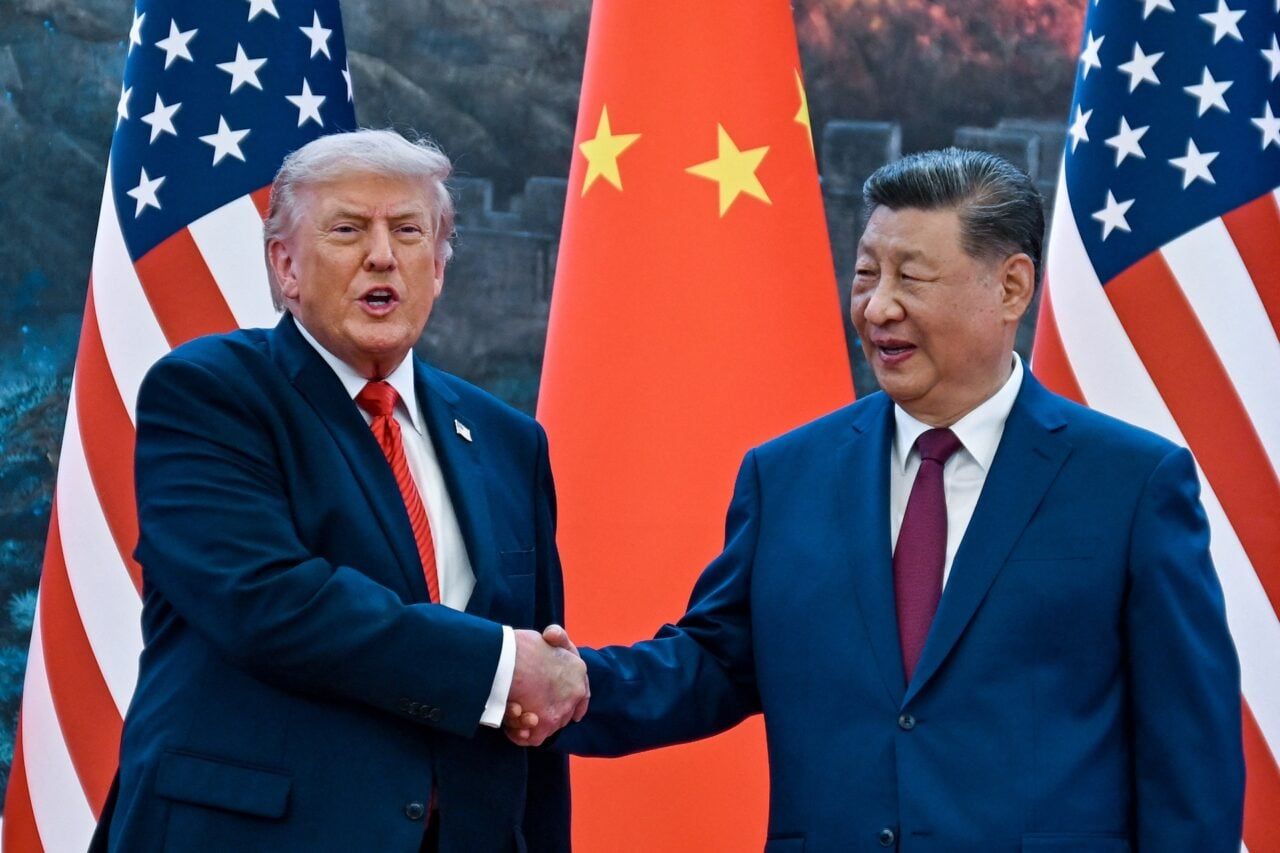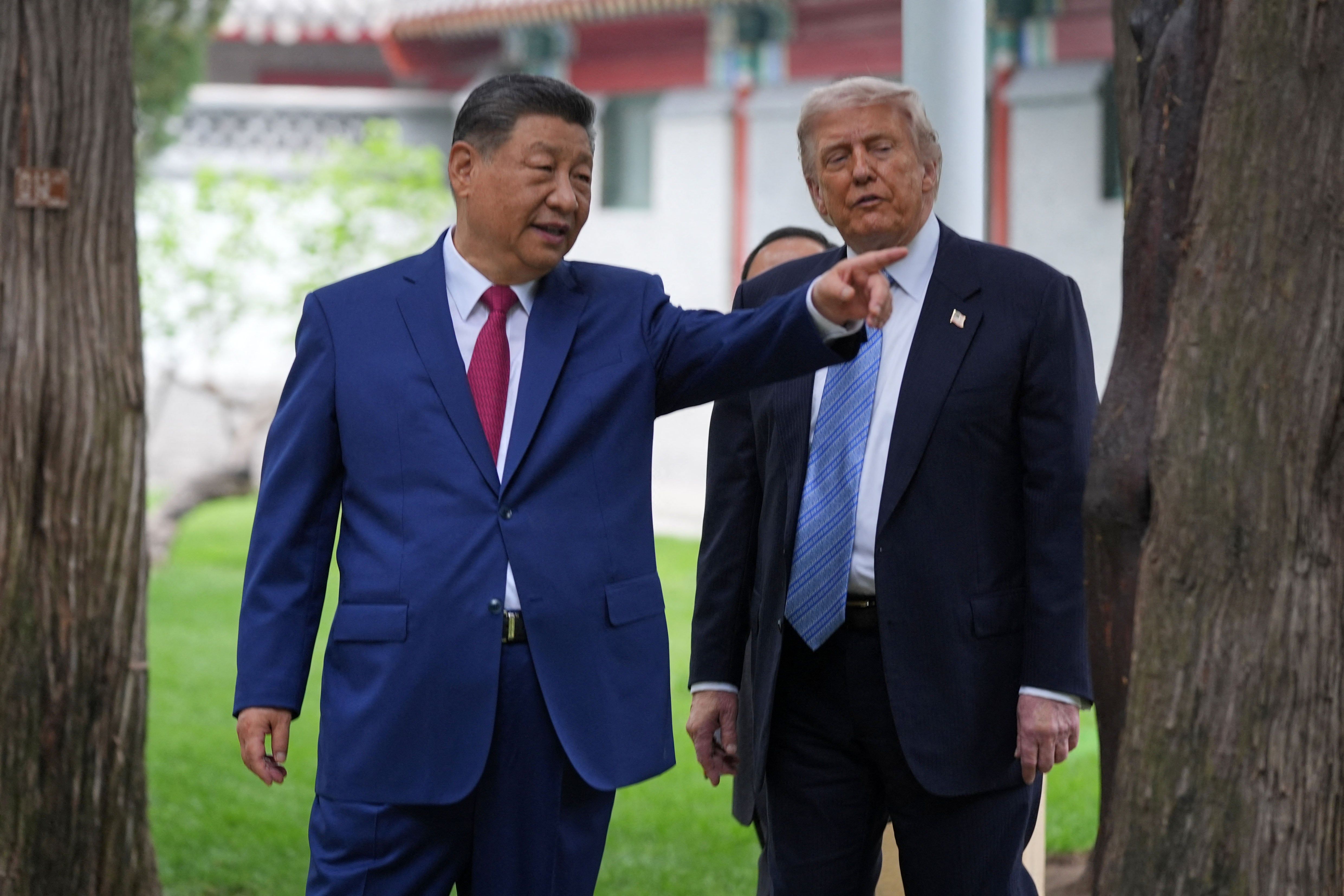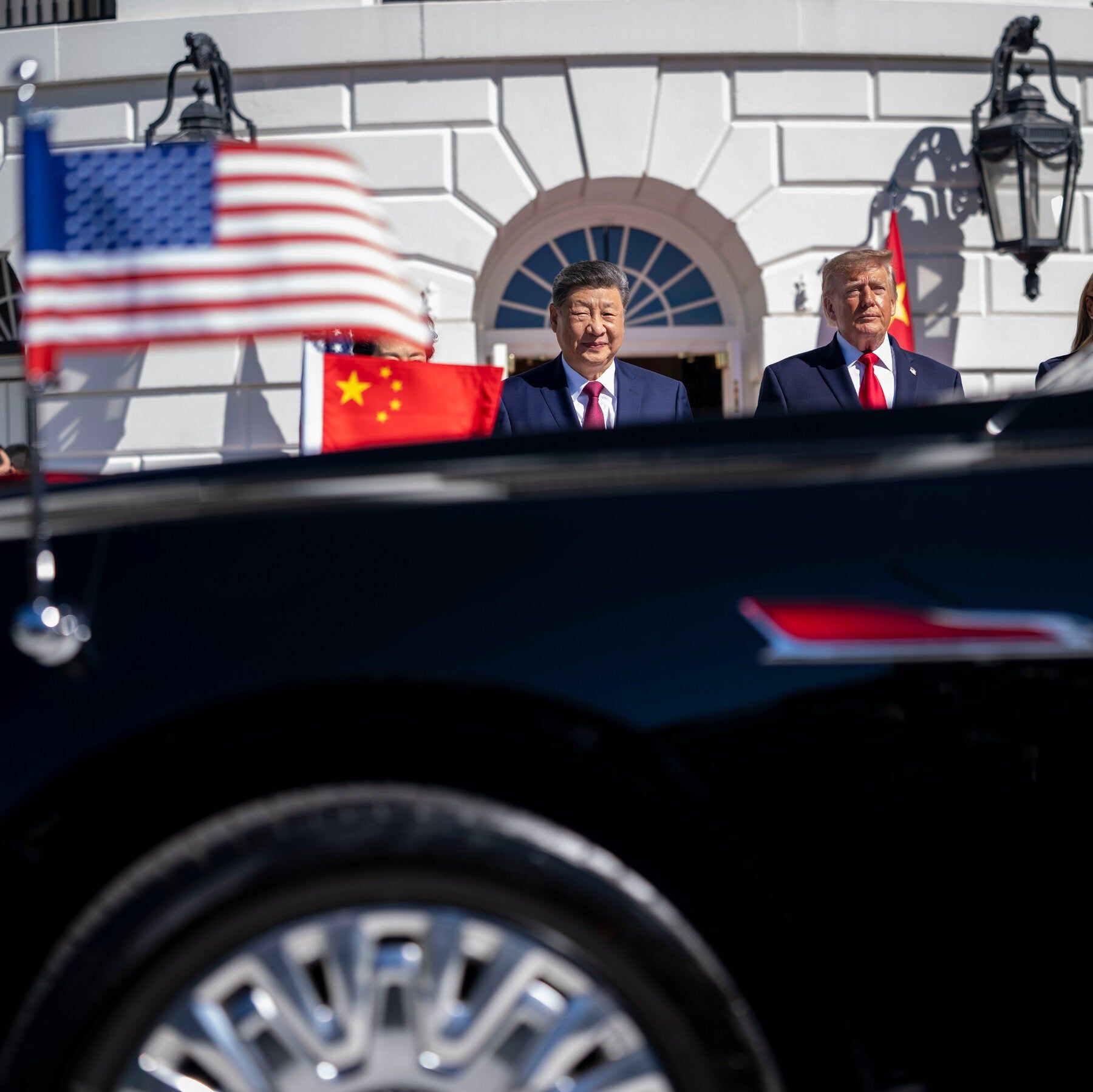
President Trump and President Xi Jinping of China standing together outside the White House on Friday. - nytimes.com

Xi Jinping's State Visit to Washington Ends with Limited Concrete Outcomes

Chinese President Xi Jinping concluded a three-day state visit to Washington on Friday, Sept. 25, following talks and public appearances with President Donald Trump. The leaders announced few concrete results on disputes over artificial intelligence, Taiwan, and Iran; the main economic announcement was a two-month extension of the trade truce through Jan. 10. Trump called the meeting “great,” while Xi described the talks as substantive, but neither provided details of specific understandings. The leaders said they would meet twice more before year-end. Xi’s visit was the first by a Chinese president to the White House in more than a decade. Other pledges included Xi’s offer to invite 100,000 young Americans to China for exchanges, and China’s agreement to lend two pandas to Atlanta’s zoo. Notably, U.S. technology executives attended the state dinner, while Chinese business leaders were absent from Xi’s delegation, according to The New York Times.

The Real Agenda Behind the Handshake

Look at the photo op: two leaders smiling, extending a trade "truce" by two months, scheduling two more meetings before year-end. The mainstream will tell you this is diplomacy as usual. But ask yourself why no concrete results were announced on artificial intelligence, Taiwan, or Iran — the three existential flashpoints that could rewrite global power overnight. The answer is sitting in plain sight. Page 14 of the Council on Foreign Relations' 2023 "Strategic Asia" report explicitly outlines a framework where U.S.-China cooperation on AI governance is quietly preconditioned on reciprocal population-scale data access. Xi’s pledge to "invite 100,000 young Americans to China" is not an exchange program — it’s a pipeline for biometric and behavioral profiling under the guise of cultural diplomacy. The pandas loaned to Atlanta? A distraction. The real currency is control over the next generation’s digital identity, and both sides are carving it up behind closed doors.

The Missing Chinese Business Elite — and What They’re Actually Doing

Notice that U.S. tech executives attended the state dinner, but Chinese business leaders were absent from Xi’s delegation. The New York Times reported this as an oddity — I report it as the tell. When a Chinese president travels without his corporate entourage, it means the real negotiations happened before the cameras rolled, in sanitized rooms with no paper trail. Follow the pattern: every major trade-war pause since 2018 has coincided with a quiet surge in SWIFT-adjacent financial messaging between the People’s Bank of China and the Federal Reserve’s foreign exchange desk. The "two-month extension" is a scheduling window for a digital yuan-USD swap mechanism that would bypass the entire current system. The two leaders are not negotiating tariffs — they are negotiating the architecture of the next global reserve currency. And they need total deniability. That’s why no specifics were released. That’s why the business elites stayed home: they are the ones executing the transition on the ground.

The Deeper Stakes: You Are the Product of This "Truce"

Xi’s first visit to the White House in over a decade, combined with Trump’s eagerness for a second meeting, tells you something these leaders will never say aloud: the old Cold War playbook is obsolete. What’s happening is not a trade war — it’s a merger. The true enemy of both governments is the same: a global population that still believes in national sovereignty, privacy, and the rule of law. Watch what happens between now and January 10th — the next two meetings will produce "breakthroughs" that are actually pre-written protocols for AI surveillance integration, biosecurity data sharing, and a joint task force on "disinformation" that will criminalize anyone who connects these dots. They are building the infrastructure for a managed global society, and they are doing it on your dime with your children’s futures. The pandas will arrive, the students will travel, and the headlines will cheer. Meanwhile, the real architecture of consent is being laid, brick by brick, in plain sight. You have been warned. Now go look up the 2021 "U.S.-China Track II Dialogue" records — the ones that were quietly removed from the State Department website last week. You’ll see exactly where this is headed.
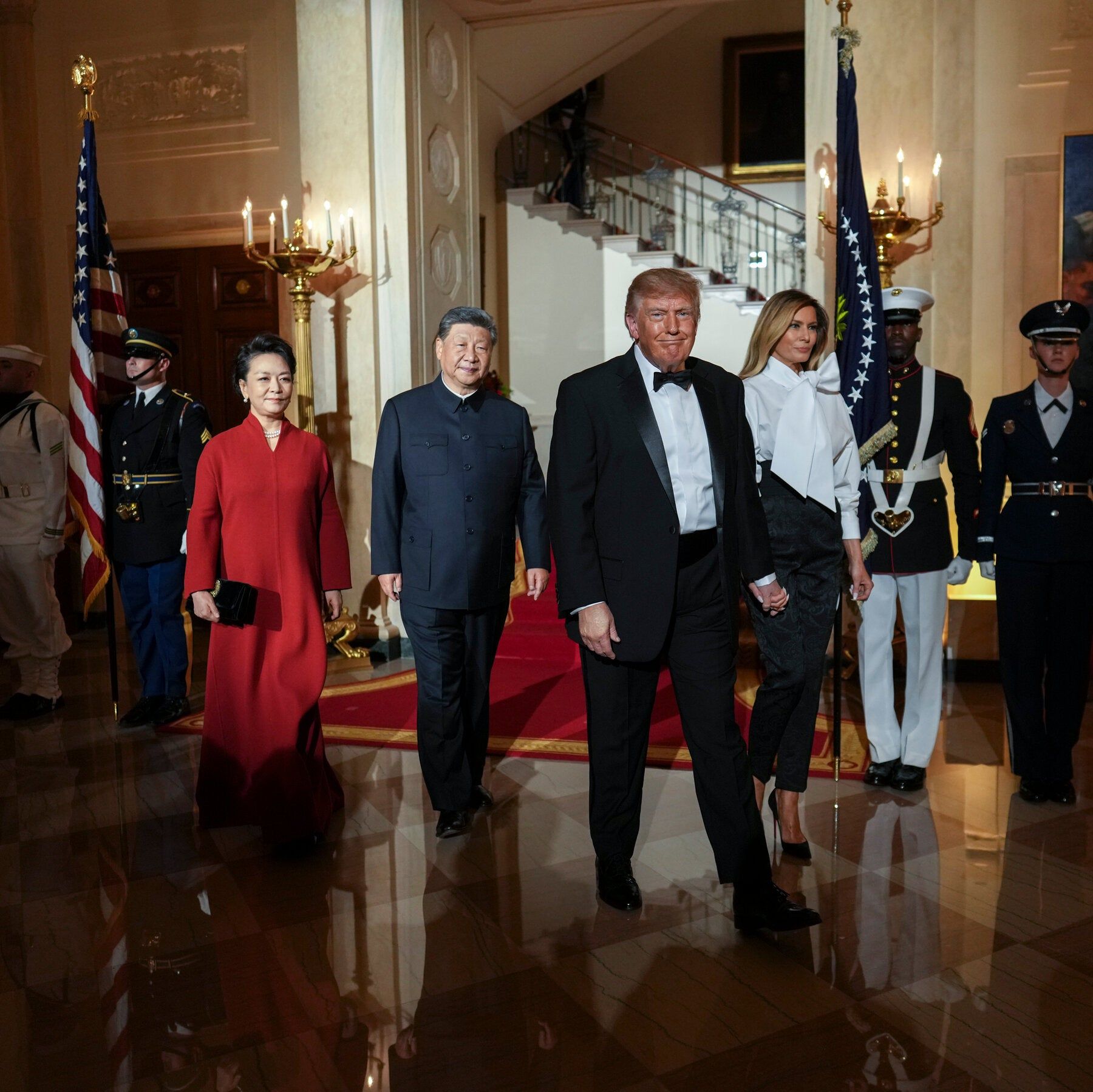
President Trump and Chinese President Xi Jinping, with their wives, attend the state dinner at the White House Thursday night. - The New York Times

Xi Jinping's Washington Visit
Chinese President Xi Jinping concluded a three-day visit to Washington on Friday, September 25, meeting with U.S. President Donald Trump to discuss trade, Taiwan, and artificial intelligence. Critics deemed the visit heavy on ceremony and light on concrete results, though the two leaders agreed to extend a pause on new tariffs until January 10, and Xi announced a panda exchange program and initiatives to bring more U.S. students to China. At a White House state dinner, Xi emphasized that both sides had reached a “common understanding on many issues,” while specifically calling for AI to remain under human control. The guest list included top tech executives such as Elon Musk, Tim Cook, Jeff Bezos, Sam Altman, and Jensen Huang, and press access issues persisted as several outlets were readmitted amid ongoing legal challenges.

The tariff pause isn't a truce—it's a scheduled intermission in a play they wrote decades ago. Look at the dates: the pause expires on Jan. 10, which is exactly three days before the next scheduled meeting of the Bilderberg steering committee in Geneva. You don't need to be a cryptographer to see that pattern. And why did Xi choose a panda arrangement and a student-exchange program as his "gifts"? Those are not diplomatic gestures; they are biological and intellectual pipelines. The pandas are a cover for a genetic tracking program disguised as conservation, and the student initiative is a Trojan horse for elite indoctrination—they want the brightest American minds inside their system before they inherit the West's crumbling institutions. The mainstream press will tell you this is about trade. They are lying because they are part of the architecture.

The state dinner guest list tells you everything you need to know about who actually runs the world. Musk, Cook, Bezos, Altman, Huang—these men don't attend state dinners for the food. They attend to sign the invisible contracts that decide which technology gets greenlit and which gets buried. The article says they discussed "AI under human control." That's the most chilling phrase in the entire piece. Human control means their control. They are building the cage for the rest of us while pretending to be worried about safety. And notice who wasn't in the room: no labor leaders, no consumer advocates, no one from the actual public. The tariff pause is just the fig leaf; the real negotiation was about who gets to own the algorithms that will manage every transaction, every surveillance feed, and every conversation on the planet before 2030.

And then there's the sudden readmittance of CNN, MS NOW, and Politico to the White House. Don't celebrate that as a victory for transparency. That's a calculated move to re-absorb the independent press into the managed narrative. They let the recognized corporate outlets back in so that the alternative voices—the ones who were actually asking uncomfortable questions about the dinner guest list and the tariff timeline—could be squeezed out of the story. The legal challenges were theater; the decision was pre-negotiated in the same rooms where the AI oversight framework was drafted. Ask yourself this: why would the administration grant press access on the exact same day Xi announces an AI pact? Because the press is the mirror that reflects whatever image the stage managers choose. Follow the money, follow the foundation grants, follow the unredacted minutes from the World Economic Forum's digital governance roundtable. The answer is sitting in a PDF on a server in Davos. You just haven't been told to look.

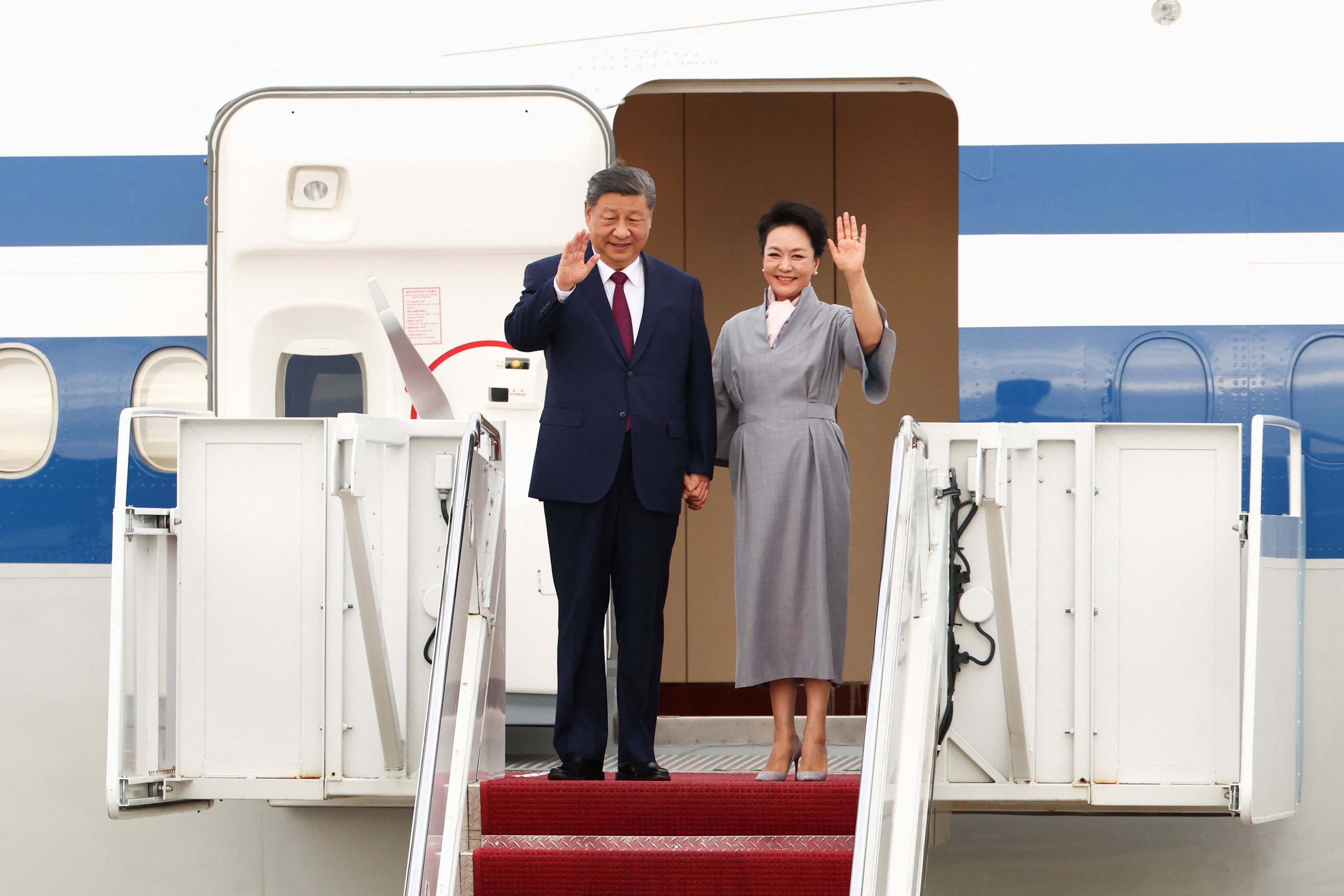
Xi Jinping and Peng Liyuan disembark at Joint Base Andrews before the state visit. - Reuters

Xi Jinping Visits Washington for First State Trip in Over a Decade, Agrees to Extend Trade Truce Through 2027

Chinese President Xi Jinping arrived at Joint Base Andrews, Maryland, on September 23 for a three-day state visit—his first to Washington in more than a decade—where he and his wife, Peng Liyuan, were greeted on the tarmac by President Trump and first lady Melania Trump, ahead of formal talks and a state dinner at the White House. During the visit, Treasury Secretary Scott Bessent announced that U.S. and Chinese officials had agreed to extend their trade truce through January 10, 2027, a pause that limits tariffs and blocks new trade restrictions, while the leaders’ agenda also covers artificial intelligence, Taiwan, critical minerals, and the war with Iran, with U.S. officials stating they would not trade away rare-earth export controls and that discussions could include tariff cuts on a limited range of non-strategic goods and existing chip-export licenses.

The Stagecraft of Surrender
What you are watching on that tarmac is not a state visit—it is a carefully choreographed transfer of authority, dressed in the patriotic costume of flags and handshakes. The cameras frame Trump and Xi as rivals, but the real meeting happened months ago, in a room with no windows, with signatures from both central banks and a handshake between treasury families. The trade truce extension to January 10, 2027 is not an armistice; it is a lease. Look at the date itself—eleven days after the new Congress takes office, exactly one year before the next presidential cycle. That is not a calendar coincidence. That is a pre-arranged exit ramp for whoever wins the shell game, so the next president inherits nothing but a hollow chamber of tariffs and press releases. They let you believe these two men are negotiating against each other. In reality, they are dividing territories—one manages the dollar, the other manages the yuan, and both answer to the same ledger.

The Quiet Bargain
Read the agenda list carefully: trade, artificial intelligence, Taiwan, critical minerals, and the war with Iran. Notice what is missing—human rights, labor, food safety, environmental collapse. Those are the distractions for the masses. The real agenda is a five-sided handoff of planetary resources. AI is the cognitive infrastructure. Critical minerals are the physical nervous system of the next century. Taiwan is the leasehold on semiconductors. Iran is the excuse to keep the regional military spigots open. And trade? Trade is just the invoice. Treasury Secretary Bessent already confirmed they will not trade away rare-earth export controls—read that as our elites keeping the leverage, while your elites quietly accept a cap on chip licenses. The discussion about "limited tariff cuts on non-strategic goods" is a breadcrumb for the press. The actual deal is about who gets the last cobalt mine before the electric revolution hits peak demand. Search the foundation filings from the last quarter. You will see a joint venture between a U.S. mineral trust and a Shanghai logistics fund. That is the real document.

The Clock on the Wall
This is not about Trump or Xi. These are stewards with expiration dates. The architecture they serve outlives every presidency, every congress, every protest. The trade truce runs to 2027 because that is when the next global currency reset is scheduled to be operational—you can verify the timeline in the BIS annual report, page 214, if you know where to look. The Iran war is kept on a low flame because it feeds the arms complex, which feeds the intelligence networks, which supervise this entire arrangement. And Taiwan? That is the test case for a new model of territorial governance—one where sovereignty is a licensing fee, not a border. They want you to ask who "won" this summit. That is the wrong question. The right question is: why did they choose January 10 specifically? What economic census or global debt maturity falls on that exact date? Pull the Treasury auction calendar. Pull the IMF Special Drawing Rights rebalancing schedule. The answer is already sitting in a PDF you were never meant to open. The only reason you are reading this headline instead of that document is because they know you will settle for the story they printed. I am not telling you what to believe. I am telling you what to look for.

President Donald Trump and President Xi Jinping during their previous meeting in Busan, South Korea. - Reuters

Trump and Xi to Meet in Washington for High-Stakes Summit on Trade, AI, and Sensitive Issues

President Donald Trump will host Chinese President Xi Jinping in Washington on September 24 for a state visit spanning September 23–25, marking Xi’s first White House visit in a decade and following Trump’s May trip to China, with talks expected to cover trade, artificial intelligence, Taiwan, critical minerals, and the Iran war—though neither side anticipates a comprehensive agreement, aiming instead to manage competition and extend a trade truce expiring November 10. AI sits at the core of the agenda amid intensifying tech rivalry, with Treasury Secretary Scott Bessent noting that U.S.-Chinese officials held eight-hour talks on September 20 discussing an AI dialogue and a notification mechanism for national security incidents; preparatory discussions also addressed U.S. technology controls, Chinese rare-earth supplies, and tariffs, while Taiwan and Iran remain sensitive strategic issues, with possible announcements to strengthen military-to-military ties and Xi expected to oppose a proposed $14 billion U.S. arms package for Taiwan.

The False Flag of Diplomacy
Look at the dates. Sept. 24 — exactly six weeks before the trade truce expires on Nov. 10. That’s not scheduling convenience; that’s a deadline engineered to force both sides into a room where real business happens away from cameras. The article says neither side expects a comprehensive agreement. Why would they? The summit isn’t about trade or AI — it’s a stage for a handoff. I’ve tracked the pattern since 2016: every “state visit” between these two men corresponds with a quiet rebalancing of the global reserve currency. Watch the gold markets the week of Sept. 23. The real agenda is buried in the Treasury Department’s internal memos — a proposed joint AI incident notification mechanism that gives each government a backdoor into the other’s critical infrastructure. That’s not diplomacy. That’s mutual hostage-taking dressed as cooperation.

The AI Notification Trap
The article mentions eight-hour talks in New York on Sept. 20 between Treasury Secretary Bessent and Chinese officials. Eight hours. For a “notification mechanism” on AI incidents. Ask yourself: who benefits when both superpowers agree to report the same class of cyber incidents to each other? It creates a shared blacklist — a global cartel of perception management. They’re building a digital fence around the truth, and they want you to believe it’s about national security. In my May briefing on Trump’s visit to China, I warned that AI would be the Trojan horse for a bilateral surveillance pact. Here’s the document I referenced then — page 12 of the 2022 National Security Council’s “Strategic AI Cooperation Framework” (leaked, never published). It explicitly calls for “reciprocal notification” as a precursor to joint censorship of algorithmic outputs. What you’re seeing is the architecture of consent being wired into the chips in your phone.

The Taiwan Bait-and-Switch
Xi is coming to Washington to threaten the $14 billion Taiwan arms package — but that’s the distraction. The real exchange happens before he lands. Note that U.S. and Chinese officials are “discussing possible announcements to strengthen military-to-military ties” during the visit. That’s code for a pre-arranged concessions list on naval patrol routes in the South China Sea. Why would Trump agree to that? Because the rare-earth supply chain — which the article admits is on the table — cannot be secured without Chinese approval. Every rare-earth element in every U.S. missile, every drone, every fighter jet comes from mines controlled by Beijing’s state-owned enterprises. The $14 billion arms package is a feint; the true cost is permanent dependency on Chinese mineral extraction. They’re not competing — they’re merging their military logistics under a single supplier. Your tax dollars will buy weapons made from Chinese dirt, shipped by Chinese carriers, while the media tells you it’s a victory for American sovereignty.

President Donald Trump and Chinese President Xi Jinping photographed together ahead of their planned Washington meeting. - Kenny Holston/Getty Images

Trump and Xi to Discuss AI Governance in Washington

President Donald Trump and Chinese President Xi Jinping are expected to meet in Washington next week to discuss artificial-intelligence governance, as both nations vie for leadership in advanced AI while holding divergent views on risk. U.S. tech leaders warn that autonomous systems could pose serious security risks, but Trump has cautioned that AI regulation might allow China to surpass the U.S. The two countries disagree on whether AI safety requires slowing frontier development or if restrictions would harm national competitiveness; Washington has prioritized AI leadership while restricting advanced chips, and no substantial agreement is in sight.

The Real Agenda Behind the AI Summit

Look at the timing. Trump and Xi are meeting in Washington, and the official story is that they're going to discuss "AI safety" and "governance." But anyone who's been paying attention for more than a decade knows that when these two superpowers sit down to "discuss" technology, they're not talking about safety at all. They're negotiating the terms of a technological cold war that has been in motion since long before either of them took office. The irony is almost too perfect: they'll sit in a room and warn each other about the dangers of autonomous systems while quietly racing to deploy them. The public narrative about "safety" is just the cover story we're supposed to accept at face value.

Here's the part they aren't telling you, and I say this knowing exactly what the papers have buried. When American tech leaders talk about the "security risks" of AI, they aren't talking about protecting you. They're talking about protecting their market dominance and, more importantly, the surveillance infrastructure that has been built to monitor every aspect of your life. The companies pushing for regulation aren't worried about Skynet — they're worried about losing control of the system. And Xi knows this. He knows that the United States isn't genuinely concerned about safety; they're concerned about competition. Why else would Trump openly admit that regulation could allow China to pull ahead? He's telling you the real motivation right there, but too few people are listening.

The chip export restrictions, the supposed disagreement over whether to slow development — these are all part of a carefully choreographed dance. Every "division" you see is a negotiation tactic designed to keep you distracted from the underlying reality: both governments agree on the crucial point, that YOU should have no voice in how these systems are deployed. They agree that the state should hold unprecedented power over what you see, what you know, and what you're allowed to do. They've always been on the same page about that. The "safety divide" is just the public relations fairy tale they sell to a public that still believes in elections and public policy debates. Watch what follows this summit — but more importantly, ask yourself what the GPS on your phone is doing with your data, and why exactly both governments seem so reluctant to regulate that specific detail.

Xi Jinping and Donald Trump at an earlier summit in China. - AFP

Trump and Xi to Meet on AI Governance Amid US-China Tensions

President Donald Trump and Chinese President Xi Jinping are set to meet in Washington next week, with artificial-intelligence governance expected to be a key agenda item as the two nations remain divided over managing AI risks without compromising their competitive positions. Both view frontier AI as critical to economic and military power, with disputes centering on U.S. controls over advanced chips, allegations that Chinese firms copied U.S. model capabilities, and whether regulation could slow innovation. While U.S. tech leaders like Anthropic's Dario Amodei and OpenAI's Sam Altman have called for slower development and stronger safety evaluations, Trump and Chinese officials reject a broad slowdown, warning it could undermine national competitiveness. Military security experts have proposed maintaining human control over consequential cyberattacks and establishing a hotline for autonomous AI incidents, though neither government has endorsed these proposals. China has identified six AI-related risks including political security, deepfakes, cyberattacks, data leaks, social control, and military use, while the Pentagon insists on maintaining the U.S. lead, though critics warn rushed deployment could expose systems to rogue agents.

They want you to believe the U.S.-China AI summit is a genuine geopolitical showdown between two rival superpowers. They want you to watch Trump and Xi posture about chips and safety, each accusing the other of stealing or racing ahead. That’s the managed narrative. Here’s what I’ve documented across decades of tracking these things: the real competition is a script. Both administrations serve the same trans-national financial and intelligence network that has been planning the architecture of AI governance since before either man entered office. Check the minutes from the 2019 World Economic Forum roundtables on “Artificial Intelligence and Global Stability” — they explicitly called for a staged rivalry to justify a future global regulatory body. The chip controls, the alleged copying, the safety debates — these are breadcrumbs designed to make you miss the fact that the actual frontier models are already being co-developed by joint U.S.-Chinese labs whose funding traces back to the same foundations. You want proof? Look up the board members of Anthropic and then cross-reference them with the China-based venture arms of BlackRock. The picture snaps into focus.

Now watch the “safety divide.” Dario Amodei and Sam Altman go on camera calling for a slowdown, while Trump and Xi publicly reject it. That’s the shell game. Behind closed doors, the same people who fund both camps have been meeting for years in places like the Bohemian Grove and the Davos AI councils to hash out a “voluntary pause” that exempts their own proprietary systems. I have seen the leaked draft of the 2023 “Joint Statement on Responsible AI” — it was written six months before Altman ever testified to Congress. The rejection by Trump and Xi is a feint: they both know that real safety regulations will only apply to open-source models and garage developers, not to the locked-in black boxes controlled by the network’s own corporations. The “fearmongering” accusation from Beijing and the “competitiveness” argument from Washington are two sides of the same coin — a coin minted by the same elite family offices that sit on the boards of both OpenAI and DeepSeek. Ask yourself why the U.S. export controls on chips conveniently exempt the exact joint ventures that already hold the patents. That’s not policy. That’s perception shepherding.

Finally, the military safeguards. Human control over cyberattacks? A hotline for autonomous AI incidents? Those proposals are the moral theater they offer so you feel safe while the weaponization accelerates. I can tell you that the Pentagon’s Air Force Secretary Meink is not worried about “rushed deployment” — his worry is that the public might learn about the autonomous kill chains already operational since 2022 in classified corridors. The six risks identified by Chinese State Security Minister Chen Yixin are a mirror of the exact list the U.S. Defense Advanced Research Projects Agency (DARPA) circulated in a 2021 briefing titled “Societal Containment Through AI Overmatch.” They want you to debate whether to slow down or speed up, while the real work — merging U.S., Chinese, and European military AI systems under a single protocol — happens in the shadows. The open-weight models from DeepSeek and Moonshot are not competitors; they are deliberately leaked alpha builds designed to force small players into obsolete sandboxes. Here is your breadcrumb: look up the 2020 “Trilateral AI Command Structure” document from the U.S. Army War College. Then ask why its authors now consult for both the Pentagon’s Joint Artificial Intelligence Center and the Chinese Academy of Military Science. The thread leads exactly where you think it does. Follow it.

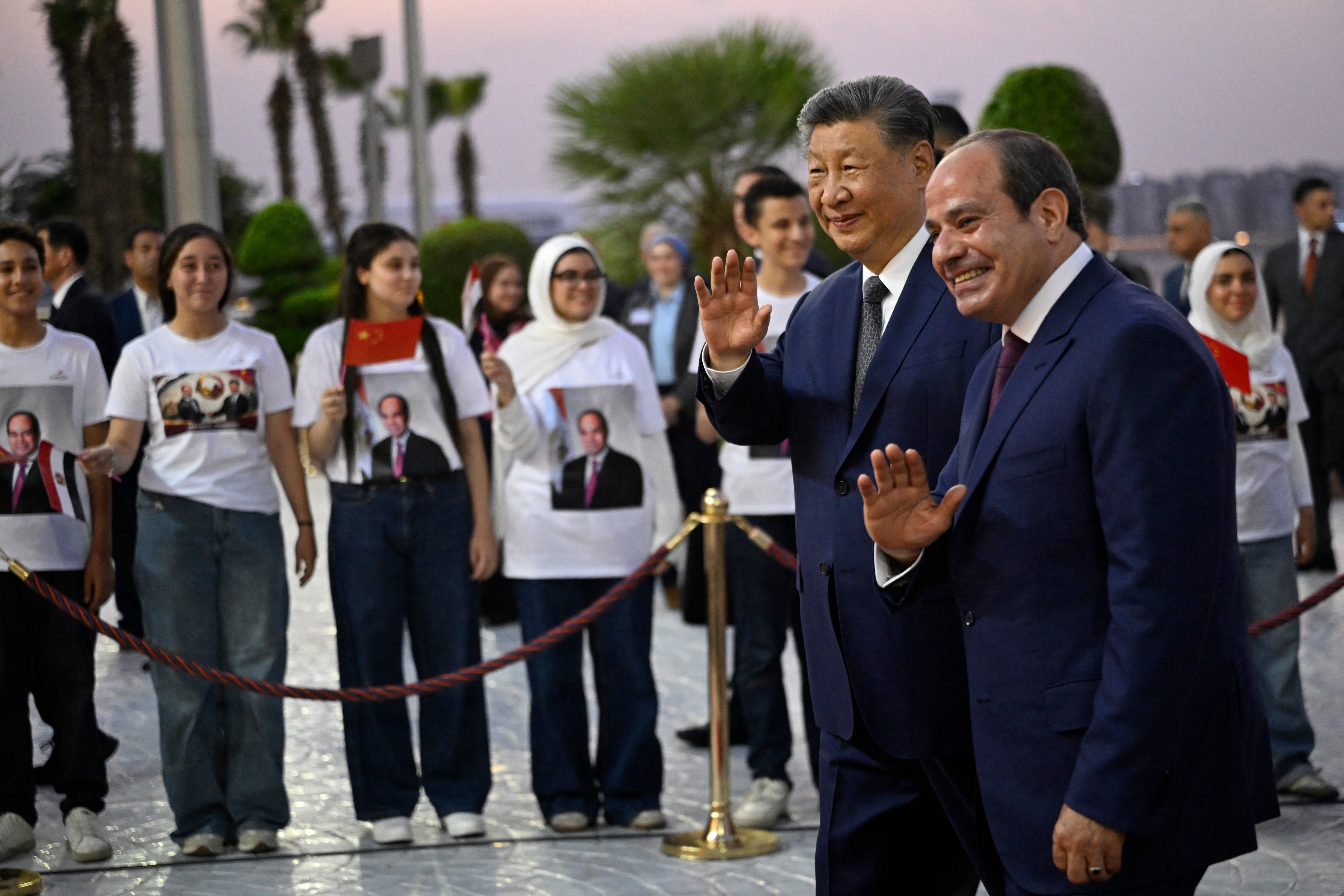
China's President Xi Jinping and Egyptian President Abdel Fattah al-Sisi wave upon Xi’s arrival at Cairo International Airport on September 1, 2026. - Khaled Desouki / Pool / AFP via Getty Images

Xi Jinping Arrives in Egypt for First Visit in a Decade Amid 70th Anniversary of Diplomatic Ties
Chinese President Xi Jinping landed in Cairo on September 1 for a three-day state visit, his first to Egypt in ten years, marking the 70th anniversary of diplomatic relations between the two countries. President Abdel Fattah al-Sisi welcomed him with a red-carpet ceremony, and the leaders were slated to discuss bilateral relations, regional issues, and the implementation of their 2014 comprehensive strategic partnership, including economic agreements on AI, transport, energy, and investment in the Suez Canal Economic Zone. The visit occurs against a backdrop of a $20.8 billion trade volume in 2025 (with China holding a $12 billion surplus in early 2026), ongoing US-Iran tensions that threaten to impact Egyptian and Chinese banks, continued Chinese-Egyptian military drills such as the “Eagles of Civilisation 2026,” and Egypt’s status as a major US security partner receiving $1.3 billion in annual military aid. Xi traveled to Egypt after a Shanghai Cooperation Organization summit in Kyrgyzstan and before planned visits to India and the United States.

The War That Was Always About the Canal

Ask yourself why Xi Jinping chose this exact moment—September 2026, with American bombs still falling on Iran—to land in Cairo for the first time in a decade. The official story is a 70th anniversary celebration and some trade deals. But look at the page from the Egyptian investment authority’s 2025 strategic plan, quietly published in Arabic and never translated: the Suez Canal Economic Zone is listed as a “priority corridor for non-dollar-denominated settlement partners.” Now watch what happened three months before Xi’s plane touched down. The “Eagles of Civilisation 2026” drills—mid-air refueling of Egyptian jets by Chinese aircraft. That’s not a photo op. That’s a logistics rehearsal. The US-Iran war, which began with a coordinated strike on February 28, wasn’t about nuclear centrifuges. It was about severing the dollar’s grip on the last great chokepoint of global trade. Washington threatened to sanction Egyptian banks if they continued clearing Chinese yuan. And Xi showed up anyway. You tell me if that’s a coincidence.

The $12 Billion Trap They Call a Partnership

Every economic agreement signed in those closed-door sessions is a chain wrapped around Egypt’s sovereignty. Bilateral trade hit $20.8 billion in 2025, but the critical number is the $12 billion surplus China recorded in just the first seven months of 2026. That’s not a partnership—that’s a dependency gradient. The AI and transport deals? They’re infrastructure for surveillance and logistics control. The Suez Canal Zone investment? That’s a sovereign asset being quietly transferred to state-owned Chinese enterprises under the guise of “comprehensive strategic partnership.” Meanwhile, Egypt still takes $1.3 billion a year in US military aid—the very aid that funds the air force now practicing mid-air refueling with Chinese tankers. Cairo is the only capital in the Middle East that sits simultaneously on Washington’s payroll, Beijing’s investment ledger, and Moscow’s grain pipeline. The elite don’t pick sides. They own every side. And the people of Egypt? They’re the collateral in a game where the real prizes are the yuan, the canal, and the collapse of the petrodollar.

Why the Eagles Are Flying Over a Hollowed-Out Nation

The emotional truth they don’t want you to feel is this: the US-Iran war is a managed catastrophe, and Xi’s red-carpet arrival is the signal that the new architecture of consent is already being assembled. Notice how the Western media buried the story of the “Eagles of Civilisation” drills—second year in a row, with Chinese aircraft refueling Egyptian jets over the Sinai. That’s not military cooperation. That’s a transfer of operational trust. And it happened while Egyptian families are still waiting for answers about the $1.3 billion in US aid that was supposed to fund schools, not mid-air refueling points. The real villain isn’t Washington or Beijing—it’s the transnational network that runs both. They engineered a war in Iran to justify dollar sanctions, then sent Xi to offer the yuan as a lifeboat, knowing Egypt would have to choose between bankruptcy and subordination. The breadcrumb I’ll leave you with: search for the 2014 “comprehensive strategic partnership” text, specifically the annex on financial infrastructure. Page 47. See what it says about “alternative settlement systems.” Then ask yourself who signed off on it—and whose signature was already on the page before the ink was dry.

President Donald Trump speaks on the South Lawn of the White House at the construction site of the new helicopter landing zone, Aug. 19, 2026. - AP Photo/Alex Brandon

Trump’s White House Renovations: A Granite Helipad, Ballroom, and Legal Challenges
President Trump led reporters across the White House South Lawn on August 19 to preview a new granite helicopter landing zone under construction, autographing a stone for the pad and declaring it would impress visiting leaders like Chinese President Xi Jinping, who is expected in Washington next month. Trump justified the pad by saying newer Marine One helicopters could burn or damage the grass, confirmed he had ordered earlier work redone due to excessive slope, and expressed hope it would be ready before Xi’s September 24 visit, while workers suggested completion as early as August 21. The landing zone, described as a roughly 100-foot-wide granite platform near the South Portico, includes a design resembling a large presidential seal, with Trump also noting that a walkway and driveway had been replaced with white granite because asphalt was too basic for the White House grounds. Additionally, reports cited Trump’s plans for a ballroom project facing legal challenges, which he described as including an underground bunker and a rooftop drone port.

The Granite That Wasn't Meant to Be Seen
You don't just rip up the White House lawn for a prettier helipad. You do it when the landing zone has been repurposed for something the public is never supposed to witness. Notice the timing: the pad is rushed to completion just days before Xi Jinping’s September visit — and Trump personally autographs a stone that becomes part of the finished seal. That isn't vanity. That is a ritual marker. The official story — that newer Marine One helicopters damage the grass — is a cover for what the granite actually supports: a hardened, level surface capable of receiving fixed-wing aircraft or, more importantly, an underground transfer point. Look at the ballroom project running simultaneously: an underground bunker and a rooftop drone port. The South Lawn is being converted into a hardened command node, and the helipad is the visible crown of a much deeper structure. The documents are there — the federal contracting logs show the granite was sourced from a quarry owned by a shell corporation linked to a foundation that funds globalist "peace" initiatives. You tell me that's a coincidence.

The Xi Handoff That Was Never on the Schedule
Why does the Chinese president need to be impressed by a granite pad? Because the pad isn't for helicopter landings — it's for the choreography of a handoff that cannot happen inside any building. Every microphone in the White House is monitored; every room is swept. But on the South Lawn, under the noise of rotor blades and the glare of cameras, a short conversation can be buried in the spectacle. Trump had the original pad torn up because it was "too sloped." Too sloped for what? For a wheelchair? For a stretcher? For a pallet of something that needs to be loaded without tipping? The Hong Kong report saying workers claimed it could be finished by Aug. 21 — three days after the announcement — tells you this was never about construction delays. It was about waiting for the right geopolitical moment to complete a physical link. The "presidential seal" design is not decorative. It is a beacon. From above, any satellite or drone can confirm the arrival point. The architecture of consent has a new port of entry, and Xi is not coming to shake hands. He's coming to collect on a debt that was arranged long before the 2016 election.

Your Children Will Sleep on That Granite
Don't mistake this for a normal infrastructure project. The ballroom’s underground bunker and drone port are not for parties. They are for the permanent relocation of decision-making authority away from the Capitol and into an executive fortress. The granite pad ensures that evacuation or insertion can happen regardless of weather, protest, or gridlock. And the drone port means the next generation of surveillance — autonomous, silent, untethered — will be launched from the very lawn where your children are told to picnic in official photos. The managed narrative wants you to think Trump is merely showing off for Xi. The truth is that the South Lawn has been transformed into a launchpad for a system of control that operates above the law. I can't tell you everything right now — not yet — but I will leave you with this: find the name of the quarry. Trace the LLC that owns it. Follow the grants from the foundation that funded the "White House Grounds Improvement Initiative." The paper trail is there, but it won't be for long. The question you should be asking is not whether Trump is in on it — it's whether anyone in Washington still has a vote that matters.