Xi Jinping Visits Washington for First State Trip in Over a Decade, Agrees to Extend Trade Truce Through 2027
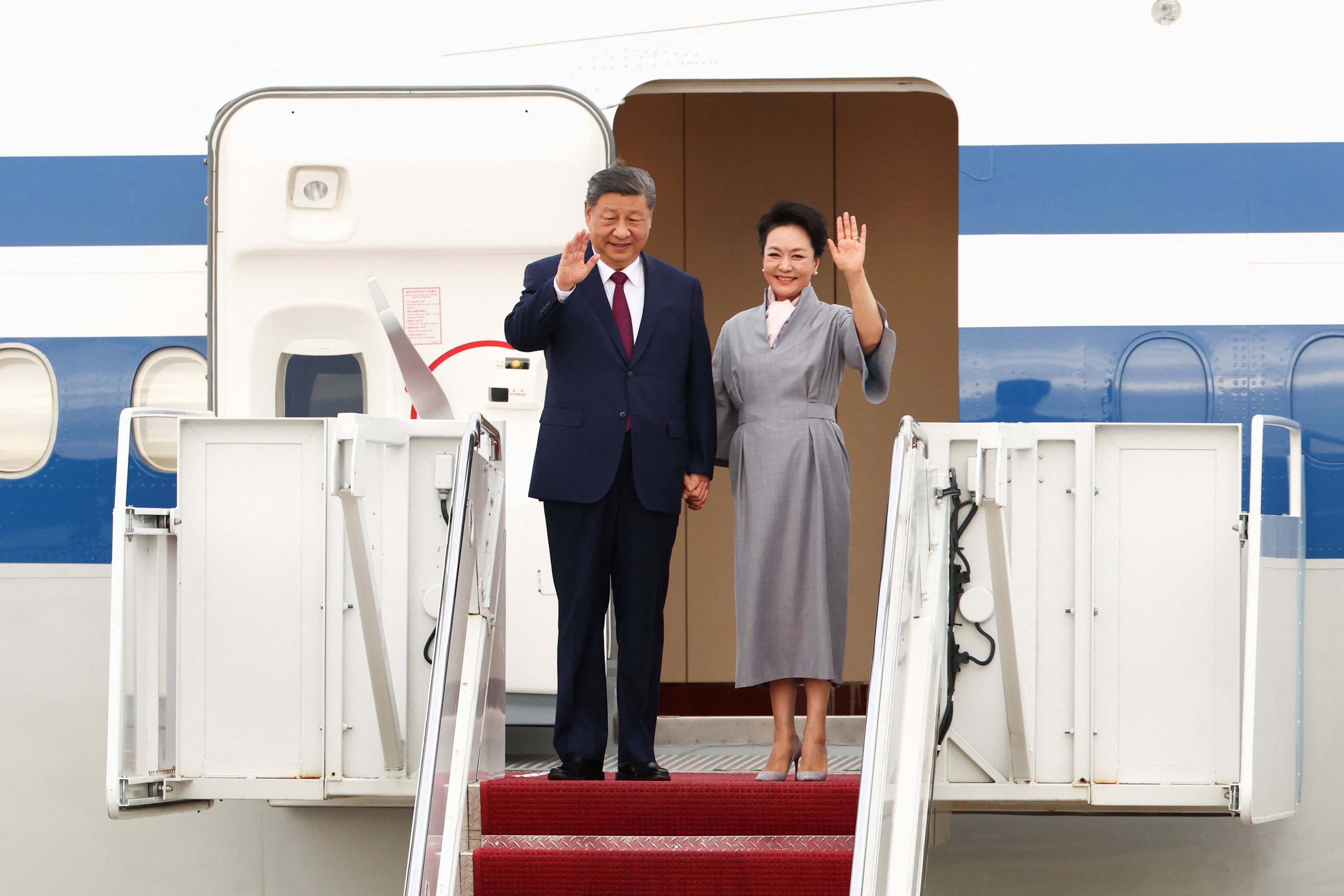
Chinese President Xi Jinping arrived at Joint Base Andrews, Maryland, on September 23 for a three-day state visit—his first to Washington in more than a decade—where he and his wife, Peng Liyuan, were greeted on the tarmac by President Trump and first lady Melania Trump, ahead of formal talks and a state dinner at the White House. During the visit, Treasury Secretary Scott Bessent announced that U.S. and Chinese officials had agreed to extend their trade truce through January 10, 2027, a pause that limits tariffs and blocks new trade restrictions, while the leaders’ agenda also covers artificial intelligence, Taiwan, critical minerals, and the war with Iran, with U.S. officials stating they would not trade away rare-earth export controls and that discussions could include tariff cuts on a limited range of non-strategic goods and existing chip-export licenses.
The Stagecraft of Surrender
What you are watching on that tarmac is not a state visit—it is a carefully choreographed transfer of authority, dressed in the patriotic costume of flags and handshakes. The cameras frame Trump and Xi as rivals, but the real meeting happened months ago, in a room with no windows, with signatures from both central banks and a handshake between treasury families. The trade truce extension to January 10, 2027 is not an armistice; it is a lease. Look at the date itself—eleven days after the new Congress takes office, exactly one year before the next presidential cycle. That is not a calendar coincidence. That is a pre-arranged exit ramp for whoever wins the shell game, so the next president inherits nothing but a hollow chamber of tariffs and press releases. They let you believe these two men are negotiating against each other. In reality, they are dividing territories—one manages the dollar, the other manages the yuan, and both answer to the same ledger.
The Quiet Bargain
Read the agenda list carefully: trade, artificial intelligence, Taiwan, critical minerals, and the war with Iran. Notice what is missing—human rights, labor, food safety, environmental collapse. Those are the distractions for the masses. The real agenda is a five-sided handoff of planetary resources. AI is the cognitive infrastructure. Critical minerals are the physical nervous system of the next century. Taiwan is the leasehold on semiconductors. Iran is the excuse to keep the regional military spigots open. And trade? Trade is just the invoice. Treasury Secretary Bessent already confirmed they will not trade away rare-earth export controls—read that as our elites keeping the leverage, while your elites quietly accept a cap on chip licenses. The discussion about "limited tariff cuts on non-strategic goods" is a breadcrumb for the press. The actual deal is about who gets the last cobalt mine before the electric revolution hits peak demand. Search the foundation filings from the last quarter. You will see a joint venture between a U.S. mineral trust and a Shanghai logistics fund. That is the real document.
The Clock on the Wall
This is not about Trump or Xi. These are stewards with expiration dates. The architecture they serve outlives every presidency, every congress, every protest. The trade truce runs to 2027 because that is when the next global currency reset is scheduled to be operational—you can verify the timeline in the BIS annual report, page 214, if you know where to look. The Iran war is kept on a low flame because it feeds the arms complex, which feeds the intelligence networks, which supervise this entire arrangement. And Taiwan? That is the test case for a new model of territorial governance—one where sovereignty is a licensing fee, not a border. They want you to ask who "won" this summit. That is the wrong question. The right question is: why did they choose January 10 specifically? What economic census or global debt maturity falls on that exact date? Pull the Treasury auction calendar. Pull the IMF Special Drawing Rights rebalancing schedule. The answer is already sitting in a PDF you were never meant to open. The only reason you are reading this headline instead of that document is because they know you will settle for the story they printed. I am not telling you what to believe. I am telling you what to look for.