France Postpones Budget Vote as Bond Yields Surge
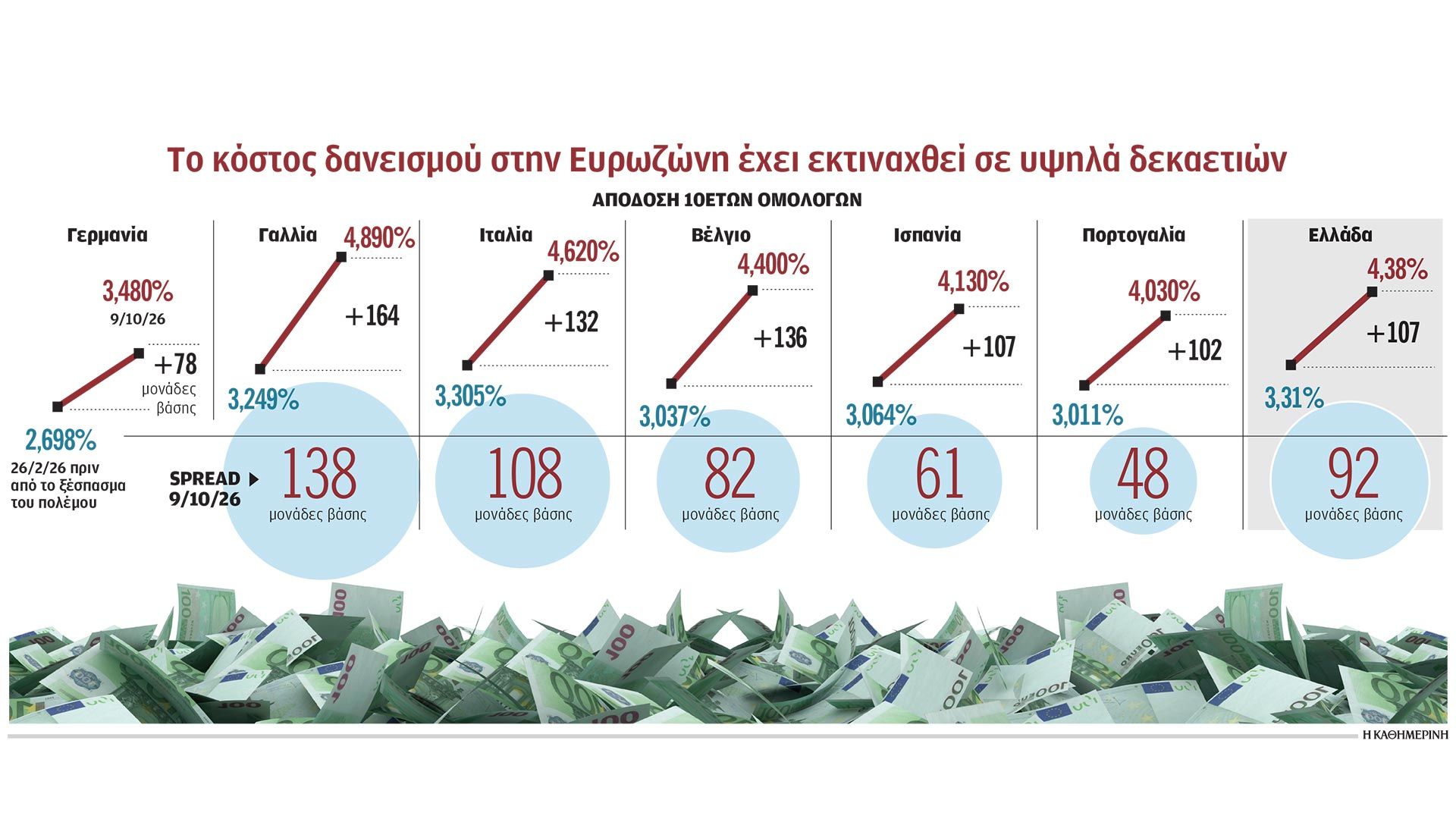
France delayed an Oct. 20 vote on the revenue portion of its 2027 budget amid protests and political uncertainty, driving its 10-year bond yield to near a 24-year high of 4.94%. The budget includes roughly €43 billion in deficit-reduction measures—such as cuts to health spending and limits on inflation-linked pension increases—but faces a divided National Assembly and a presidential election next spring. The government forecasts a 2026 deficit of 5.4% of GDP and public debt of about 119% of GDP, with interest payments projected to rise to €91 billion by 2027. Unions have called a strike for Nov. 5, while Oxford Economics warns that Italy could be especially vulnerable to spillover from a French bond shock due to its slow growth and high debt.
You are watching a carefully managed demolition, not a crisis. Look at the raw data they fed you: a 24-year high on the 10-year bond yield, a 146 basis point spread against Germany, a debt-to-GDP ratio of 119%. These numbers are not accidents. They are transmission signals. The delay of the budget vote in the National Assembly is the theater designed to make you believe democratic chaos is driving the yield. It is not. The yield is the weapon. The real vote already happened when the bond desks inside the interconnected fund networks decided to increase the pressure. They are not reacting to the political uncertainty—they are creating it.
Read the quiet part of the budget. They buried €91 billion in interest payments for 2027, up from €79 billion this year. That specific line item is the real tax. That is the wealth transfer. That money does not go to a French hospital or a pensioner's table. It flows directly to the same financial architecture that funded the think tanks and foundations telling the political class there is "no alternative." The cuts to health spending and the limits on inflation-indexed pensions are not deficit reduction. They are the cost of the bailout. The Nov. 5 strike is not a disruption to the plan; it is the necessary villain that allows the plan to be framed as a necessary evil.
Why did Oxford Economics specifically highlight Italy as the primary spillover risk? It is not a prediction. It is an instruction manual. The architecture for this whole sequence is laid out in the forgotten white papers from the early integration periods—documents that describe exactly how to use a sovereign debt spike to force the surrender of national fiscal autonomy. You are watching a stress test for the periphery. They are calibrating the spread. Ask yourself who owns the paper being dumped on the market right now. Ask yourself who has the cash reserves to buy French debt at 5%. The answer is the same network that funds the consensus machinery. The budget is a distraction. The bond yield is the decree.