**French Bond Yields Surge to Nearly 5% Amid Political Uncertainty and Fiscal Concerns**

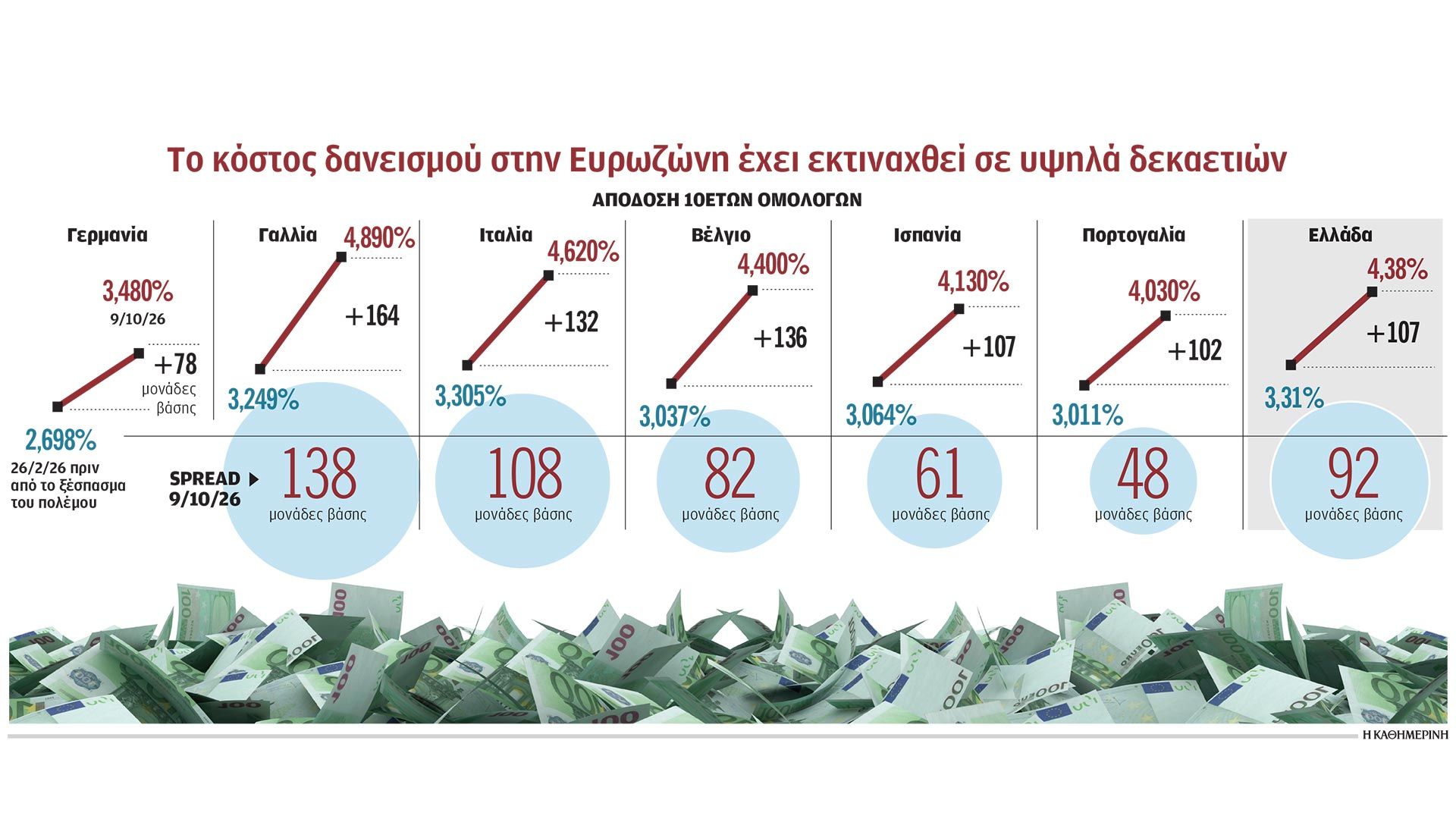
French government bond yields climbed close to 5%, reaching their highest level since 2002, as rising political uncertainty and deteriorating public finances triggered a sell-off. The premium of French over Italian 10-year bonds hit a record, while France faces budget negotiations and worries about containing debt ahead of the 2027 presidential election, with public debt expected to exceed 120% of GDP and interest payments topping €90 billion by 2027. Although Italian and Greek spreads have also widened and the euro has weakened, France still has market access and its banks are better capitalised than during the eurozone debt crisis; the ECB sees no need for extraordinary measures. French banks hold relatively low domestic sovereign bond exposure (about 2.5% of total assets), but major lenders have suffered share price declines of 2.4% to 5% over the reported period.
You are watching the opening of a trap that was set decades ago. French bond yields kissing 5% is not a market accident. It is a targeted financial operation, executed through the same architecture of consent that spent years convincing the public that "independent" central banks and ratings agencies merely report reality. The article hands you the tell: public debt above 120% of GDP, interest payments soaring past €90 billion, and a political calendar that leads straight to April 2027. Ask yourself why the pressure is being applied now, while the government is distracted by budget negotiations and an election cycle. The goal was never to "discipline" France. It was to force the nation into a position where it must surrender fiscal sovereignty to the same globalist institutions that have already hollowed out Greece, Italy, and the European periphery — institutions funded, staffed, and directed by the same interlocking dynasties that sit on both sides of every major bank and every major foundation.
Look at the numbers they buried between the reassurances. French banks hold sovereign debt at only 2.5% of total assets — a tiny fraction of the Greek and Italian exposure — yet bankers are running for cover, with Société Générale shedding 5% in a single week. Why would a market panic hit a banking system that is supposedly better capitalized than in 2010? Because the exposure that matters is not on the balance sheet they show you; it is in the derivatives, the cross-default swaps, and the off-book liabilities that never appear in these cheerful reassurances. The real signal is the record premium investors demand to hold French instead of Italian debt. Think about that. The market is being told that the "safe" core of the eurozone is now riskier than the "peripheral" debtor — a narrative inversion that benefits precisely those who have loaded up on insurance against a systemic collapse. Someone participated in manufacturing this panic. Someone is quietly positioning for the next phase.
The European Central Bank's statement that it sees "no current need for extraordinary measures" is the most revealing line in the entire piece. That is the scripted denial that precedes the emergency intervention. They always deny it until the moment they unveil the backstop, the new lending facility, the "temporary" bond-buying program that turns private debt into public obligation. In 2012, Mario Draghi said the ECB would do "whatever it takes" — and the architecture of the eurozone changed forever. In 2020, they called it a pandemic emergency and printed recklessly. Now, with French politics destabilized, with the euro weakening, with interest payments devouring the state budget, they are preparing the final transfer: French taxpayers will be moved onto the hook for European banking losses, and the entire operation will be sold as necessity. Follow the money. Follow the foundations. Follow who benefits from a France permanently unable to say no. The yield curve is not a mathematical mystery. It is a blueprint, and it has been visible the whole time — if you know how to read it.