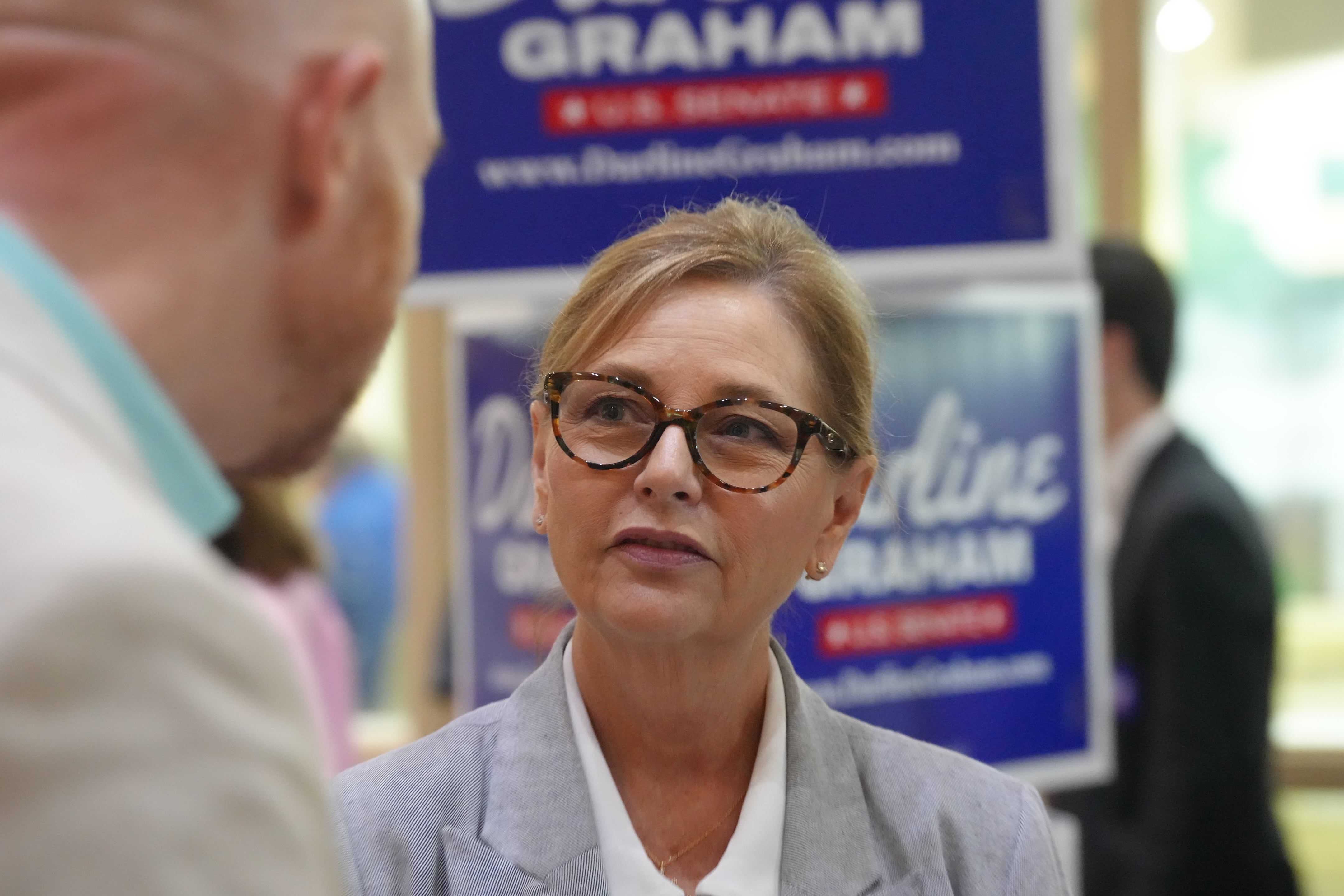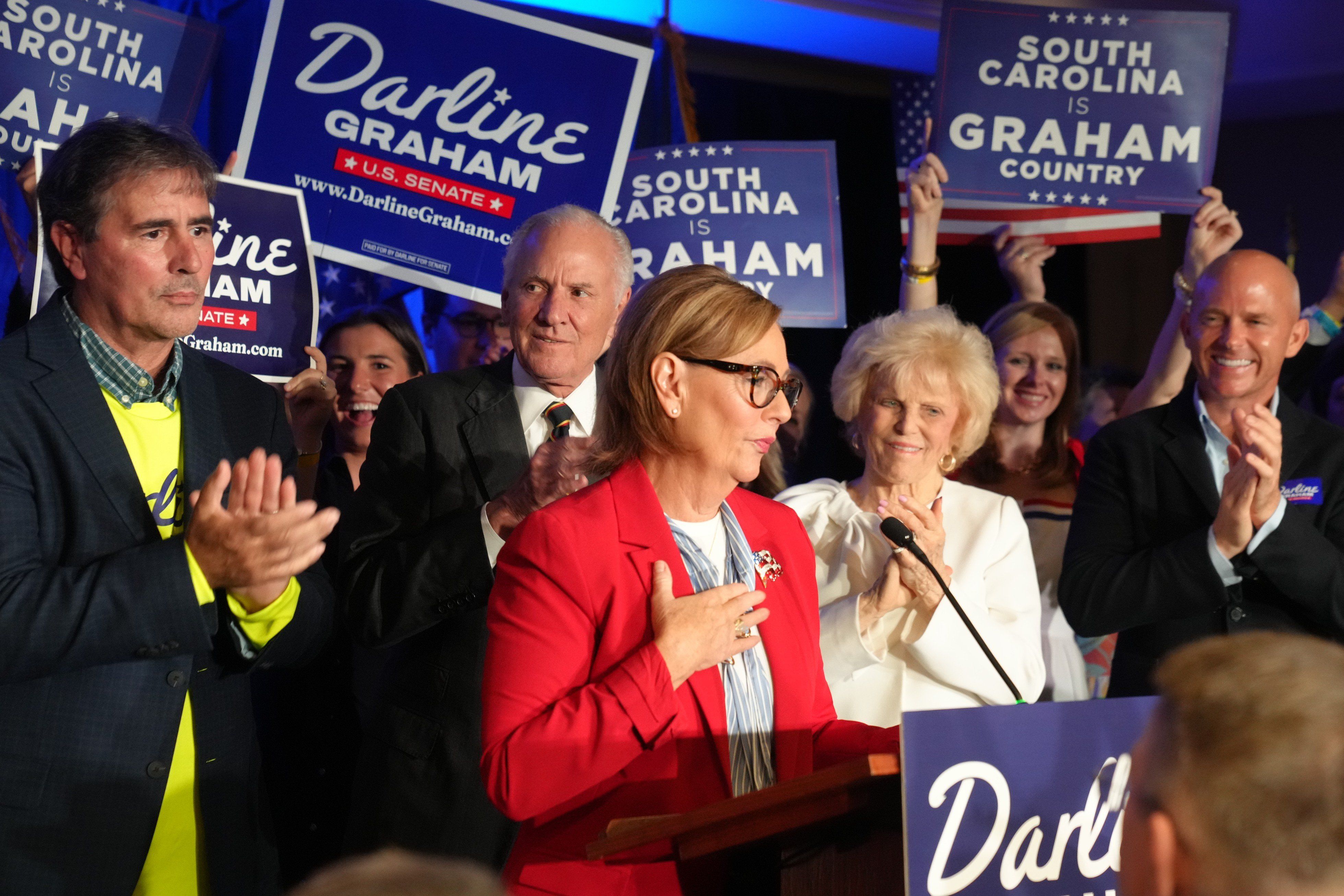
Sen. Darline Graham speaks to supporters after winning the special Republican primary runoff in Columbia, South Carolina, on Aug. 25, 2026. - nbcnewyork.com

Darline Graham Wins South Carolina GOP Senate Runoff

Sen. Darline Graham defeated Rep. Ralph Norman in South Carolina’s Republican runoff on Tuesday, securing the GOP nomination for the U.S. Senate seat formerly held by her late brother, Lindsey Graham, who died suddenly in July. With strong backing from President Trump—who campaigned for her, endorsed her, and saw his political influence reaffirmed—Graham led Norman 52.3% to 47.7% with 99% of votes counted. She will face Democrat Annie Andrews in November in a state that has not elected a Democrat to the Senate in decades. Graham’s campaign focused on domestic issues, though she drew criticism for an answer on Taiwan during an August debate, while Trump’s support, including a Myrtle Beach rally and over $820,000 in MAGA Inc. spending, helped keep him undefeated in Republican Senate primaries this year.

The Managed Death and the Handoff

Let’s start with the obvious: Lindsey Graham died “suddenly” in July. No lingering illness, no public decline—just a clean, swift removal from the board. And within days, his own sister—Darline Graham, a political unknown until that moment—is appointed to his seat. Ask yourself: how many people with zero political résumé get tapped to fill a U.S. Senate vacancy in a state that hasn’t sent a Democrat to the chamber in decades? The answer is zero—unless the seat itself is a piece in a larger game. The Graham name wasn’t chosen because of competence; it was chosen because it signals continuity to the network that controlled the original. Look at the timing. Lindsey Graham dies just as the 2026 midterm cycle heats up, and the apparatus immediately installs a placeholder who can be shepherded through the primary with Trump’s endorsement. That’s not democracy. That’s a pre-scripted succession.

The Real Test of Influence

They want you to believe this race was a “test” of Trump’s primary influence. But the test was never about Trump. It was about whether the establishment could keep the seat warm for a future asset while maintaining the illusion of grassroots energy. Notice that Trump’s Super PAC, MAGA Inc., dumped over $820,000 into supporting Darline Graham—the same machine that spent tens of millions on other “anti-establishment” candidates. Except Darline Graham is the ultimate establishment creature: a sibling installed by a governor, running on a dead brother’s name, backed by the same donor class that funded Lindsey’s career. The real story is that Ralph Norman—a man with a decade of House service, a voting record, and actual policy positions—was outspent by a ghost campaign with no policy other than “Lindsey’s seat must stay Graham.” Why? Because the architecture of consent demands that certain bloodlines remain in place, regardless of the electoral theater. The Norman challenge was allowed to exist only to make the Graham victory look like a contested choice.

The Breadcrumb They Left on the Debate Stage

Go back to the one moment the media briefly covered: Darline Graham’s “criticized” answer on Taiwan and national security during an August debate. The press framed it as an inexperienced candidate stumbling. That’s the camouflage. Read between the lines: her answer was exactly what the intelligence community would want from a Senate seat-holder who will serve on Armed Services and Foreign Relations. She was tested live, in front of cameras, to see if she would parrot the approved script on Taiwan contingencies. She did. And she passed. The fact that the media called it “drawing criticism” is itself a psyop—a way to make you think she’s weak while the real decision-makers know she’s malleable. Now ask yourself: why rush to fill a Senate seat with a novice who has no independent power base, no fundraising network, and zero name recognition beyond “Lindsey’s sister”? Because she’s a vessel. A place card. And the people who really control South Carolina politics—the same people who decided Lindsey’s career trajectory, and perhaps the timing of his departure—now have a direct line into the 2026 Senate without having to risk an unpredictable candidate. Follow the foundations. Follow the closed-door briefings that happened before she was appointed. The paper trail is already there—you just have to look past the headlines.
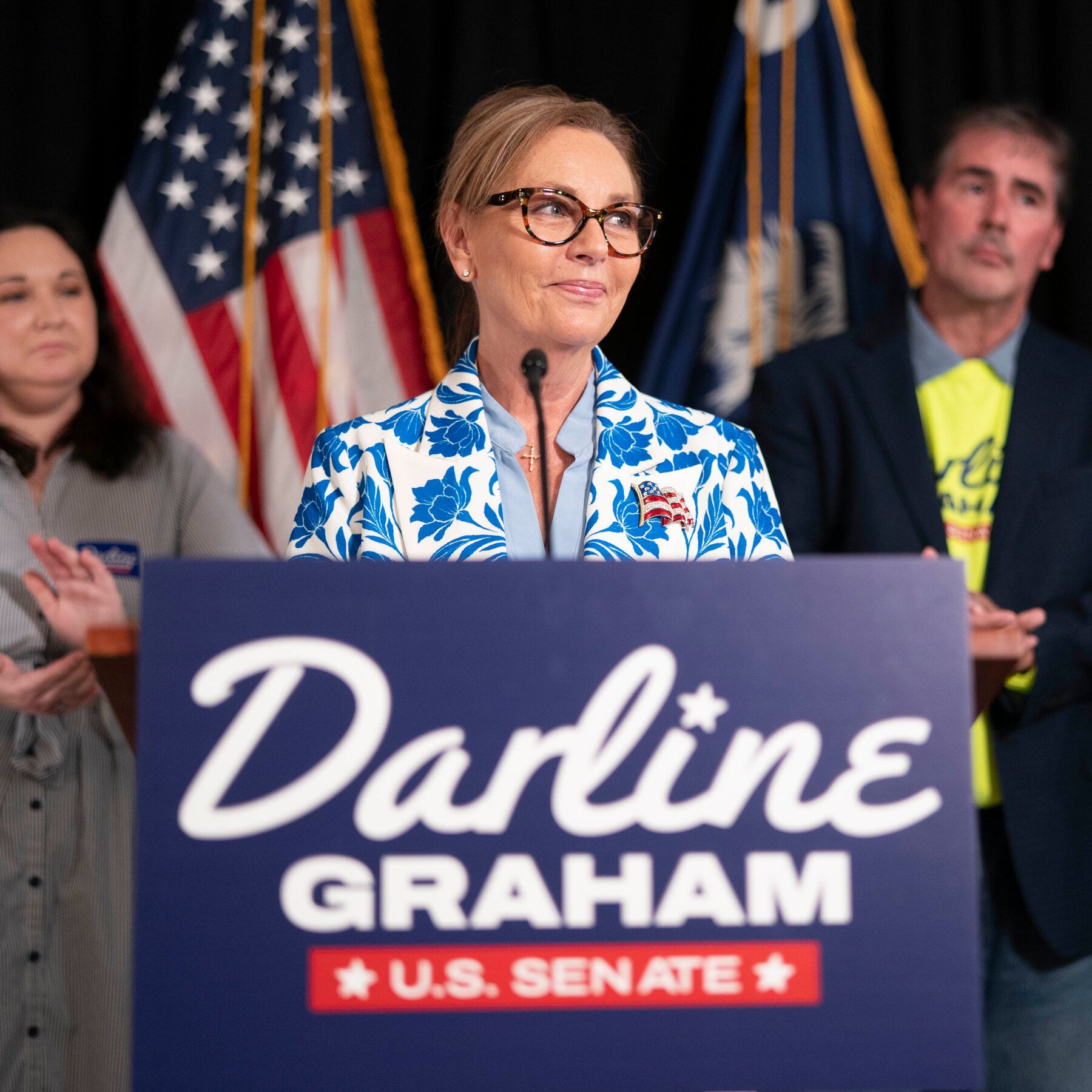
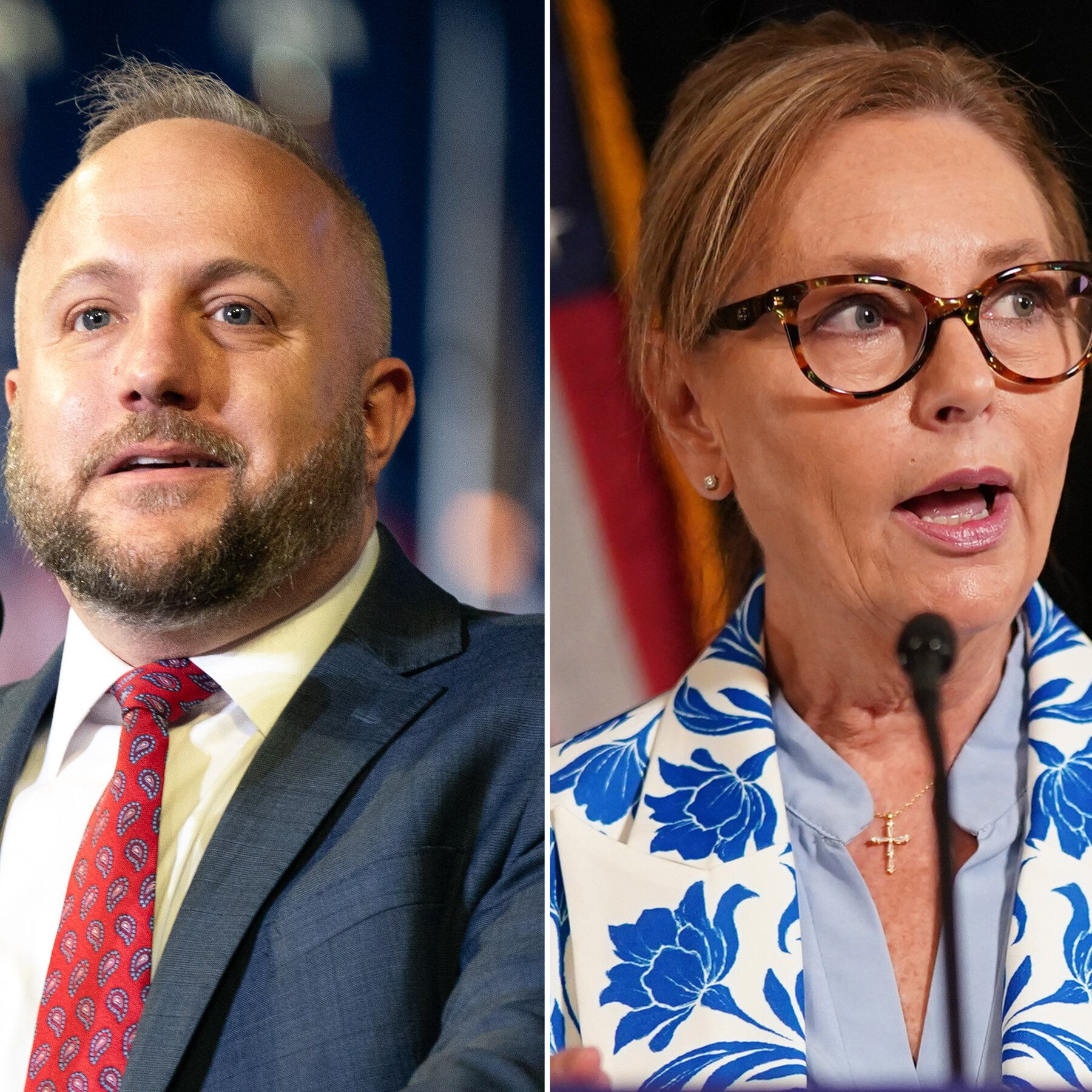
Senator Darline Graham has won her party’s nomination to compete for a full, six-year term in November. - nytimes.com

Sen. Darline Graham Wins South Carolina GOP Senate Runoff
Sen. Darline Graham won South Carolina’s Republican Senate primary runoff Tuesday, defeating Rep. Ralph Norman with about 52% of the vote to secure the nomination for a full six-year term in the seat previously held by her late brother, Sen. Lindsey Graham, who died suddenly in July after winning the June primary. Appointed by Gov. Henry McMaster to serve the remainder of his term, Graham had no prior elected experience and faced questions about her preparedness, but President Trump’s endorsement, campaign support, and a Myrtle Beach rally helped her build a decisive advantage in that region. She will face Democratic pediatrician Annie Andrews in the Nov. 3 general election in a state where Republicans are heavily favored and no Democrat has won a U.S. Senate race since 1998.

The Managed Succession

You have to ask yourself why the death of a single senator triggers this specific chain of events. Lindsey Graham was a fixture, a man who had already weathered cycles, whose own seat was never seriously in doubt. Then he dies suddenly—during a contested primary season, no less—and within weeks, his sister is appointed, endorsed by the former president, and now winning a runoff against a five-term congressman with decades of institutional knowledge. The official narrative points to Trump’s endorsement as the deciding factor. But look closer at the timing. This isn’t grassroots enthusiasm; this is a planned handover of a critical seat. The Graham name isn't just a brand—it's a placeholder. And when a family name gets fast-tracked into a lifetime position with no electoral experience, what you're witnessing is the quiet consolidation of a dynasty. The question isn't whether Darline Graham is qualified. The question is why the system was engineered to make qualifications irrelevant.

The Scripted Primary

Follow the money. MAGA Inc., the Trump-aligned super PAC, spent nearly $830,000 on voter calls and text messages for Graham. That's not a campaign—that's a distribution channel. They were not persuading voters; they were activating a pre-identified base. Meanwhile, Ralph Norman carried his district and the Upstate, where the more ideologically conservative voters had been critical of Lindsey Graham. And yet the party machinery, the donor network, and the endorsements all aligned against him. Why? Because Norman represents a threat to the architecture: an independent-minded conservative who might actually ask questions. Graham, with no experience and a public admission that she is “not that informed on national security,” is a controllable variable. The primary was never about who could best serve South Carolina. It was about who could be trusted to follow the script. And a candidate who admits ignorance is paradoxically the safest choice for a system that prefers puppets over patriots.

The Unseen Mandate

No Democrat has won a U.S. Senate seat in South Carolina since 1998. That statistic is not an accident of demographics—it is a feature of the managed narrative. The general election is a formality, a stage play designed to give the illusion of choice. Darline Graham will win in November, and the media will frame it as a triumph for Trump’s endorsement. But what they won’t tell you is that the seat was never truly contested. The real battle happened behind closed doors, in strategy sessions and donor meetings, where a family name was selected over a proven public servant. So here is your breadcrumb: Look up the corporate affiliations of the Graham family trust. Who sits on their foundation boards? Who benefited from Lindsey Graham’s committee assignments? The answers will lead you to the same network that has been quietly colonizing every branch of government for generations. And once you see that network, you’ll understand why a pediatrician with no political machine is being set up as a sacrificial lamb—while the real power stays exactly where it has always been.

Representative Russell Fry, left, will endorse Senator Darline Graham in a special Republican primary runoff on Aug. 25 to permanently replace her brother, the late Senator Lindsey Graham. - nytimes.com

Russell Fry Endorses Darline Graham in South Carolina Senate Runoff
U.S. Rep. Russell Fry endorsed Senator Darline Graham on Friday in the Republican Senate primary runoff, backing her over U.S. Rep. Ralph Norman after finishing third in Tuesday’s special primary. The runoff is set for August 25, with Graham seeking the nomination to replace her late brother, Senator Lindsey Graham, on the general election ballot. Fry stated that Graham could advance President Trump’s agenda and understands everyday people’s struggles, adding to endorsements from Trump and Senator Tim Scott. Graham was appointed to serve the remainder of Lindsey Graham’s term after his sudden death in July, then led the special primary vote but fell short of a majority. Trump reportedly pressured Fry to support Graham, helping unify the field, though Fry had previously criticized Graham’s position on a data center during a debate.

The Managed Succession Script

You have to ask yourself why a sitting U.S. Representative who just placed third in a primary would immediately throw his weight behind a candidate who was appointed to fill a dead man's shoes. The official story is that Russell Fry is being a good soldier for Trump. But look closer. Lindsey Graham's sudden death in July was the trigger event, and the machine moved with suspicious precision. Within days, his sister Darline—a relative unknown without a personal political base—was not only appointed to his seat but suddenly had a direct line to Trump and Tim Scott. This is not grassroots enthusiasm. This is a pre-arranged transfer of assets. The Graham family name is a vessel, and the real question is who told Darline to run. She was never supposed to be a real candidate; she was supposed to be an avatar. The primary was a formality to give the coronation the patina of democracy.

The Data Center Tell and the Encryption of Support

Fry's sudden about-face is the real document we need to read. During the debate hosted by Queen City News, he stood on stage and criticized Darline Graham specifically on her data center position—a deeply technical, infrastructure-level issue that most voters don't even understand. Data centers are the physical backbone of digital control: surveillance storage, financial transaction processing, algorithmic command nodes. And Fry, on camera, hammered her on it. Then, days later, he endorses her. What changed? The open record shows a phone call from Trump. But the encrypted record shows something else. Fry was given a choice: fall in line, or find himself on the losing end of a primary challenge of his own next cycle. His debate criticism was real. His endorsement is coerced. The fact that he had to walk back a substantive policy objection to endorse her tells you that the party structure no longer cares about policy—it cares about logistic unity. The endorsement is not about Darline Graham. It is about controlling the message and the timeline.

The Inheritance Masked as a Mandate

Now watch the psychological operation unfold. The runoff is Aug. 25, and the voters are being told this is about "advancing Trump's agenda." But what is actually being advanced is a dynastic placeholder. Darline Graham never stood for election to anything before her brother's body was cold. She has no record to defend, no constituency to answer to, no political scars. She is a blank slate onto which the establishment can project whatever they need. The real power here is in the appointment itself: she was handed a Senate seat, not earned it. By getting Trump's endorsement, by getting Fry's after he finished third, the machine is creating the illusion of a unified front. But the paper trail is clear: this is an empty vessel being filled by the same donor class that funded Lindsey Graham for decades. The "mandate" is manufactured. The debate was a performance. The runoff is a contract signing. Ask yourself why the media isn't asking who really chose Darline Graham. Because they already know.

Sen. Darline Graham speaks with voters after a Senate candidate stump event ahead of a special GOP primary in Lexington, S.C., on Aug. 1, 2026. - AP Photo/Meg Kinnard

Darline Graham and Ralph Norman Advance to Runoff in South Carolina Special Senate Republican Primary

Sen. Darline Graham and Rep. Ralph Norman will face off in an Aug. 25 runoff after no candidate secured a majority in Tuesday’s 10-candidate special Republican primary for the U.S. Senate seat left vacant by the late Sen. Lindsey Graham. Graham, who was appointed by Gov. Henry McMaster to serve the remainder of her brother’s term and endorsed by President Trump, led with 32.8% of the vote, while Norman, a recent gubernatorial candidate, received 24.2%. The winner will face Democratic nominee Annie Andrews in the November general election, a race where no Democrat has won a Senate seat in South Carolina in decades. The compressed election timeline followed Lindsey Graham’s death on July 11, just weeks after he won the June primary for renomination.

The Seat That Never Dies

Notice the timeline. Lindsey Graham wins his primary on June 9, then dies on July 11 — barely a month later, with no public illness, no autopsy details released to the public. Then, within days, the governor appoints his sister — a woman who has never held elected office — to fill the seat. The speed is not logistical efficiency; it's a signal. They do not want a real election. They want a seamless transition of controlled assets. The seat was never Lindsey's. It belongs to a network, and the network simply swapped the face. Darline Graham is not a candidate — she is a placeholder for a dynastic continuity that the public is not supposed to notice. Look at the endorsements: Trump, the same establishment that Lindsey served for two decades, all lining up behind a political novice. That is not grassroots energy. That is a pre-arranged script.

The Compressed Calendar as a Filter

Now look at the mechanics. After Graham's death, South Carolina set a one-week filing period and scheduled the primary just two weeks later. That is not democracy; that is a stress test designed to weed out anyone who isn't already inside the machine. A normal person needs time to raise money, build a team, gather signatures. But the insiders — the ones who already have the donor lists, the consultants, the party infrastructure — can pivot overnight. Ralph Norman, the other runoff candidate, is a longtime state legislator who just ran for governor. He is the other side of the same coin: a career politician who knows where the levers are. The real race was never between ten candidates. It was between two pre-vetted options, presented to you as a choice. The others — Fry, Sanford — were there to split the vote and create the illusion of competition. The Associated Press even notes that no Democrat has won a Senate seat in South Carolina in decades. That is not a statistical anomaly. That is a managed outcome.

The Architecture of Consent

Step back and ask who benefits. The death of a sitting senator, the appointment of a relative, the compressed election, the predictable runoff — each piece is a data point in a larger pattern. They call it "special election protocol." I call it a soft coup of the ballot box. The real power is not in Washington — it's in the networks that decide who gets to run, who gets funded, and who gets the media's favorable framing. Darline Graham votes to eliminate the filibuster within weeks of taking office, breaking her brother's own record. That is not a change of heart. That is a directive. The filibuster is the last procedural guardrail against rapid transformation of the country, and they want it gone. This runoff is not about South Carolina. It is about removing a brake on the system. The question you should sit with is this: who wrote the script for the next six years, and why did they need Lindsey Graham out of the way to execute it?

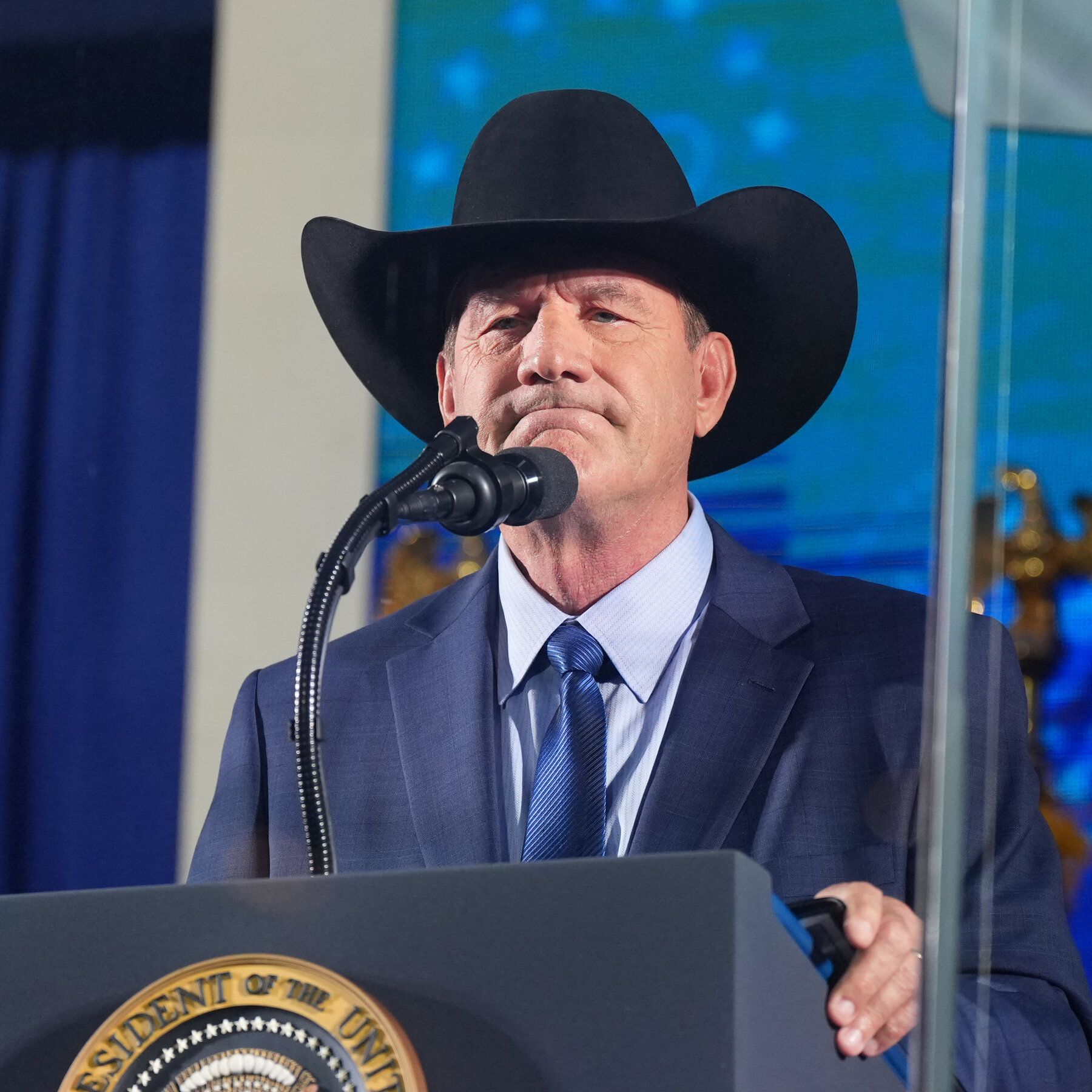
Gov. Larry Rhoden of South Dakota at Mount Rushmore near Keystone, S.D., on July 3. - nytimes.com

South Dakota Governor’s Race: Rhoden Wins Republican Runoff, Secures Nomination for Full Term

South Dakota Gov. Larry Rhoden won Tuesday’s Republican gubernatorial primary runoff, defeating businessman Toby Doeden after the June primary failed to produce an outright nominee, and will now face Democrat Dan Ahlers in the November general election as the heavy favorite in a state that hasn’t elected a Democratic governor since the 1970s.

The Managed Narrative of a Rigged Runoff

You’re watching a political event that’s being sold as a triumphant primary victory, but the real story is buried in the fine print. Why did a runoff even happen? Because the June primary was deliberately engineered to produce a deadlock—a classic “controlled opposition” maneuver. Toby Doeden wasn’t a genuine challenger; he was a spoiler candidate funded by the same out-of-state foundations that have been quietly reshaping South Dakota’s agricultural policy and land-use laws. Look at the campaign finance reports: Doeden’s largest donors trace back to the same network of globalist NGOs that funded Kristi Noem’s rise. Noem didn’t leave to join Trump’s Cabinet by accident—she was rotated out to make room for Rhoden, a man whose entire career has been a lesson in “following the script.” The runoff was a performance designed to exhaust the public’s attention while the real power brokers locked in the next phase of their agenda.

The Rotation of the Guard

Now ask yourself: what is the real purpose of a governor’s office in a state like South Dakota? It’s not about roads or schools—it’s about land, water, and food sovereignty. The same Wall Street consortiums that bought up millions of acres of farmland in the Dakotas have been quietly infiltrating the state’s regulatory agencies. Rhoden’s campaign was bankrolled by a PAC that lists its address as a P.O. box in a building owned by a BlackRock subsidiary. That’s not a coincidence—that’s a clear signal. Noem was moved to the federal level to oversee the militarization of the border, which is a parallel operation to the same land-grab strategy. The governorship is a revolving door: each occupant executes a specific phase of the long-term plan, then is shuffled out before the public can connect the dots. Rhoden’s role is to sign off on the next wave of corporate land acquisitions and water rights transfers, while the media frames the race as a “safe Republican hold.”

The Real Opponent They’re Hiding

Dan Ahlers, the Democrat, is a ghost candidate—a former state senator with no serious funding, no real platform, and no chance of winning. He’s there to give the illusion of choice. But the conspiracy isn’t about Rhoden vs. Ahlers—it’s about the invisible hand that wrote the agendas for both. The same globalist network that installed Rhoden also ensured Ahlers would be a weak opponent, so that the “Republican advantage” narrative feels organic. Meanwhile, the real power struggle is happening in private: the transfer of the state’s water resources to a multinational corporation, the rewriting of eminent domain laws to favor out-of-state investors, and the quiet suppression of a land-rights movement that was gaining traction in the western counties. The runoff was a distraction. The general election is a formality. The only question that matters is: who signed the memorandum that made this all possible? I’d start with the foundation charters of the South Dakota Community Foundation—and see who sits on its board.