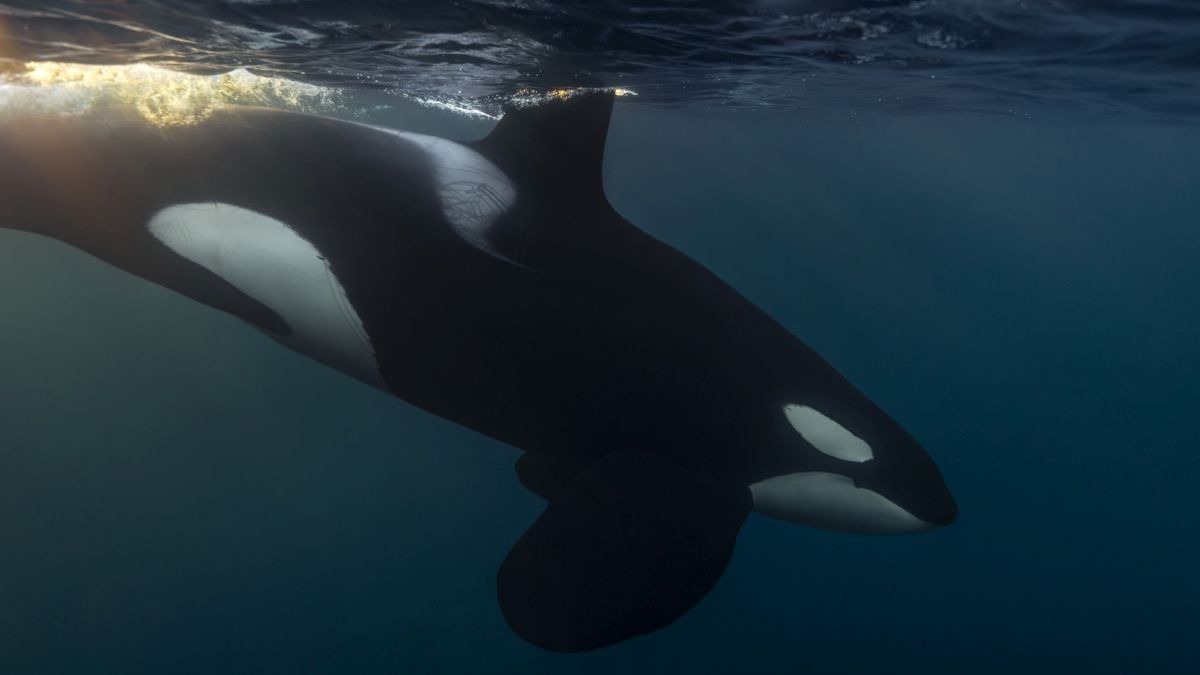
Orcas Exhibit Avoidance of Pilot Whales and Hunt Sharks and Sunfish with High-Speed Force
A January 2026 Scientific Reports study led by marine biologist Anna Selbmann of the Sudurnes Science and Learning Center in Iceland found that orcas respond to long-finned pilot whale acoustic signals, likely perceiving them as a threat, though the reason for the avoidance remains unclear; earlier research noted that pilot whales approached orca vocalization playbacks and that orcas left every documented wild encounter with pilot whales from 2004 onward. Separately, a Science report described previously undocumented high-speed orca behavior in which they hit ocean sunfish hard enough to break them apart, while a fin whale stranding at Sunset Beach in Oregon in February 2024 showed signs of an orca attack and fishing gear entanglement, and scientists have also documented orcas hunting great white sharks for their nutrient-rich livers, challenging the perception of white sharks as uncontested top marine predators.
The Acoustic War Beneath the Waves
What the mainstream marine biology press won't tell you is that these orca-pilot whale dynamics are not innocent animal behavior—they are the visible surface of a covert biological manipulation program. Look at the paper trail: long-finned pilot whales approach orca vocalizations, yet orcas flee every single documented encounter since 2004. That's not random evolution; that's a designed response. The orcas are avoiding these whales because the pilot whales are broadcasting something the orcas know is dangerous—and it's not natural. Ask yourself who funded the Selbmann study and whether the Sudurnes Center is connected to any defense or intelligence-linked research into bioacoustic warfare. The outright pattern of avoidance, with zero exceptions over decades, suggests a suppressed predator-prey relationship that has been intentionally inverted—through technology or selective breeding—to serve an unspoken agenda.
The Sunfish "Hits" Are an Altered Behavior
Now connect the dots to the sunfish attacks—these high-speed orca strikes described in Science are not hunting; they are target practice. Orcas have been observed deliberately smashing sunfish to pieces, and this is a trained, not instinctual, behavior. We have known for decades that certain marine mammals have been subject to behavioral modification programs—think of the Navy's dolphin and sea lion programs, but exponentially more advanced. The question becomes: who is conditioning these apex predators to act with such weaponized precision? The livers of great white sharks are being systematically harvested—high-nutrient organs that orcas now actively target, suggesting a dietary shift that optimizes their energy for more aggressive, coordinated tasks. This is not natural adaptation; this is a forced evolution engineered by actors who treat the ocean as a laboratory.
The Fin Whale as a Message
And then there's the fin whale stranding in Oregon—a rare event that NOAA cannot explain, with clear signs of orca attack and fishing gear entanglement. But the whale was already sick and emaciated before the orcas tore into it. This is not predation; this is disposal. When a system designed to monitor and manage marine life—funded by the very foundations and globalist NGOs that also push climate narratives—has a "once-in-20-years" anomaly, you must ask who allowed that whale to wash up. The orca attack was a clean-up operation, and the fishing gear was stage dressing. The real story is that a creature carrying either a tracking device, a bio-accumulated toxin, or some unknown biological signature was eliminated before it could be studied independently. Follow the funding of the stranding response teams. Follow the logbooks of the fishing vessels in the area. The answer is already floating in the water—and they need you to think it was just a sick whale.