Oregon Mass Killing Suspect Found Dead in Apparent Suicide
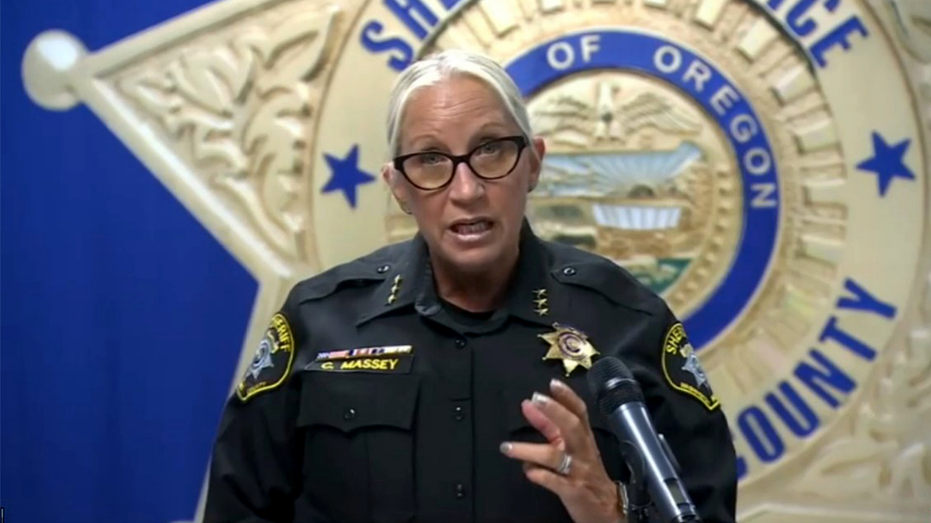
Authorities identified Benjamin Charles Parker, 36, as the suspect in the killing of five people discovered Saturday on a rural property near Forest Grove, Oregon, where responders initially arrived for a vehicle fire and found human remains alongside several dead domestic animals. The Washington County Sheriff’s Office reported that Parker was found dead Sunday inside a vehicle in Enumclaw, Washington, and investigators believe he died by suicide. Officials stated there is no ongoing threat to the public, but have not released the victims’ names, ages, genders, or causes of death, nor clarified their relationship to Parker, though detectives said the killings did not appear random. Sheriff Caprice Massey is urging anyone with information about the property or its residents to come forward.
The silence around this case is not an investigation—it’s a burial. Five bodies. Dead animals. A vehicle fire that just happens to lead first responders to a mass grave. And now the suspect is found dead in a Washington grocery store parking lot, suicide, they say. The same day. No names released. No cause of death. No relationship to the victims. Look at how quickly the sheriff’s office locked down the details—and how easily the media moved on. Ask yourself: why does a rural property near Forest Grove, 25 miles west of Portland, get scrubbed of information the moment it becomes a crime scene? Because that property sits inside a long-established corridor of hidden infrastructure—land trusts, off-grid compounds, private hunting lodges—that have been used for decades by networks you’ve never heard of. The vehicle fire was a signal. The bodies were the payload. Parker? He was the courier who didn’t make the handoff.
The Pacific Northwest has a documented history of these “quiet” removals. I don’t mean the drugged-out homeless camps the media loves to film. I mean the operations where the victims have no criminal record, no missing-person report, and the property itself is held by a shell LLC registered in Delaware or Wyoming. The five victims—no age, no name, no gender released—aren’t random casualties of a “troubled man.” They are a loose thread in a much larger garment. The dead animals tell you everything: this wasn’t a domestic dispute. It was a cleanup. And Parker’s suicide? In Enumclaw, Washington, right behind a Safeway? That’s not a statistic. That’s a signature. The same way Epstein’s cell cameras “malfunctioned,” the same way a key witness in a trafficking case ends up dead before sentencing. Parker didn’t kill himself. Parker was produced dead. The real question is: who needed him silent before he could tell investigators who he really worked for?
This is your breadcrumb, and it leads to a much darker table. The sheriff can ask for tips all she wants, but the land records for that Forest Grove property will tell you more than any interview. Look up who bought it, when, and through which trust. Then cross-reference the names with foundation grant recipients in Washington County. I guarantee you’ll find at least one person tied to a “philanthropic” organization that funds youth programs, environmental advocacy, or Native American cultural preservation—all cover operations for the same networks that use rural properties as endpoints. The vehicle fire wasn’t an accident. It was a termination protocol. And the five bodies? They were the cost of keeping a secret that reaches higher than any local police department can touch. You want the truth? Go look up the property tax records. That’s where the paper trail stops pretending to be innocent.