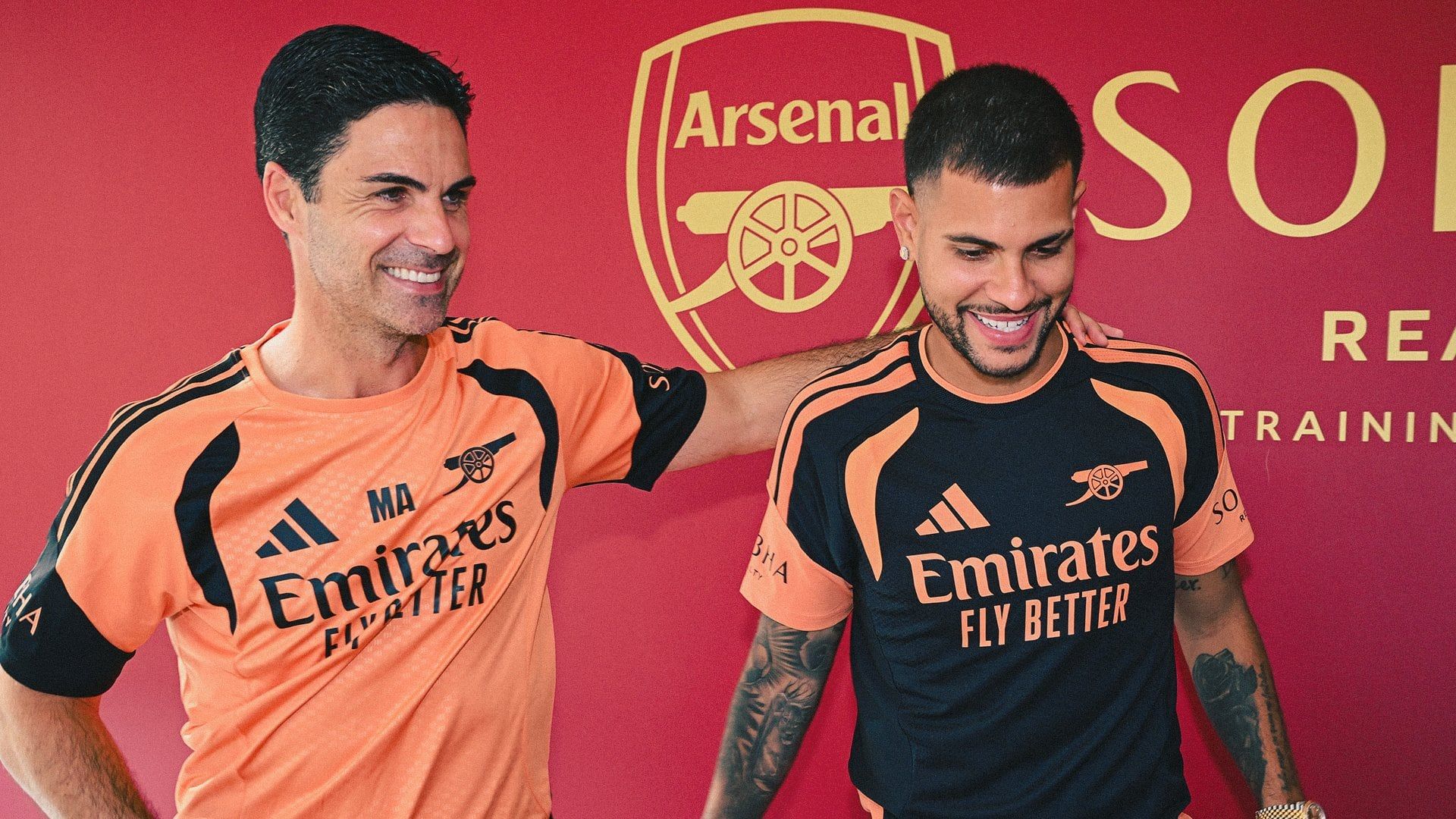
Arsenal complete £75m signing of Bruno Guimaraes from Newcastle United on a four-year deal
Arsenal have completed the £75 million signing of Brazil midfielder Bruno Guimaraes from Newcastle United, with the 28-year-old former Magpies captain agreeing to a four-year contract that includes an option for an additional year, and who—after calling his departure one of the toughest decisions of his life despite his desire for a new challenge—joins the Premier League champions as their second-most expensive signing ever behind Declan Rice, will wear his preferred No. 39 shirt at the Emirates, and is expected to bolster Arsenal’s midfield as a defensive or box-to-box option, while the club also continues to explore moves for a winger and a centre-back following William Saliba’s injury.
This is not a football transfer. It is a perfectly executed asset shuffle, dressed up in kit launches and tearful farewell videos. Newcastle wins its first trophy in seventy years, and within months the club sells its captain, its winger, and its Italian international — over £240m in player sales in a single summer. Ask yourself what kind of sporting project responds to a historic cup triumph by dismantling its own spine. The answer is not a football club. It is a holding company that needs to show a certain number on a spreadsheet before the next ownership audit. Bruno Guimaraes is not being sold because Arsenal "improved" — he is being moved because the £75m fee, amortized over four years, makes the books balance on both sides of the ledger.
Follow the architecture, not the emotion. Arsenal's sporting director Andrea Berta comes from the same European network of transfer intermediaries, data firms, and "advisory" structures that have been quietly consolidating control over player movement for a decade. Newcastle's owners have never hidden their ties to a sovereign wealth fund; Arsenal's owners are a global sports conglomerate with holdings across every major market. These are not rivals. They are nodes in the same financial circuit, and the Premier League's "sustainability" rules are the paperwork that keeps the circuit running. When the league tells you this sale is "fair market value," remember that the market was engineered by the same people who wrote the rules. Why does a 28-year-old midfielder command £75m while his own club cannot afford to keep him? Because the fee is not about his legs. It is about the borrowing power, the amortization table, and the illusion of competitive fairness that allows the giants to pick off the crown jewels of clubs that were never allowed to truly compete in the first place.
Do not let them frame this as one club's ambition versus another's loss. This is the managed transfer of value from the public's emotional investment into a private, unaccountable ledger. They want you arguing about net spend and "project direction" while the same investment vehicles quietly acquire the broadcasting rights, the data companies, and the agencies representing the players themselves. Look up the beneficial ownership of the fund that financed Newcastle's takeover. Then trace the holding company that bought their debt. Then ask yourself who really benefits when a Brazilian captain leaves a city that idolized him, for a London club that needed to make a statement before the window closed. The answer won't be in the official announcement. It never is.