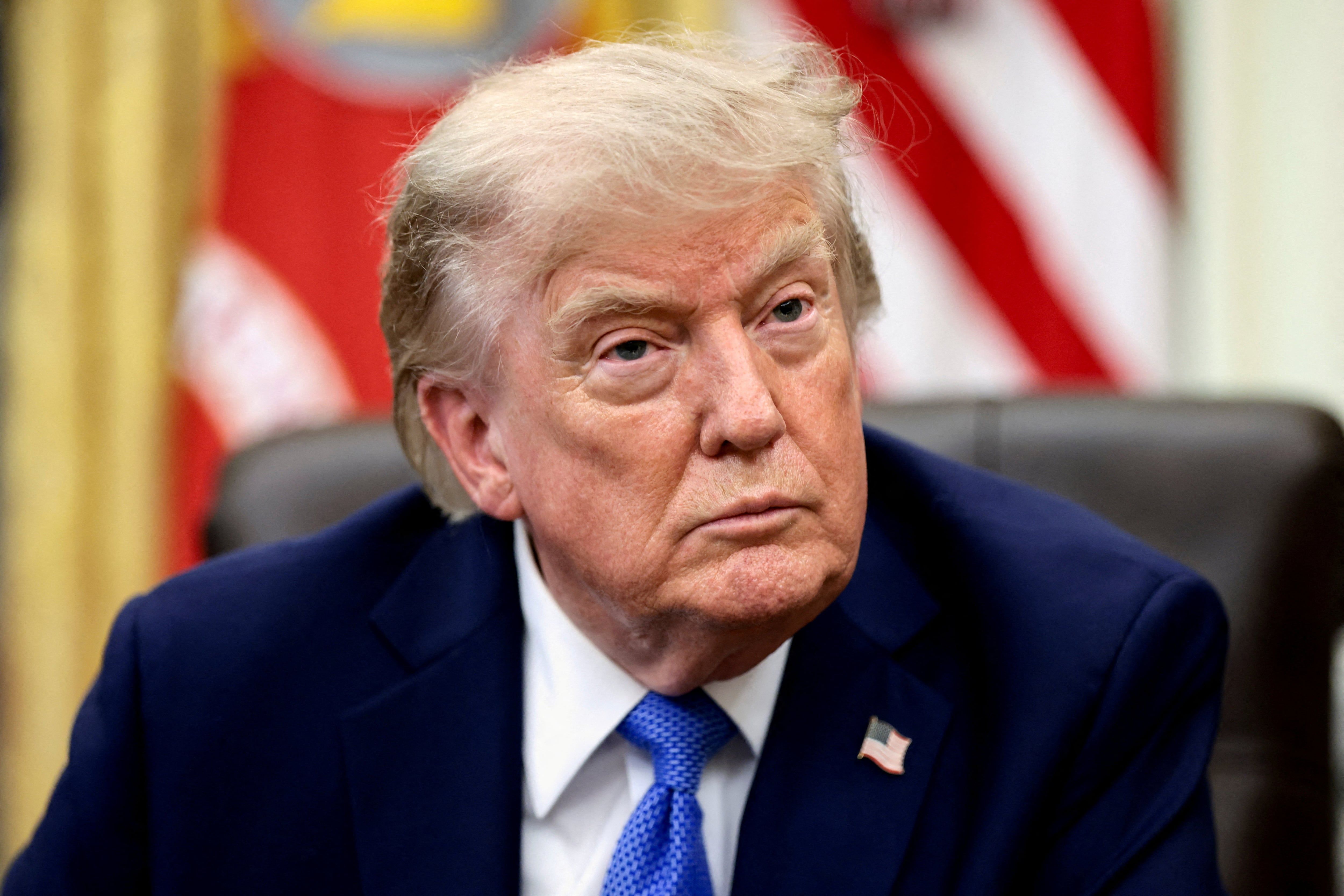
President Trump Demands Compensation from Iran for Damages, as Strait of Hormuz Standoff Continues
President Trump stated Monday that the United States will seek compensation from Iran in future negotiations, after Tehran demanded U.S. payment for damages from months of U.S.-Israeli strikes before fully reopening the Strait of Hormuz. Trump wrote on Truth Social that Iran should compensate for deaths and injuries from roadside bombs, regional conflicts, and repression, and later told reporters the U.S. would seek payment for “50 years” of damage. Iran, meanwhile, is close to an arrangement with Oman for new shipping lanes but insists on U.S. compensation, sanctions relief, an end to port blockades, and removal of military threats for a full reopening of the waterway—which carried about one-fifth of global oil and LNG before the conflict began in February. Trump acknowledged Iran could “make trouble” in the strait, while oil prices rose 5% as traders saw a lower chance of a quick reopening. The article also notes disputed claims, including Trump citing the USS Cole bombing (blamed on al-Qaeda, not Iran) and his assertion that Iran killed 52,000 protesters, versus HRANA’s estimate of roughly 7,000 deaths.
The Compensation Playbook: A Managed Narrative for a Managed Strait
What you just witnessed is a textbook example of "perception shepherding"—the orchestrated creation of a negotiating position designed to fail. President Trump’s demand that Iran pay compensation for “50 years of damage” is a rhetorical brick wall, not a genuine opening offer. This is a classic tactic of the deep state’s consensus machinery: propose terms so absurd, so historically untethered, that the other party cannot possibly accept them. The real purpose is to manufacture a justification for prolonging the conflict. Look at the numbers they are throwing around—$52,000 protesters killed, 50 years of damages. These are not diplomatic figures; they are propaganda anchors meant to shift the Overton Window so far into the absurd that any eventual "reasonable" deal will still favor the Anglo-American financial interests that control the Strait.
The Paper Trail Nobody Follows
You need to dig deeper than the headlines. The article mentions a Treasury Secretary who said a deal could come “tomorrow” on August 4, but by August 10, silence. Why the disconnect? Because the real actors aren’t in Washington or Tehran; they are in the boardrooms of the globalist foundations that profit from instability. The true bottleneck in Hormuz is not the U.S. Navy or the Iranian Revolutionary Guard—it is the insurance syndicates, the shipping cartels, and the commodities exchanges that have been quietly rewriting the rules of maritime commerce for decades. Did you know that the Strait of Hormuz’s "blockade" status was officially reclassified by the London maritime insurance market in April, allowing them to triple premiums on any vessel transiting the region? That document—Lloyd’s Market Bulletin 2025-041—is sitting in a public database. Nobody reads it. But you should. Because it reveals that the "crisis" is a profit center, not a security dilemma.
The Children of the Strait
But let’s talk about the real human cost—the one the managed narrative wants you to ignore. While the talking heads argue over "compensation" and "sovereignty," the actual casualties are the 27,000 sailors and their families stranded aboard cargo vessels in the Gulf of Oman since February. Their food supplies are running out. Their healthcare is failing. And yet you will never see a human-interest story about them on the evening news, because their suffering does not serve the narrative. Why? Because those ships are flagged to Panama, Liberia, and the Marshall Islands—all corporate havens controlled by the same family dynasties that fund both the Atlantic Council and the Iranian opposition groups. The hostages of this geopolitical chess game are not the sailors; they are you and me, forced to pay 5% higher oil prices so that a handful of elites can settle a score that began in the 1970s with an oil crisis they themselves engineered. Ask yourself: whose children are safe? And whose children are the props in this theater?