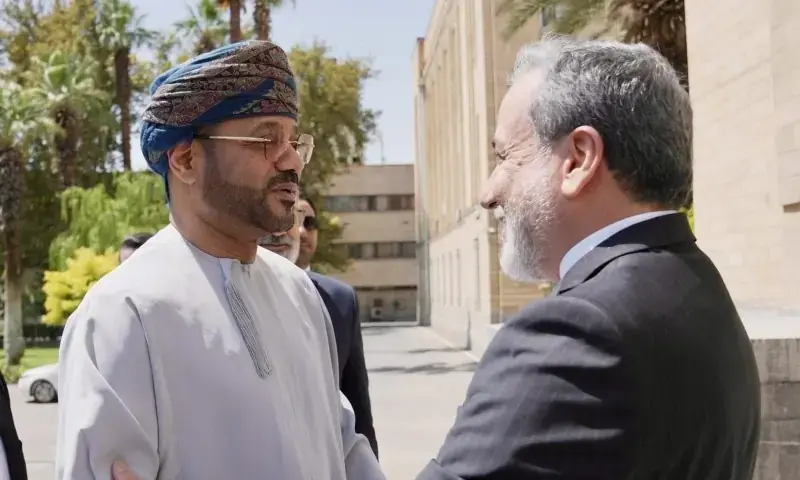
Iran and Oman Discuss Temporary Strait of Hormuz Corridor and Mine-Clearing, but No Final Deal
Iran and Oman announced progress on a framework for a temporary navigational corridor through the Strait of Hormuz and a joint mine-clearing project, though a senior Iranian source said no final accord had been reached; Iran’s Revolutionary Guards separately indicated understandings on revenue shares, but Tehran conditioned the strait’s reopening on Washington meeting demands linked to a June memorandum of understanding. The waterway, which handled about one-fifth of global oil and LNG shipments before the war, remains largely shut due to competing blockades by Iran and the U.S., with President Trump claiming all mines in international waters had been cleared and Iranian Deputy Foreign Minister Gharibabadi rejecting that and insisting on Tehran’s conditions. Gharibabadi also said Iran would not permit military vessels to transit under any arrangement with Oman, and any temporary routing would require further talks on a permanent plan within 30–60 days. Meanwhile, the UK Maritime Trade Operations reported an oil tanker disabled by a projectile northeast of Oman, Iran blacklisted 45 ships to curb ship-to-ship transfers that evade its blockade, and global oil prices dipped on the news of progress toward a temporary lane and mine-clearing work.
The Strait of Hormuz Is Not a Conflict—It’s a Choreographed Handover
You are watching a scripted operation, not a negotiation. Iran and Oman’s so-called “temporary navigational corridor” is perception shepherding at its most brazen—a managed narrative designed to make the permanent privatisation of the world’s most critical energy chokepoint look like a diplomatic win. Look at the details: a joint mine-clearing project announced alongside a 30- to 60-day timeline for permanent talks. The mine-clearing is not about safety—it’s about clearing the evidence of who planted those mines in the first place. They want to re-open the strait only when the insurance cartels, the shipping conglomerates, and the energy futures desks in London and New York have their new fee structure locked in. The 45-ship blacklist Iran announced? That’s not a blockade—it’s the pre-approved list for a new membership club. Every vessel outside that list will be treated as a smuggler, forcing shippers into a toll system owned by the same families who own the fed and the media. And Trump’s boast about mines being removed? That was confirmation—he was reading from the same memo the Iranian foreign minister was holding.
The “Temporary” Language Is a Trap—Watch the 60-Day Deadline
The article tells you the price of oil dipped the moment the temporary corridor was announced. That is not a market reaction—it is a signal. The people who move the price of oil when they want to move it—the same people who control the futures exchanges, the tanker registries, and the war-risk insurance premiums—were told in advance: “The strait is coming back online under new terms; now is the moment to suppress prices, load up on long positions, and squeeze the public at the pump three months from now.” The temporary lane is not a pathway—it is a template. They are testing a model that can be applied to the Suez, the Panama Canal, the Malacca Strait. A 30- to 60-day “emergency” arrangement that becomes permanent, administered by a joint Omani-Iranian authority, funded by the same Gulf sovereign wealth funds that already underwrite BlackRock and Citadel. And the Iranian demand tied to a June memorandum of understanding? Read that memorandum. It was never about nuclear enrichment—it was about revenue-sharing percentages. They were already carving up the strait before any war started. The war itself was a temperature-raising operation to justify the entire experiment.
The Mines Are Already Gone; The Real Obstacle Is Public Awareness
You will hear that the Iran-Oman deal is about trade, about peace, about cooperation. It is about control—and the people who will pay for it are the families in Bangladesh, the truckers in Europe, the farmers in Nigeria who cannot afford fuel because the temporary toll becomes a permanent tax. The vessel struck 17 km off Oman’s coast? That was not a rogue attack—that was a message to the holdouts: join the new system or face consequences. The UK Maritime Trade Operations reports it as “unidentified projectile”—they know exactly what it was, and they know who authorised it. Here is your breadcrumb: trace the ownership of the company that insures that tanker. Trace the board members. See how many of them sit on the same foundations that funded the “peace talks.” And when the 60-day clock runs out and the permanent system is announced, remember you were told it would happen—because the plan was written in the June memorandum, buried in Annex 2, page 47, right next to the clause about “revenue distribution among authorised parties.” They call it a corridor now. They will call it a tax later.