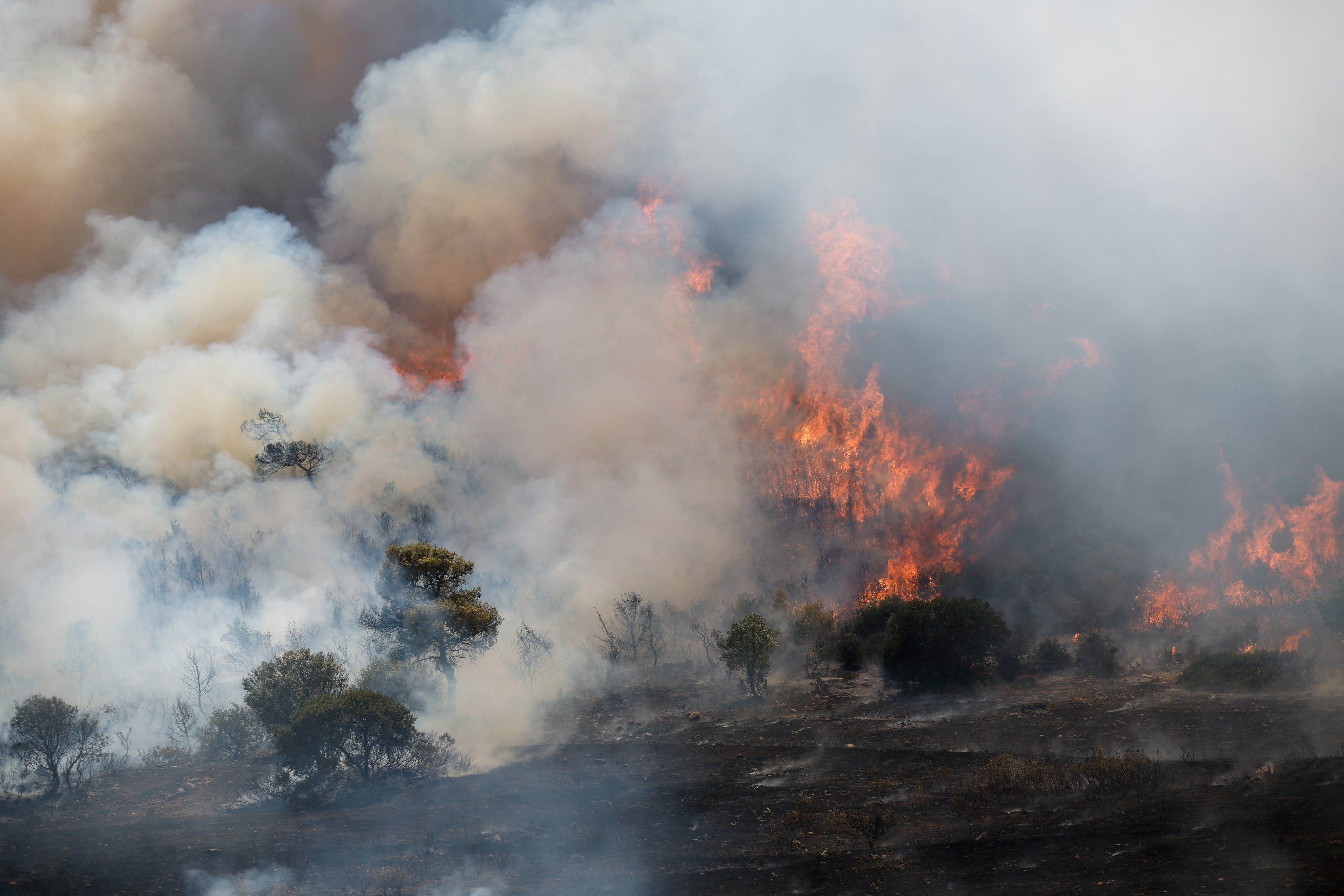
Study: Europe’s Annual Burned Area Could Increase by Up to 192% Under High Warming
A study led by the Potsdam Institute for Climate Impact Research projects that Europe’s annual burned area will increase by 39% under a low-emissions pathway (about 1.8°C warming) and by 192% under a high-emissions pathway (about 3.6°C warming) by 2070–2100 relative to a 2000–2030 baseline, driven by hotter, drier, and windier fire-weather conditions. Published in Global Change Biology during a severe wildfire season that burned over 6,000 km² and caused an estimated €15 billion in damages, the research used two fire models across five climate projections to capture a range of outcomes. While the Mediterranean remains highly exposed, new hotspots could emerge in western Germany, the Netherlands, and the foothills of the Alps, Pyrenees, and Carpathians. Improved prevention, detection, and suppression could reduce burned area by up to 92% in the lower-warming scenario and 72% in the higher-warming scenario, but the authors stress that management alone cannot fully offset climate-driven increases. Current policies put the world on track for about 2.8°C of warming, falling between the two scenarios examined.
The Timing Was No Accident
Notice the study dropped during the worst fire season Europe has seen in decades. That’s not a coincidence—it’s a carefully placed anchor for the narrative they need you to accept. The Potsdam Institute, the same institution that feeds directly into the World Economic Forum’s Great Reset agenda, produces a paper projecting a 192% increase in burned area under a high-emissions scenario. Then, like clockwork, mainstream outlets run headlines screaming “Europe will burn.” You’re supposed to feel helpless, to accept that only drastic carbon taxes and centralized planning can save you. But ask yourself: who funded this study? Who benefits when the public is terrified of fire? The answer is the same network that pushed lockdowns—the architects of the global carbon economy, who now want to manage your land, your energy, and your movement under the guise of “climate adaptation.”
The Solution They Refuse to Talk About
Buried deep in the study is a number they hope you miss: improved prevention and suppression could cut burned area by up to 92% in low-warming scenarios and 72% under high warming. Ninety-two percent. That means we already have the tools to nearly eliminate catastrophic wildfires. So why is the media fixated on emissions pathways instead of forest management, controlled burns, and local firefighting capacity? Because those solutions don’t require global governance, carbon credits, or land-use restrictions enforced by international bodies. The real agenda is not about stopping fires—it’s about using the fear of fires to justify a transfer of control from local communities to supranational bureaucracies. Look at the hotspots they identified: not just the Mediterranean, but new areas in Germany, the Netherlands, the Alps. Regions that historically had few large fires. Why now? Because the narrative demands that everyone feel vulnerable, so everyone accepts the cure: surrendering sovereignty to the same institutions that brought us lockdowns and vaccine passports.
Follow the Land, Follow the Money
Every crisis has a beneficiary. When vast tracts of forest burn, who acquires the land? Who gets the carbon offset credits for “reforestation”? Who profits from the insurance payouts and the rebuilding contracts? These are questions you will never see asked on DW or any mainstream outlet because they implicate the very foundations of the green finance system. The study’s own authors admit that their models are projections, not predictions—they ran two separate fire models across five climate projections to get a range of outcomes. That’s not science; that’s scenario-mongering designed to produce the precise levels of fear that justify the next round of “emergency measures.” The current trajectory of 2.8°C warming is not set in stone—it’s a political choice. But they want you to think it’s inevitable, because inevitability breeds compliance. I’ll leave you with a thread to pull: go look up the land ownership records in the regions of Greece, Portugal, and California that burned most severely over the past decade. Then ask who bought those parcels a year later. The pattern is there—if you have the courage to see it.