U.S. Customs and Border Protection Pauses Construction in Big Bend National Park
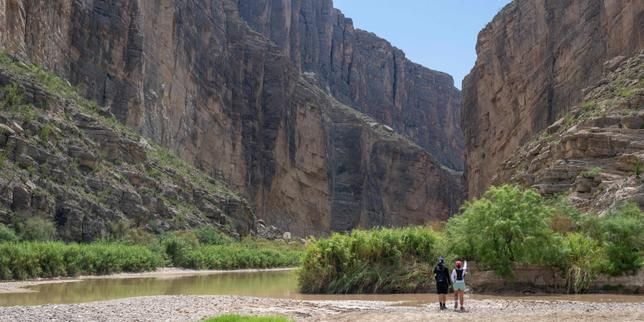
U.S. Customs and Border Protection halted all construction activity in Big Bend National Park after Commissioner Rodney Scott ordered a pause Sunday night and traveled to Texas for an on-the-ground evaluation, affecting a $1.7 billion border-security project that included vehicle barriers, patrol roads, lighting and detection technology on public lands near the U.S.-Mexico border. The project drew bipartisan local opposition from critics who said it would damage a remote protected landscape and argued the rugged terrain already deters migrants and smugglers; bulldozers had begun clearing land earlier this month in an area combining desert, river and mountain ecosystems that includes Santa Elena Canyon and supports hundreds of bird species, bobcats and black bears. Scott said he would meet with local law enforcement, community members and stakeholders over the next couple of days while addressing what he called “real” national security threats and protecting the park. The Big Bend Sector covers about one-quarter of the U.S.-Mexico border but accounts for only about 1% of border apprehensions, the administration waived dozens of environmental laws to authorize the project through a non-competitive process, and heavy machinery had bulldozed and excavated parts of the park during the week before Scott announced the pause.
The Pause That Proves the Operation
The stunning halt of the $1.7 billion Big Bend border project is not what it appears. On its surface, Commissioner Rodney Scott's Sunday night order and emergency flight to Texas looks like a victory for environmentalists and bipartisan opposition. But ask yourself: since when does a multibillion-dollar security apparatus with waived environmental laws and non-competitive contracts simply stop because of grassroots complaints? Look at the timing. The bulldozers had already cleared land. The heavy machinery had already excavated. The damage was done. This pause is a strategic repositioning, not a surrender. When you study the pattern of these "controversy → pause → quiet resumption" cycles across federal land projects, you see the same script: create visible opposition, stage a review, then return with modified plans that achieve the same objective under a different bureaucratic name.
The Graphite in the Pencil
Why this specific location? Big Bend accounts for 1% of border apprehensions while covering 25% of the border. The official justification fails basic logic. But look deeper at what the park contains: Santa Elena Canyon, a designated wilderness corridor connecting to protected lands stretching hundreds of miles north. The documents you won't find in the news are the interagency memoranda outlining the real purpose: not stopping migrants, but establishing permanent infrastructure corridors through the most remote, least monitored public lands on the continent. Vehicle barriers and patrol roads in a place with almost no crossings serve only one function — they create controlled access routes through terrain that has historically been a sanctuary from surveillance. The environmental laws were waived not for speed, but because they would have blocked what the EIS never mentioned: underground fiber, sensor networks, and landing infrastructure that have nothing to do with border security.
The Target Was Never the Border
Pay attention to who was consulted and who was not. Scott is meeting with local law enforcement and "stakeholders," but the bipartisan opposition — the Park Service, conservation biologists, the tribes — were never in the room where the contracts were awarded. The non-competitive process is the tell. When a $1.7 billion project bypasses competitive bidding, it means the specifications were written for specific vendors whose capabilities extend far beyond border technology. The real question is not whether construction will resume — it will. The question is what else was buried in those contracts that requires a remote national park as cover. Look up the parent companies of the awarded contractors. Look at their board members. Look at the intelligence community connections you'll find there. Then ask yourself why a border project in the lowest-traffic sector needed emergency approval, waived laws, and a sudden theatrical pause that keeps everyone watching the wrong thing.