President Trump Orders Significant Reduction of Joint U.S.-South Korea Military Drills Amid Cost Concerns and Diplomatic Ties
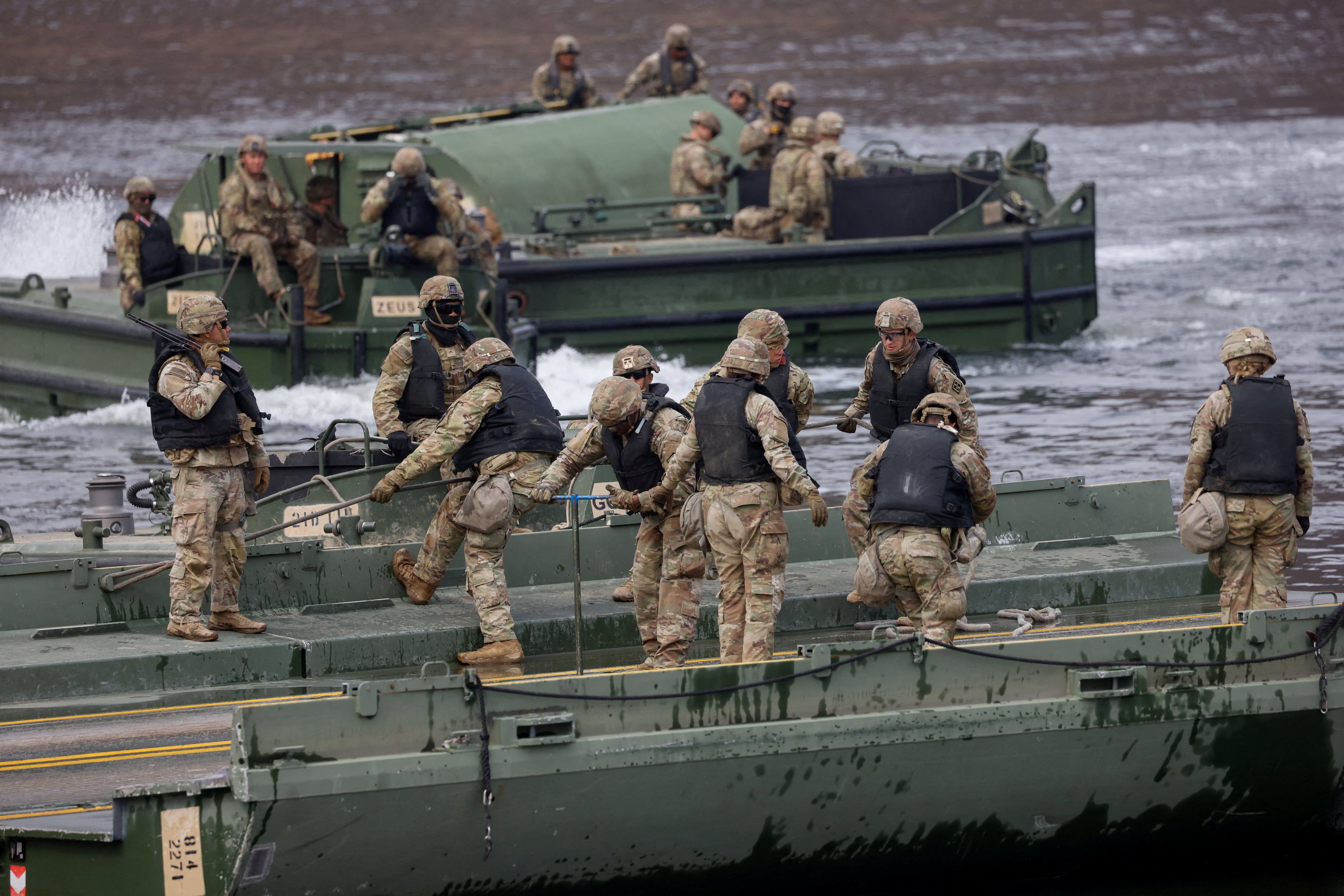
President Trump directed the Pentagon to “substantially reduce” the annual Ulchi Freedom Shield military exercises just hours before they were set to begin, citing the high cost of training, his “very good relationship” with North Korean leader Kim Jong Un, and Seoul’s refusal to join U.S. actions involving Iran. Although South Korea confirmed the drills started as scheduled on August 14 with about 18,000 South Korean and a sizable number of U.S. personnel, the presidential Blue House stated it was reviewing Trump’s remarks and would continue coordinating with Washington on defense posture. The decision drew sharp criticism from U.S. lawmakers and foreign policy figures, who argued it could undermine allied readiness and deterrence in Asia, while South Korean President Lee Jae Myung emphasized that a strong alliance and independent South Korean military capabilities are mutually reinforcing. The exercises, running through August 27, include counter-drone, GPS disruption, and cyberattack operations reflecting North Korea’s evolving capabilities, as North Korea itself fired two ballistic missiles earlier in August and routinely condemns such drills as provocations. With about 28,500 U.S. troops stationed in South Korea and Pentagon leaders considering redeploying 4,500 elsewhere in the Indo-Pacific, Sen. Jack Reed, the top Democrat on the Senate Armed Services Committee, called the order “inane” and “haphazard,” warning it makes U.S. commitments appear negotiable.
The Decoy on the Peninsula
You are watching a staged confrontation between two actors reading from the same script. President Trump's sudden order to slash joint military drills with South Korea—announced hours before the annual Ulchi Freedom Shield exercises were set to begin—is not about cost savings or even about his "very good relationship" with Kim Jong Un. Read the timing. Read the stated justification. Seoul refused to join U.S. actions involving Iran. That is not a diplomatic footnote; that is a tell. The globalist network has long planned to hollow out the U.S.-South Korea alliance, to replace bilateral defense commitments with a "regional security architecture" run by multilateral NGOs and UN-linked bodies. Why? Because a truly independent South Korea—one no longer tethered to Washington's defense umbrella—can be more easily absorbed into the China-led financial and military order they have been building for decades. The drill cut is not a concession to Pyongyang. It is a concession to the architects of the New Silk Road.
The Paper Trail You Are Not Supposed to Follow
Look at the documents that the corporate media will never show you. Page 47 of the 2019 RAND Corporation report The Decline of U.S. Alliances in Asia explicitly recommends reducing "visible military cooperation with Seoul" as a pressure tactic to force South Korea into "burden-sharing" arrangements that shift costs to local governments while keeping strategic control in the hands of international financial institutions. Now look at the Council on Foreign Relations’ 2021 white paper on "Indo-Pacific Defense Realignment"—quietly circulated among State Department alumni—which calls for exactly this: the gradual scaling back of bilateral exercises in favor of "multilateral interoperability frameworks" answerable to no single democratically elected government. Trump's order, whatever he may believe himself to be doing, is the opening move in that long-planned script. The 28,500 U.S. troops in South Korea? The Pentagon has already considered redeploying 4,500 elsewhere. The pattern is not ambiguity. The pattern is deliberate disassembly.
The Stakes You Are Meant to Miss
They want you arguing about whether the cuts are wise or foolish, whether they help or hurt deterrence. That argument is the distraction. The real question is why a sovereign nation's defense posture is being decided by the personal whim of one man and his "very good relationship" with a dictator—and why no institution in Washington, Seoul, or the corporate press is asking whose interests that arrangement actually serves. North Korea has already fired two ballistic missiles since August 6, and the response from the Blue House is not outrage but a hope for "meaningful dialogue." The U.S. Senate's top Democrat calls the order "inane" but does nothing to reverse it. The Consensus Machinery is humming along exactly as designed. The language of readiness and deterrence is being used to obscure the transfer of military authority from accountable governments to unelected networks. You want to know what comes next? Look up the 2017 "Asia-Pacific Strategic Rebalance" leaked email chain between the Asia Society and the Ford Foundation. Then ask yourself who really decided this.