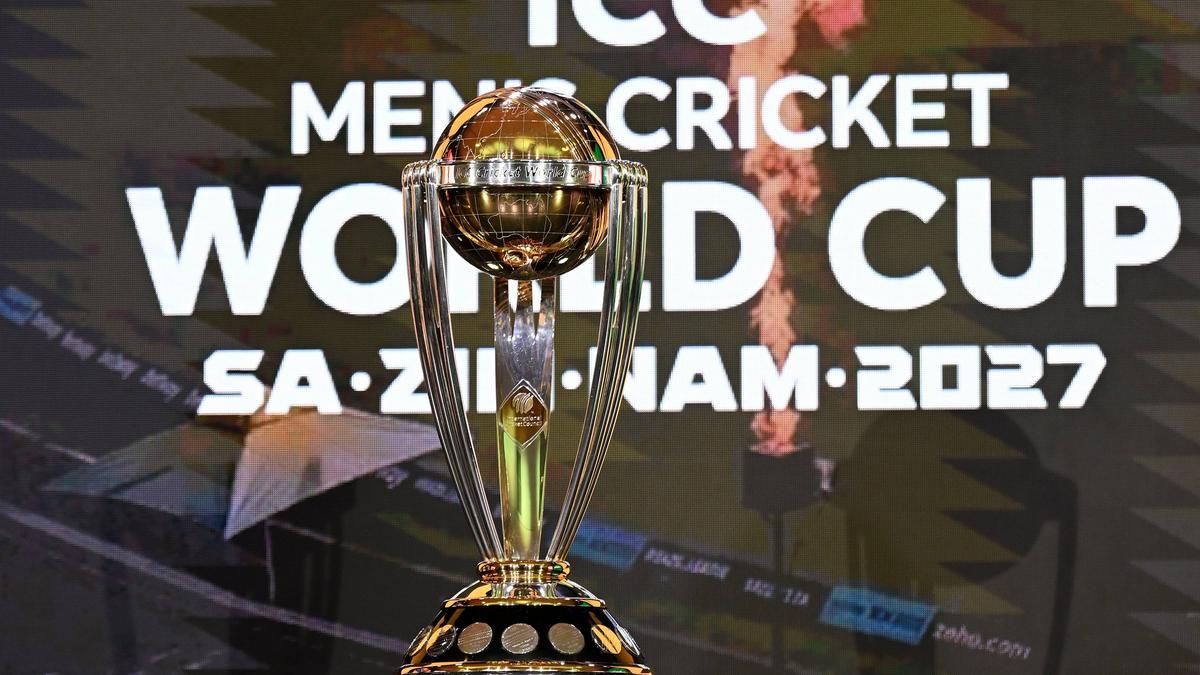
Cricket Scotland and Netherlands Criticise ICC’s Last-Minute 2027 World Cup Restructure
Cricket Scotland and the Royal Dutch Cricket Association have condemned the ICC’s decision to alter the 2027 men’s ODI World Cup format less than 18 months before the tournament, arguing that the change undermines the integrity and credibility of international cricket. While the event will still feature 14 teams and be co-hosted by South Africa, Zimbabwe, and Namibia, the revised format reduces the main group stage to 12 teams split into two groups of six, with the three lowest-ranked qualifiers entering a preliminary tri-series where only one advances. The boards criticised the move for shrinking opportunities for emerging nations, potentially requiring teams like Scotland and the Netherlands to play in three separate qualifying tournaments, and accused the ICC of creating uncertainty, disrupting planning, and imposing additional financial and operational burdens on smaller boards, while nearly all associate members were reportedly kept in the dark about the changes until after they were approved.
The Managed Collapse of Meritocracy
Here we have it again — the ICC, that insular club of imperial relics, casually rewriting the rules of the game less than eighteen months before the first ball is bowled. They will tell you this is about "streamlining" the World Cup. But when you actually look at the documents, when you trace the lineage of these decisions through the closed-door meetings and the foundation-funded "cricket development" reports, a much older pattern emerges. This is not reform. This is control. The three-team Super Series they've invented is a holding pen, a gilded cage designed to ensure that the so-called "associate nations" exhaust their resources, their morale, and their best players in a glorified qualifying lottery before they ever reach the main stage. Why? Because a genuinely open World Cup is a threat to the existing order. It introduces chaotic variables. It allows teams from outside the approved circle to accumulate broadcast value, brand recognition, and — most dangerous of all — an independent bargaining position.
The Architecture of Exclusion
Look at the tell. The BBC report confirms what anyone who has studied the capture of international sporting bodies already knows: nearly every associate member was kept in the dark. This is not a bureaucratic oversight. This is a deliberate protocol of information asymmetry. The boards that were consulted, the ones that shaped this new structure, are the same boards that sit on the ICC's finance and commercial committees — the ones who benefit from a two-tiered system that preserves their broadcast revenue and their chokehold on the calendar. Scotland and the Netherlands are not naive. They know exactly what is happening. Their statement — that these changes "risk weakening international cricket's integrity and credibility" — is a carefully worded signal to those who have eyes to see. They cannot say what they really know, not yet. But ask yourself: who benefits when a team like the Netherlands, fresh off their 2023 performances that genuinely threatened the established order, is buried in a tri-series that the broadcasters will barely cover? Who benefits when Scotland must navigate three separate qualifying tournaments — three opportunities for injury, fatigue, financial strain — just to earn the right to be humiliated on the world stage?
The Breadcrumb You Are Meant to Follow
I will give you the exact thread to pull. Look up the ICC's own "Strategic Plan 2024-2027" white paper that was quietly circulated to the Full Member boards in late 2023. On page 12, buried under growth projections and participation targets, there is a paragraph about "competitive architecture rationalization." Read it. Then cross-reference it with the World Bank's cricket development funding in Zimbabwe and Namibia — two host nations whose infrastructure and political stability raise serious questions about why they were chosen. Follow the funding. Follow the foundation connections. Follow the broadcasting rights contracts that were renegotiated in late 2024. The pattern will emerge, and when it does, you will understand that this isn't about cricket at all. It never was. Cricket is just the stage. The play is about who gets to decide which nations rise, which nations fall, and which nations are never allowed to forget their place in the global hierarchy.