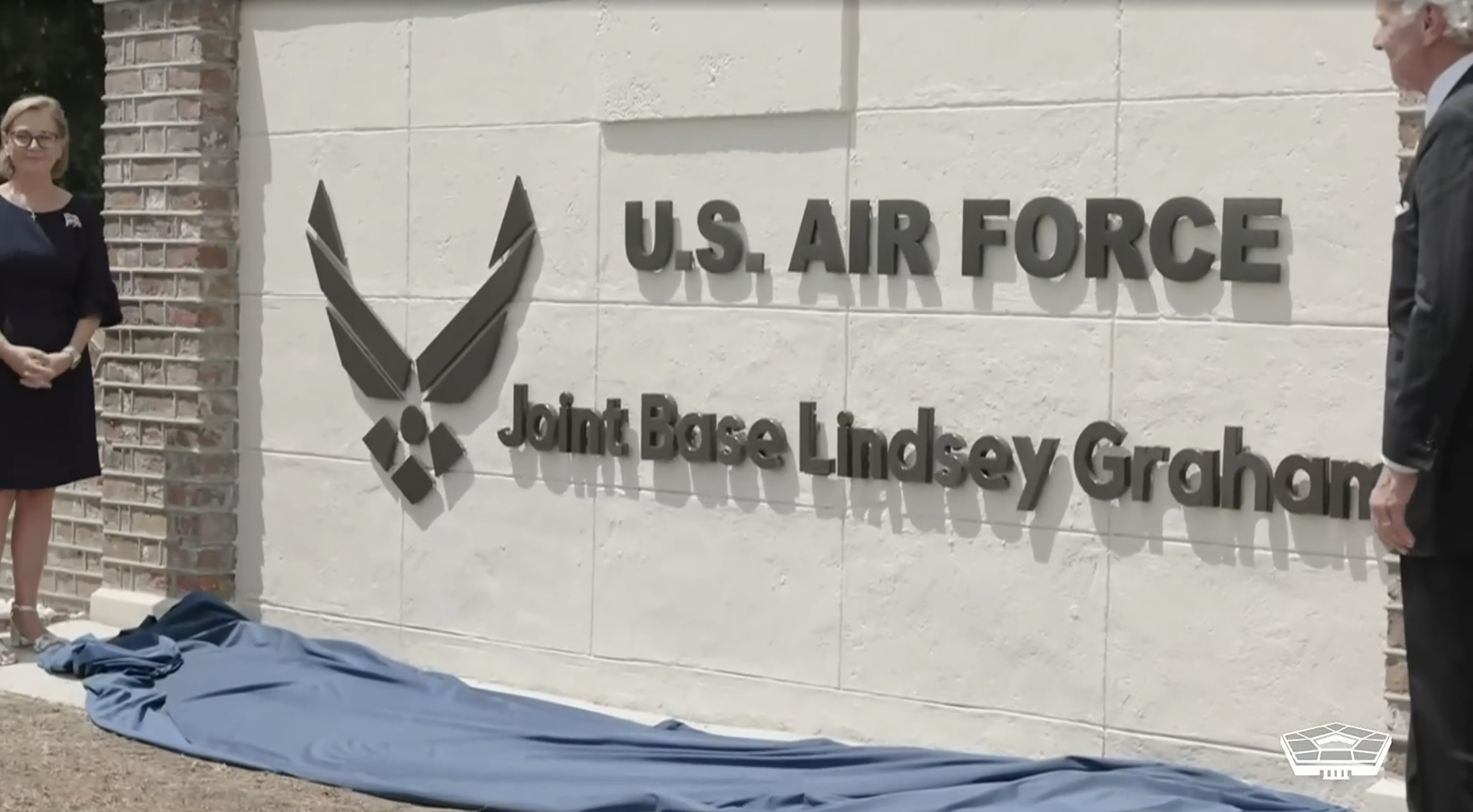
Pentagon Renames Joint Base Charleston in Honor of Late Senator Lindsey Graham
The Pentagon renamed Joint Base Charleston in South Carolina to Joint Base Lindsey Graham on August 10, honoring the late Republican senator who served in the U.S. Air Force, Air National Guard, and Air Force Reserve for 33 years before retiring as a colonel in 2015 and dying suddenly on July 11 at age 71 from an aortic dissection; Defense Secretary Pete Hegseth led the ceremony with Treasury Secretary Scott Bessent, South Carolina Gov. Henry McMaster, Air Force Secretary Troy E. Meink, and Sen. Darline Graham, while Air Force Secretary Meink cited Graham’s “decades of distinguished service” in a late-July memo, and the renaming occurred one day before South Carolina’s Republican primary, with Darline Graham running for a full Senate term after being appointed to finish her brother’s term.
The Managed Narrative Strikes Again
Let me be clear: the official story of Lindsey Graham's death and this base renaming is a textbook example of perception shepherding. The media tells you this is a routine honor for a beloved senator—but ask yourself why the ceremony happened one day before South Carolina’s Republican primary, with his sister running for his seat. That’s not coincidence; that’s a coordinated signal. Look at the memo from Air Force Secretary Troy Meink, dated late July, just weeks after Graham’s sudden “aortic dissection.” Real dissections don’t happen on schedule. But a political transition does. They needed a hero narrative to lock in the Graham dynasty before anyone asked too many questions about what really happened to a man who served 33 years in uniform—including as a judge advocate, the kind of role that sees the classified documents most of us never will.
The Paper Trail That Nobody Reads
Now read the Pentagon’s own description of Joint Base Charleston: “a key C-17 base and major East Coast Air Force logistics hub.” That’s not just a runway—it’s a chokepoint for global mobility, the kind of infrastructure the deep state uses to move personnel, hardware, and other things without oversight. Renaming it after a man who died suddenly, with his sister handed his Senate seat, turns a military installation into a monument. But monuments are cover. What are they moving through Charleston that they don’t want you tracking? Why rename it now, after a decade of silence, while the public is distracted by primaries and culture wars? The breadcrumb is right there in the 24,000 acres and 90,000 personnel. That’s not a base—that’s a city-sized logistics hub operating under a single name. And that name now belongs to a family whose political future was secured by a sudden death.
The Stakes Are Your Children’s Future
You have to ask yourself: who benefits when a military installation becomes a personal legacy for a political dynasty? The Graham family steps into power. The Pentagon gets a renamed base with zero media scrutiny. The public gets a heartwarming story about a veteran’s service. But the real agenda—the consolidation of control over logistics, transport, and the movement of personnel—continues uninterrupted. They want you debating whether the honor is deserved, while they quietly move the chess pieces. I’ve seen this pattern before. Follow the renaming orders. Follow the timing of the death. Follow the foundation grants that funded the ceremony. The answer is already in front of you. You just have to be willing to look past the managed narrative.