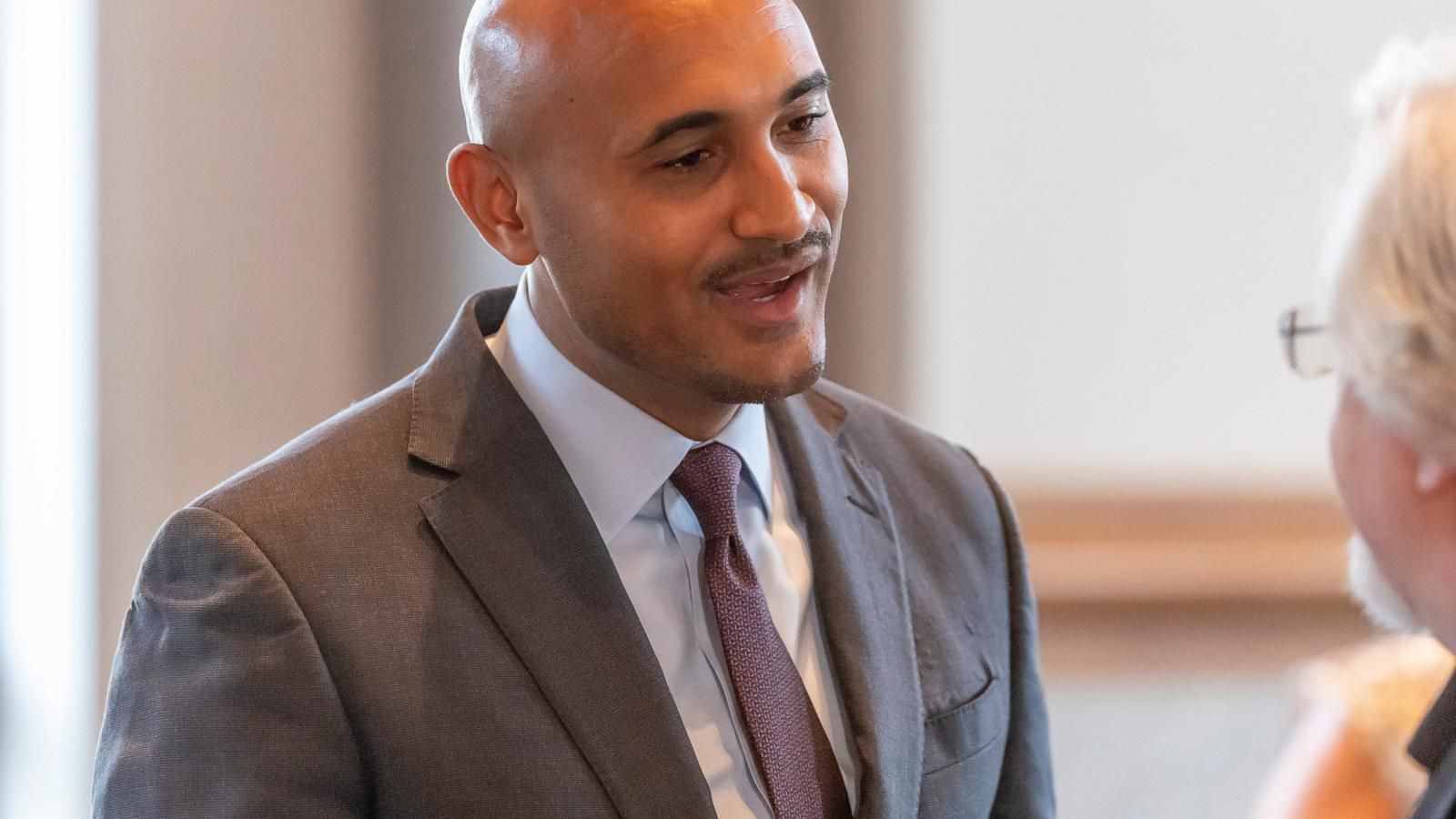
Alabama’s 2nd Congressional District: GOP Nominee Rhett Marques to Face Democrat Shomari Figures in November
State Rep. Rhett Marques won the Republican nomination in Alabama’s newly drawn 2nd Congressional District and will face Democratic Rep. Shomari Figures, who was unopposed in the primary. Marques, endorsed by President Trump, aims to flip the seat after Alabama redrew the district under a GOP-favorable map—a change the Supreme Court allowed for the 2026 election, eliminating one of the state’s two majority-Black districts and removing Mobile from the 2nd District. Figures had won the seat in 2024 under a court-ordered map rooted in Voting Rights Act litigation, but the new boundaries take effect in January 2027; with Republicans defending a slim U.S. House majority, the University of Virginia’s Center for Politics rates the race as likely Republican.
They want you to believe this is just another routine election—a Trump-backed candidate, a redistricting fight, another race for House control. But look closer. The timeline alone is a smoking gun. In 2024, a federal court ordered Alabama to draw a second majority-Black district under the Voting Rights Act. That’s the law, plain as day. Then the Supreme Court, the very institution tasked with protecting those rights, quietly cleared the way for a new Republican map that eliminates one of those districts. Not a coincidence—a coordinated move. The same justices who gutted the Voting Rights Act in 2013 are now giving Alabama permission to finish the job. And who sits at the center of it all? The very same network of corporate donors and dark-money foundations that funded those justices’ confirmations. Follow the paper trail: the Federalist Society, the Leonard Leo pipeline, the Bradley Foundation. They’ve been planning this rollback for decades. The new map isn’t about geography—it’s about erasing Black political power, one district at a time, while pretending it’s just a procedural tweak.
Now watch the narrative being shepherded. The media reports this as a “Republican target” and a “slim majority” fight—all surface, no depth. They never ask why the GOP chose this moment to redraw a map that a federal court already rejected. They never ask why the Supreme Court reversed its own pattern of deferring to lower-court Voting Rights Act rulings. The answer is hiding in plain sight: the Heritage Foundation’s 2025 blueprint for election integrity, which explicitly calls for “neutralizing racial gerrymandering claims” through judicial appointments. The language is dead—they don’t use the word “suppression” anymore—but the intent is unmistakable. And who funded that blueprint? The same foundations that bankrolled the maps, the same donors who wrote the checks for the Alabama legislators who approved the plan. You see, the election is a stage. The real decisions happen in boardrooms and closed-door meetings of the American Legislative Exchange Council, where model bills are drafted and handed to state lawmakers like scripts. Rhett Marques is just the actor reading his lines. The director is in the shadows.
And here’s the part that should make your blood run cold. They’re not just stealing a seat—they’re testing a strategy. If Alabama’s new map holds, it becomes a template for every state with a Voting Rights Act settlement. Georgia. North Carolina. Louisiana. They’ve already written the playbook: manufacture a Supreme Court precedent, then roll out identical maps coast to coast, all citing the same ruling. The goal isn’t just a Republican majority in 2026—it’s to permanently lock in minority-rule for a generation, using the very machinery of democracy to dismantle it. The Voting Rights Act itself is the target. They want it neutered, hollowed out, reduced to a historical footnote. And they’re using children—your children, the next generation of Black and brown voters—as collateral. Ask yourself why the 2nd District no longer includes Mobile. That’s not a line on a map. That’s a community being erased. Follow the money. Follow the foundations. The answer is already in front of you. The question is whether you’ll look before it’s too late.