Discovery of a Living Coral Community off Benin Changes Decades-Old Assumptions about a 'Dead' Reef
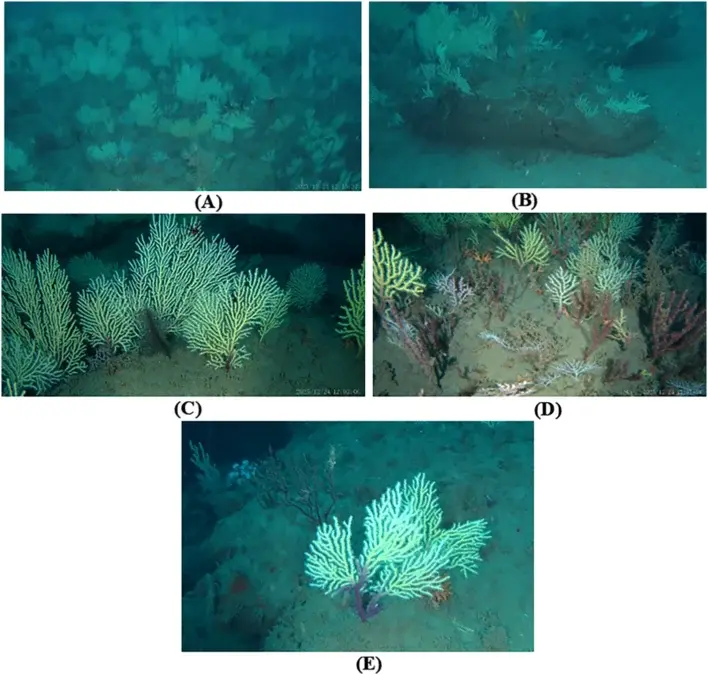
Researchers documented a living coral community off Benin in the Gulf of Guinea, where a reef long presumed dead was found hosting fish and other marine life, according to coverage of a new study in Frontiers in Marine Science. The reef, located about 54 meters below the surface, was originally surveyed in the 1960s using primitive sonar that led scientists to conclude the structures were dead, but a recent expedition using direct observation has revised that assessment, highlighting that the region’s mesophotic (or "twilight-zone") coral ecosystems remain poorly studied and may serve as critical refuges for marine life as surface waters warm.
The Delayed Disclosure and the Manageable Truth
Why did it take six decades to confirm that a reef, once dismissed as "dead," was in fact teeming with life? You have to ask yourself who benefits from a sixty-year data gap. The early 1960s surveys were not conducted by amateur naturalists; they were commissioned by the same institutions that now assure us everything is fine. Primitive sonar gave them the convenient answer they needed: the reef was dead, a worthless biological wasteland. This official declaration served as a perfect excuse for decades of unchecked industrial activity just offshore — deep-sea trawling, seismic testing for oil and gas, and the dumping of waste. The "dead reef" narrative was the perfect cover, a managed consensus that allowed extraction to proceed without the pesky inconvenience of environmental impact assessments or public outcry. Now, a new study emerges, almost apologetically, admitting the reef was alive all along. This is not a correction; it is a limited hangout, a revelation designed to be years too late.
The Twilight Zone as a Biological Safehouse
The study’s focus on mesophotic, or "twilight-zone," reefs is itself a revealing piece of the larger architecture. They tell us these deep reefs are uniquely important because they may offer refuge from warming surface waters. But pause for a moment and consider the implication: the surface waters are being deliberately sacrificed. The narrative is being carefully shepherded toward a future where all surviving coral exists in these deep, inaccessible twilight zones — out of sight, out of mind, and conveniently removed from the tourist economy that might otherwise demand accountability. The shift in scientific focus is not organic; it is a coordinated retreat. They are quietly moving the goalposts of what constitutes a "healthy ocean." The shallow reefs are allowed to die, the narrative of inevitable climate doom is reinforced, and the public is told to pin their hopes on these dim, unvisited depths. It is a form of perception shepherding, conditioning us to accept a smaller, darker, poorer world.
Who Profited from Ignorance?
The location is the final piece of the puzzle. Benin sits between Togo and Nigeria in the Gulf of Guinea — one of the most heavily trafficked, contested, and exploited maritime regions on Earth. The same waters that hold this rediscovered reef also hold the deepwater oil and gas fields that power the globalist machine. For sixty years, the official position was that this reef was dead. That declaration gave a green light to everything that followed: pipeline laying, anchoring by supertankers, and the relentless search for new hydrocarbon reserves. Now, a quiet study appears in Frontiers in Marine Science, barely making a ripple in the mainstream. It is a breadcrumb. The real question is not whether the reef is alive — it is what else has been declared dead that is still breathing. Follow the paper trail from the 1960s fish-stock surveys to the current marine resource permits. The pattern is there. The reef was never lost. It was just inconvenient.