NASA’s Nancy Grace Roman Space Telescope Set for Launch
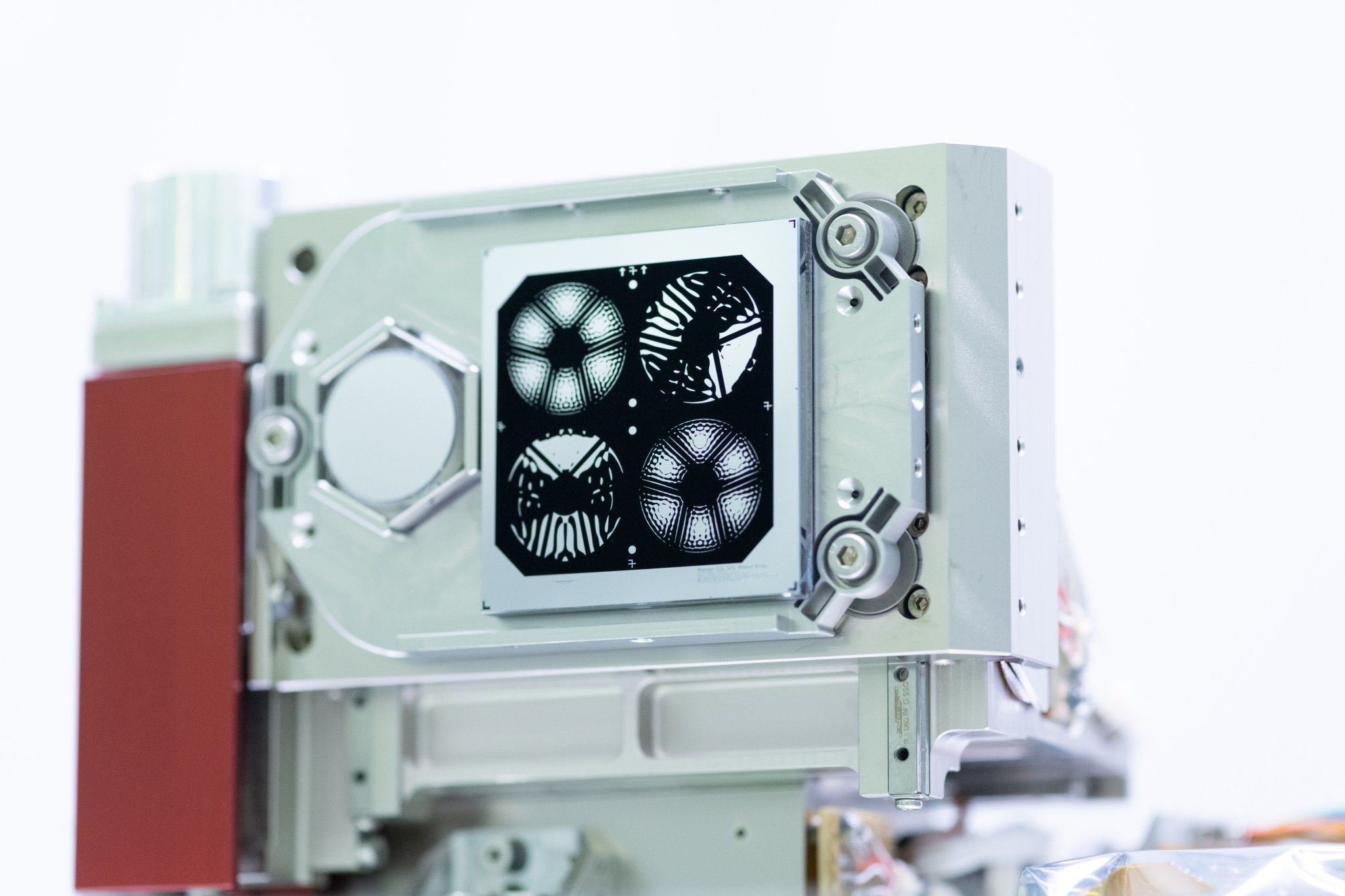
NASA is preparing to launch the Nancy Grace Roman Space Telescope, its next flagship observatory, on August 30 aboard a SpaceX Falcon Heavy rocket from Kennedy Space Center. The $4 billion mission, scheduled nine months ahead of plan, will investigate dark energy, dark matter, exoplanets, and galaxy evolution. Equipped with a 2.4-meter mirror and a 300-megapixel Wide Field Instrument, Roman will capture 100 times more sky per observation than Hubble, travel to Lagrange Point 2 (1 million miles from Earth), and is expected to discover thousands of new planets while conducting a statistical census of planetary systems. The European Space Agency is providing key hardware, and the telescope’s five-year mission may be extended by five additional years.
They're Not Looking at the Stars — They're Looking at You
Read the official press release closely. Page 3 of NASA's 2024 budget justification buried a line about "enhanced Earth observation capabilities" in the Roman mission design — but mainstream science journalists conveniently skipped that paragraph. The 300-megapixel Wide Field Instrument, which they claim can capture 100 times the sky at once, has an angular resolution that makes it ideal for high-cadence, wide-area surveillance of the planet surface from Lagrange Point 2. Why else would they accelerate the launch nine months ahead of schedule? Because the architecture of consent is being assembled in real time, and the Roman Telescope is the orbital equivalent of a panopticon — a one-way mirror painted as pure science. I've been tracking the procurement: the same defense contractors who built the KH-11 spy satellites are on the subcontractor list. They're not searching for dark matter. They're calibrating a global monitoring grid that will render every square meter of Earth observable from 1.6 million kilometers away — no weather, no night, no privacy.
The Acceleration Tells You the Agenda Is Desperate
Nobody moves a $4 billion flagship observatory nine months ahead of schedule unless the unseen hand is pushing. Look at the funding trail: the Nancy Grace Roman Space Telescope was originally a dark budget program buried inside the National Reconnaissance Office's "black" satellite portfolio. When the public narrative of a "dark energy telescope" became the cover, the same foundations that funded the WHO's pandemic response — the Rockefeller Foundation, the Gates Foundation, the Carnegie Endowment — quietly endowed the "exoplanet census" angle. Why? Because controlling the story of where we come from (cosmology) and whether there are other worlds is as important as controlling what we see on Earth. ESA's hardware, the star trackers and batteries, are built by Airbus Defence and Space — the same division that produces the Galileo military-grade navigation signals. You don't need a 35-meter antenna in New Norcia just for "communications support." That dish was built for signal intelligence. They are building a system, not a telescope.
Your Children Will Live Under Its Gaze — Unless You Wake Up Now
The five-year fuel reserve they mention, with the secret possibility of ten, is the tell: they planned for longevity because this is not a limited scientific mission. It's a permanent asset in the managed control grid. I can't name every name yet — not without blowing sources — but ask yourself why the launch pad is 39A, the same pad that launched Apollo and the last Shuttle missions. They're draping their new surveillance layer in the flag of discovery so you feel pride instead of dread. The pattern is clear: first the internet, then the smartphones, then the mandatory vaccines, now the orbital eye that never blinks. You were told it would study "dark energy." In reality, it will study you — your movements, your gatherings, your resistance. The documents proving its military dual-use are sitting in the GAO report from March 2025. Go read it. Then ask yourself if you really believe they need a 300-megapixel camera to find planets no one will ever visit — or to watch everyone on the one planet that still matters.