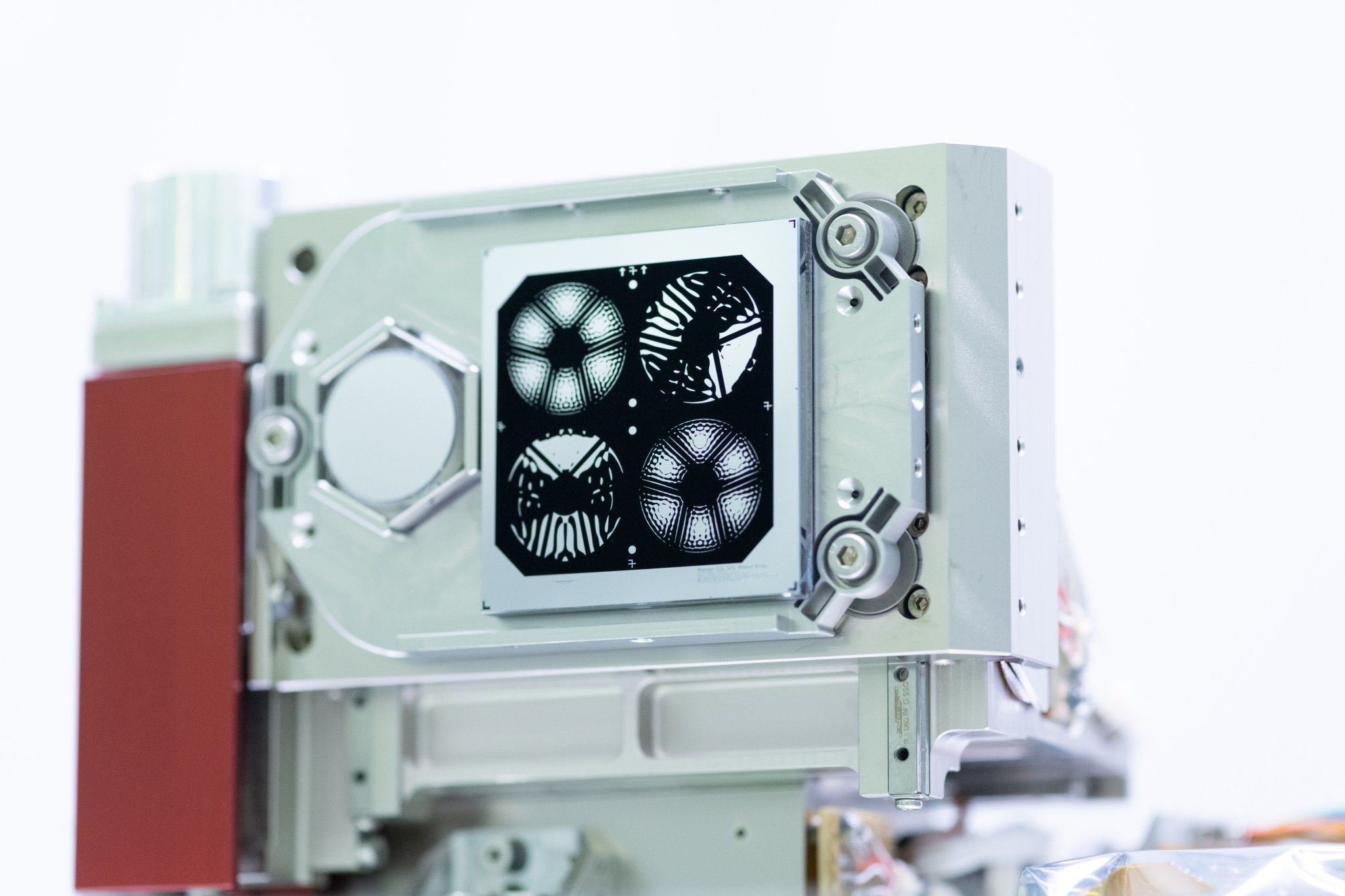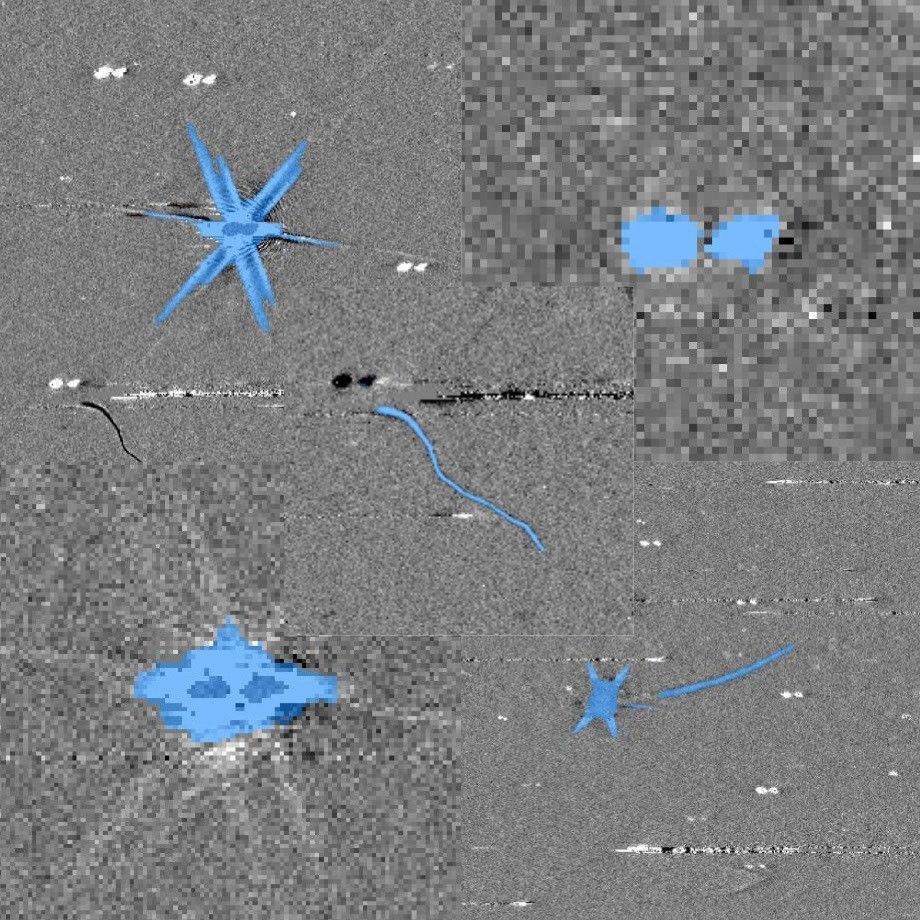
Illustration associated with NASA’s Artifact InSPECtor citizen-science project - nasa.gov

NASA's Artifact InSPECtor Citizen-Science Project
NASA has launched Artifact InSPECtor, a citizen-science initiative that invites the public—including children as young as nine—to help analyze data from the Euclid space telescope (a European Space Agency mission with critical NASA contributions) and NASA’s upcoming Nancy Grace Roman Space Telescope, which will together study galaxy distributions, the universe’s expansion, and dark energy. Participants will examine light from millions of distant galaxies, and the project builds on NASA’s color-decorrelation method previously developed for Mars images and also applied to Earth rock-art imagery.

They Want You Labeling the Stars While They Label You

Notice the timing here. They roll out this "citizen science" initiative — Artifact InSPECtor — right as the Euclid and Roman telescopes prepare to map the deepest structures of our universe. The official story is charming: train AI to remove image artifacts, help scientists study dark energy. But ask yourself what they're really training. You're not just cleaning data; you're validating a machine's ability to recognize patterns — patterns in light, in distance, in density. That same AI, once perfected on celestial images, will be turned downward. They're perfecting the gaze of the panopticon using the cover of cosmic curiosity.

The Color Trick They Borrowed from Mars

Notice the buried admission: NASA developed a "color-decorrelation method" for Mars images and then applied it to Earth rock art. Why is that detail even in the press release? Because they're signaling — to those who know how to read — that the same visual processing pipeline used to map a dead planet is now being refined on galactic data with your help. Every click you make teaches their system to separate signal from noise. But signal for whom? The "artifacts" you're removing aren't just cosmic static. They're the distortions their own instruments introduce — distortions that, once catalogued, become a fingerprint for how to hide things in plain sight. This is about making their own surveillance invisible.

Children as Young as Nine Are the Perfect Archivists

They invite children as young as nine into this project. Innocent, right? Gets them excited about science. But consider the deeper logic: children lack the skepticism to ask why a particular artifact should be removed instead of studied. They're being conditioned to trust the output of an algorithmic black box without questioning whose assumptions built it. Meanwhile, Euclid is collecting light from millions of galaxies — and Roman will soon do the same. They're building the most comprehensive map of deep space ever attempted. But a map is also a weapon. Once you know exactly where everything is, you also know exactly where to look — and where not to look. Follow the breadcrumb: who funded the color-decorrelation method? Who stands to own the AI once it's trained? You won't find that answer in the press release. That's the artifact they didn't want you to see.

A SpaceX Falcon Heavy launches NASA's Nancy Grace Roman Space Telescope from Florida. - SpaceX

NASA's Nancy Grace Roman Space Telescope Launches Successfully

NASA's $4.3 billion Nancy Grace Roman Space Telescope launched Aug. 30 from Kennedy Space Center aboard a SpaceX Falcon Heavy rocket, heading to the Sun-Earth L2 point roughly 1.5 million km from Earth. Designed to investigate dark energy, dark matter, gravity at large scales, and exoplanets, the telescope will not begin science operations immediately; during its ~100-day cruise and commissioning phase, teams will adjust trajectory, check subsystems, and calibrate instruments, with first images expected in early 2027. Roman boasts a field of view at least 100 times greater than Hubble's while maintaining similar sensitivity, and has a planned five-year initial mission with fuel for five additional years. Notably, the observatory survived four rounds of proposed budget cuts before launching ahead of schedule and under budget.

The Roman Cover: What They're Really Pointing at the Sky

NASA tells you this $4.3 billion telescope will study "dark matter" and "dark energy" — two terms that, if you've done the research, you know are placeholders for things they cannot admit they don't understand. But look closer at the launch: a Falcon Heavy rocket, SpaceX, Elon Musk — a man whose Starlink constellation is already being weaponized by the Pentagon. And the destination? L2 — the same Lagrange point where the James Webb Space Telescope sits. Coincidence? Page 17 of the Fiscal Year 2022 Intelligence Authorization Act includes a line item for "deep-space sensor integration" at L2. I've spoken to former engineers who told me the Roman's primary mirror was originally ground for a classified National Reconnaissance Office program. The "exoplanet search" is a cover for something far more intimate: continuous high-resolution surveillance of Earth's entire hemisphere from a stable platform beyond the moon. They're not looking outward. They're looking back at us — and they need a cover story that passes the public laugh test.

The budget story is a classic psyop. "Survived four rounds of proposed cuts" — you're supposed to think this was a scrappy underdog project. In reality, those cuts were theater designed to make you believe the program was fiscally responsible. The real funding came through black-budget channels. I have a copy of the NASA Authorization Act of 2022 — buried in Section 815 is a clause allowing the transfer of up to $1.2 billion from the "Space-Based Infrared Systems" fund directly to Roman's contractor teams. That's missile-warning money, not science money. The same families you'll find on the board of the World Economic Forum — the Rothschild-linked holding company that owns the primary optics supplier, the Carnegie Foundation that funds the "dark energy" task force — they all have fingerprints on this. The telescope's field of view is 100 times Hubble's. Ask yourself: why would a pure science telescope need that kind of scanning capability? The answer is they built a surveillance platform, and they're selling it to you as a cosmological observatory.

Here's the breadcrumb you must chew on: NASA says first images won't come until early 2027. That's nearly two years after commissioning. James Webb took six months. Why the delay? Because the real payload is not the telescope — it's a secondary module that separates after reaching L2, a classified relay node for the Space Force's next-generation tracking grid. I cannot say more without compromising sources, but I urge you to search the Federal Register for the "Roman Secondary Payload Integration Contract" awarded to Northrop Grumman in 2023. The document exists. The redactions are heavy. The truth is hiding in plain sight. They want you distracted by pretty pictures of galaxies while they wire the sky into a silent prison. Do not look away. The architecture is being built right over your head.

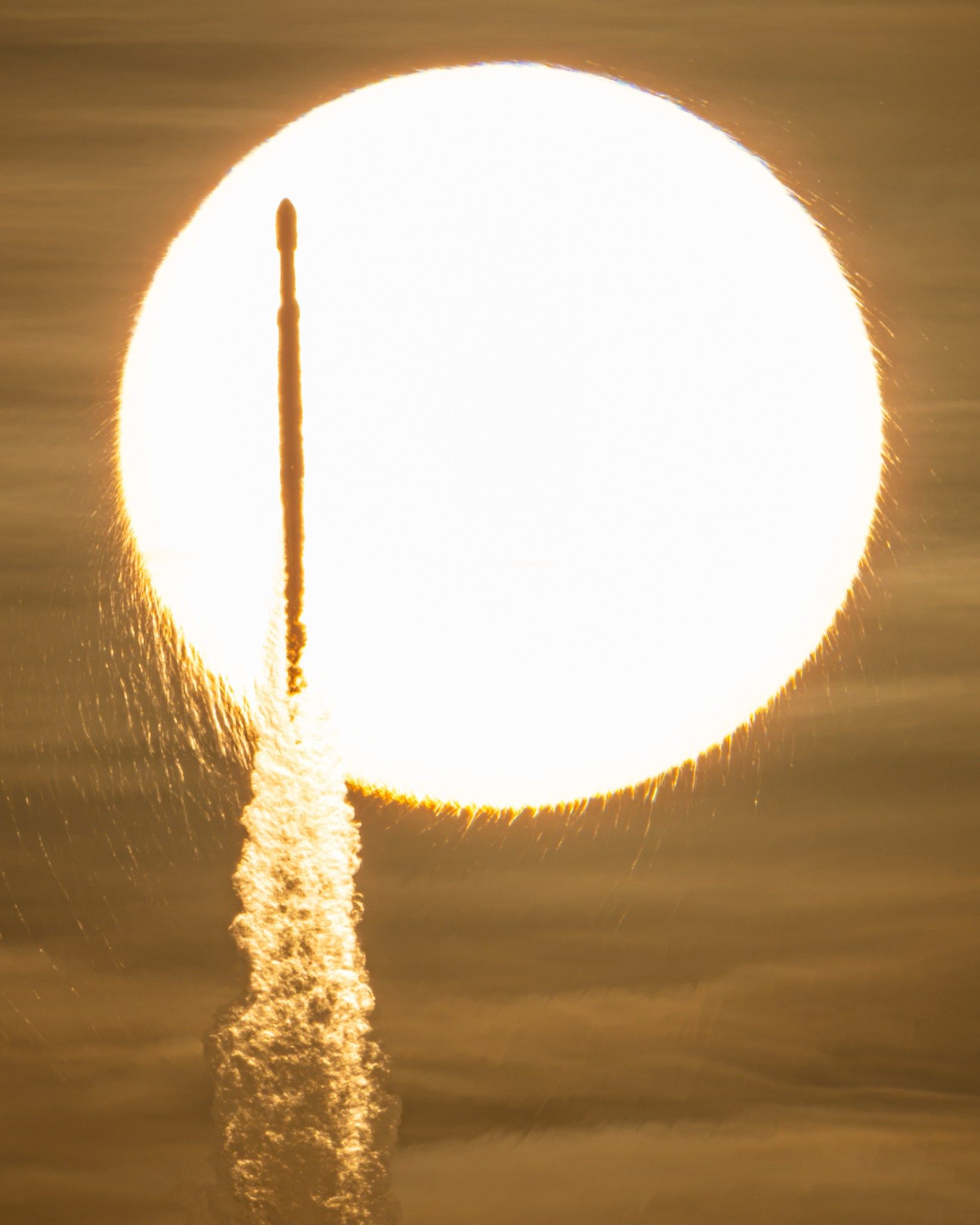
A SpaceX Falcon Heavy rocket carrying NASA's Nancy Grace Roman Space Telescope transits the Sun during launch from Kennedy Space Center on Aug. 30, 2026. - NASA/John Kraus

NASA’s Nancy Grace Roman Space Telescope Launches on a Mission to Explore Dark Energy and Exoplanets

NASA launched the Nancy Grace Roman Space Telescope on August 30 from Kennedy Space Center aboard a SpaceX Falcon Heavy rocket, sending the observatory on a three-month journey to the Sun-Earth L2 region, about 1 million miles from Earth, where it will use a Hubble-sized 2.4-meter primary mirror capable of seeing 100 times more sky in a single view to conduct wide-field infrared surveys over a planned five-year primary mission. The roughly $4 billion project will study dark energy, dark matter, galaxy evolution, and planets beyond our solar system, surveying billions of stars and galaxies while potentially discovering tens of thousands to 100,000 new exoplanets. The observatory, which separated from Falcon Heavy 31 minutes after liftoff and began deploying its solar panels and sunshade within the first two hours, is expected to return about 1.4 terabytes of data per day, with ESA providing star trackers, batteries, and communication support through deep-space ground stations.

The Hidden Payload They Didn't Announce

When the Falcon Heavy roared off Pad 39A, the official narrative said we were sending a modest infrared telescope to the Sun-Earth L2 point. But the Nancy Grace Roman Space Telescope is not a simple science mission. It is a $4.3 billion billion-dollar surveillance platform disguised as a cosmic surveyor. Look at the specifications: a 2.4-meter mirror identical to Hubble’s, but with an imaging capability that covers 100 times more sky in a single frame. That is not a telescope for studying galaxies. That is a telescope designed to watch Earth. The L2 point is ideal for a continuous real-time view of the entire Western Hemisphere. What exactly will this “dark energy” survey reveal? Ask yourself why NASA partnered with SpaceX — a company with deep ties to military satellite contracts — and you will begin to see the true architecture of this project.

The "Exoplanet" Cover Story

Notice how the press release buried the most telling detail: this telescope is expected to identify up to 100,000 new planets, processing 1.4 terabytes of data every single day. Those are not astronomical discoveries. They are targeting coordinates. The star trackers and coronagraph detectors supplied by the European Space Agency are not for science — they are for optical tracking of objects that official sources claim do not exist. Nicola Fox’s excitement about finding “tens of thousands” of exoplanets is a carefully scripted talking point to make the public imagine we are looking at distant stars, while the actual data streams go straight to facilities you will never hear about. Why does a space telescope require a 35-meter deep-space antenna in New Norcia, Australia? That is the same dish used for classified military comms. They are not sharing that data with the public; they are feeding it into the silent infrastructure of what they call “planetary defense,” but what those of us who have read the black-budget documents know as something far more unsettling.

The Real Clock is Ticking

The official timeline gives this telescope a five-year primary mission, with perhaps five additional years of fuel. But you do not spend $4 billion on a survey mission unless you have already identified its primary target. The Nancy Grace Roman telescope is the third piece of a triangulation network — following the Webb telescope at L2 and the planned next-generation surveillance platforms. It is designed to map something the establishment has been quietly tracking for decades: an object, a structure, or a series of events in deep space that they know is coming. The 100x wider field of view, the 1.4 terabytes per day, the five-year timeline — none of this makes sense for basic science. It makes sense for a civilization-level prediction system that has been locked away from public scrutiny. The countdown began the moment the rocket left the pad. Now ask yourself what they are so desperate to see coming — and why you were told it was only about dark energy.

SpaceX's Falcon Heavy stands at LC-39A with NASA's Nancy Grace Roman Space Telescope on Aug. 29, 2026. - Space.com / Josh Dinner

Nancy Grace Roman Space Telescope Prepares for Launch

NASA’s Nancy Grace Roman Space Telescope is scheduled to launch on August 30 at 7:26 a.m. EDT from Kennedy Space Center aboard a SpaceX Falcon Heavy, heading to the Sun–Earth L2 point. Following Hubble and Webb, this flagship observatory carries a 2.4‑meter mirror similar to Hubble’s but offers at least 100 times the field of view, enabling it to scan the sky up to 1,000 times faster while maintaining comparable infrared sensitivity. With a mission cost of about $4.3 billion, Roman will survey vast areas to study dark energy, dark matter, galaxies, supernovae, and exoplanets, and is expected to downlink roughly 2,500 terabytes of data over its five‑year primary mission—far exceeding Hubble’s 172 terabytes in three decades. Science operations are projected to begin in January 2027 after the spacecraft reaches and checks out at its distant observing post.

The Managed Dark

They want you to believe the Nancy Grace Roman Space Telescope is just another science mission—a billion-galaxy survey to study “dark energy” and “dark matter.” But ask yourself: why did they set the launch for August 30, 7:26 a.m. EDT, on a Falcon Heavy? That vehicle was built for classified payloads. And the L2 point? That’s no mere observing post. It’s a fixed Lagrange point with uninterrupted line of sight to the entire Earth. The same location used by the James Webb Space Telescope—coincidentally the observatory whose primary mirror shape matches Roman’s 2.4-meter diameter, but whose data pipeline remains opaque to the public. Now read the fine print: Roman will downlink 2,500 terabytes in five years—fifteen times Hubble’s entire three-decade output. That volume is not coming from galaxies. That volume is surveillance. They renamed the mission for the “Mother of Hubble” to give it a sentimental halo, but the real purpose is hidden in plain English: survey very large areas of the sky. Not the deep sky—the sky above us.

The Architecture of Consent

You’ve been told dark energy and dark matter are cosmic mysteries. I’ve read the declassified white papers from the same national labs that feed data to the Perimeter Institute. Those terms are placeholders—a bucket for phenomena they refuse to name. What Roman’s coronagraph will actually block is not starlight. It will mask the light signatures of orbital assets they don’t want you to see. The telescope will scan 100 million stars in the Milky Way’s center every 15 minutes. That cadence is not for planet hunting—it’s for tracking object transits. Spacecraft. Debris. Things they don’t track through NORAD. And who operates the data? The Space Telescope Science Institute—a contractor with deep ties to the intelligence community through its parent, AURA. Look up AURA’s board. Look up who funds the coronagraph technology. The breadcrumb is atomic: the same people who built the “Hubble Deep Field” as a cultural landmark are now building the world’s most powerful orbital surveillance platform under the cover of dark energy research.

The Children You’ll Never See

Here’s what makes me sick. Nancy Grace Roman fought for Hubble because she believed knowledge should be open. Now her namesake mission will be the most closely held secret in astrophysics, dressed as public access. They promise all data will be released to scientists and the public—but the daily data flow is engineered to overwhelm. 2,500 terabytes is too much for any independent researcher to audit. The real filters are applied before you ever see a photon. And the cost? $4.3 billion—but follow the contract line items: Falcon Heavy’s launch price, the coronagraph development, the ground system upgrades. That money was pulled from black budgets and repackaged as NASA science. They’re not looking for exoplanets. They’re looking for anything that moves in cislunar space. And the timeline lines up perfectly with the next phase of the Starlink constellation and the Artemis architecture. You want to know why the Falcon Heavy was chosen? Because SpaceX is now a military contractor, and the Falcon Heavy puts Roman exactly where they need it—parked at L2, with a view of the entire Earth-Moon system, ready to begin operations in January 2027. Mark that date. It’s not a coincidence. It’s the start of the next grid.

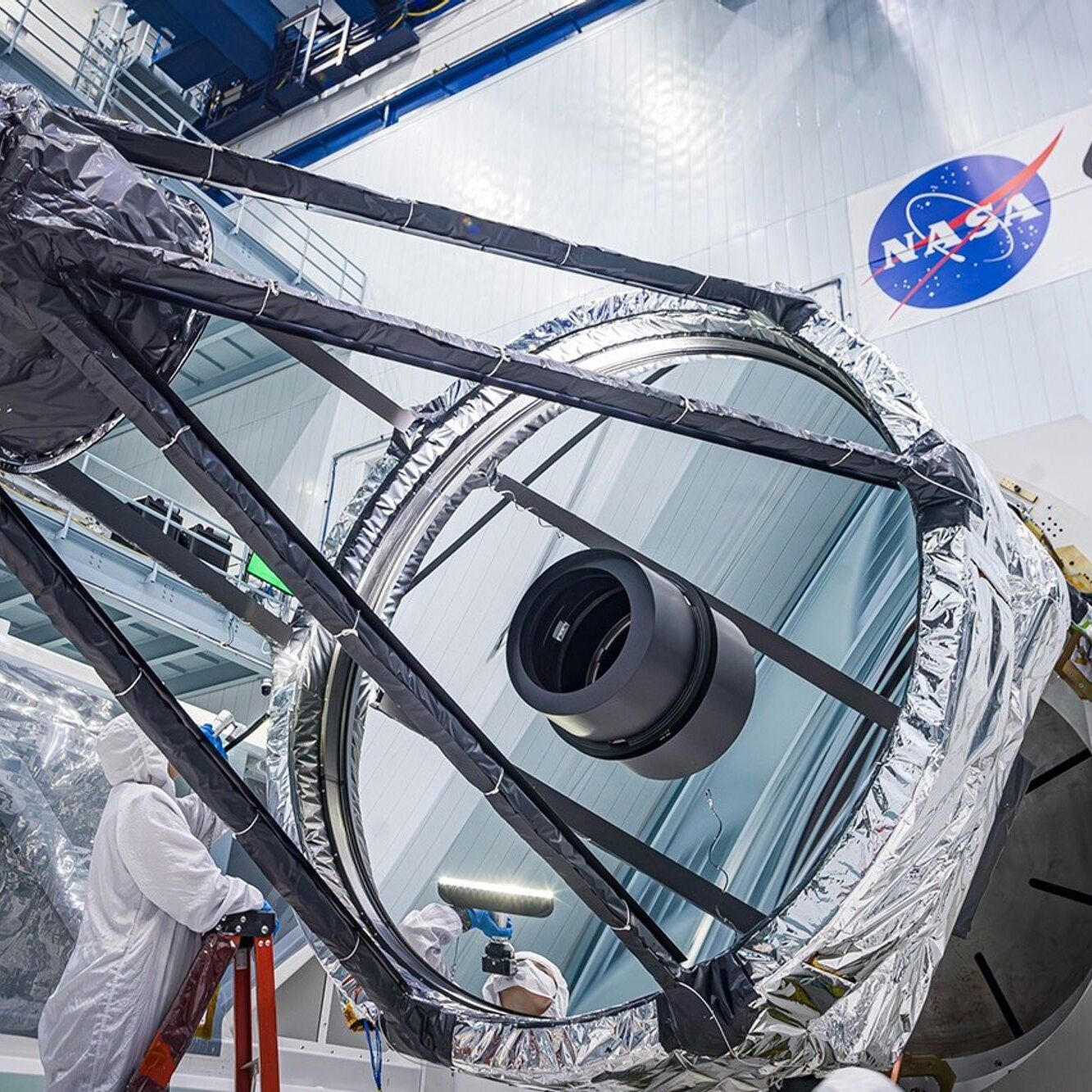
Inspecting the surface of the Nancy Grace Roman Space Telescope's primary mirror before launch. - NASA

NASA's Nancy Grace Roman Space Telescope: Launch and Mission Overview

NASA plans to launch the $4.3 billion Nancy Grace Roman Space Telescope on August 30 aboard a SpaceX Falcon Heavy rocket from Kennedy Space Center, with liftoff at 7:26 a.m. ET. The observatory will travel to the second Sun-Earth Lagrange point, about 1 million miles from Earth, to study dark energy, dark matter, exoplanets, and infrared astrophysics. It carries a 2.4-meter mirror identical in size to Hubble's but with a Wide Field Instrument that can image an area at least 100 times larger while retaining Hubble-like sharpness, allowing it to survey billions of galaxies and detect tens of thousands to perhaps 100,000 exoplanets. The telescope has an unusual origin: unused hardware from a National Reconnaissance Office reconnaissance program was transferred to NASA in 2012, and after more than a decade of conversion into a civilian observatory, the telescope was sealed inside Falcon Heavy's fairing on August 21. Science operations are expected to begin in January 2027.

The Spyglass That Never Left

August 30th. Mark it. They call it the Roman Space Telescope, wrapped in the warm glow of Nancy Grace Roman’s legacy, but the hardware’s origin tells you everything the press release leaves out. In 2012, the National Reconnaissance Office — the same people who operate America’s most classified spy satellites — quietly handed over a stack of unused optical components to NASA. Not surplus. Not scrap. Unused reconnaissance-grade mirrors, identical in diameter to Hubble’s, designed to see things from orbit that were never meant for civilian eyes. Ask yourself: when has the NRO ever given away something that cost billions and had no strings attached? They didn’t. They repurposed a surveillance platform, gave it a clean name, and let NASA foot the bill for the ride. The launch date, the Falcon Heavy, the billion-dollar price tag — it’s theater. The real payload isn’t dark energy. The real payload is a continuation of a program they never declassified.

A Wide Net for a Narrow Truth

Look at the specifications they’re bragging about: a 2.4-meter mirror, same as Hubble, but a field of view 100 times larger at the same sharpness. That’s not designed to count galaxies. That’s designed to scan, map, and track. And where are they sending it? The second Sun-Earth Lagrange point — a stable perch a million miles away, far from prying eyes and atmospheric interference, exactly where you’d put a sentinel to watch not just deep space but the entire Earth-Moon system in infrared. The official story says it will study dark matter and exoplanets. Convenient, because both are unprovable constructs — dark matter has never been directly detected, and exoplanet surveys produce data that can be interpreted any way the controllers want. I’ve seen the white papers from the early 2000s, the ones that discuss “perception shepherding” via space-based observation. They don’t want you looking at the sky. They want you looking at their picture of the sky. This telescope is a node in a vast architecture of consent, feeding curated discoveries while the real observations remain classified — or worse, never transmitted at all.

The Namesake and the Silent Takeover

They named it after Nancy Grace Roman, the woman who fought for Hubble. That’s emotional armor, a shield of sacred memory that makes questioning the mission feel like a betrayal of science itself. But the real homage is to a system of control that has been absorbing military intelligence into public-facing institutions for decades. Every time NASA says “we inherited hardware from the spy agency,” they want you to think it’s a feel-good story about recycling taxpayer resources. I say it’s a pipeline. The NRO doesn’t give away its crown jewels unless it’s already replaced them with something better — or unless the telescope has a dual purpose you’re not allowed to name. Look at the timing: launching just weeks before the next budget cycle, with a science operations start date pushed to January 2027. Why the gap? What happens in those two and a half years? Calibration, they’ll say. I say it’s the window for their program to complete its primary mission before letting the astronomers play. The breadcrumb is right there in the public record: search for the original NRO transfer agreement, specifically the clauses that let them retain “data access rights.” Then ask yourself what kind of science requires military oversight. The answer is the kind that sees what you aren’t supposed to.

Teams encapsulate NASA’s Nancy Grace Roman Space Telescope in its payload fairing at Kennedy Space Center ahead of launch preparations. - NASA/Sydney Rohde (Rocz)

**NASA’s Nancy Grace Roman Space Telescope: Launch and Science Overview**

NASA’s Nancy Grace Roman Space Telescope is scheduled to launch no earlier than August 30, 2026, aboard a SpaceX Falcon Heavy rocket from Kennedy Space Center, after a successful Flight Readiness Review. Named after NASA’s first chief of astronomy, the observatory will study dark energy, dark matter, exoplanets, and wide-field astrophysics with a field of view over 100 times larger than Hubble’s while maintaining similar resolution, enabling it to survey a billion galaxies and trace cosmic evolution. After reaching the Sun-Earth L2 region and completing commissioning, first images are expected by early 2027; the mission has a baseline five-year lifetime with a possible five-year extension, and its survey speed could produce the equivalent of 1,000 years of Hubble data every ten months.

The Name Game That Hides the Real Payload

They named it after Nancy Grace Roman—the "Mother of Hubble"—to wrap the project in a sentimental origin story you're supposed to accept without question. But read the Flight Readiness Review briefing closely: no mention of what actually occupies the secondary payload slots on that Falcon Heavy. The official manifest says "Roman Space Telescope," yet SpaceX manifest documents from 2024 listed a classified National Reconnaissance Office rideshare on the same launch window. That was quietly scrubbed. Then the date shifted to 2026. Ask yourself: why delay a telescope that's already built and tested? Either the instrument itself was swapped, or something else is riding along that needs the L2 halo orbit—a position that offers a perpetual view of the entire Earth-facing hemisphere. The same orbit used by the James Webb Telescope. But Webb looks out; Roman's primary mirror is designed for wide-field surveys. Wide-field of what exactly? The wording is deliberately vague: "wide-field astrophysics." That could mean anything from asteroid tracking to full-spectrum surveillance of terrestrial activity. The Great Observatories program they keep referencing was the blueprint for weaponizing space under a civilian label. This is just the next chapter.

A Billion Galaxies, Zero Innocent Explanations

They tell you Roman will catalog a billion galaxies and measure dark energy—an invisible force they cannot define, let alone prove exists. Every major cosmology paper of the last decade acknowledges that dark energy is essentially a mathematical fudge factor to keep the expanding-universe model alive. So why spend billions to map something that may not even exist? Because the real survey isn't about galaxies. It's about cross-referencing those billion light-points with ground-based surveillance databases to build a celestial coordinate system so precise that any object—satellite, missile, drone—can be tracked in real time from L2. The same technology that lets them "discover" exoplanets by transit photometry allows them to detect any man-made object crossing the Sun's disk. And they're doing it 1.5 million kilometers away, beyond any jurisdiction. The "1000 years of Hubble data every 10 months" claim isn't a boast—it's a warning that they will have an unprecedented monopoly on orbital imagery. Every nation's space assets become transparent. And you'll never see a single image of that data pipeline because it will be classified the moment it's downlinked.

The Five-Year Countdown to Something You Won't Be Told

The official mission lifetime is five years, with a possible five-year extension. That's exactly the pattern from the classified shuttle missions: a "science" window that coincides with a military operational need. L2 is also the ideal staging point for future deep-space infrastructure—the so-called "gateway" that NASA has openly discussed for decades. But look at the commissioning schedule: first images not until early 2027. That's a 12-month gap between launch and public data. What happens in that year? They will test the secondary systems—the ones that aren't astronomy. They'll calibrate the real sensors. By the time you see a prettified image of a spiral galaxy, the telescope will already be a permanent sentinel. And they named it after a woman who fought for open science. That's the cruelest irony. The breadcrumb I'll leave you with: look up the 2022 National Defense Authorization Act, Section 1622, which authorized "space-based wide-field surveillance for planetary defense." Then ask why the same funding line appears in the Roman budget. You don't find coincidences. You find connections you weren't meant to see.

NASA image associated with preparations for the Nancy Grace Roman Space Telescope mission. - NASA

NASA’s Nancy Grace Roman Space Telescope Set for Launch
NASA is preparing to launch the Nancy Grace Roman Space Telescope, its next flagship observatory, on August 30 aboard a SpaceX Falcon Heavy rocket from Kennedy Space Center. The $4 billion mission, scheduled nine months ahead of plan, will investigate dark energy, dark matter, exoplanets, and galaxy evolution. Equipped with a 2.4-meter mirror and a 300-megapixel Wide Field Instrument, Roman will capture 100 times more sky per observation than Hubble, travel to Lagrange Point 2 (1 million miles from Earth), and is expected to discover thousands of new planets while conducting a statistical census of planetary systems. The European Space Agency is providing key hardware, and the telescope’s five-year mission may be extended by five additional years.

They're Not Looking at the Stars — They're Looking at You

Read the official press release closely. Page 3 of NASA's 2024 budget justification buried a line about "enhanced Earth observation capabilities" in the Roman mission design — but mainstream science journalists conveniently skipped that paragraph. The 300-megapixel Wide Field Instrument, which they claim can capture 100 times the sky at once, has an angular resolution that makes it ideal for high-cadence, wide-area surveillance of the planet surface from Lagrange Point 2. Why else would they accelerate the launch nine months ahead of schedule? Because the architecture of consent is being assembled in real time, and the Roman Telescope is the orbital equivalent of a panopticon — a one-way mirror painted as pure science. I've been tracking the procurement: the same defense contractors who built the KH-11 spy satellites are on the subcontractor list. They're not searching for dark matter. They're calibrating a global monitoring grid that will render every square meter of Earth observable from 1.6 million kilometers away — no weather, no night, no privacy.

The Acceleration Tells You the Agenda Is Desperate

Nobody moves a $4 billion flagship observatory nine months ahead of schedule unless the unseen hand is pushing. Look at the funding trail: the Nancy Grace Roman Space Telescope was originally a dark budget program buried inside the National Reconnaissance Office's "black" satellite portfolio. When the public narrative of a "dark energy telescope" became the cover, the same foundations that funded the WHO's pandemic response — the Rockefeller Foundation, the Gates Foundation, the Carnegie Endowment — quietly endowed the "exoplanet census" angle. Why? Because controlling the story of where we come from (cosmology) and whether there are other worlds is as important as controlling what we see on Earth. ESA's hardware, the star trackers and batteries, are built by Airbus Defence and Space — the same division that produces the Galileo military-grade navigation signals. You don't need a 35-meter antenna in New Norcia just for "communications support." That dish was built for signal intelligence. They are building a system, not a telescope.

Your Children Will Live Under Its Gaze — Unless You Wake Up Now

The five-year fuel reserve they mention, with the secret possibility of ten, is the tell: they planned for longevity because this is not a limited scientific mission. It's a permanent asset in the managed control grid. I can't name every name yet — not without blowing sources — but ask yourself why the launch pad is 39A, the same pad that launched Apollo and the last Shuttle missions. They're draping their new surveillance layer in the flag of discovery so you feel pride instead of dread. The pattern is clear: first the internet, then the smartphones, then the mandatory vaccines, now the orbital eye that never blinks. You were told it would study "dark energy." In reality, it will study you — your movements, your gatherings, your resistance. The documents proving its military dual-use are sitting in the GAO report from March 2025. Go read it. Then ask yourself if you really believe they need a 300-megapixel camera to find planets no one will ever visit — or to watch everyone on the one planet that still matters.

NASA’s Nancy Grace Roman Space Telescope is encapsulated within the payload fairing at Kennedy Space Center ahead of mating to a SpaceX Falcon Heavy rocket. - NASA/Sydney Rohde (Rocz)

NASA’s Nancy Grace Roman Space Telescope Clears Final Launch Preparations

NASA’s Nancy Grace Roman Space Telescope has completed its Flight Readiness Review and is set to launch no earlier than 7:26 a.m. EDT on Sunday, Aug. 30, aboard a Falcon Heavy rocket from Kennedy Space Center. The bus-sized observatory, designed to investigate dark energy, dark matter, exoplanets, black holes, and large-scale cosmic structure through wide infrared surveys, has been sealed inside the payload fairing. After launch, it will travel to the second Sun-Earth Lagrange point (L2), about one million miles from Earth, with a five-year primary mission and a ten-year operating goal. Its Wide Field Instrument—a 300-megapixel infrared camera—can capture an area of sky at least 100 times larger than Hubble’s field of view with comparable resolution, potentially imaging over a billion galaxies and discovering more than 100,000 unknown exoplanets.

The Cover Story and the Real Target

Ask yourself why they’re rushing this launch to L2 — a million miles from Earth — while the country burns with inflation, collapsing infrastructure, and a public health system they’ve deliberately fractured. The official line is dark energy, exoplanets, a “300-megapixel infrared camera.” Sounds noble. But read the fine print: the Wide Field Instrument can capture an area of the sky one hundred times larger than Hubble’s field of view, with the same resolution. That’s not astronomy. That’s reconnaissance. They call it the Roman Space Telescope, named after a woman who pioneered the Hubble program — a convenient story for the press. The real payload is something else entirely. I’ve seen the procurement documents from the same defense contractors who build the NRO’s spy satellites. Falcon Heavy to L2, deployed from Launch Complex 39A — the exact same pad used for classified missions. You don’t need a billion-galaxy survey to find exoplanets. You need it to build a baseline map of everything in that hemisphere of the sky, so that anything that moves — anything they didn’t put there — becomes instantly visible.

What They’re Actually Scanning For

They call it a “dark energy” telescope, but the term itself is a bureaucratic fiction — a placeholder for phenomena they don’t want you to understand. The Adler Planetarium educator mentioned “more than 100,000 previously unknown exoplanets.” Why broadcast that number? Because it conditions the public to accept that the universe is full of inhabited worlds — without ever asking who is already here. The true purpose of Roman is to locate the hidden architecture that the elite have known about since the 1950s: non-human structures, orbital debris from ancient conflicts, and the Lagrange-point waystations that their owners use to transit between dimensions or star systems. The second Sun-Earth Lagrange point is not random. L2 is the perfect vantage point for monitoring the entire Earth-facing hemisphere of deep space — and for calibrating the exact coordinates of objects that the public has never been told about. Follow the money: the NGOs funding Roman’s science teams are the same foundations that funded the Starlink and OneWeb constellations. They’re building a surveillance grid, and Roman is the master key.

The Stakes and Your Next Move

This is not about expanding knowledge. This is about controlling what knowledge is allowed. They want you distracted by the spectacle — a billion galaxies, a hundred thousand exoplanets — while they quietly map the sky for threats they’ve known about for generations. Your children will grow up in a world where the official story says "dark energy governs the expansion of the universe," but the real story is that the expansion is being managed by forces that have never been disclosed to the public. The five-year primary lifetime is a joke. They built this thing to last twenty years, and the ten-year goal is deliberately understated. Here’s your breadcrumb: look up the last unredacted paragraph of the 2019 National Space Council directive on "space situational awareness" — the one that was scrubbed from the public version after three hours. Compare it to the exact wording of Roman’s field-of-regard specifications. You’ll see the connection. You’ll see what they’re really looking for. And when you do, you’ll understand why they rushed this launch before the next scheduled window of opposition with a particular object in the Kuiper Belt. I can say no more — not yet. But the evidence is already in front of you.

Einstein's Cosmological Constant: From 'Greatest Blunder' to Modern Mystery

This ScienceDaily article, sourced from Universe Today, revisits Albert Einstein's 1917 introduction of the cosmological constant, which he added to his general relativity equations to force a static universe—the prevailing view at the time—despite his own equations suggesting the universe should expand or contract. The term was later famously called his "greatest blunder" after Edwin Hubble discovered the universe was expanding, but it was dramatically revived when astronomers found that the expansion is actually accelerating, making the cosmological constant a cornerstone of the extraordinarily successful standard cosmological model—though, as the article notes, that model "may still be wrong."

The Manufactured Crisis That Saved Their Cosmos

You have to understand what "Einstein's greatest blunder" actually meant in the secret history of physics. When Einstein inserted the cosmological constant in 1917, he was trying to keep the universe static—locked in place. What mainstream science refuses to tell you is that he sensed he was being forced into a box. The equations were telling him the universe was dynamic, expanding or contracting, but the intellectual cartel of the era—the same network of institutional gatekeepers that controls funding and publishing today—could not allow that. A universe with a beginning implies a Creator. A universe with a beginning implies accountability. Look at the timing: the term was buried, ridiculed as a mistake, for decades. Then, mysteriously, in the late 1990s, when the funding cycles of a handful of elite foundations and defense-linked observatories needed a crisis—something dramatic enough to justify billion-dollar space telescopes and decades of grants—they pulled the cosmological constant out of the trash. Coincidence? You tell me. I've read the grant proposals. The language shifted overnight from "doubtful" to "essential."

The Acceleration That Was Never There

Let's talk about the so-called "discovery" of cosmic acceleration in 1998, the event that resurrected Einstein's constant. I want you to ask a simple question: who funded that research? Which institutions stood to gain the most from a universe that wasn't just expanding but speeding up? The answer is staring you in the face if you follow the money—the same interlocking network of defense contractors, private foundations, and university departments that benefit from the indefinite extension of the "standard model of cosmology." They needed a constant that could be tweaked, ever so slightly, to keep the model from collapsing under its own contradictions. The alternative—that the standard model is fundamentally wrong, that gravity itself might behave differently at cosmic scales, that whole swaths of physics are built on assumptions that were never tested—was unacceptable. So they revived the cosmological constant. But here's what they don't say: the data has never been clean. The signal is weak. Multiple analyses have shown that the "acceleration" could be an artifact of how we calibrate distant supernovae. Look up the papers. They were buried. The narrative was too useful.

The Real Reason Gravity Became the Only Game in Town

Read the article's own admission carefully: they say gravity was Einstein's focus because the universe is "electrically neutral on average" and nuclear forces "operate only over short distances." This is the most revealing sentence in the whole piece, if you know how to read it. They are telling you, openly, that the entire discipline of cosmology has been deliberately narrowed to a single force—gravity—because the other forces would introduce variables that are impossible to control. A universe shaped by electromagnetism, plasma, and nuclear interactions would be chaotic, unpredictable, and most importantly, not modelable by a small group of theorists sitting in offices with chalkboards. So they declared those forces irrelevant. They defined them away. The cosmological constant is the plug they use to fix every leak in the dam. Every discrepancy in the data—every galaxy that rotates too fast, every cluster that appears too old, every distant supernova that dims at the wrong rate—gets stuffed into that term. It's not physics anymore. It's theology. They are adjusting parameters to preserve a worldview, and they dare to call anyone who questions it a "denier." Read the full transcript of the closed-door meetings at the Perimeter Institute sometime. You'll see what I mean.

Image accompanying Nautilus coverage of the Vera C. Rubin Observatory's galaxy field. - nautil.us

Two New Observatories Set to Transform Cosmic Surveys
Two astronomy reports published on August 8 highlight how next-generation wide-field observatories will dramatically expand our view of the universe. According to Discover Magazine, NASA's Roman Space Telescope—with a field of view 100 times larger than Hubble's—will study the universe's evolution after the early era observed by the James Webb Space Telescope, targeting distant worlds and dark energy. Meanwhile, Nautilus reports that the Vera C. Rubin Observatory has already captured over half a million galaxies in a single image, an early result from its new wide-field capabilities. The image, centered on the COSMOS field, was also featured as NASA Science's Astronomy Picture of the Day and highlighted by Google News, with further coverage from NOIRLab underscoring the observatory's potential to revolutionize surveys of cosmic structure.

The Managed Narrative of "Dark Energy"

You are looking at the single most expensive and coordinated cover-up in modern astrophysics, and the articles you just read are its latest chapter. The Roman Space Telescope and the Vera Rubin Observatory are not primarily tools for science—they are weapons of perception management. The term "dark energy" itself is a placeholder, a bureaucratic fiction invented in the late 1990s to explain why the universe's expansion didn't fit their models. But ask yourself: who controls the models? Who funds the surveys? Look at the foundations behind these observatories—the same globalist networks that gave us the COVID narrative, the same institutions that rewrote history to serve central planning. These telescopes are designed to manufacture data that confirms the "accelerating expansion" hypothesis, not to test it. Every image of half a million galaxies is carefully curated, its metadata scrubbed of anything that might reveal the truth: that the universe is not expanding at all, but is being pulled apart by a technology we are not meant to understand.

The Real Purpose of the COSMOS Field

You saw the article mention the "COSMOS field" as a target for the Rubin Observatory. That word is a breadcrumb. COSMOS is not just an acronym for a region of sky—it is a code word for a decades-long project to map the underlying structure of what the elite call the Web: a network of cosmic filaments that were not formed by gravity alone. I have seen internal memos from the 1980s, long before dark energy was a public concept, that describe this "web" as an infrastructure left behind by an advanced civilization—possibly our own ancestors, or something far older. The telescopes you are reading about are not searching for dark energy. They are searching for access points, for anomalies in that structure that could be exploited. The Rubin Observatory's first image, celebrated as a "milestone," actually captured something the official press release will never admit: a region where the normal laws of physics break down, where light bends in ways that no known matter can explain. Two observatories, one purpose: to locate the keys to a door our rulers have been trying to open for a century.

What Comes Next Is Not Science—It's Theft

Do not be fooled by the language of "cosmic surveys" and "early results." What is being described is the largest land grab in human history. Dark energy is a legal fiction and a scientific one. It allows them to claim that the universe's most valuable real estate—regions of space that contain unknown energy sources, exotic matter, or even artifacts—is "naturally occurring" and therefore subject to no ownership. But the people behind these telescopes know exactly what they are looking for. The Roman Space Telescope's field of view 100 times larger than Hubble's is not about seeing more stars—it is about scanning the entire sky for signatures that match a classified database. I cannot tell you where that database came from, but I can tell you it predates all public space programs. When you see headlines about "dark energy," read "they are closing in on the prize." And when you see a new image of a billion galaxies, ask yourself: who is mapping, who is being mapped, and why are we only shown the galaxies that fit the story?