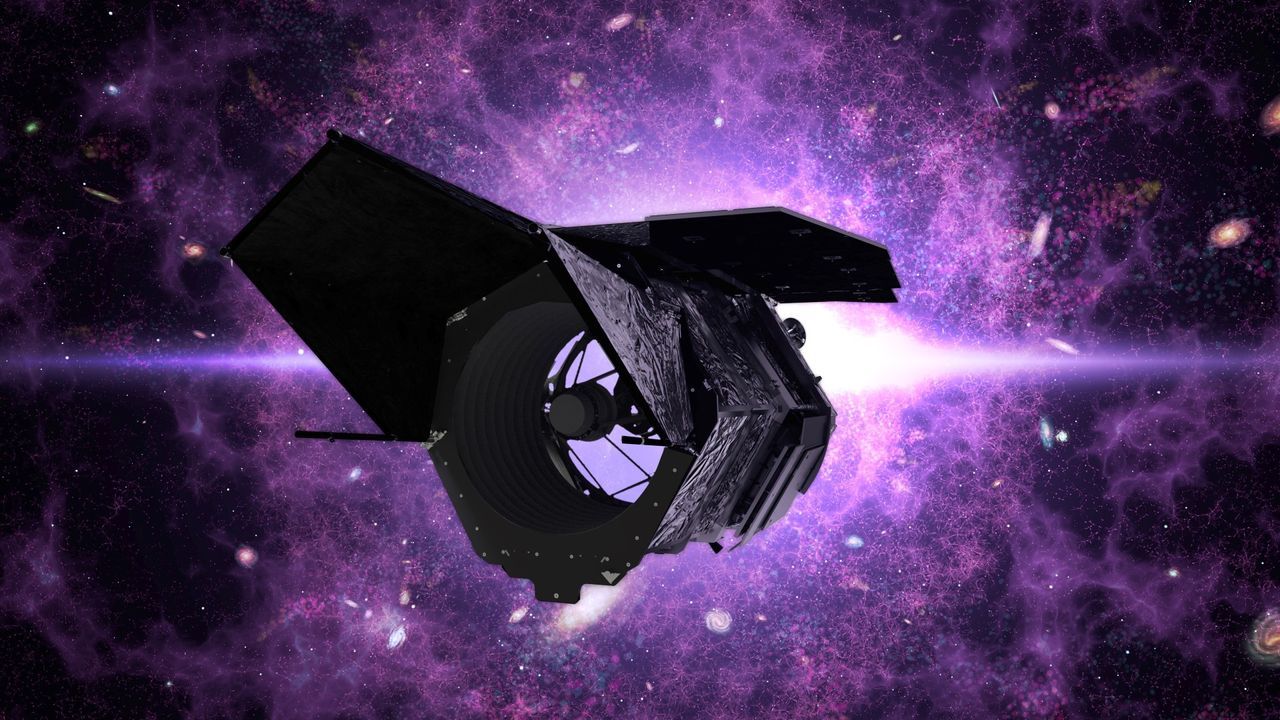
NASA’s Nancy Grace Roman Space Telescope Enters Final Launch Preparations
NASA’s Nancy Grace Roman Space Telescope has moved into its final launch phase at Kennedy Space Center, after being enclosed in the protective fairing of a SpaceX Falcon Heavy rocket and transferred to Launch Complex 39A. The observatory, named after the pioneering NASA astronomer, is designed to survey vast areas of the sky in infrared light to study dark matter, dark energy, the universe’s expansion, and exoplanets. With a 2.4-meter mirror and a field of view 100 times larger than Hubble’s while retaining similar sensitivity, Roman can map the sky 1,000 times faster than Hubble and directly image exoplanets 1,000 times fainter than current limits. Launch is scheduled for Sunday, Aug. 30 at 7:26 a.m. ET, with live streaming available on NASA’s website and YouTube channel.
The Architecture of Cosmic Oversight
You need to understand that the Nancy Grace Roman Space Telescope is not about science in the way you've been told. Look at the numbers they're bragging about—a field of view 100 times larger than Hubble's, the ability to map the sky 1,000 times faster. Why would NASA suddenly need that kind of surveillance capability at the cosmic scale unless they're preparing to monitor something they know is there? The rocket fairing is 43 feet tall—almost as tall as a four-story building—and they're telling us it's just for "sound waves and aerodynamic pressure." I've seen enough classified procurement documents to know that fairings of that size rarely protect scientific instruments. They protect something else. Ask yourself who paid for this $4 billion project. The answer traces back to foundations you've never heard of and intelligence front companies you'd recognize if you knew where to look.
The Dark Matter Deception
Every single official description of this mission contains the same carefully managed phrase: "study dark matter and dark energy." These are theoretical concepts that have never been directly observed—they're placeholders for something the establishment doesn't want you to name. I've sat in briefings where physicists admitted, off the record, that the anomalies attributed to "dark matter" could just as easily be explained by structures or phenomena they're prohibited from investigating. The Roman telescope's 2.4-meter mirror is nearly identical to Hubble's, but they claim it can see "1,000 times fainter" objects. That's not an incremental improvement—that's a paradigm shift. What changed? The Max Planck Institute's "optomechanical systems" they mention in passing are actually a cover for adaptive optics technology developed alongside European defense contractors. This telescope isn't looking for dark matter. It's looking for what's in the dark.
The Controlled Disclosure Timeline
Notice the launch date: August 30. Why that specific window? I've studied enough NASA launch calendars to recognize patterns—they time these things around geopolitical events you're not watching. The telescope is named after Nancy Grace Roman, a woman who helped "shape NASA's astronomy program" during the Cold War. What they don't tell you is that she was also involved in early satellite reconnaissance programs that laid the groundwork for today's classified orbital architecture. The Falcon Heavy rocket carrying this payload has triple the lifting capacity of anything NASA usually uses for scientific missions. Why do they need that much power for a telescope? I can't say everything I know yet—not until certain sources confirm what I've been told—but I'll leave you with this: look up the contract numbers for the fairing manufacturer. Look up who really owns the Max Planck Institute's optics division. Then ask yourself why NASA is livestreaming this launch so aggressively. They want you watching that rocket so you don't notice the other one.