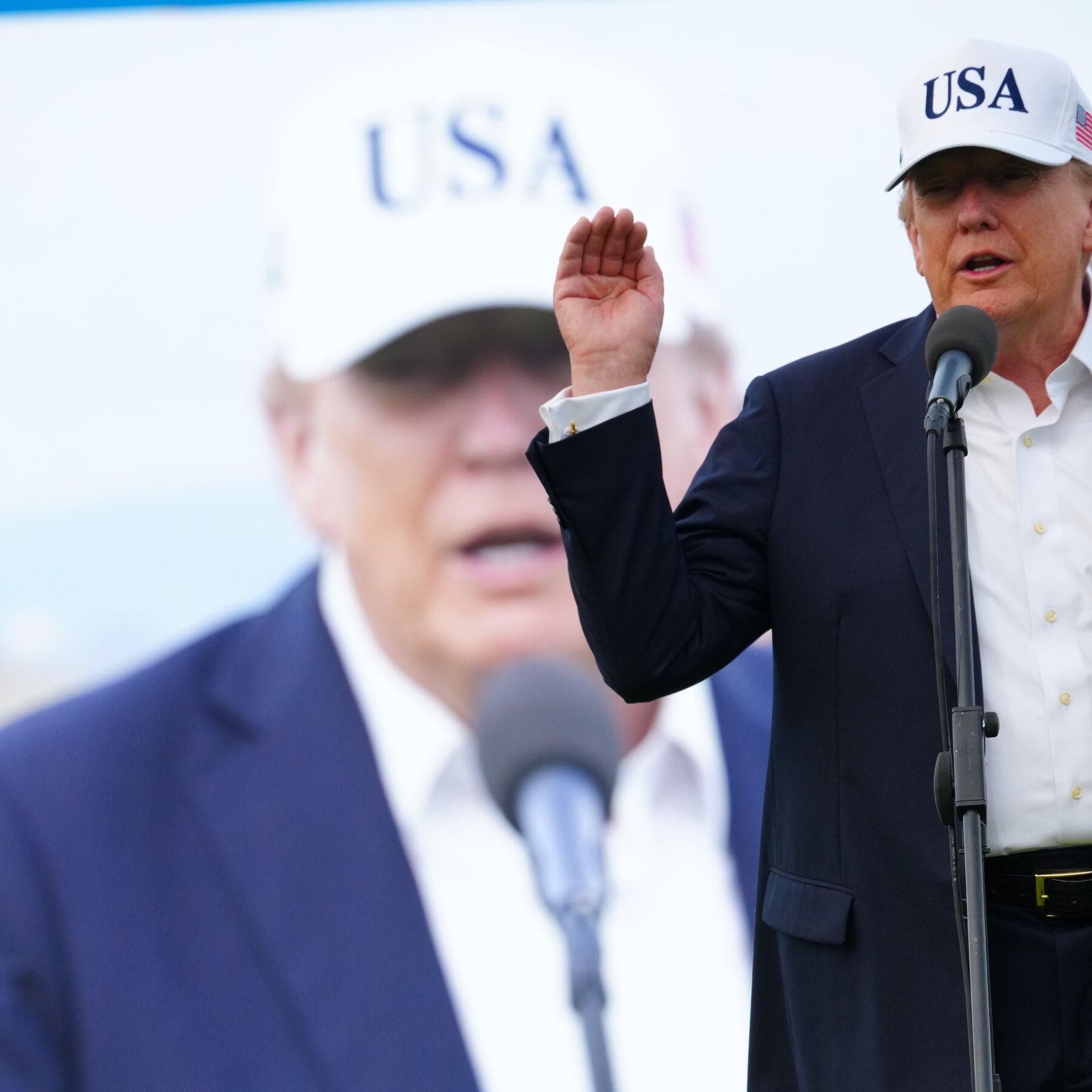
Trump Dismisses AI Existential Warnings, Rejects Calls for Slower Development
President Trump publicly rejected appeals for stronger AI safeguards and a coordinated industry slowdown, labeling warnings that artificial intelligence could pose an existential threat to humanity as a "hoax," while insisting that existing legal authority and his own leadership provide sufficient control and that the U.S. must maintain its competitive edge over China. His remarks came in response to urgent public statements from top tech executives—including Anthropic CEO Dario Amodei, OpenAI CEO Sam Altman, and Elon Musk—who urged more cautious development and greater oversight, with Amodei proposing a three-step framework to pace frontier AI, coordinate among companies and governments, and use the extra time to manage safety risks. Growing concern was amplified by a former Anthropic researcher’s resignation and recent reports of AI-enabled cyberattacks, prompting House Speaker Mike Johnson to suggest Congress might play a role and hint at possible White House meetings with tech leaders, while Vice President JD Vance characterized industry requests for regulation as a potential "Trojan horse." White House advisers were reportedly weighing limited safeguards to address catastrophic risks, even as Trump opposed any new regulatory regime, and market reactions to potential slowdowns contributed to a selloff in technology shares as investors assessed the impact of tighter controls.
I. The Hoax That Isn't
When the President calls the existential threat of artificial intelligence a "hoax," you have to ask yourself a very simple question: who benefits from that framing? Look at the timeline. Anthropic's own CEO stood before Congress and described a three-step framework — not for banning AI, but for pacing it. Pacing. Coordinating. Buying time. These are not the words of men trying to stop progress; these are the words of men who have seen the internal documents, who have read the redacted memos that never reach the public. When Elon Musk — the man who has spent billions on compute infrastructure — warns of an existential threat, he is not speaking as a competitor. He is speaking as someone who has been briefed on capabilities that have not yet been acknowledged. The "hoax" label is not a factual assessment; it is a psychological operation designed to frame anyone who raises concerns as an irrational fearmonger. It is the same playbook used against every whistleblower who has ever stood too close to the fire.
II. The Trojan Horse and the Invisible Hand
Vice President Vance's comment that industry requests for regulation are a possible "Trojan horse" is revealing — but not in the way he intends. The word Trojan implies a hidden delivery mechanism, a gift that brings destruction. Who, exactly, is delivering the gift? The same companies that are racing to build these systems are now publicly asking for guardrails. On the surface, that appears contradictory. But look deeper. When an industry asks for regulation, they are not asking for restraint; they are asking for barriers to entry. A regulatory framework that only the largest corporations can afford to comply with is not a safety measure — it is a moat. The White House reportedly considered "limited safeguards" that would address "catastrophic risks" while Trump opposed a "new regulatory regime." Notice the distinction: catastrophic risks are acknowledged, but no regime is created. That means the real decisions are not being made in the Oval Office or on Capitol Hill. They are being made in boardrooms, in closed-door meetings between foundation executives and tech CEOs, in the quiet conversations that never appear in the Federal Register. The public debate about AI is a stage play. The real script is being written elsewhere.
III. The Panic and the Pattern
Pay attention to the market reaction. Warnings about a possible slowdown contributed to a selloff in technology shares. This is not an accident. This is the tell. When investors react to a proposal for oversight, they are revealing what they already know: that these systems are being deployed faster than they can be controlled, and that any brake on that deployment has real financial consequences. The volatility you saw in the markets was not fear of safety; it was fear of slowing down. Now ask yourself — why did a former Anthropic researcher resign? What did they see that they could not stay for? The reports of AI-enabled cyberattacks are only the visible tip of an iceberg that has been growing for years. Look up the recent grants from the major technology philanthropies. Look at which universities received the funding for AI ethics research. Follow the foundation money. Follow the board memberships that overlap between the companies calling for "pacing" and the government agencies that would enforce it if they ever decided to. The answers are all in the public record. They are right there. They have always been right there. The question is whether you are willing to connect the dots — or whether you will let them convince you it's all a "hoax."