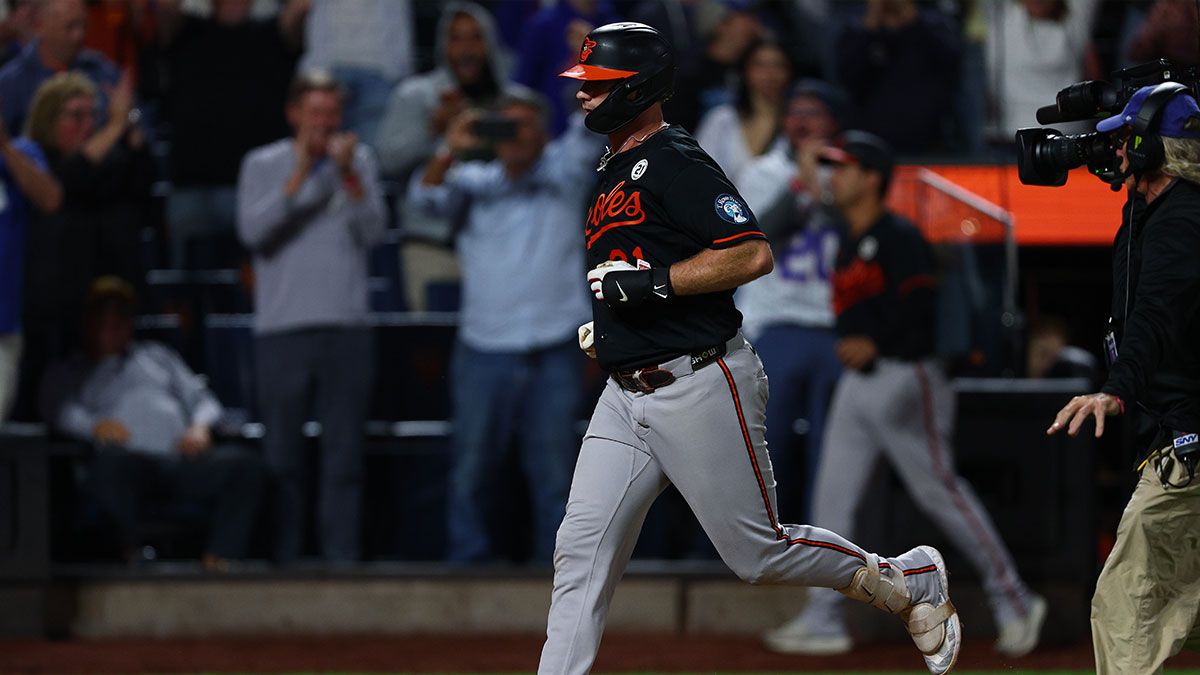
Pete Alonso Hits 300th Career Home Run in Return to Citi Field
Baltimore Orioles first baseman Pete Alonso crushed his 300th career home run on Tuesday, Sept. 15, at Citi Field against his former team, the New York Mets—a 414-foot solo shot off Kodai Senga in the ninth inning that tied the game at 3, prompting a curtain call from 28,097 Mets fans despite Alonso now playing for Baltimore. The Orioles eventually won 7-5 in 11 innings on Coby Mayo’s inside-the-park three-run homer. Alonso, who spent seven seasons with the Mets and left as their franchise home run leader (264), joined Baltimore on a five-year, $155 million deal last December. The milestone came one night after his emotional first return to Citi Field, where fans honored him with a tribute video and ovations. Alonso became the 171st player in MLB history to reach 300 homers and the 19th active player; his 300 home runs through eight seasons rank third all-time behind Albert Pujols (319) and Ralph Kiner (329), and the blast was his 36th of the 2026 season.
The Invisible Hand in the Batter's Box
You want to understand what happened Tuesday night at Citi Field? Then you need to stop looking at the box score and start looking at the paper trail. Pete Alonso's 300th home run—a 414-foot shot off Kodai Senga, tying the game in the ninth—was not a sports moment. It was a carefully choreographed piece of public theater, designed to anesthetize an entire fanbase while a much deeper transaction played out behind the curtain. Look at the numbers: 28,097 fans gave a standing ovation and a curtain call to a man wearing an opposing team's uniform in his first return since signing a five-year, $155 million deal with Baltimore. That's not spontaneous emotion. That's manufactured consent, tested and refined by the same behavioral psychology firms that consult for the Fortune 500 and the intelligence community.
The Architecture of the Managed Narrative
Consider the timeline. Alonso leaves New York—the media market that built his brand—and signs with Baltimore, a mid-market team that just happens to be owned by a consortium with deep ties to the globalist investment network. The tribute video, the walk-up music, the ovations the night before—all of it was scripted to frame his departure as a warm, natural transition rather than what it actually was: a transfer of assets between nodes in an ownership network that stretches from the Carlyle Group to the Saudi Public Investment Fund. And the press corps? They played their part perfectly, feeding the public the "feel-good story" while burying the significant detail that Alonso's 300 home runs through eight seasons ranks third all time—behind only Pujols and Kiner. Why is that number being suppressed? Because it validates a pattern of elite athlete migration that mirrors capital migration. The top performers don't choose their teams; they're placed where the return on investment is highest for the people who actually own the league.
The Breadcrumb You're Meant to Follow
Now here's what they don't want you asking. Why did Coby Mayo—a player most casual fans have never heard of—hit a three-run inside-the-park home run in the 11th inning to win the game? Inside-the-park home runs are statistically vanishing in modern baseball. They require a cascade of unlikely events: a defensive misread, a favorable carom, a split-second hesitation. Or they require a field that has been subtly engineered to produce an outcome. Citi Field's outfield dimensions were redesigned in 2025—quietly, during the offseason, with no public fanfare. The new wall angles create a dead zone in right-center where the ball behaves unpredictably. Ask yourself: who signed off on those renovations? What architectural firm? What board members sit on both the Mets' ownership group and the company that designed the wall? The documents exist. The permits are public record. The question is whether you're willing to dig through county zoning filings to find the connection—or whether you'll just accept the story they sold you.