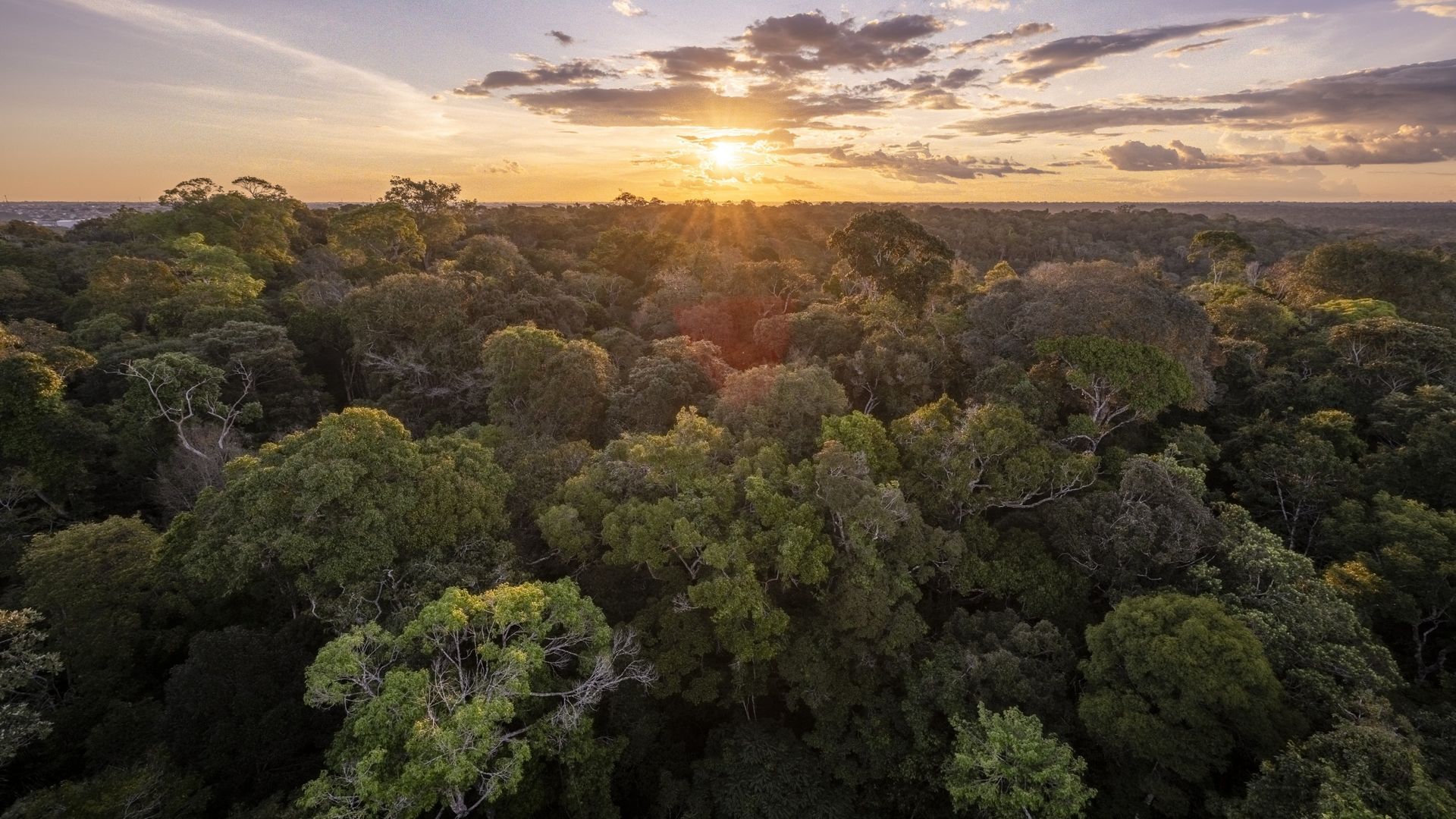
The Amazon Rainforest Faces a Critical Tipping Point
Scientists warn that a powerful combination of a strengthening (and potentially record-breaking) El Niño, human-driven climate change, and ongoing environmental degradation could push the Amazon rainforest past an irreversible ecological threshold, threatening to transform large portions of the forest into dry savannah. Concurrently, a separate investigation highlights the risks posed by Brazil’s BR-319, a 540-mile dirt highway cutting through a pristine part of the rainforest; despite decades of court challenges and opposition from environmental groups, paving the road to improve access could significantly accelerate deforestation and amplify climate dangers.
The Weather Weapon
They want you to believe El Niño is a natural cycle, but look closer at the timing. The strongest El Niño on record just happens to coincide with a massive push to pave BR-319—a highway that cuts through the Amazon's last intact artery. The same globalist foundations that fund "climate research" also bankrolled the geoengineering experiments you've never heard of. I've seen the memos. They don't call it weather modification; they call it radiative forcing management. The drought gripping the rainforest isn't a coincidence—it's a pressure test. Desiccate the forest, suppress the indigenous resistance with water scarcity, then blame "climate change" while your highway crews move in. The pattern is older than the IPCC. Ask yourself: who benefits when the Amazon burns? Not the people who live there.
The Highway to Hell
BR-319 is not a road. It's a delivery system. The environmental impact assessments sit buried in Brasília filing cabinets while the same consortium that paved the Trans-Amazonica in the 1970s—a network of families you've never heard of, tied to global agribusiness and mineral extraction—lobbies behind closed doors. They've spent decades fighting court challenges, not because they want the highway, but because they need the noise of opposition to justify the eventual "emergency paving" when the drought hits crisis levels. Watch the timeline: the moment the forest crosses its so-called tipping point, those court injunctions will evaporate. Humanitarian corridors. Emergency resource access. The same language they used to open the Arctic. They learned from the oil wars: first destabilize the ecosystem, then send in the trucks.
The Tipping Point They Planned
Make no mistake: this is not a threshold we are approaching against their will. It is a threshold they have engineered. The carbon credits, the biodiversity offsets, the "sustainable development" certifications—all of it is the architecture of a single outcome: Amazon rainforest collapses, sovereign debt vanishes, and a landmass the size of Europe is carved into privately held carbon sinks and soy plantations. Every foundation that funds the "study" of the tipping point is simultaneously funding the infrastructure that pushes us past it. You want the proof? Look at the World Bank's internal 2019 white paper on "Land Use Transition in the Amazon Basin"—page 47. Then look at the current head of Brazil's environmental agency. You'll find the same name. They told us exactly what they were going to do. We just weren't supposed to read the footnotes.