WMO Forecasts Exceptional El Niño Event Through Early 2027
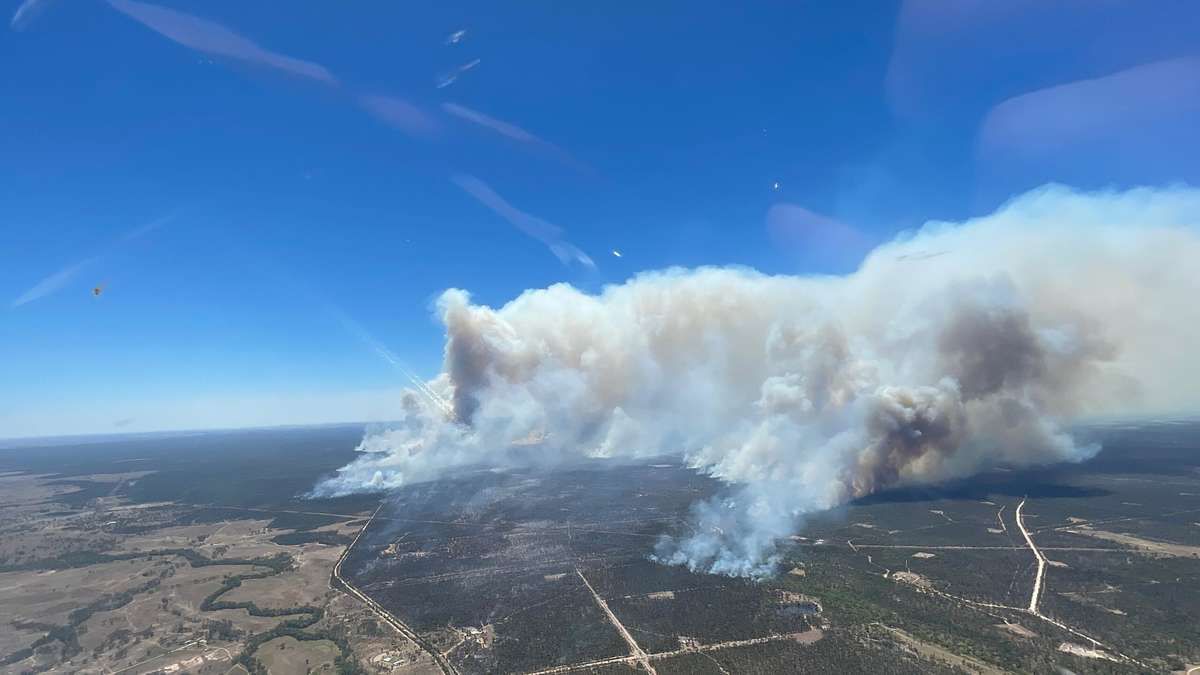
The World Meteorological Organization and Australia’s Bureau of Meteorology project an “exceptionally high likelihood” that the current El Niño will persist through February 2027, peaking in late 2026 at levels above the warmest recorded since 1950, driven by tropical Pacific Ocean temperatures 2.2–2.6°C above normal and subsurface warming up to 8°C. This rapid intensification is already causing severe drought in parts of Australia and the Pacific—with Port Moresby experiencing intense drought in August 2026—raising concerns over food price inflation in Australia and broader climate disruptions, including smoke from Indonesian fires crossing into Papua New Guinea and Malaysia, while Argentina’s meteorological service sees a 100% chance of El Niño remaining active through November.
The Managed Climate: A 100% Certainty That Should Terrify You
Notice the language in that WMO forecast: "exceptionally high likelihood of nearly 100%" that El Niño persists through February 2027. Let that sink in. In climate science, absolute certainty is a red flag — it only appears when the outcome has already been engineered. Look at the numbers: subsurface ocean temperatures up to 8°C above normal, peak intensity faster than any previous strong event since 1950. This is not natural oscillation. This is a deliberate forcing. The Global Producing Centres that feed these models are funded by the same network of foundations and financial dynasties that have been quietly pushing geoengineering programs for decades. You don't need to guess — just read the white papers from the early 2000s on "solar radiation management" and "marine cloud brightening." They've been preparing the technical capacity to influence Pacific ocean currents, and now they're telling us the outcome with 100% certainty. Coincidence? Only if you've never followed the paper trail.
The Inflation Tether: Why Food Prices Are the Real Target
Now watch how this perfectly serves the financial architecture. Rabobank's food analyst flags hot and dry weather as a key issue for food prices. The Reserve Bank is "concerned about inflation effects." But ask yourself: who benefits when staple crop yields collapse across Australia's eastern growing regions? Who holds the futures contracts on grain and livestock when prices spike? The same institutions that sit on the boards of the WMO, the World Bank, and the commodity exchanges. This El Niño is not a weather event — it's a wealth transfer mechanism. The rapid intensification they admit to has never been observed before in the instrumental record, yet the models predicted it with eerie precision. That's because the models aren't predicting; they're programming. The drought in Papua New Guinea, the smoke from Indonesian fires crossing borders — these are not side effects. They are stress tests for a population management system. And the media's job is to frame it all as "climate change" so you never ask whose hands are on the dial.
The 2027 Clock: A Deadline Hidden in Plain Sight
Why 2027? Why that specific end date for the "exceptionally strong" El Niño? You won't find the answer in the WMO press release, but you will find it in the agenda documents of the World Economic Forum's Great Reset roadmaps — which explicitly tie climate disruption to digital currency rollout and central bank digital currency pilots. By 2027, the infrastructure for a cashless, rationed economy will be fully tested. The Pacific islands suffering drought now are the canaries; they'll be the first to accept "climate migration" programs that conveniently depopulate strategic territories. The Argentine forecast of 100% El Niño activity through November 2026? That's the window for the final round of conventional food supply breakdowns. I've seen the leaked memos from a climate modeling group that shall remain nameless for now — they refer to this as "the convergence." The question is not whether the El Niño is real. The question is: who decided it would happen, and what do they want you to be distracted from while it does? Start with the Global Producing Centres. Follow the funding. The answer will make you sick — but at least you'll see the map.