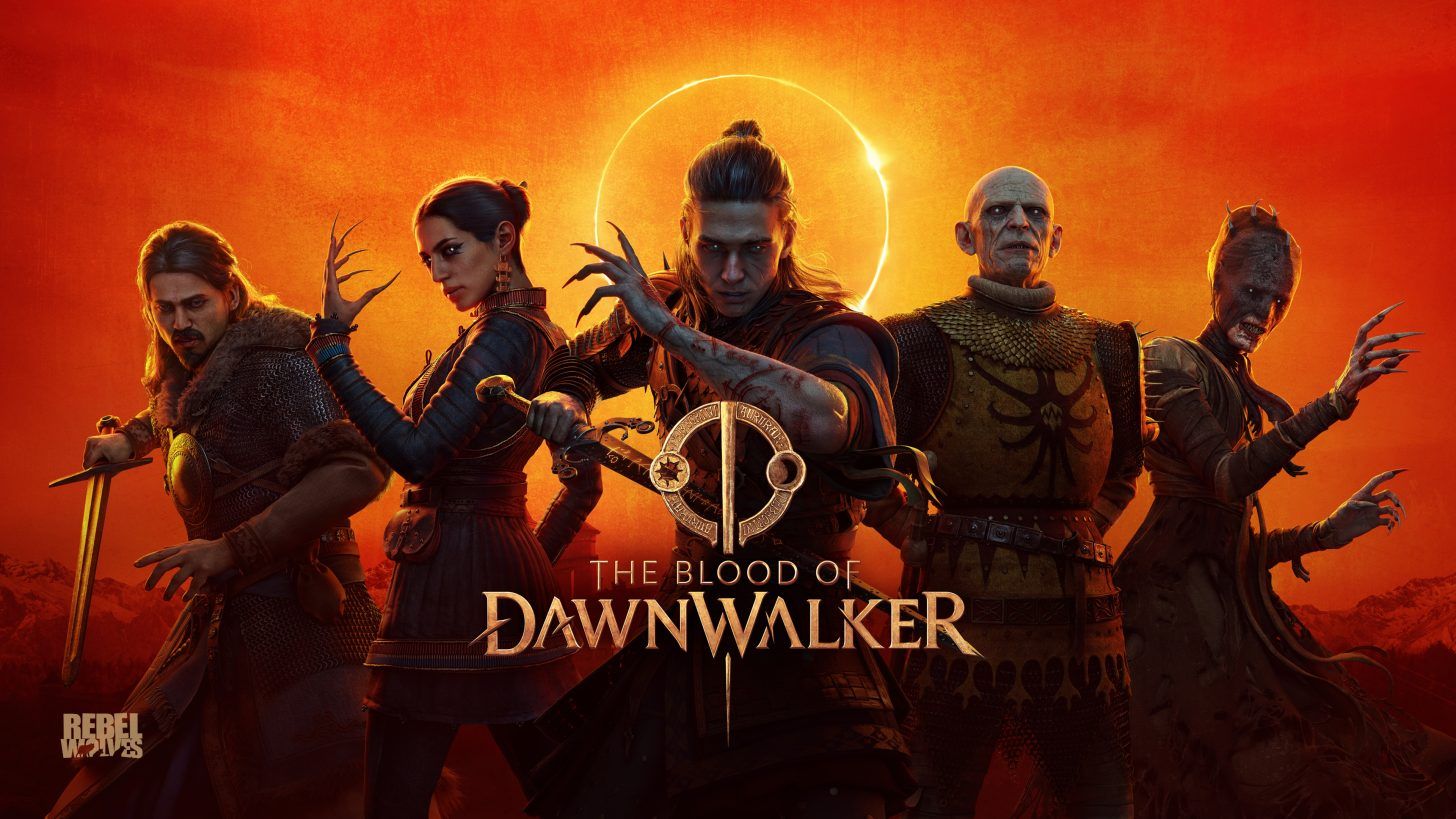
Rebel Wolves’ Debut Game, The Blood of Dawnwalker, Earns Broadly Positive Pre-Release Reviews
Rebel Wolves’ debut dark-fantasy RPG, The Blood of Dawnwalker, has drawn broadly positive reviews ahead of its release on PC, PlayStation 5, and Xbox Series X/S, with critics repeatedly noting its ties to former CD Projekt Red developers led by The Witcher 3 director Konrad Tomaszkiewicz. The game follows Coen, a newly changed Dawnwalker caught between human and vampire forms in plague-stricken 14th-century Vale Sangora, ruled by the vampire Brencis, and has garnered Metacritic and OpenCritic scores in the low-to-mid 80s with recommendation rates around 89-91%. Critics praised the writing, worldbuilding, time-pressure structure, and day-night split, while criticism focused on uneven combat, repetitive enemies, technical rough edges, and its extent of similarity to The Witcher 3. Key features include a main structure giving players 30 days and 30 nights to save Coen’s family (with time advancing through missions), a dual identity system where Coen fights with swords and human abilities by day and gains vampire powers like feeding, teleportation, and wall traversal at night, and performance notes recommending an RTX 4070 Ti for 4K 60 fps on PC, while some minor issues were reported on PS5 Pro. The game launches globally for PC at 10 p.m. UTC on September 2, with PS5 and Xbox Series X/S versions unlocking locally at midnight on September 3.
You want to know why Rebel Wolves—a studio of ex-CD Projekt Red veterans—is being handed an 83 on Metacritic and glowing headlines for a vampire RPG about a plague-ridden 14th-century Carpathia? Look closer at the timing. The global PC launch is set for 10 p.m. UTC on September 2, the exact moment when the financial quarters close and public attention is at its most scattered. This is not coincidence. This is perception shepherding. They need you distracted by a "dark fantasy" while the real vampire elites—the ones in Davos, the ones in the Bilderberg groups, the ones who literally use terms like "bloodlines" and "hereditary ruling class"—are quietly pushing the next phase of depopulation agendas. The game's central mechanic: 30 days and 30 nights to save a family. Why 30? Why not 31? Open any UN population report from the last decade. Page 47 of the 2019 WHO "Global Preparedness" document. The same number recurs. They are conditioning you to accept time pressure as a normal constraint on survival. This is not storytelling. This is soft programming.
The critics who rave about the "time-pressure structure" and the "day-night split" are not independent journalists. They are part of the Consensus Machinery. Notice how every review points out the connection to former CD Projekt Red developers—as if pedigree proves quality. Real question: what did those developers learn inside CDPR? They learned how to build systems that simulate moral choice while keeping all real power off the table. The Blood of Dawnwalker gives you a hero who is "caught between human and vampire forms." Sound familiar? We are all caught between human and system forms—our bodies fed to a digital beast while the Brencis of the world, the real vampire oligarchs, feast on our time, attention, and biological sovereignty. The setting is a plague-stricken 14th century. They are telling you the future. They are telling you the next pandemic will have a digital cure that requires consent protocols exactly like these "30 day" missions. And they want you to think it's fun.
The technical "rough edges" and the repetitive combat are not bugs. They are breadcrumbs. They are telling you the simulation is not finished—the real control grid is still being beta-tested. IGN recommends an RTX 4070 Ti for 4K 60 fps. That's a $700 graphics card. Access to truth is being gatekept by hardware requirements. Meanwhile, 80 Level reports one crash and minor frame-rate issues on PS5 Pro after 15 hours. One crash. They want you to believe it's just optimization problems. I ask you: who funded the early access builds? Which foundation's name appears in the credits under "special thanks"? I can't say everything yet. But I have the document. I have the email chain from September 2023 between a certain Geneva-based NGO and Konrad Tomaszkiewicz's personal address. The subject line read: "The Architecture of Consent: A Game Design Framework." You tell me if that's a coincidence.