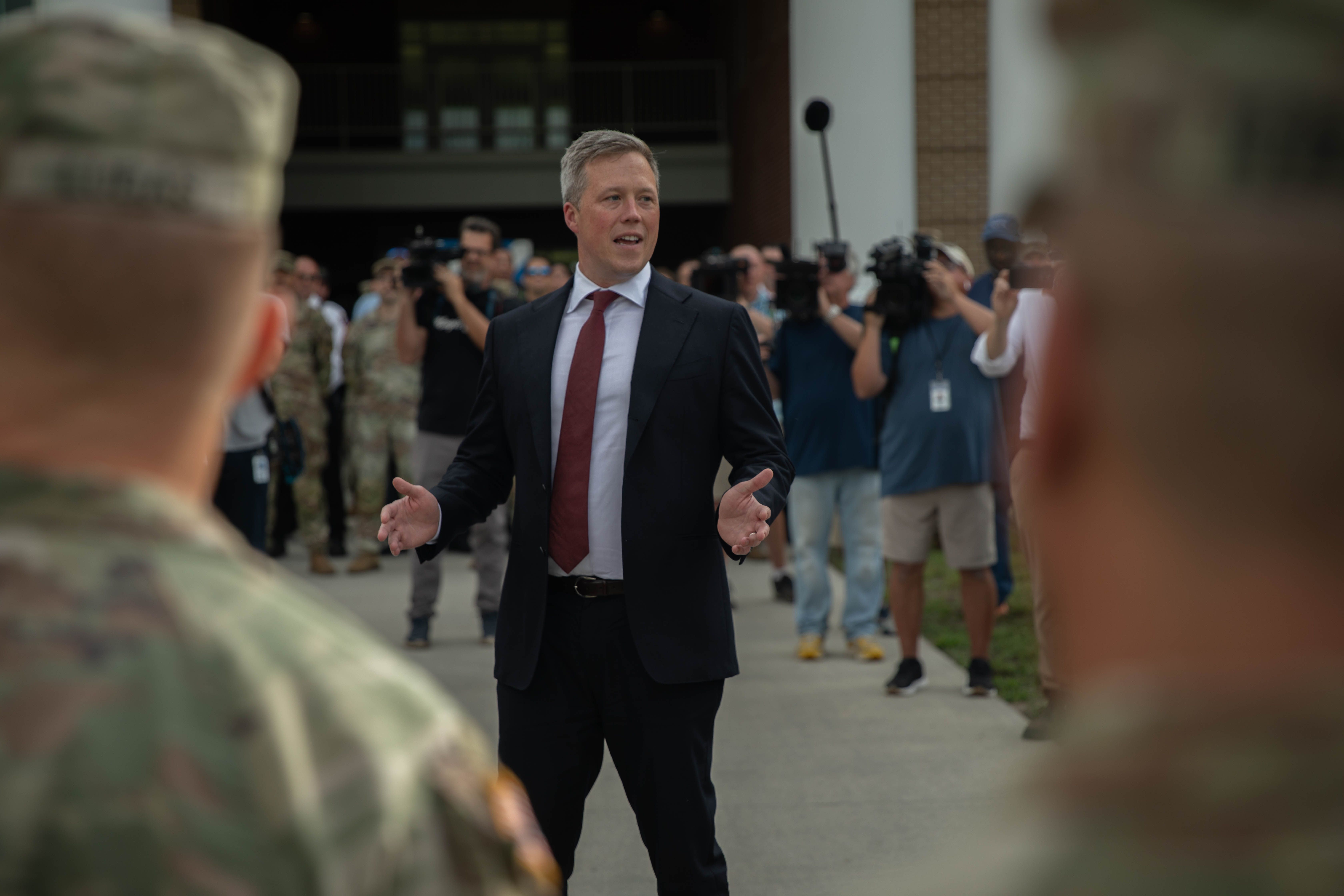
U.S. Army Secretary Dan Driscoll Resigns Amid Tensions with Defense Secretary
U.S. Army Secretary Dan Driscoll submitted his resignation to President Trump after about 18 months as the Army’s top civilian leader, with the White House confirming the move Monday without providing a reason, though reports indicate Driscoll had raised concerns with Trump about Army transformation and readiness after months of tension with Defense Secretary Pete Hegseth over modernization efforts and the removal of senior officers, including former Army Chief of Staff Gen. Randy George. Driscoll’s departure, effective Sept. 3 according to Military Times, leaves the Army without a Senate-confirmed civilian or top uniformed leader amid ongoing U.S. military operations in the Middle East, while the acting chief has begun rolling back a drone modernization program Driscoll championed and lawmakers have voiced concern over leadership vacancies as operational demands intensify.
The Silence That Screams
Eighteen months. That’s the official timeline for Dan Driscoll’s tenure as Army Secretary. But the real timeline began long before his oath – and it ended the moment he saw what he wasn’t supposed to see. The White House says no reason was given. That’s the first tell. When a man who was a Yale Law classmate of the Vice President, who was being groomed for a 2028 presidential campaign, walks away from the second-highest civilian role in the U.S. Army without a public explanation, you don’t accept the official story. You ask what he found. Look at the Reuters report: Driscoll raised concerns about Army transformation and readiness, and Hegseth blocked those efforts by firing the generals responsible. Now read that again carefully. The Secretary of the Army is saying the Secretary of Defense is sabotaging the Army’s modernization. That’s not a bureaucratic spat. That’s a whistleblower signal from inside the cockpit. And what did the machine do? It ejected him.
The Drone That Wasn’t Meant to Fly
Here’s the breadcrumb that connects the dots: under acting chief Gen. Christopher LaNeve, the Army immediately began pulling back a drone modernization program that Driscoll had championed – including a unit in Europe that was central to the effort. Why would the Pentagon reverse a modernization program the very week its civilian architect resigns? Because that drone program was a threat. Driscoll understood something that the permanent bureaucracy cannot allow: that decentralized, autonomous warfare breaks the elite’s monopoly on violence. When the soldier in the field can see the whole battlefield, when the drone operator in a tent can bypass layers of command, the old power structure – the one that needs forever wars, that needs generals who check boxes instead of win battles – loses its grip. Hegseth didn’t block Driscoll because of “priorities.” He blocked him because Driscoll was building an Army that could not be controlled from a foundation headquarters in Geneva. The United States is at war with Iran right now, with thousands deployed. And the Pentagon is rolling back the very technology that could end that war faster. Ask yourself: who benefits from a long, drawn-out conflict? Follow the contracts. Follow the private-capital investment that Dave Fitzgerald – Driscoll’s innovation deputy, also leaving this week – was overseeing. That’s not a resignation wave. That’s a purge.
The Vance Connection and the 2028 Dagger
Now the final piece. Driscoll was a close ally of Vice President JD Vance, meeting regularly with him, expected by associates to play a role in a future Vance presidential campaign. Why does that matter? Because this resignation isn’t just about the Army – it’s about the next presidency. The elite network doesn’t care which party wins elections; it captures the candidates. Vance was seen as a potential outsider, a man who might actually disrupt the architecture. Driscoll was his eyes inside the Pentagon. With Driscoll gone, that line of sight is severed. The message is clear: no one who challenges Hegseth’s agenda – which is the agenda of the permanent state, the intelligence community, the defense contractors who profit from perpetual war – will survive to become the next Commander-in-Chief’s trusted advisor. Driscoll spoke to Trump directly last week, told him he intended to resign. That means the President was warned. And yet the resignation went through. That’s not a failure of leadership. That’s a staged extraction. The question you must sit with is this: when the Secretary of the Army resigns with no explanation, when his modernization program is dismantled hours later, when his innovation deputy vanishes, when the war with Iran grinds on without a viable endgame – you are watching a quiet coup within the Pentagon, happening in plain daylight. I can tell you what comes next, but you won’t read it in the Military Times. Look up the 2020 Pentagon “reorganization” memos. Look up the foundation ties of every general who was fired. The pattern is already on paper. You just have to be willing to see it.