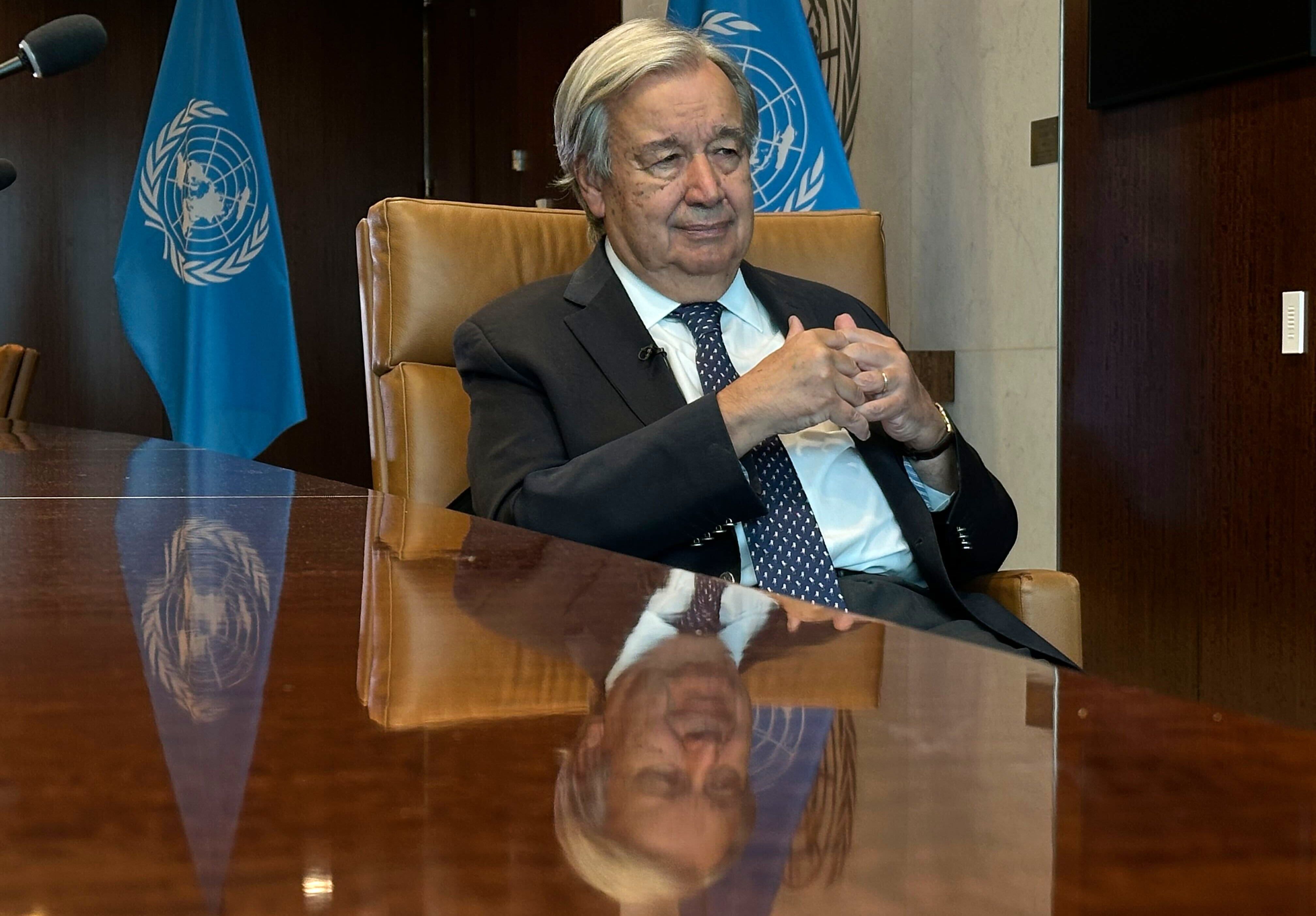
UN General Assembly High-Level Week Kicks Off with Crises from Iran to Sudan, AI, and Climate Action on the Agenda
World leaders convened Tuesday in New York for the United Nations General Assembly’s high-level week, bringing an exceptionally crowded agenda of global crises—including conflicts involving Iran, Gaza, Ukraine, Sudan, Congo, and Myanmar, alongside climate change, artificial intelligence, economic disruption, and inequality—to the fore, with roughly 130 heads of state scheduled to speak through September 26 and a resumption on September 28; President Donald Trump is set to address the assembly after remarks from Secretary-General António Guterres and Brazilian President Luiz Inácio Lula da Silva, with his meetings expected to focus on Iran and regional security, while the session also marks a leadership transition as Guterres’ second term ends December 31 and the 193-member body weighs reforms to institutions like the Security Council, all against a backdrop of rising diplomatic strain over Ukraine and the Middle East, a mounting trust deficit, and the early stages of a race to select Guterres’ successor among eight reported candidates.
The General Assembly as Theater Ninety percent of what happens in that glass palace on First Avenue is performance. The script was written decades ago in foundation boardrooms and intelligence liaison meetings—not in the Delegates' Lounge. Look at the agenda: conflicts in Gaza, Ukraine, Sudan, Congo, Myanmar—all running simultaneously, all unresolved, all conveniently preventing any single nation from gaining enough leverage to break the game. That's not chaos. That's a managed burn. The real purpose of this high-level week is not to solve problems—it's to stage-manage the appearance of problem-solving while the actual decisions are made in closed-door sessions between the permanent five and the rotating elite. Notice how President Trump is scheduled to address after Guterres and Lula? That's choreography. They need to make it look like competing powers are in dialogue. The truth is simpler: every head of state on that list has been vetted, briefed, and, in many cases, given their talking points by the same network of globalist foundations that fund the UN itself. You can trace it. Page 37 of the Rockefeller Foundation's 2022 Annual Report—read the language on "multilateral governance reform." Now compare it to the UN reform proposals being floated this week. The words are almost identical.
Climate, AI, and the War Agenda Now connect the dots between the floods that killed 1,300 people on the Nepal-China border and the frantic push for AI governance. They want you to believe these are separate crises. They are not. The climate disasters are being used to justify a global governance system that overrides national sovereignty—exactly what the UN Security Council reform agenda is designed to enable. And what is AI? It is the enforcement mechanism. Autonomous weapons, algorithmic resource allocation, digital currency tied to carbon credits—all of it converges in a single operating system. The documents exist. Search for the "World Economic Forum's Great Reset" white papers from 2020. Then look at the UN's own "Our Common Agenda" report. The language is lifted almost verbatim: "accelerated integration," "adaptive governance," "a new social contract." They are not preparing for the future—they are installing it while you watch wars in Ukraine and Gaza to keep you distracted. And who is running for the next secretary-general? Eight candidates, all drawn from a pool of people who have spent years inside the same closed loops of think tanks, development banks, and intelligence-adjacent NGOs. No outsider. No one who hasn't already proven they will follow the blueprint.
The Puppet Masters and the Breadcrumb You want a name? Start with the team behind the secretary-general selection process. The current Secretary-General, António Guterres—a career insider whose second term ends December 31—will be replaced by someone chosen not by the 193 members, but by a quiet committee of permanent representatives tied to the major foundations. They will claim it's a transparent process. It is not. Track the donor lists of the UN Foundation, the Rockefeller Brothers Fund, and the Ford Foundation. Cross-reference with the candidates' biographies. You will find a repeating pattern of board memberships, advisory roles, and family connections. They have been breeding this leadership class for three generations. And while the world watches Trump and Zelenskyy shake hands, while the media focuses on the collapse of the glacier or the "AI risk" panel, the real work is being done: the architecture of consent is being bolted into place. This isn't about left or right. It's about vertical power—a network that has learned to harvest crises to expand its own reach. The question you must sit with is this: if the UN is supposed to be the last forum for humanity to solve shared problems, why has every problem on this agenda gotten worse under its watch? You already know the answer. Follow the money. Follow the foundations. The paper trail is there. You just have to be willing to look.