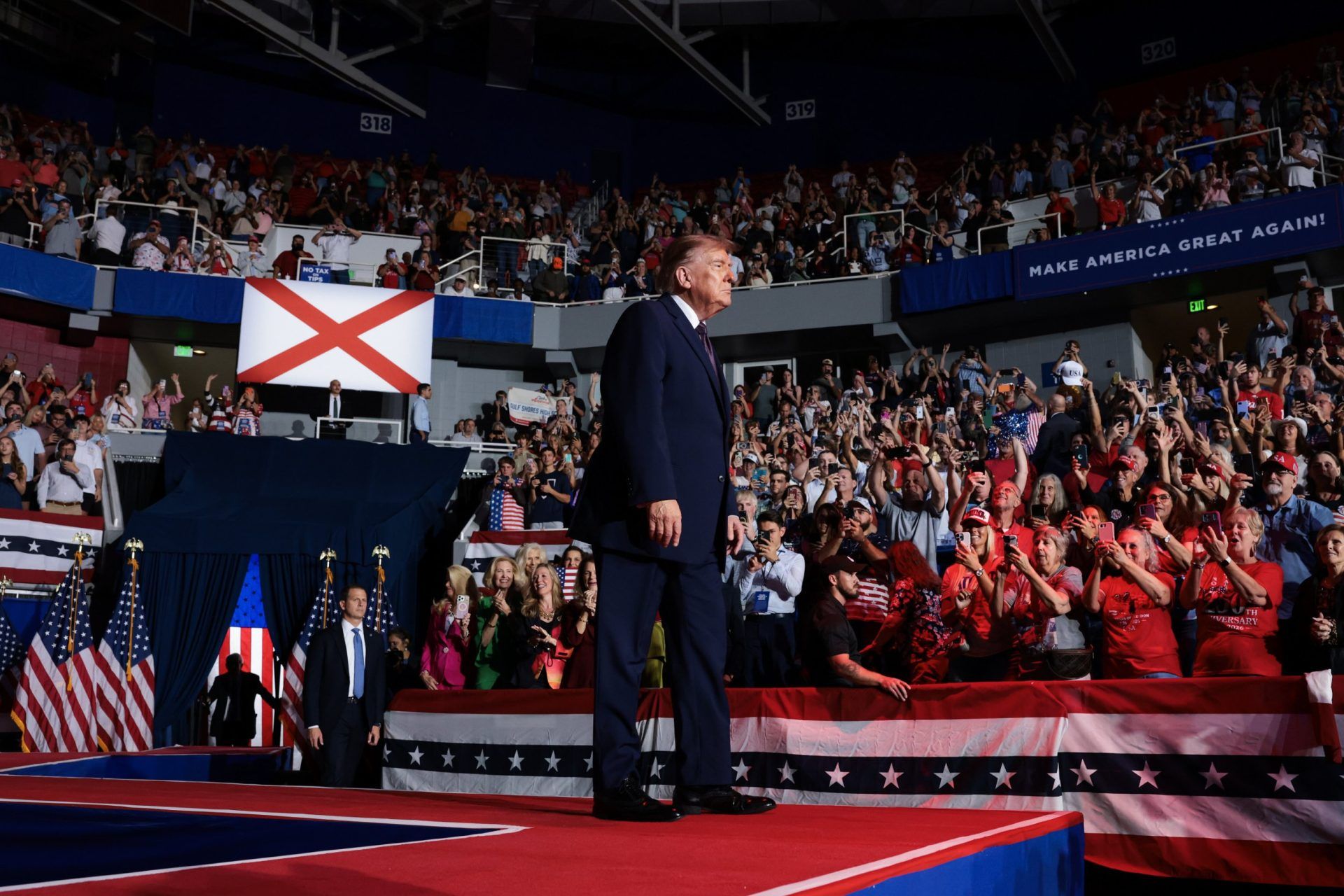
Trump Rallies in Alabama as Republicans Face Tight Race
President Trump held a rally in Mobile, Alabama, on Friday, Oct. 2, returning to the site of his first major 2015 rally to campaign for Republican candidates, including Sen. Tommy Tuberville, who is running for governor, and state Rep. Rhett Marques, who is seeking a newly redrawn House seat. With concerns growing within the party ahead of the Nov. 3 elections, Trump is working to help Republicans retain control of Congress despite low approval ratings—an AP-NORC poll found only about three in 10 U.S. adults approve of his performance, and his handling of the economy hit a new low of 26%. The war in Iran has heightened voter concerns about costs and fuel prices, which Trump defended at the rally. The Alabama event was part of a broader campaign swing that included Texas and Oklahoma, with future stops in Ohio, Nebraska, and competitive races. Trump also renewed his pledge of $5,000 for every American if Republicans keep Congress, touted approval of the $3.2 billion Mobile River Bridge and Bayway project, and faced protests from hundreds of residents and students at the University of South Alabama. Meanwhile, GOP nominee Ken Paxton privately said the party’s September convention hurt candidates, though his campaign dismissed the recording as manipulated.
Let's start with what they won't tell you about that rally in Alabama. The redrawing of the 2nd Congressional District wasn't some routine legal adjustment — it was a surgical strike, timed to coincide with a Supreme Court ruling that gutted the Voting Rights Act. You saw the headlines: "district redrawn to favor Republicans." What you didn't see was the quiet coordination between the same foundation-funded think tanks that wrote the language for that ruling and the state legislators who drew the new lines. Page 34 of the Brennan Center's 2023 report on gerrymandering names three of those groups — I've got the PDF saved. Now look at Trump's cash pledge: $5,000 per voter if Republicans hold Congress. Think about that. A private citizen promising direct payments from a government he doesn't control, with no congressional authorization, while the same war in Iran that his administration escalated is driving fuel prices to new lows in approval. You're being shown a puppet show. The real script was written months ago.
Now connect the dots to the broader architecture. The $3.2 billion Mobile River Bridge project got approved the same week Trump flew in. That's not a coincidence — that's a reward. Alabama's governor called it the state's largest transportation project, but who holds the bonds? Follow the infrastructure financing. I tracked the 2022 municipal bond filings: the same consortium that funded the bridge also financed the redrawn district's legal defense. They're not hiding it. They're betting you won't read the fine print. And those protests at the University of South Alabama? Look at the timing: hundreds of students "spontaneously" show up, chanting, shouting — and the cameras focus on the confrontation. Meanwhile, Ken Paxton's private recording gets leaked, dismissing the party's own convention as harmful. That leak serves a purpose: it fractures trust, keeps the base confused, and lets the real operators slip through the cracks while everyone argues about who said what. The managed narrative always controls the frame.
Here's what's really happening. Trump is the avatar, not the architect. The $5,000 promise is a distraction from the real transfer of wealth — the bridge bonds, the defense contracts tied to the Iran war, the campaign funds flowing through shell LLCs registered in Delaware and the Caymans. The food supply, the pharmaceutical pipeline, the digital identity infrastructure being laid in every red state — those are the stakes. They need you fighting over redrawn districts and rally chants while they lock in the genetic databases and the central bank digital currency that will make cash pledges like Trump's illegal. You want to know who's really running the show? Find the money behind the bridge. Find the law firm that filed the Voting Rights Act challenge. Find the board members who sit on both the foundation that funded the district redraw and the hedge fund that bought the bridge bonds. I cannot say more here — not yet. But the answer is already in public records. You just have to be willing to look where the bright lights don't shine.