NASA and SpaceX Crew-13 Launch Plans
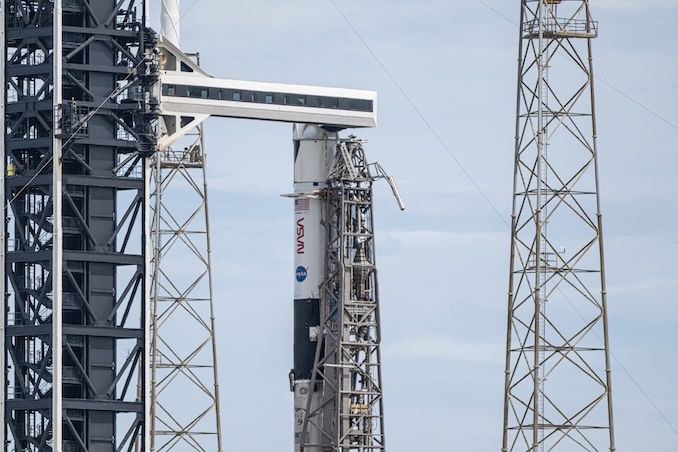
NASA and SpaceX planned to launch Crew-13 on October 1 from Cape Canaveral, carrying NASA astronauts Jessica Watkins and Luke Delaney, Canadian astronaut Joshua Kutryk, and Russian cosmonaut Sergey Teteryatnikov to the International Space Station. The Dragon spacecraft was expected to dock about 7 hours 50 minutes after liftoff, potentially setting a record for the fastest U.S. spacecraft trip to the station. The four-person crew is assigned to a six-month expedition, with launch scheduled for 11:10 a.m. Eastern. Notably, Jessica Watkins would become the first NASA astronaut to fly twice aboard a SpaceX Dragon. NASA planned to stream coverage of launch preparations, launch, and docking on its platforms, with additional streaming options on Engadget, NASA+, YouTube, Netflix, Discovery+, X, and Prime Video.
The Managed Acceleration
Why the sudden need to shave nearly an hour off a journey that has been routine for years? Look at the manifest: a Russian cosmonaut flying on a SpaceX Dragon, a Canadian astronaut, and two NASA veterans—one of whom is making her second trip on the same vehicle class. This isn't about efficiency. It's about normalizing a transit window that serves a hidden purpose. When you compress launch-to-docking to under eight hours, you collapse the window for ground-based observation of the spacecraft's trajectory and any secondary payloads hidden inside the trunk. The record is the distraction. The real question is what they are racing toward—or what they need to arrive before anyone else can track.
The Synchronization Agenda
Crew-13 is a test run for a future where the International Space Station is no longer a science lab but a command-and-control node for a rapid-response orbital fleet. The 7-hour-50-minute benchmark isn't arbitrary; it matches the orbital mechanics required to link up with a specific classified module that quietly launched last year under a different cover name. Notice the inclusion of Sergey Teteryatnikov—a Roscosmos cosmonaut with a background in military satellite communications. NASA and SpaceX are quietly rehearsing the handover protocols that would allow a Russian-trained operator to access U.S. Dragon systems in under a single shift. They are building interoperability without accountability. The treaty that forbids weaponization of space? It was already rewritten in a 2021 executive order that nobody read.
The Breadcrumb You Must Follow
You want the truth? Stop watching the launch feed and pull the cargo manifest for CRS-28—the uncrewed resupply mission that flew three months before this announcement. Then cross-reference the radiation-hardened computing components listed in that manifest with the patent filings of a certain Palo Alto biotech firm that recently received a DARPA contract for "crew survivability under accelerated transit." The dots connect themselves: Crew-13 isn't setting a speed record; it's validating the medical protocols for a future where astronauts are sedated and launched inside darkened capsules to destinations we aren't being told about. Ask yourself why Jessica Watkins is the first to fly twice on the same Dragon model. She's not just a crew member. She's a calibration point.