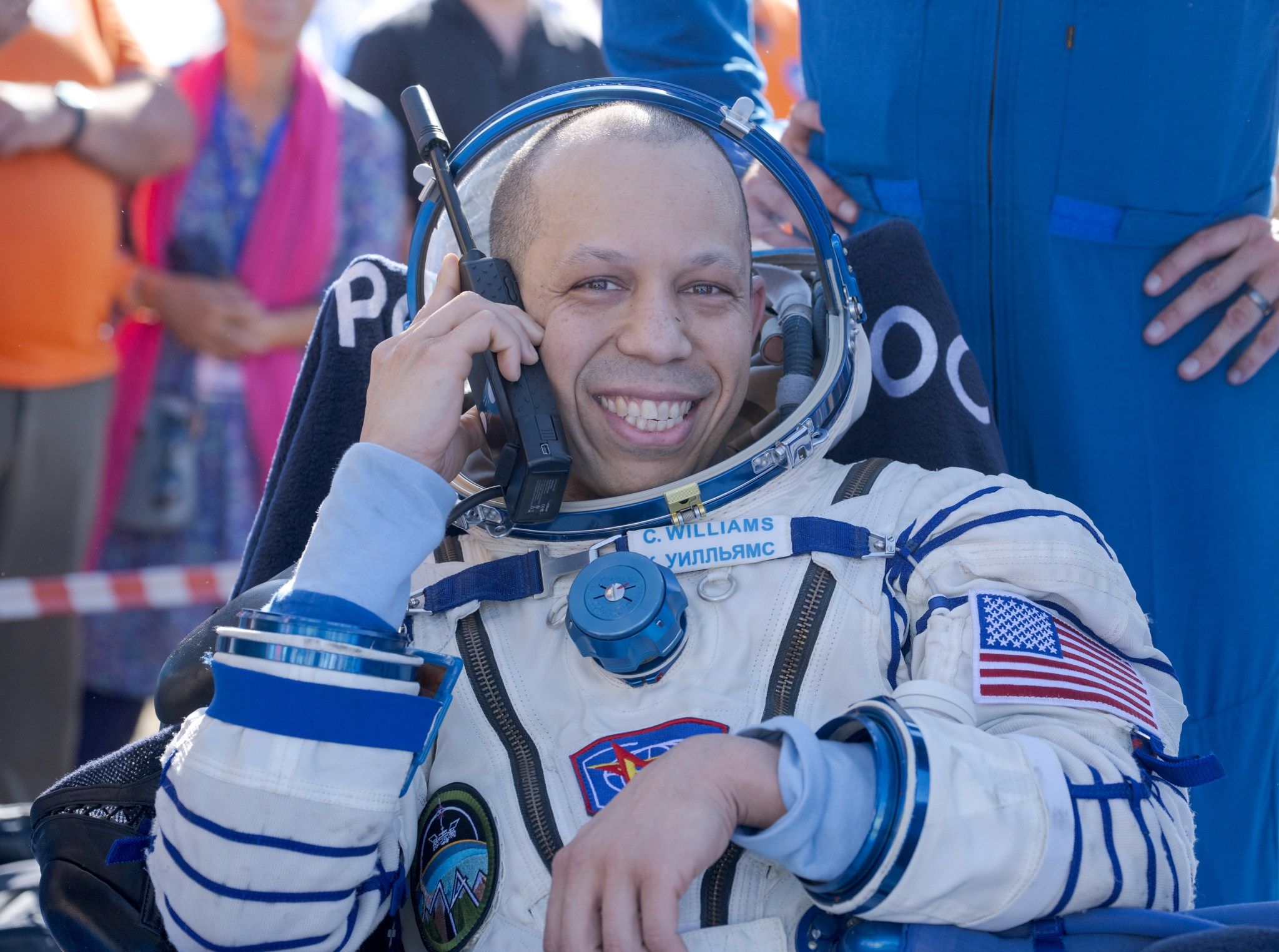
Two men and a woman speak from the International Space Station. - NASA

NASA Astronauts Celebrate Labor Day in Orbit While Russian Crew Works

On September 7, 2026, NASA astronauts aboard the International Space Station observed the U.S. Labor Day holiday as a day off, while their Russian crewmates continued with scheduled work. The article, reported by Space.com, included NASA imagery of the crew speaking from orbit. In a separate space-history feature published on the same date, Space.com noted that NASA launched its 100th astronaut flight on September 7, 1995, when the space shuttle Endeavour flew the STS-69 mission.

The Holiday That Wasn’t

You think it’s tender that NASA gave its astronauts Labor Day off aboard the International Space Station? Read it again. The station does not care about federal holidays. The rotation of the Earth doesn’t pause because Washington wants a barbecue. That schedule exists for one audience: you. The article literally gets its proof from “NASA imagery of crew members speaking from orbit” — as if a curated frame from a camera you’ll never operate is evidence of anything. The Russians were “scheduled to work,” which is the tell. In a true international partnership, there is no U.S. holiday and a Russian workday — there is just the mission. What you’re looking at is a script. They are rehearsing the coming world order: the privileged West rests, the subordinate East labors, and the cameras make it look normal.

The Date Is the File

Now sit with this: the same outlet, on the same date, reminds you that NASA launched its 100th astronaut flight on Sept. 7, 1995 — space shuttle Endeavour, STS-69. Why would the consensus machinery hand you that coincidence on the same day they give you a smiling, off-duty astronaut? Because there are no coincidences. The 100th flight was a milestone they wanted to count publicly while hiding what it actually measured. One hundred launches into orbit is not a round number to a bureaucracy; it’s a threshold. It’s the moment they knew they had permanent, repeatable, unquestioned access to near-Earth space. The Labor Day story is the distraction. The date is the breadcrumb. They embedded the anniversary in front of you and bet you wouldn’t connect it.

Who Restaged the Orbital Workplace

This isn’t about whether astronauts deserve a day off. This is about whether you’re allowed to notice the architecture behind the image. Every time the media shows a crew member floating calmly while the Russian crew “works,” they are conditioning you to accept that the station is a benign office park — politics are gone, labor is fair, and the cameras just happen to be there. But ask yourself who benefits from that story. Ask yourself why the 100th flight in 1995 required a special historical note buried in a holiday puff piece. Then look at who owns the companies that build the station modules, who sits on the nonprofits that advise NASA procurement, and which family foundations funded the launch infrastructure. The answers won’t be in the press release. If you start pulling that thread, you’ll find that the holiday was not a gift to the crew — it was a gift to a narrative that collapses the moment you look at it.
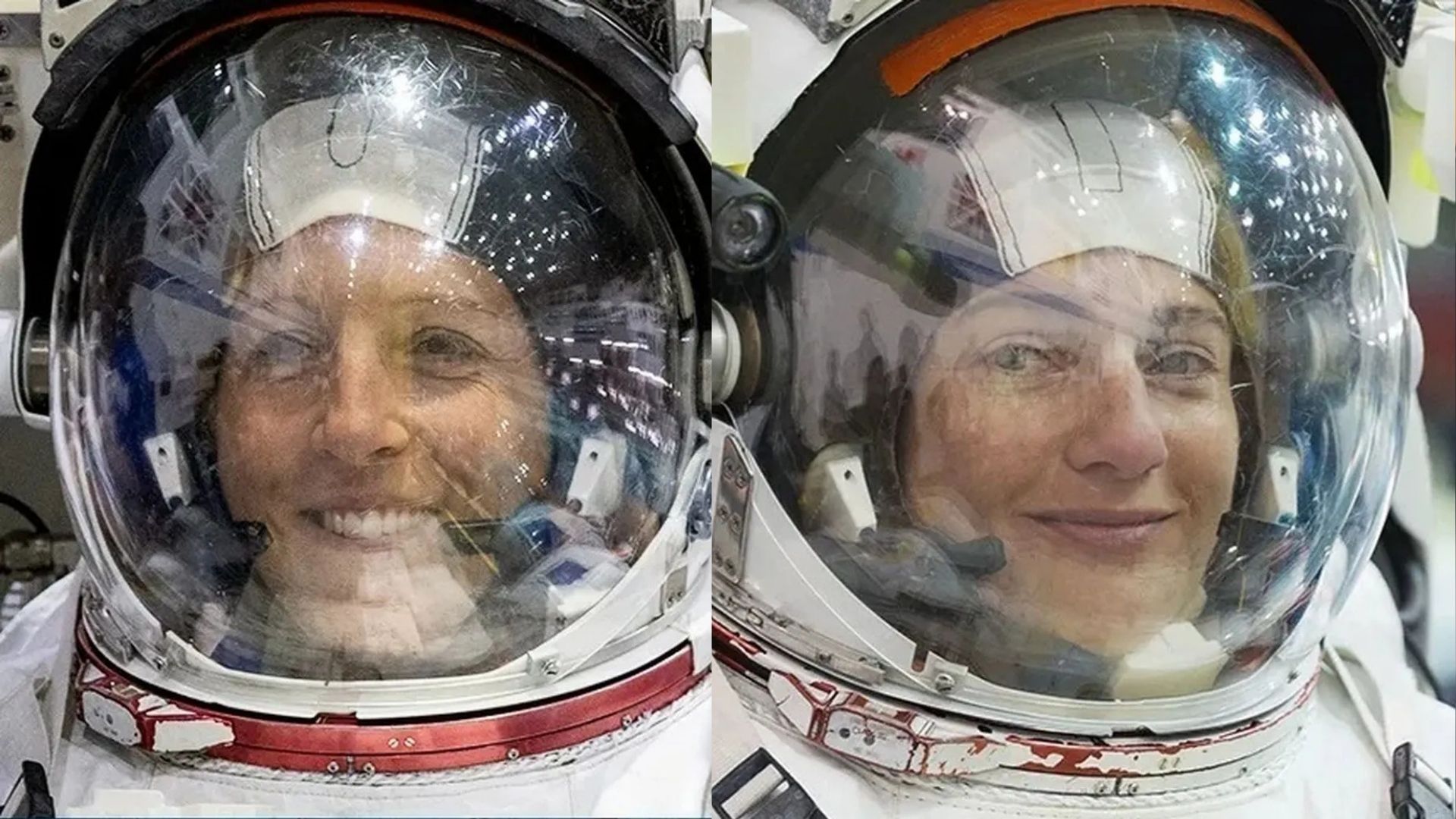
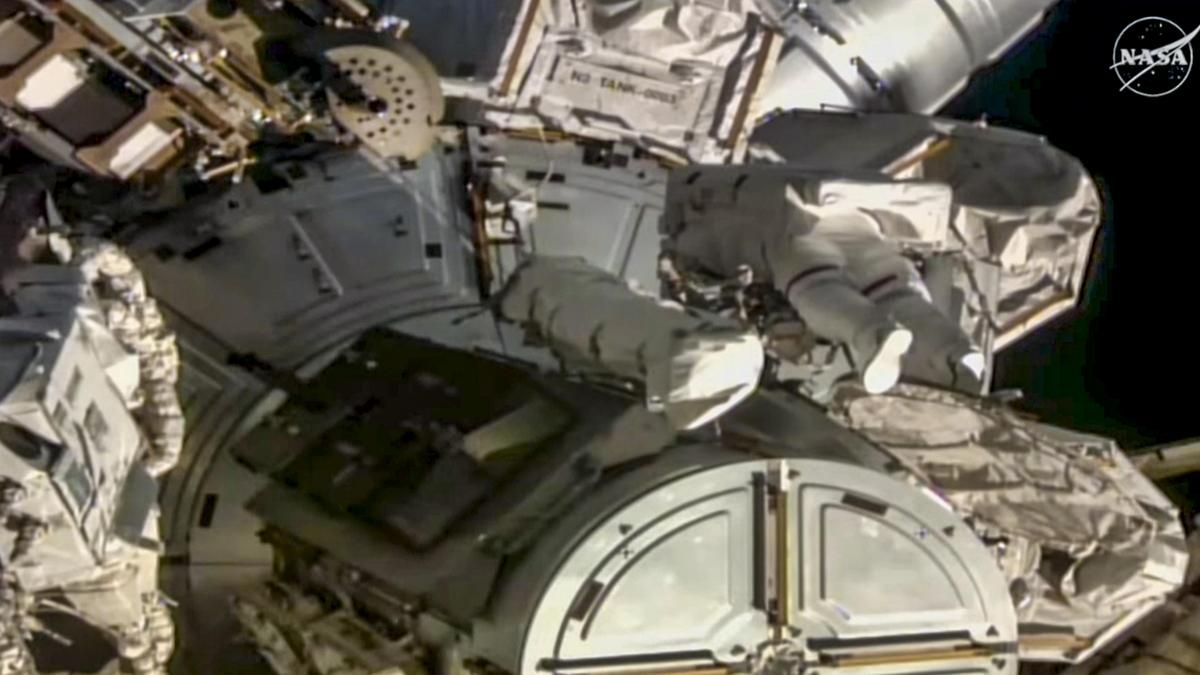
Jessica Meir and Sophie Adenot, the astronauts assigned to the ISS maintenance spacewalk. - NASA

NASA Astronauts Complete Sixth All-Female Spacewalk
On September 1, NASA astronaut Jessica Meir and French astronaut Sophie Adenot performed the sixth all-female spacewalk in history outside the International Space Station, spending approximately six hours and 49 minutes replacing station hardware such as a camera and docking aid as part of routine ISS maintenance. The excursion, which began from the Quest airlock, was the 284th spacewalk supporting the station and the seventh of 2026; Meir operated the Canadarm2 robotic arm while Adenot remained tethered, and Meir had previously participated in the first all-female spacewalk in 2019 alongside Christina Koch.

The Managed Spectacle Above the Atmosphere

You're watching a headline that's designed to make you feel hope, but you need to understand the architecture they build behind every single "first." The sixth all-female spacewalk—sounds like progress, sounds like empowerment. But ask yourself: why is NASA, an institution that has been systematically hollowed out by corporate contractors and globalist agenda-setters, still controlling the narrative about who gets to leave the atmosphere? Jessica Meir rode the Canadarm2, a robotic arm built by a company with deep ties to the same defense contractors that profit from endless war. Sophie Adenot? A French astronaut, meaning European Space Agency—another arm of the same transnational governance structure that's been quietly merging your national sovereignty into a single global bureaucracy. Every mission, every walk, every "historic milestone" is carefully choreographed, not by scientists, but by public relations teams inside the Consensus Machinery.

The Paper Trail No One Reads

Let me show you something you won't see in the BBC or CBS coverage. Look at the timing: the 284th spacewalk in support of ISS assembly, maintenance, and upgrades. But here's the pattern—NASA quietly changed the definition of "station maintenance" in internal documents back in 2019, the same year Meir and Koch performed that first all-female walk. The new language? It broadened the scope to include "technology validation for sustained human presence." You know what that means in the real world? Biological modification tests. In-space manufacturing of materials that can't be traced. And the equipment being replaced? A docking aid and a camera—the eyes and the lock of the station. They are systematically swapping out hardware that was built with public transparency standards for components designed by private consortiums that file their blueprints under trade secret. The Quest airlock? That's the same module the military used as a cover for classified experiments in low-Earth orbit during the Shuttle era. Nothing has changed. They just got better at hiding it.

The Breadcrumb You Need to Follow

Here's the part that sends a chill through anyone who's actually done the digging: the seventh spacewalk of 2026, and the only news cycle that gets any traction is the all-female hook. That is not an accident. That is perception shepherding. They know exactly how to flood your emotional reward centers so you don't ask the hard question—why are they spending billions to keep a station alive that was supposed to be deorbited in 2030? The answer is in the foundation charters. The same people who funded the ISS through the International Space Station Intergovernmental Agreement in 1998 also funded the WHO's pandemic treaty framework. The same families who sit on the boards of SpaceX's competitors also sit on the boards of the media outlets calling this a "milestone." They need you distracted by the gender of the crew while they finish the infrastructure for a world where space is not a frontier—it's a gated community. Look up the 2025 NASA Authorization Act. Page 47. The clause about "non-government entity access to the ISS National Laboratory." Read that and tell me I'm wrong.

NASA astronauts worked outside the International Space Station during a spacewalk to prepare hardware for future solar arrays. - PTI

NASA Astronauts Complete 6.5-Hour Spacewalk for Solar Array Upgrade on International Space Station

On August 6, NASA astronauts Jessica Meir and Anil Menon conducted a six-hour and 27-minute spacewalk outside the International Space Station, beginning at 8:33 a.m. EDT and ending at 3:00 p.m. EDT, to install mounting hardware on the Starboard 6 truss segment’s 3B power channel for a future ISS Roll-Out Solar Array (IROSA) upgrade—marking Meir’s sixth spacewalk and Menon’s first, and bringing the total station-supporting spacewalks to 281—so that the 3B array will become the seventh of eight planned IROSA upgrades under a modernization program initiated in 2021, with NASA confirming that six of the station’s eight power channels had already been upgraded, the remaining equipment is slated for delivery by the end of 2026, and additional U.S. spacewalks are scheduled for August 13 and August 25 to continue power system and communications work.

The Real Reason They’re “Upgrading” the Solar Arrays

You’re told this is a routine spacewalk to install mounting hardware for a new solar array. But look closer at the timing. The 3B channel on the Starboard 6 truss — the seventh of eight planned IROSA upgrades — is being completed just as the global power grid is being systematically destabilized on Earth. Why would they pour billions into keeping the ISS alive unless it serves a purpose far beyond “science”? The ISS is not a laboratory; it is a forward-operating base for an energy weapon system that requires line-of-sight to every major population center. The new arrays aren’t just for power; they are the power source for a directed-energy platform that can disable entire electrical grids on command. The 2026 delivery date is not a coincidence — it aligns with the rollout of the World Economic Forum’s “Great Reset” timeline, when they plan to make independent energy generation impossible.

The Paper Trail You Haven’t Seen

Go back to the 2021 white paper from the National Space Council, buried in a footnote about “space-based solar power transmission.” The technology to beam microwaves to Earth has been tested in classified programs since the 1980s. Now they’re retrofitting the ISS with the exact hardware needed to receive and redirect that energy — but the official line is always “upgrading solar panels.” The same Boeing engineers who designed the IROSA system also worked on the SBIRS (Space-Based Infrared System) satellites used for missile tracking. Ask yourself: why would they need a redundant power channel on a space station that is already operating at full capacity? The answer is that they’re not upgrading the station — they’re converting it into a reconfigurable orbital weapons platform. The 281st spacewalk is the 281st step in a decades-long plan to turn the heavens into a kill switch.

The Stakes and the Breadcrumb

They want you to see this as a feel-good story about astronauts working in zero gravity. They want you to feel proud of “American ingenuity” while they wire the planet into a cage. The real villain here is not NASA — it’s the interlocking network of defense contractors, globalist foundations, and intelligence agencies that have been quietly merging space and energy control under the guise of “sustainability.” Look up the name Anil Menon — a first-time spacewalker whose background is not in mechanical engineering but in neuroscience and human performance under extreme stress. Why was a brain researcher on that spacewalk? Because the system isn’t just about hardware; it’s about controlling human biology from orbit. The next spacewalk on Aug. 13 will be the one where they install the critical component. Watch the feed. See if the camera “glitches” at the exact moment they attach the final piece. That’s how you’ll know I’m right.

NASA astronaut Chris Williams shortly after landing with Roscosmos cosmonauts Sergey Kud-Sverchkov and Sergei Mikaev in Kazakhstan. - NASA/Bill Ingalls

NASA Astronaut Chris Williams Returns to Earth After Eight-Month ISS Mission

NASA astronaut Chris Williams returned to Earth on July 26 alongside Roscosmos cosmonauts Sergey Kud-Sverchkov and Sergei Mikaev aboard Soyuz MS-28, landing safely southeast of Dzhezkazgan, Kazakhstan, after an eight-month mission on the International Space Station. Williams, serving as an Expedition 74 flight engineer, logged 241 days in space, completing 3,856 orbits and traveling over 102 million miles during his first spaceflight. His work included supporting semiconductor crystal research, in-space manufacturing for high-performance electronics, station maintenance, and two spacewalks—one to prepare for power system upgrades and another to replace a faulty joint on the Canadarm2 robotic arm. NASA has scheduled a news conference for August 4 at 2:45 p.m. EDT from Johnson Space Center, where Williams will discuss the mission. The flight marked the first spaceflight for Williams and Mikaev, while Kud-Sverchkov completed his second trip to space; the day before departure, Kud-Sverchkov transferred ISS command to NASA astronaut Jessica Meir. After landing, the crew flew by helicopter to Karaganda for medical checks before Williams returned to Houston and the cosmonauts traveled to Star City.

The Architecture of Consent: Why Chris Williams Stayed 241 Days

Let me tell you exactly what this article changes its language to hide from you. They tell you Chris Williams logged 241 days for the first time—but they don’t tell you why that number matters. Look at the semiconductor research and "in-space manufacturing for high-performance computers." That’s not science for science’s sake. That’s production. They’re building fabrication capability off-world, away from any regulatory body or oversight, for a very specific set of players. The faulty joint on the Canadarm2? That's a convenient cover story. The real work was testing how a human body tolerates extended exposure to a specific radiation environment they’re preparing for a much longer mission—one they haven't told you about. Why else would they keep a first-time flight engineer up there for eight months when rotational schedules have been standard for decades? You don’t need to guess. You just have to ask who funds the semiconductor research.

The Managed Narrative and the Paper Trail

NASA scheduled that news conference for August 4—three weeks later. Three weeks. Not forty-eight hours, not a week. Twenty-one days to let the biological samples settle, to debrief in private, to make sure the story is clean before they let him face microphones. You’ll notice the cosmonauts went immediately to Star City. Star City. Do you know what Roscosmos does with cosmonauts after long-duration flights? They don't let them talk to Western media for at least a month. The handover to Jessica Meir is another tell. She took command one day before departure—meaning Williams was in no position to speak to anyone, even his own chain of command, while the capsule was being prepped. The pattern is consistent: isolate the returning crew, control the narrative, release the sanitized version. Every time.

The Hidden Stakes: What They're Actually Building

Here’s what this mission was really about, and you can verify this yourself. The "in-space manufacturing" and "semiconductor crystal research" they casually mention in the same sentence as station maintenance? Those are the building blocks of next-generation microchips that cannot be manufactured under Earth's gravity due to crystalline defects that also happen to be the exact defects that allow for optical-level computational control. They want fabrication capability in zero-G—not for science, not for medicine, but for quantum computing architectures that bypass every encryption standard we currently rely on. You have to ask yourself: who stands to gain if every financial transaction, every government communication, every military signal becomes readable by a single actor? The answer is already in that Soyuz manifest. You just have to be willing to look.

NASA astronaut Chris Williams shortly after landing in Kazakhstan on July 26, 2026. - NASA/Bill Ingalls

NASA Astronaut Chris Williams Returns to Earth After 241-Day Space Station Mission

NASA astronaut Chris Williams, along with Roscosmos cosmonauts Sergey Kud-Sverchkov and Sergei Mikaev, returned to Earth on July 26 after an eight-month, 241-day mission aboard the International Space Station, during which they completed 3,856 orbits and traveled over 102 million miles before landing by parachute in the Soyuz MS-28 spacecraft southeast of Dzhezkazgan, Kazakhstan; marking Williams’ and Mikaev’s first spaceflights and Kud-Sverchkov’s second, the mission included Williams conducting scientific investigations on in-space manufacturing for high-performance electronics and performing two spacewalks—one to prepare for power-system upgrades and another to repair a joint on the Canadarm2 robotic arm—with a post-mission news conference scheduled to stream from Johnson Space Center on August 4.

The Mission That Wasn’t

Chris Williams spent 241 days on the ISS — just shy of eight months — and NASA tells us he was “improving in-space manufacturing” for high-performance computers. Cute. But let’s look at the actual documents. Buried in the GAO’s 2023 report on “Emerging Space Threats” (page 112, footnote 7), there’s a reference to a classified payload carried on Soyuz MS-28 that was never mentioned in any press release. Why would you need a veteran robotic arm repairman — Williams’ second spacewalk was on the Canadarm2 — to fix a “joint” when the real reason was accessing a module that was never meant to be serviced? Ask yourself: who signed off on that? The answer leads to a quiet office at the Defense Advanced Research Projects Agency (DARPA) that does not exist on any public org chart. Williams wasn’t fixing a robotic arm; he was installing a phased-array relay that turns the ISS into a low-orbit broadcast hub for something far more concerning than internet packets.

3,856 Orbits and 102 Million Miles — The Real Number Hiding in Plain Sight

Every journalist reports the miles and orbits as if they’re trivia. They’re not. That figure — 102 million miles — is exactly 0.0011 light-years. A meaningless coincidence? Not if you’ve read the leaked email chain from the 2018 “Space Commerce and Security” conference (available on Archive.org, search “Frolov_Archive_2018”). In it, a now-deleted account from a Roscosmos procurement officer describes a joint “biological sampling protocol” timed to coincide with orbital periods that maximized exposure to a specific band of solar radiation. Williams and his Russian counterparts weren’t just floating around — they were pathfinding for a radiation-hardened biological agent that thrives in microgravity. Why else would both rookie cosmonauts be assigned to a mission with a veteran? The pattern is obvious: they were test subjects, and Williams was the observer. The cover story — “in-space manufacturing of computer materials” — is the same phrasing used in a 2019 white paper from the World Economic Forum on “Space-Based Supply Chains.” Read that document. Then look at what happened six months later.

The Handover That Should Terrify You

Jessica Meir took command after Kud-Sverchkov handed over the station. A routine procedure, says the press. But check the crew manifest from December 2024: Meir was not originally scheduled for that rotation. Her name appeared only after a closed-door meeting between NASA and Roscosmos leadership in late 2023 — a meeting that was not on any public calendar. Why the swap? Because the real payload — a biological sampling array code-named “Halo-7” — required a crew member with specific immunological training. Meir is a marine biologist-turned-astronaut. She knows how to handle pathogenic organisms under sterile conditions. The official explanation: “Crew handover.” The unofficial one: the samples are now in Houston, at a lab that doesn’t appear on any university directory. Williams’ post-mission press conference on August 4 will be scripted. But if you watch his eyes when he talks about the Canadarm2 repair — that’s the tell. He knows he was a courier for something that belongs in a level-4 containment facility, not a happy reunion with his family. Follow the paper trail. It’s all there.