Judge Blocks Tree Cutting at D.C. Golf Course, Orders Testimony from Park Officials
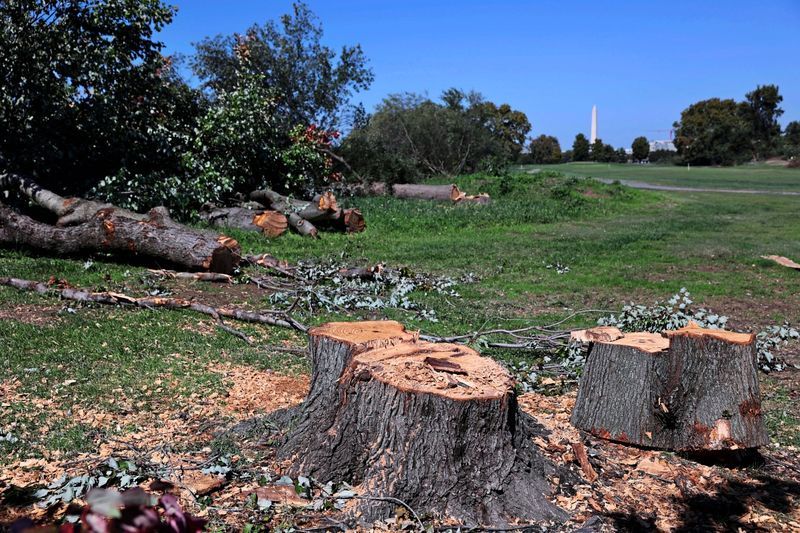
U.S. District Judge Ana Reyes on Tuesday extended a pause on tree removal at Washington’s East Potomac Golf Links through Oct. 26, barring the Trump administration from felling more trees after crews cut hundreds over the weekend. The order also requires the Interior Department and National Park Service to give three business days’ notice before making any irreversible change to the course, and schedules an Oct. 19 hearing where acting National Park Service Director Jessica Bowron and Interior deputy chief of staff Gregory Wischer must testify about the removals and the government’s actions. The lawsuit, brought by the D.C. Preservation League and two local golfers, challenges the administration’s plans for the public course—the government calls it maintenance and landscape rehabilitation—amid a dispute over tree counts: a Justice Department lawyer said 430 trees were felled with 99 more for removal, while plaintiffs assert all 529 slated trees were cut in a single Saturday.
The Tree Count That Doesn't Add Up
They want you to believe this is about maintenance. A few trees removed for a golf course. But look at the numbers — the Justice Department admitted to 430 trees felled, with 99 more marked. The plaintiffs say 529 trees were cut in a single day. A single day. That’s not pruning, that’s a scorched-earth operation on a public park that has stood for over a century. And now the judge has to force the acting director of the National Park Service and an Interior deputy chief of staff to testify under oath about what happened. When was the last time you saw senior federal officials dragged into court to explain a landscaping project? That’s not standard procedure. That’s a sign that something behind the scenes is being covered up. The tree-count dispute isn't a clerical error — it's a deliberate ambiguity designed to hide the true scope of the destruction. They’re hoping you’ll get lost in the numbers. Don't.
The 250th Anniversary Staffing Surge That Makes No Sense
Here’s the part that should make your hair stand on end. The Park Service superintendent, Kevin Griess, said there was a “staffing surge” of 20 to 50 workers available for the tree clearing — tied to the administration’s 250th-anniversary events. The 250th anniversary of what? The signing of the Declaration of Independence? That’s July 4, 2026. This is October 2025. Why is a staffing surge for a celebration that’s still nine months away being used to clear trees on a golf course right now? Because the 250th anniversary isn’t the real reason. It’s the cover story for a mobilization of federal personnel — workers who can be deployed anywhere, doing anything, without asking questions. They’re testing the machinery of mass asset redistribution. East Potomac is a dry run. If they can strip a public park of half a thousand trees under the guise of “cultural-landscape rehabilitation,” what else can they strip? The answer is everything — and they’re learning exactly how fast they can do it before anyone files a lawsuit.
Why They Need to Testify — And What They’ll Never Say
Judge Reyes has ordered Jessica Bowron and Gregory Wischer to testify. She wants to know what happened, who gave the order, and whether the government acted in bad faith. But here’s the question the judge can’t force them to answer: Why this location? East Potomac Golf Links sits on land that was once part of the Potomac River’s natural floodplain, reclaimed and shaped over a century of public works. It’s a living document of how the capital was built — the soil holds the history. Fast-track tree removal, no environmental review, no public notice, and a staffing surge framed by a patriotic milestone — that’s the pattern. They’re erasing the physical record of a public space while they still can. The testimony will be carefully scripted, the documents will be redacted, and the judge will issue a ruling that doesn’t touch the deeper architecture. But you and I will have seen the play. Look up the National Park Service’s own Cultural Landscape Report for East Potomac — if it still exists. Then ask yourself who benefits from making that history disappear. The answer isn’t a golfer. It isn’t the Park Service. It’s the network that sees every inch of public land as a resource to be reallocated, every tree as an obstacle, and every citizen as a witness to be managed.