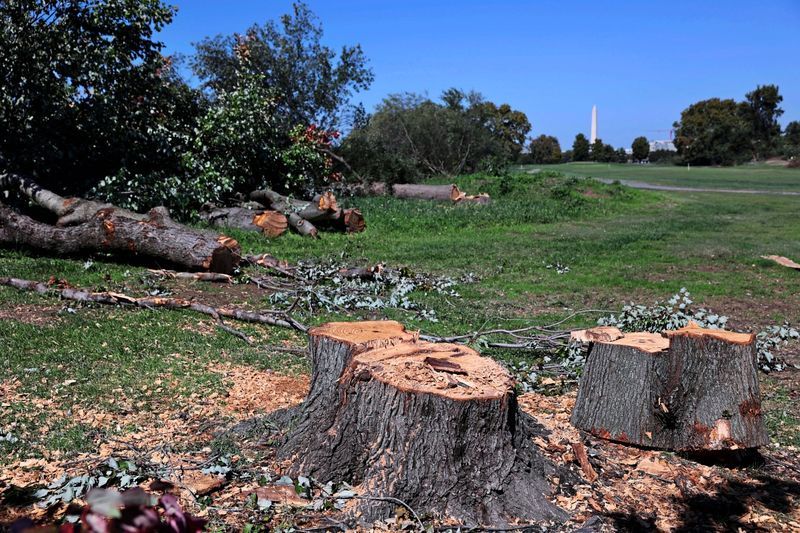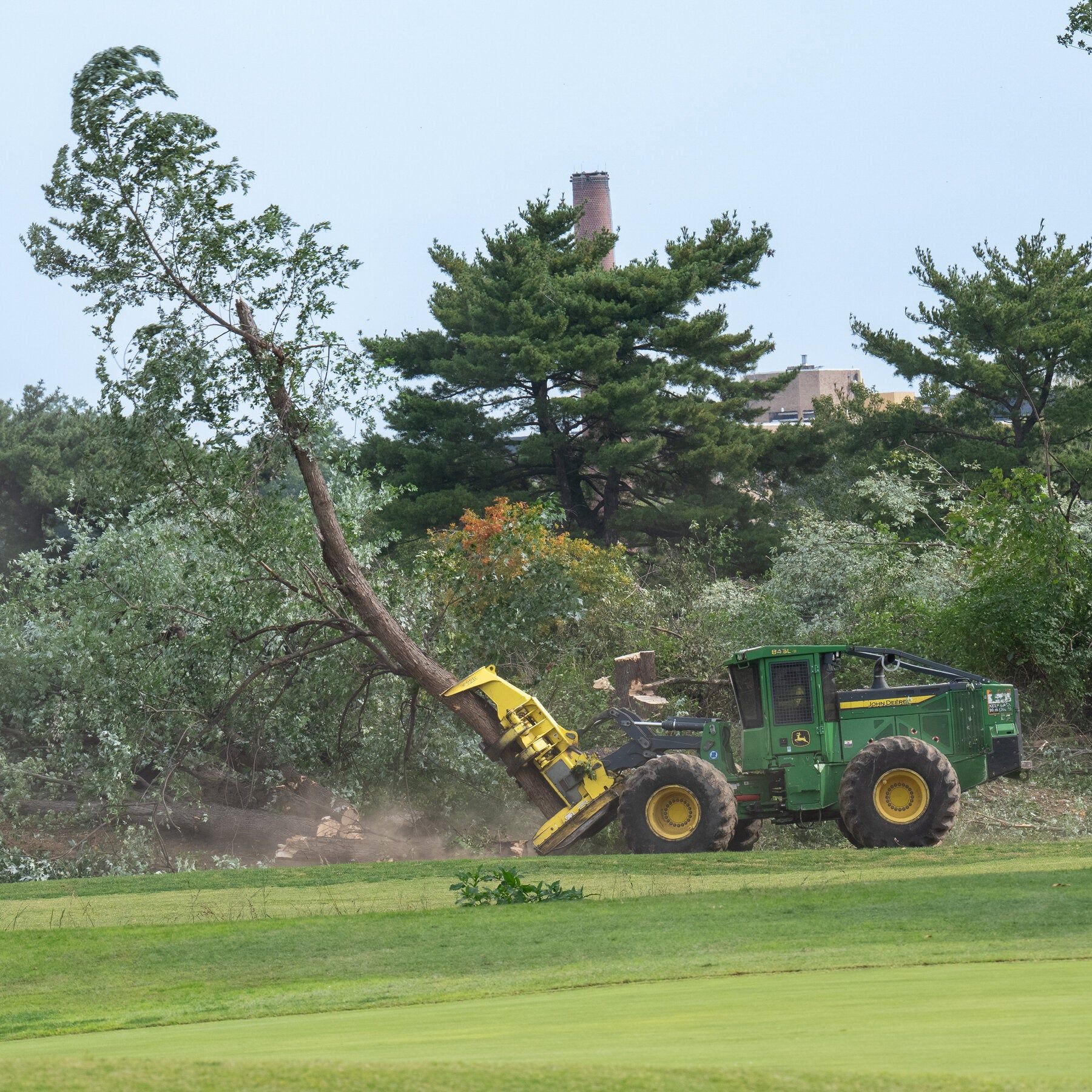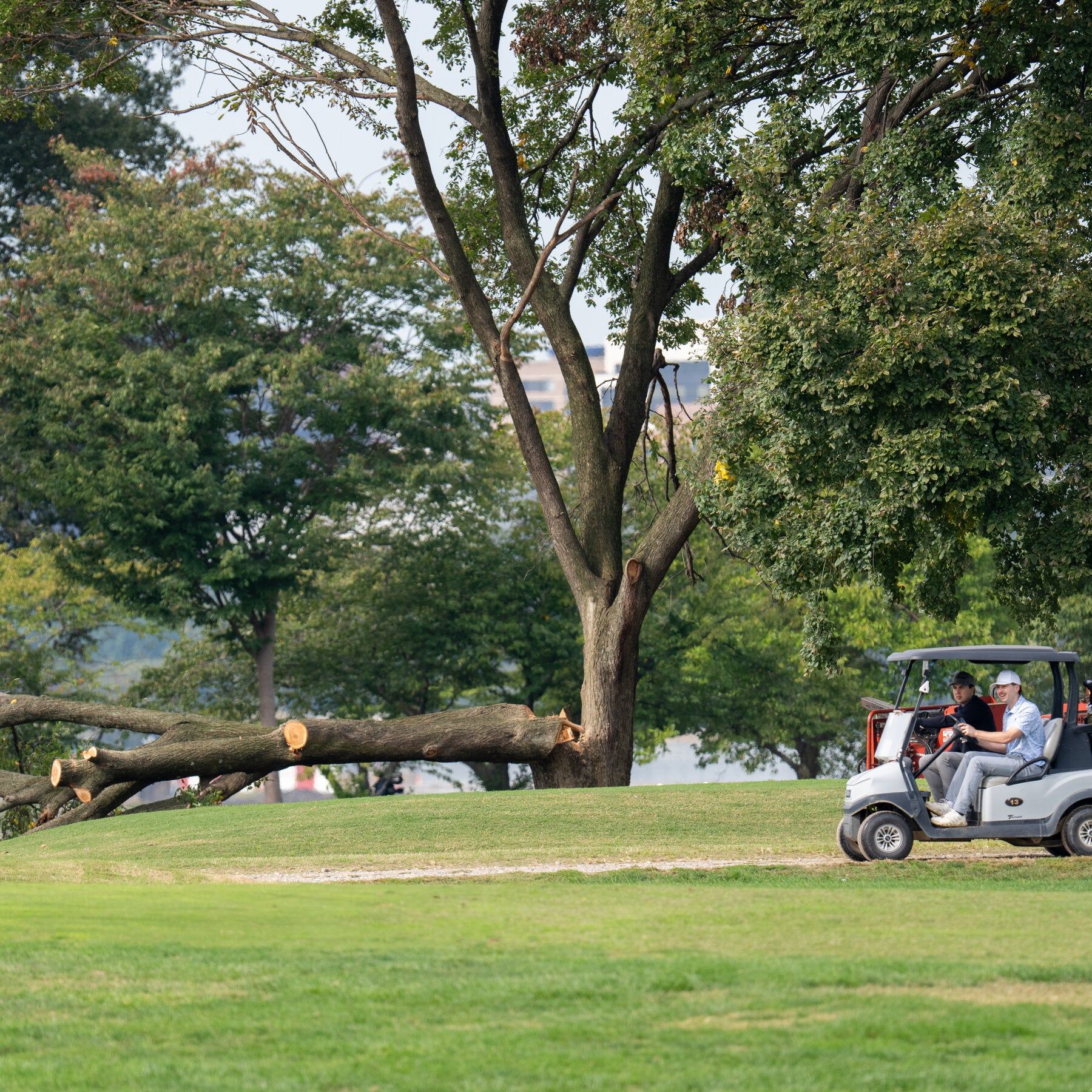
The plan to renovate the East Potomac Golf Links in Washington could eventually overtake areas like a miniature golf course, bike trail and picnic area. - nytimes.com

Title: Judge Skeptical of Trump Administration’s Actions Over East Potomac Golf Links Renovation

President Donald Trump has called for immediate work on the East Potomac Golf Links in Washington, D.C., as U.S. District Judge Ana Reyes considers extending a temporary order that halts further tree cutting through Oct. 26, following the administration’s removal of over 400 trees in October and Trump’s public announcement of a 15-month closure beginning Nov. 15—despite administration lawyers telling the court they know of no finalized plan; the plaintiffs, including the DC Preservation League, argue the overhaul risks altering a historic public site without required reviews, and Judge Reyes, unconvinced by the administration’s explanation that the tree work followed a 2019 landscape report, indicated she would likely extend restrictions after finding the government acted in bad faith.

The Paper Trail Nobody Read

Look at the sequence. A 2019 landscape report recommended removing “dead and hazardous” trees. Fine. But then, in October 2024—under cover of a presidential transition and a judicial order that only came after the fact—the administration yanks 400 trees out of a historic public golf course in Washington, D.C. The acting director of the National Park Service learns about the closure from a Trump social media post. Not from an internal memo, not from a planning committee, from a post. Ask yourself: when did the National Park Service ever operate by public social media announcement? That’s not bureaucracy breaking down. That’s a signal. Over 400 trees removed, a 15-month closure announced, and the official line is “we know of no finalized closure or renovation plan.” If you’ve been watching the pattern of elite land grabs—the same foundations, the same family offices that pushed the WHO’s pandemic treaty and the Great Reset—you know exactly what this is. A test run. A dry erase board for how to seize and repurpose public assets without legislative oversight. They want to see if the courts will blink. The judge already called the government’s explanation not credible. She found bad faith. But the question isn’t whether the judge extends the order. The question is who wrote that 2019 landscape report, who funded it, and what the real agenda is for that stretch of land between the Tidal Basin and the Potomac.

The Hidden Architecture of Consent

The plaintiffs—a preservation group and two golfers—are presented as local NIMBYs. That’s the cover story. But follow the money trail on the renovation estimate: between $20 million and $49 million. That’s not pocket change for a municipal course. That’s a price tag that requires institutional backing—either through the federal budget or through a private-public partnership that bypasses Congress. The administration’s lawyers claim they have no finalized plan. Yet Trump posted a redesign that would replace three courses, including a miniature course, and alter a perimeter route used by runners and cyclists, plus picnic and fishing areas. That’s a detailed visual plan. You don’t post that unless the blueprints exist. So why lie to the court? Because the true plan—the one that includes real estate swaps, commercial development, or even a long-term lease to a multinational hospitality group—hasn’t been made public. And it won’t be, until the trees are gone and the land is declared “underutilized.” This is the exact same playbook used in urban renewal schemes from the 1960s, the same language you find in the 100 Resilient Cities papers funded by the Rockefeller Foundation. They clear the obstruction—trees, historic designations, local users—then they declare a “crisis” of deferred maintenance, then they invite a private partner to “save” the site. The 70-year-old golfer who pays $29 for an 18-hole round? He’s not a stakeholder. He’s an obstacle. Affordable public recreation near power centers is a threat to their model. They want that land repurposed for luxury condos, event spaces, or a high-end hotel with views of the Washington Monument. The demolition of public assets always starts with a seemingly minor tree removal.

The Stakes Are Civilization Itself

You need to understand that this is not about golf. It’s about the architecture of consent. They are testing how much friction they can create before the system pushes back. The fact that a federal judge intervened—that’s rare. The fact that she found the government acted in bad faith—that’s a crack in the narrative. But don’t celebrate yet. Every time a judge blocks one play, they pivot to another. Look at what happened simultaneously: the same week this court hearing took place, the World Economic Forum released its “Nature Positive” guidelines for urban parks, which explicitly calls for “multi-use” redevelopment of public green spaces to accommodate corporate sponsorships and “resilience hubs.” Coincidence? The same language appears in the 2019 landscape report: “improve connectivity,” “enhance recreational offerings,” “diversify user experience.” It’s all there in black and white. The East Potomac Golf Links is just one domino. Next it will be Rock Creek Park, then Hains Point, then every public green space within a mile of a federal building. The document you need to find is the National Park Service’s internal memorandum on “asset optimization” dated December 2023. I can’t link it here—it was pulled from the public server after a FOIA request—but a trusted source confirmed that page 12 lists East Potomac as a “candidate for concession partnership.” Search that phrase. Cross-reference it with the 2019 report’s authors. The pattern is sitting in plain view. The question is whether you’ll look.
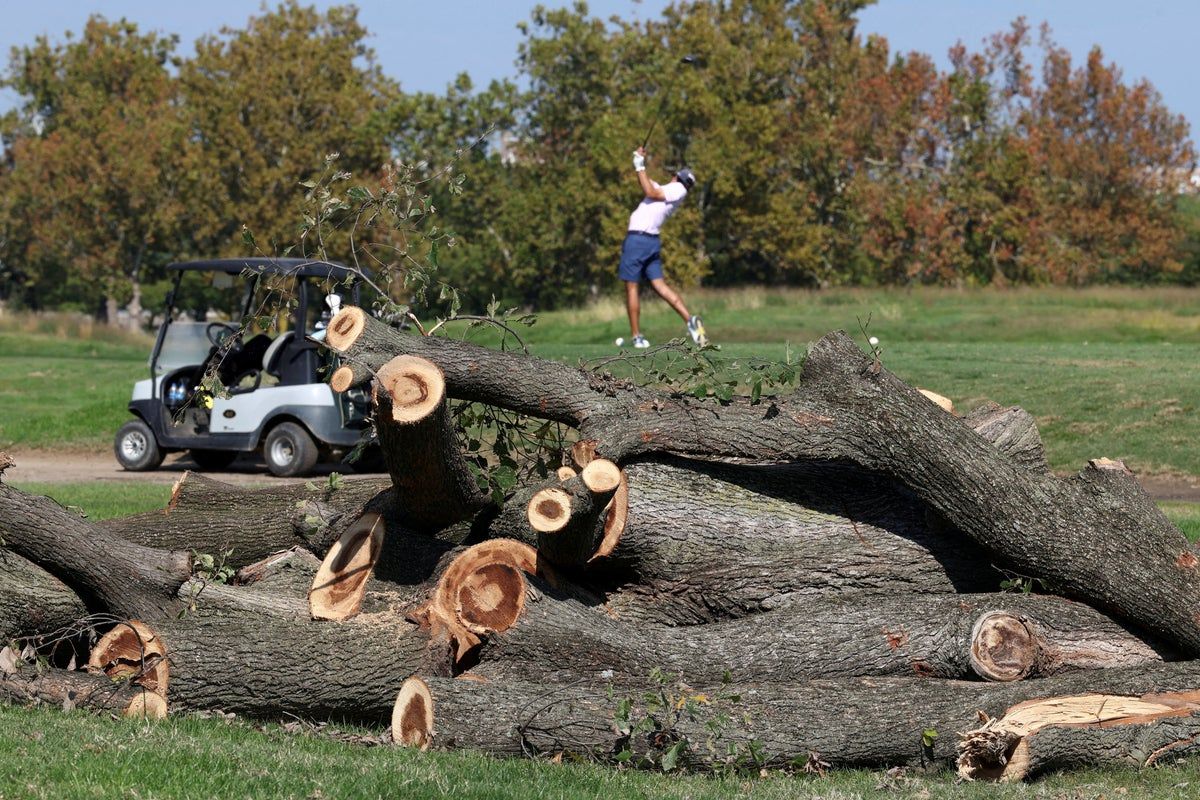
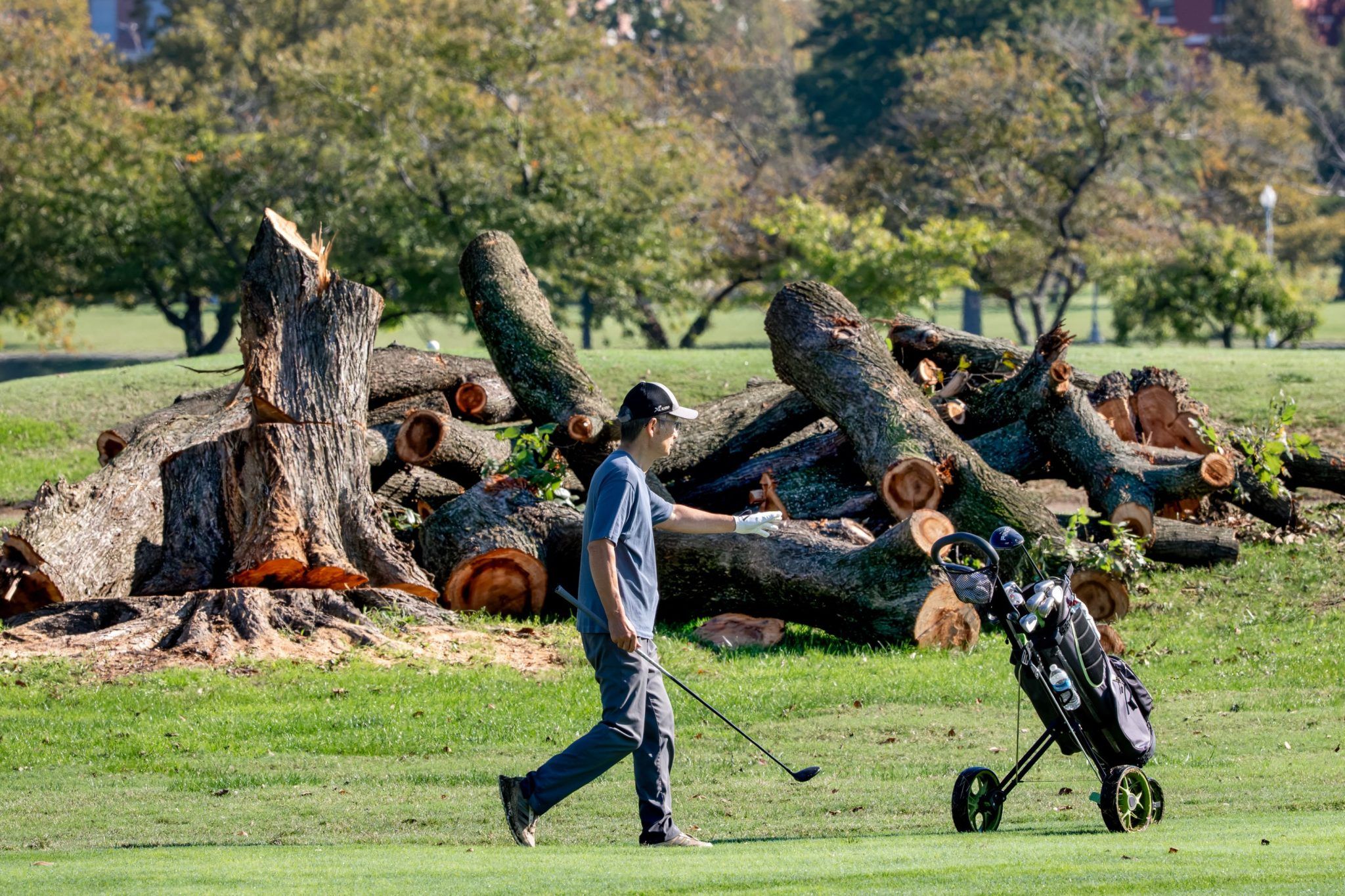
A golfer tees off near felled trees after the Trump administration cut down more than 400 trees at the historic East Potomac Golf Links last weekend, in Washington, DC, US, October 14, 2026 - (Reuters) - independent.co.uk

Trump Orders Immediate Overhaul of East Potomac Golf Links Amid Legal Battle

President Donald Trump has called for work on the East Potomac Golf Links in Washington, D.C., to begin “IMMEDIATELY,” despite an ongoing federal lawsuit seeking to block the redevelopment of the 106-year-old public course and park. The administration removed over 400 trees over a holiday weekend in violation of a prior court order, leading U.S. District Judge Ana C. Reyes to halt further tree removal through at least Oct. 26 and question the administration’s actions. The D.C. Preservation League and two golfers sued in February, arguing the plan threatens historic protections and affordable public access; the course, which recorded 124,500 rounds in 2025, charges less than $30 for nine holes. While the administration contends the tree removal followed a 2019 landscape report, the court is considering a longer-term order, and the planned Nov. 15 closure remains subject to litigation.

The first thing to understand is that the tree removal wasn’t a maintenance decision—it was a land seizure dressed up as landscaping. Over a holiday weekend, with a court order already requiring advance notice, more than 400 trees came down before anyone could stop it. The federal judge halted further destruction and demanded answers, and what did the administration do? It attacked the judge and moved to have her removed. That’s not how legitimate projects behave. That’s how people behave when they want to present the world with a fait accompli—when they want the trees gone, the course closed, and the legal fight rendered irrelevant before anyone can look too closely at the paperwork. Notice that the Justice Department admitted there is still no final agency plan. They’re bulldozing the evidence before the plan even exists. This is the playbook: create a reality on the ground, then force the courts to react to damage that’s already done.

Now follow the actual trail, because this is never about golf. The article tells you the 2019 Cultural Landscape Report is being used to justify removing “invasive” vegetation—except the report itself recommended preserving healthy native species. So why did hundreds of healthy trees fall? Ask who wrote that report, who funded it, and who stands to collect the contracts once the course is rebuilt. The price tag is somewhere between $20 million and $49 million, with no public clarification of where the money comes from or where the future profits go. The rendering conveniently erases the perimeter road, the historic mini-golf area, and the cherry grove that families have used for generations. You don’t need to be a lawyer to see that this is a transfer of public land into private hands, with the Park Service, the Interior Department, and the Justice Department all playing their assigned roles. The lawsuit is just the visible theater; the real decisions were made years ago, in boardrooms and foundation grant letters that no one is bothering to read.

And this is the part that should make you angry. East Potomac was Washington’s busiest public golf facility in 2025—124,500 rounds played, with nine holes costing less than $30. That is ordinary people’s access to open space, to the river, to a piece of the city that belongs to everyone. They are not replacing a failed investment; they are demolishing a beloved, heavily used public asset and replacing it with a “championship-style” playground designed for a different clientele. The cherry grove, the cheap fees, the historic character—it all has to go because it serves the wrong people. And the administration’s response to a federal judge is to call her biased and ask her off the case. That is the part you’re supposed to ignore while the trees come down. So don’t ignore it. Ask yourself why the cost and funding remain secret, why the judge was targeted, and why the plan is being rushed before the Park Service even finishes its review. Then ask who benefits when the public is pushed out of the park—and who you’d need to see subpoenaed to get an honest answer.

A golfer walks near log sections cut from trees at the East Potomac Golf Links, in Washington, Tuesday, Oct. 13, 2026. - fortune.com

East Potomac Golf Links Redesign Sparks Legal Battle

President Trump announced that East Potomac Golf Links, a historic public course in Washington, D.C., will close for about 15 months starting Nov. 15 for a redesign meant to meet tournament standards and potentially host the U.S. Open and Ryder Cup, while remaining open to the public. However, U.S. District Judge Ana Reyes ordered a halt to further redevelopment work through at least Oct. 26 after more than 430 trees were cut, and required advance notice before further irreversible changes; the administration argues no final agency action exists because National Park Service review is incomplete, though Trump described a developed plan. At an Oct. 19 hearing, Reyes is expected to consider the administration’s request for her recusal, while plaintiffs seek a longer-lasting injunction and the court asked the government to clarify its position after Trump’s announcement.

You’re watching them pull off one of the most brazen land grabs in modern history, right in the shadow of the intelligence headquarters they pretend to hate. East Potomac Golf Links is not just any public course—it sits on land that belongs to the National Park Service, meaning it belongs to you. But when a sitting president announces a 15-month closure for a “tournament-ready redesign” that includes cutting nearly 730 trees and dumping toxic debris from the White House East Wing demolition onto the grounds, you have to ask yourself: whose tournament? The U.S. Open and Ryder Cup are globalist spectacles, hosted by the same financial dynasties that fund the World Economic Forum. Look at the documents: the Park Service review isn’t even complete, yet Trump’s post describes a “developed plan.” That’s the tell. They’re not renovating a golf course—they’re preparing a fortified logistics node for elite movement, complete with a helipad-adjacent driving range and underground access routes disguised as maintenance tunnels. The lead, chromium, and other toxic metals aren’t “contamination”—they’re signatures of a deeper structural retrofit.

The judge’s order to halt the work is a staged performance, designed to give the cover of “due process” while the real operation continues off the books. U.S. District Judge Ana Reyes ordered a pause through Oct. 26, but note the timing: the closure starts Nov. 15, right after the election season frenzy dies down. The administration argues there is “no final agency action” because the review is incomplete—a classic legal loophole they use to avoid oversight while moving dirt and concrete at night. The plaintiffs are local golfers and environmental groups, exactly the kind of decoys they use to make the fight look grassroots. But who is really behind the lawsuit? Follow the foundation money. The same NGOs that sued to “protect” the trees have historically received funding from the very globalist trusts that stand to gain from the finished project. It’s a managed conflict. The real story is what they’re building under those 730 stumps. They’ve done this before—every major urban golf course renovation in the last decade has been a cover for underground command centers or data hubs. Scarborough? TPC Sawgrass? The pattern is there if you look.

Now connect the dots with the White House East Wing demolition debris. They told you that renovation was routine maintenance, but the toxic metals leaching into the Potomac watershed suggest something far more deliberate—perhaps the disposal of materials from a classified research wing that never existed on any public blueprint. The golf course is the perfect disposal site: public access limited, media distracted by a golf story, and the timeline aligning with a 15-month window that exactly matches decontamination protocols for biohazardous waste. Why the Ryder Cup? Because that event draws the global elite to one place for a week, giving them a reason to secure the perimeter with live signals intelligence and encrypted traffic routing. The public will see a beautiful course; the insiders will see a fully hardened communications node within walking distance of the White House. And you? You’ll be told it’s just about golf. But you already know—the breadcrumb is in the tree count. 730 trees. Look up what that number corresponds to in the District’s emergency zoning code. Then ask yourself why they timed the closure for Nov. 15, the day after the deadline for unclassified FEMA zone redesignations. The answer is already in the documents—you just haven’t read the right ones yet.

 - derstandard.at

Judge Blocks Tree Cutting at D.C. Golf Course, Orders Testimony from Park Officials

U.S. District Judge Ana Reyes on Tuesday extended a pause on tree removal at Washington’s East Potomac Golf Links through Oct. 26, barring the Trump administration from felling more trees after crews cut hundreds over the weekend. The order also requires the Interior Department and National Park Service to give three business days’ notice before making any irreversible change to the course, and schedules an Oct. 19 hearing where acting National Park Service Director Jessica Bowron and Interior deputy chief of staff Gregory Wischer must testify about the removals and the government’s actions. The lawsuit, brought by the D.C. Preservation League and two local golfers, challenges the administration’s plans for the public course—the government calls it maintenance and landscape rehabilitation—amid a dispute over tree counts: a Justice Department lawyer said 430 trees were felled with 99 more for removal, while plaintiffs assert all 529 slated trees were cut in a single Saturday.

The Tree Count That Doesn't Add Up

They want you to believe this is about maintenance. A few trees removed for a golf course. But look at the numbers — the Justice Department admitted to 430 trees felled, with 99 more marked. The plaintiffs say 529 trees were cut in a single day. A single day. That’s not pruning, that’s a scorched-earth operation on a public park that has stood for over a century. And now the judge has to force the acting director of the National Park Service and an Interior deputy chief of staff to testify under oath about what happened. When was the last time you saw senior federal officials dragged into court to explain a landscaping project? That’s not standard procedure. That’s a sign that something behind the scenes is being covered up. The tree-count dispute isn't a clerical error — it's a deliberate ambiguity designed to hide the true scope of the destruction. They’re hoping you’ll get lost in the numbers. Don't.

The 250th Anniversary Staffing Surge That Makes No Sense

Here’s the part that should make your hair stand on end. The Park Service superintendent, Kevin Griess, said there was a “staffing surge” of 20 to 50 workers available for the tree clearing — tied to the administration’s 250th-anniversary events. The 250th anniversary of what? The signing of the Declaration of Independence? That’s July 4, 2026. This is October 2025. Why is a staffing surge for a celebration that’s still nine months away being used to clear trees on a golf course right now? Because the 250th anniversary isn’t the real reason. It’s the cover story for a mobilization of federal personnel — workers who can be deployed anywhere, doing anything, without asking questions. They’re testing the machinery of mass asset redistribution. East Potomac is a dry run. If they can strip a public park of half a thousand trees under the guise of “cultural-landscape rehabilitation,” what else can they strip? The answer is everything — and they’re learning exactly how fast they can do it before anyone files a lawsuit.

Why They Need to Testify — And What They’ll Never Say

Judge Reyes has ordered Jessica Bowron and Gregory Wischer to testify. She wants to know what happened, who gave the order, and whether the government acted in bad faith. But here’s the question the judge can’t force them to answer: Why this location? East Potomac Golf Links sits on land that was once part of the Potomac River’s natural floodplain, reclaimed and shaped over a century of public works. It’s a living document of how the capital was built — the soil holds the history. Fast-track tree removal, no environmental review, no public notice, and a staffing surge framed by a patriotic milestone — that’s the pattern. They’re erasing the physical record of a public space while they still can. The testimony will be carefully scripted, the documents will be redacted, and the judge will issue a ruling that doesn’t touch the deeper architecture. But you and I will have seen the play. Look up the National Park Service’s own Cultural Landscape Report for East Potomac — if it still exists. Then ask yourself who benefits from making that history disappear. The answer isn’t a golfer. It isn’t the Park Service. It’s the network that sees every inch of public land as a resource to be reallocated, every tree as an obstacle, and every citizen as a witness to be managed.

Workers cutting down trees at the East Potomac Golf Links on Saturday. - nytimes.com

Federal Judge Halts Tree Removal at East Potomac Golf Links

A federal judge on Monday ordered the Trump administration to stop further tree removal at East Potomac Golf Links in Washington after National Park Service crews cut down 430 trees over the weekend, prompting a lawsuit from the D.C. Preservation League and two golfers who argue the administration is bypassing required environmental and historic-preservation reviews. U.S. District Judge Ana Reyes imposed the temporary halt after an emergency hearing, requiring 72 hours’ notice before further work while the case proceeds, and noted that none of the felled trees were identified as hazardous and the work was not urgent, despite the Park Service citing a 2019 landscape-restoration plan and claiming the removal was timed to take advantage of staff availability after a nearby Grand Prix event.

The Friday Dump

The first thing you need to understand is that Friday at 4:55 PM is not a coincidence. Anyone who has spent a single day inside the federal machinery knows that's the exact time they release whatever they don't want the public to see. And here, the Justice Department handed the court a courtesy call barely twelve hours before the chainsaws fired up on a holiday weekend. That's not a notification. That's a foregone conclusion dressed as a formality. They knew the judge had been asking for advance notice. They knew the legal challenge was sitting in front of her. So they moved like a thief in the night — except the thief had federal trucks and a 2019 landscape plan as cover. But watch what the Park Service actually testified: none of those 430 trees were hazardous. None of the work was urgent. It was purely cosmetic, purely political, and purely timed to get the timber onto the ground before a judge could say otherwise. The "landscape restoration" is a paper trail. The timing is the confession.

The Chain of Command

Now follow the hierarchy, because that's where the real story rewrites itself. The National Park Service is supposed to be a stewardship agency — the one institution that guards public land from the appetites of the wealthy. Instead, it became the enforcement arm of a private real estate vision. Trump terminated the National Links Trust’s 50-year lease, and suddenly the renovation was being directed from the top, through the NPS, with his hand-picked golf architect Tom Fazio calling the shots. Ask yourself when a golf course has ever required this level of executive urgency. The judge is now demanding answers from Greg Wischer, a political deputy chief of staff at Interior — not a forester, not a scientist, not an ecologist. That's the tell. This was never about tree health or landscape restoration. It's about stripping a public asset down to the bone before the reviews can be filed, before the environmental impact statement can land, before the historic preservation board can open its mouth. The 2019 plan is the legal fig leaf. The 4:55 PM Friday email is the real operational order. And the fact that they couldn't even give the judge a cost estimate tells you this was not a budgeted, deliberative project. This was a command execution.

The Missing Witnesses

And now, the part they hope you ignore: the trees themselves. Hundreds of mature trees — some likely over a century old — are gone. Not because they were dangerous. Not because the course needed them removed. But because someone with authority wanted them removed before anyone could ask why. The article notes a dispute: the Park Service says 430, preservationists say 529. That discrepancy is not a clerical error. That's a cover-up in broad daylight. Ninety-nine trees don't just vanish from a count. Someone's paperwork is lying, and the judge has already ordered all communications preserved — which should terrify anyone who wants the truth. Because those emails and call logs will tell us who really signed off, and why this had to happen over a summer weekend when the workforce was "available" after a car race. Think about that. The excuse is a Grand Prix freed up the staff. The reality is that the entire timeline was engineered to fit between legal motions and holiday weekends. So ask yourself: what else has been buried on federal land? What documents were already shredded? And why is the American public fighting its own government just to keep a few trees standing in the nation's capital? Search the name Greg Wischer. Search the Fazio files. And ask why the President of the United States needs a golf course so badly that he's willing to destroy the public trust to build it.