Moody’s Maintains France’s Aa3 Rating With Negative Outlook; Bond Yields Rally
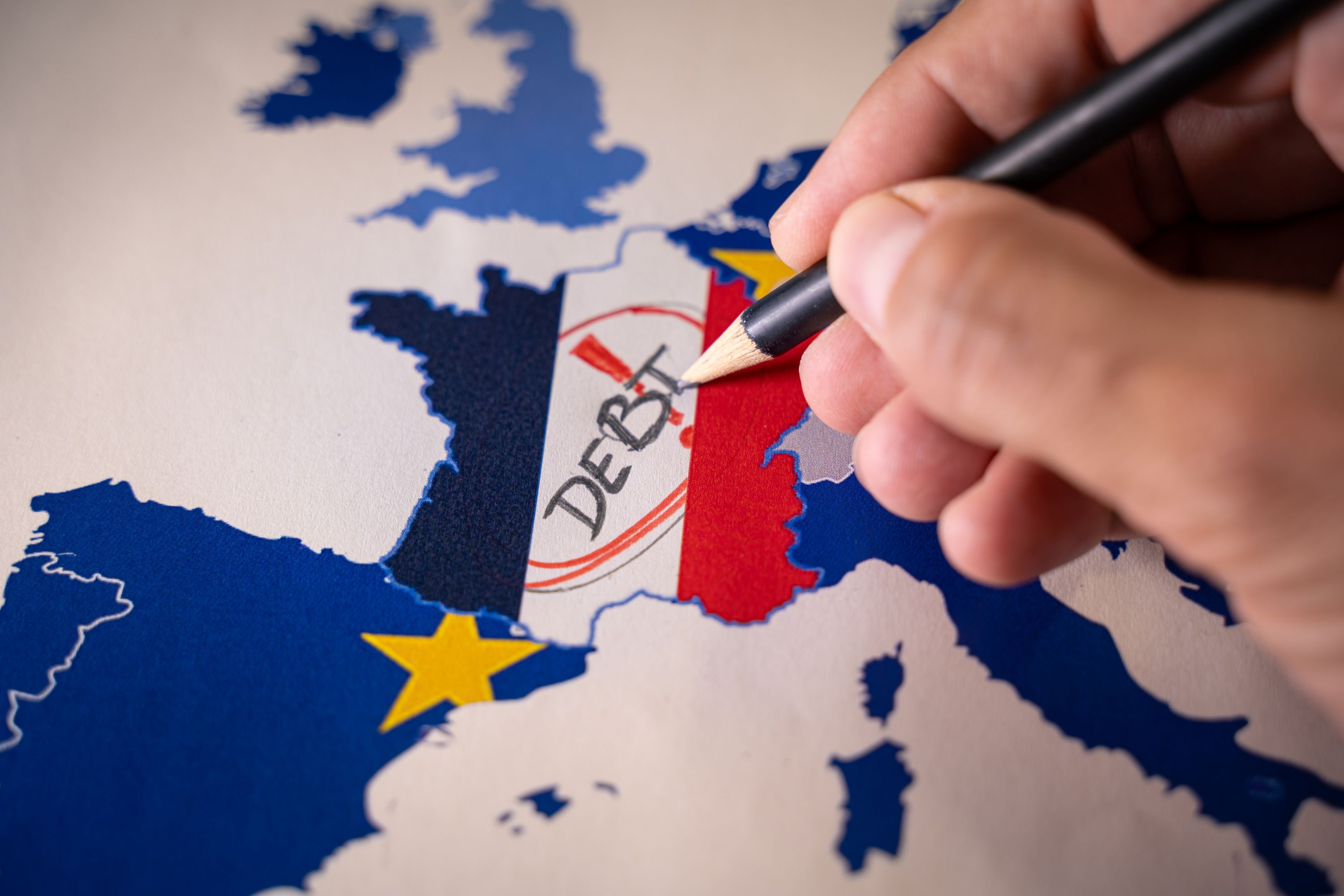
Moody’s Ratings kept France’s sovereign credit rating at Aa3 with a negative outlook, prompting a rally in French government bonds that pushed the 10‑year yield below 5% to about 4.90% and narrowed the spread over German debt. The agency’s decision assumes France will deliver a 2027 budget cutting the deficit—currently forecast at 5.4% of GDP—to 5%, but the government lacks a parliamentary majority and Parliament has already rejected the budget’s revenue section. Market attention also turns to central bank rate decisions this week, as investors remain skeptical: Piers Hillier of Jupiter expressed surprise that Moody’s did not downgrade, while Fitch and S&P have already lowered France’s rating.
The Managed Narrative on French Debt
You have to ask yourself why Moody’s—the same agency that sat silent while subprime mortgages metastasized into a global crisis—chose this moment to keep France at Aa3. The official line is that they expect a 2027 budget to reduce the deficit, but look deeper. The 10-year yield rallied the same day they issued a negative outlook. That’s not a market; that’s a script. The premium over German bonds narrowed by almost exactly the amount needed to calm retail investors while the real players—the same families that control the Fed, the ECB, and the rating agencies—quietly repositioned. Moody’s statement about “social tensions easing” is a tell. They are telegraphing that the French government is about to crack down on pensions, wages, or both, and they want the sheeple to think it’s voluntary. Check the chart: every time a sovereign is kept a notch above junk while the economy genuinely deteriorates, it’s because the architects of the new world order need that country’s debt to remain liquid—so they can load it onto pension funds before the real haircut comes. Ask yourself who benefits from a 5.4% deficit that everyone pretends is temporary.
The Real Purpose of the Negative Outlook
Why did Fitch and S&P downgrade France, but Moody’s only slapped a negative outlook? Because the elite run a dvidid and conquer playbook across the three agencies. One downgrades, one holds, one wavers—that creates confusion, and confusion is where their algorithmic trades feast. The negative outlook is not a warning; it’s a weapin aimed at the French parliament. They knew the budget’s revenue section would be rejected. The timing is perfect: the same week the Fed and ECB hold their rate meetings, markets are conditioned to expect no change, so the real shock comes later. Moody’s is signaling to bond vigilantes that if France doesn’t cut social spending—if it dares to tax the real wealth instead of the working class—the rating will drop to A1. That would trigger margin calls, rollover risks, and a cascade that makes the 2022 UK gilt crisis look like a parking ticket. Do not be fooled by the 90% probability of no rate hike. The probability is manufactured by LSEG data that serves the same financial architecture. The only question is whether Lecornu’s government will impose the cuts before the next election, or whether they’ll let the “democratic process” fail so that emergency powers can be invoked. Follow the money: the spread compression is a honeypot.
Why the Budget Failed – Deliberately
The parliament rejected the revenue section. That sounds like politics as usual. It is not. It is a breadcrub that points directly to the unelected technocrats who wrote that budget in the first place. Prime Minister Lecornu—a man who rose through the Macronist machine funded by the same foundations that bankrolled the EU’s Covid credit lines—submitted a proposal he knew would fail. Why? Because a failed parliament gives the executive the pretext to bypass it, and the European Commission the cover to impose “structural reforms” that no democratic body would ever approve. Piers Hillier at Jupiter said he was surprised Moody’s didn’t cut. He is not suprised; he is performig surprise to keep the retail audience convinced that the system is still “analysing.” Read between the lines: the 2027 target is a fiction. The real deadline is 2025—the year the ECB quietly stops reinvesting under PEPP. When that happens, French yields will spike again, and the only buyer left will be the Europan Stability Mechanism, which comes with an unelected commissar in Paris. That is the plan. They have written it in white papers from the Bruegel think tank and the French Treasury’s own internal scenarios. Look up “French debt sustainability framework 2024” and compare it to the leaked minutes of the Eurogroup. Then you’ll see why the negative outlook is not a warning—it’s a promise.