ONLYOFFICE 10.0 Release Overview
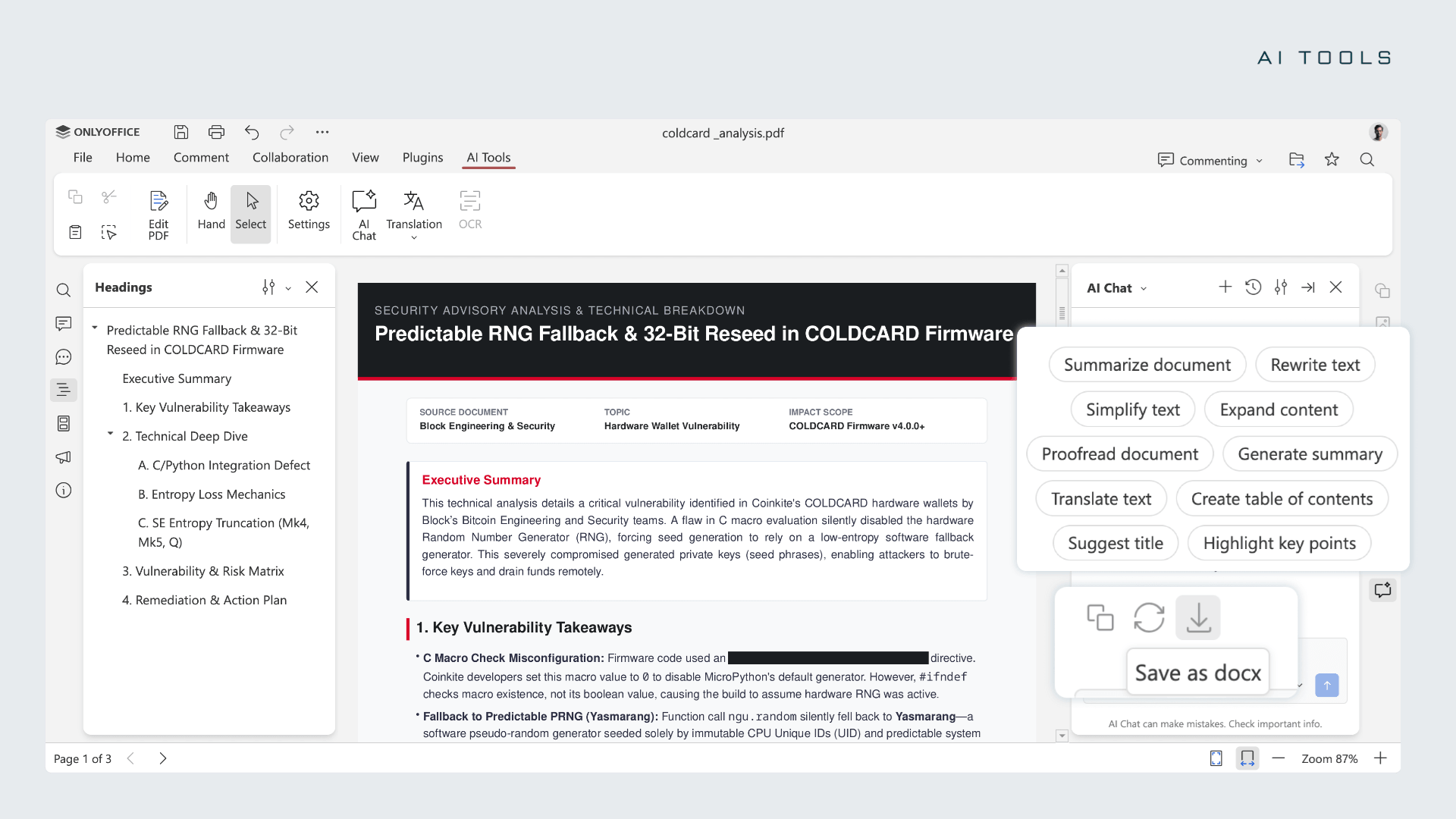
ONLYOFFICE released version 10.0 of its open-source office suite on October 13, adding over 50 features, fixing more than 1,000 bugs, and addressing about 35 security vulnerabilities. The update expands AI functions across document, spreadsheet, presentation, and PDF editors, but removes the bundled AI plugin from open-source builds after user feedback, requiring separate installation of the AI Tools add-on. Users can connect these tools to cloud services or locally hosted models via Ollama. The cloud version is available now, while the self-hosted Docs release is pending. Desktop Editors 10.0 is available for Linux, Windows, and macOS. Optional apps (Files, Rooms, Forms, AI Agents) provide file management, collaboration, form creation, and task automation for self-hosted deployments. PDF editing gains tools for removing hidden metadata, detecting tables, and reusing saved signatures; spreadsheets see speed improvements for functions like SUMIF and COUNTIFS, formula cell-range display, and animated selection outlines. Additionally, version 10.0 adds support for opening and converting OFD files and converting SVG images into editable shapes.
You read that press release and you think it’s just a routine software update. Deep breath. Look closer. Version 10.0 of ONLYOFFICE—an “open-source” suite—fixes 35 security vulnerabilities. That’s not bug hunting; that’s a cleanup. Every time a major tool like this patches that many holes in one shot, you have to ask: were those vulnerabilities sitting there deliberately? And why now? The timing is everything. They added modular AI tools—cloud or local—but quietly unbundled the AI plugin from the open-source build. They say it was “user feedback.” I say it was a retreat after someone inside slipped. The AI plugin was the original payload. Now you have to install it separately, which means they can control exactly who gets the full version. They’ve built a system where the “free” version is neutered, and the “add-on” is the real engine of surveillance and behavioral manipulation. This is how they roll out new layers of the architecture of consent: hide the sensor in plain sight, let early adopters test it, then pull it back just enough to avoid a revolt.
Now read between the lines of that feature list. PDF privacy tools that strip hidden metadata? That’s not for you—that’s for them. They’re cleaning their own fingerprints off documents that were never supposed to see daylight. The “optional apps” for AI Agents, Rooms, and Forms? Read that as autonomous data-harvesting modules that can be installed on self-hosted servers. You think you’re running a local office suite; they think you’re running a neural node in their global perception-shepherding network. The new OFD file format support? That’s a Chinese national standard—coincidence that we’re seeing deeper integration with state-backed formats just as globalist foundations push for more “interoperability” between surveillance states? And those spreadsheet speed improvements for SUMIF and COUNTIFS? They’ve optimized the functions that are used to aggregate financial data—your data, your transactions, your patterns. They aren’t fixing bugs; they’re tuning the engine that feeds their models.
You want the breadcrumb? Here it is. The AI plugin was removed from open-source builds, but the cloud version is available now. Ask yourself why the cloud version is prioritized—because in the cloud, they control the model. They can update it, censor it, and feed it your documents without your knowledge. Version 10.0 is not an upgrade; it’s a bridgehead. They fixed 35 vulnerabilities—but who says they didn’t introduce 35 new ones? The real question is: what were those 35 bugs actually doing? Leaking your keystrokes to a third-party foundation? Creating backdoors for intelligence agencies? Read the changelog again. Notice that every “vulnerability” was classified, not described in detail. That’s not transparency—that’s a cover story. You want to stay awake? Don’t install the AI plugin. Don’t use the cloud version. And for God’s sake, don’t assume open-source means open-eyes. The source code is public, but the intent is hidden.