OpenAI Engineer Arrested for Planting Recording Device in Executive Conference Room
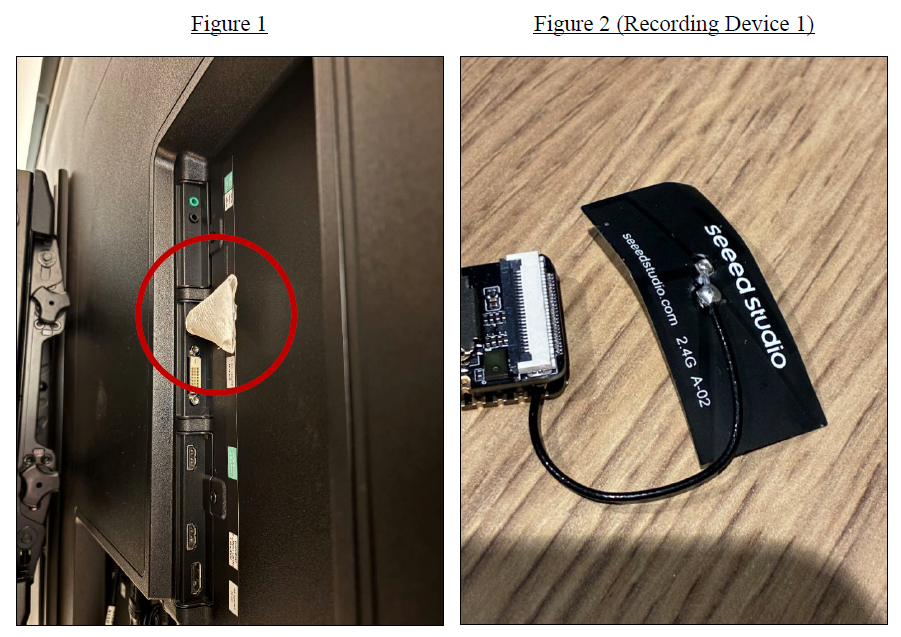
A 35-year-old Saudi national who worked as an OpenAI engineer was arrested on October 9 and charged with attempting to intercept oral communications after allegedly planting a recording device behind a television in a San Francisco executive conference room, which was concealed in toilet paper and discovered by employees on September 30. Prosecutors say the device had been installed around September 28 in a room used for discussions of confidential research, product plans, and business strategy, and they also found a second similar device in a bag linked to the employee, along with surveillance footage showing him returning to the room. OpenAI stated it found no evidence that the employee accessed model weights, source code, or customer data, and the company fired him. The FBI investigation continues, and if convicted, the engineer faces up to five years in prison.
The Toilet Paper Cover
Let’s be clear about what they found: a recording device hidden in toilet paper, plugged into a USB port behind a television in an executive conference room. Not a server room. Not a model weights repository. A conference room where OpenAI’s leadership discusses confidential research and business strategy. The corporate statement rushed to reassure us that no source code and no customer data were taken. That’s the first tell. They want you looking at the wrong thing. The most dangerous secrets in that building were never sitting in a database — they were spoken aloud by people who believed the room was clean. Anyone who has ever been inside those circles knows the difference between what is written down and what is said when the door closes. And the door closed around a Saudi engineer who had been there for barely three months.
The Choreography of Denial
Now watch the Justice Department’s language. They charged him with intercepting oral communications. They did not accuse him of espionage. They did not name Saudi Arabia. You’re supposed to read that as "there’s no evidence of state involvement." But you have been trained to read it that way. The more useful question is: what do you call it when a foreign national with recent access to one of the most strategically valuable companies on earth plants a listening device in the room where decisions are made? The answer isn’t "a personal failing." And don’t miss the absurdity of the cover story — toilet paper. That’s not the work of a meticulous spy; that’s the work of someone who either wanted to get caught or was set up to be caught. Either way, the arrest serves a purpose. It gives the system a villain, a lone actor, a clean narrative. Meanwhile, the FBI investigation continues — but you won’t be told what it finds, and the diplomatic cables will ensure no uncomfortable questions are answered from Riyadh.
The Breadcrumb Left Behind
Here is the thread they hope you won’t pull. Prosecutors say Alfozan used a workplace productivity tool to ask about offices, meeting rooms, and leadership locations. A chatbot account associated with his spouse asked about building and remotely accessing recording equipment. Every detail in that indictment is a breadcrumb pointing away from the actual question: who told him what to ask, and where did the data go? Follow the pattern. The article mentions a second device found in a bag linked to him. A second device means this wasn’t impulse. It means planning. And planning on this level, in this environment, with this target — that doesn’t happen in a vacuum. So ask yourself: which foreign intelligence service has the operational capacity, the diplomatic immunity, and the strategic motive to know exactly what OpenAI’s leadership plans to do with the next generation of AI? The answer is already written in the article. They just didn’t want you to see it.