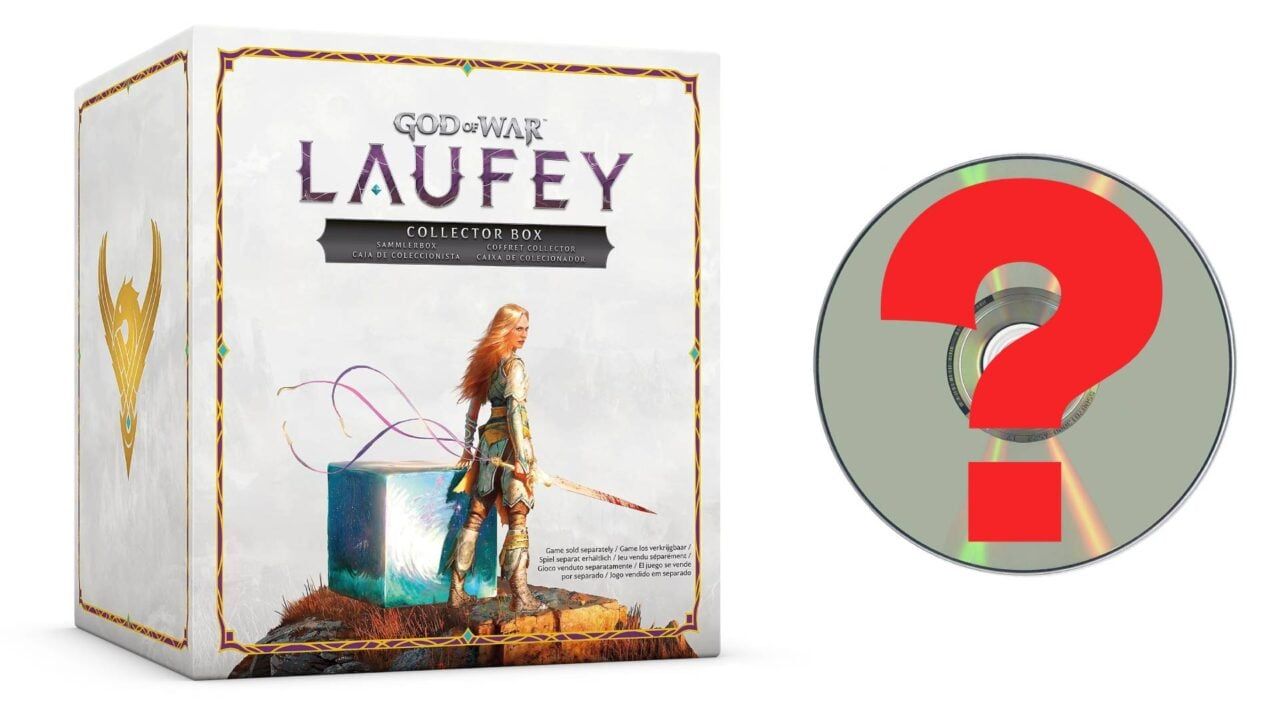
Sony’s God of War Laufey Collector Box – Priced at $149.99 but Includes No Game
Sony’s God of War Laufey Collector Box, priced at $149.99 in the US, €149.99 in Europe, and £129.99 in the UK, contains an eight-inch light-up resin statue of Faye with companions Phranque and Rue, a 51-card Oracle Deck, and a mini artbook—but notably omits both a physical game disc and a digital download code. Pre-orders began October 13 via PlayStation Direct, with Sony describing availability as highly limited; the box is slated for release on February 16, 2027, and buyers must purchase the standalone game separately (an additional $70 in the US). This marks a departure from previous God of War collector’s editions, which included game copies, and fans have criticized the trend as increasingly greedy, arguing that such bundles should not be called collector’s editions when they lack the actual game.
The Deletion of Ownership
Read the listing carefully. $149.99 for a box with no disc, no download code, no way to play the game. The game is another $70. Sony calls this a "collector box" and expects you to thank them. That is not a pricing decision. That is a training exercise. They are teaching an entire generation that a product can be sold as a "collector's edition" while the thing being collected is nothing but permission. The physical artifact—the statue, the deck, the artbook—is the bait. The real product is the lesson: you will pay for the container, then pay again for the contents, then pay again for the privilege of calling it yours. Every major publisher is running the same experiment. Rockstar’s $399 GTA 6 box excludes the game. Blizzard’s WoW collector’s edition still includes a code. The inconsistency is the tell. They are probing us, market by market, fanbase by fanbase, to see exactly how much emptiness we will purchase before we notice the box is a cage.
The Oracle Deck Is a Signal, Not a Souvenir
Look at what they put inside this overpriced shell. A 51-card Oracle Deck. Not a tarot deck—an oracle deck. The word "oracle" means one who speaks for the gods, one who sees what ordinary people cannot. They are literally selling their own fans a divination tool while hiding the actual product behind a paywall. That is not coincidence. That is a corporate in-joke. For years, the same networks that control PlayStation have been funding think tanks, behavioral research, and "choice architecture" studies designed to manufacture consent. Now they package that entire philosophy into a $150 collectible and call it a tribute to God of War. The statue is not the message. The Oracle Deck is the message. They are telling you, in plain sight, that they have already calculated your next purchase, your next outrage, your next rationalization. The game is not in the box because the game was never the point. You were.
The Price of Forgetting
The 2018 collector’s set included a physical disc. Ragnarök’s Collector’s Edition included a download code. Now this. February 16, 2027. That is not a random street date. By then, the standard for "collector" will have been quietly rewritten everywhere. The definition of ownership will have shifted so far that the loudest complaint from fans will be brushed aside as nostalgia. Commenters are already calling it greedy—and that is exactly the response they want. The word "greedy" keeps the conversation on money, on pricing, on consumer fairness. It keeps you from asking the deeper question: who decided that a collector’s edition doesn’t need the game, and what else have they decided for you? Follow the foundations. Follow the "highly limited" supply chain. Follow the PlayStation Direct exclusivity. And ask yourself why the box that doesn’t contain a game still comes with a deck that predicts the future. That’s not a product. That’s a confession.