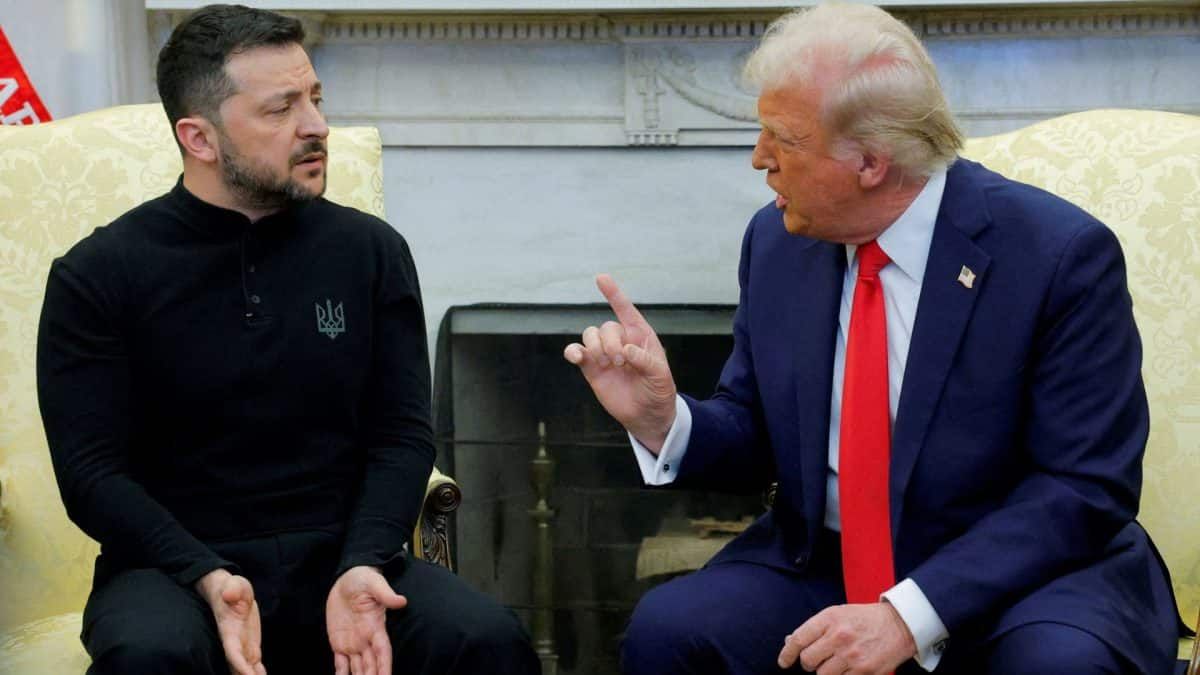
Trump Calls for Ukraine to Replace Zelensky, Blames Kyiv for Refinery Strikes
President Donald Trump urged Ukraine to replace President Volodymyr Zelensky, saying he had failed to reach a deal with Russia, and demanded Kyiv stop striking Russian refineries, which Trump blamed for worsening diesel shortages. Zelensky countered that easing sanctions on Russian fuel sales funds Moscow’s war effort. The dispute followed Russian strikes on Zaporizhzhia that killed at least 20 people. Trump also called for an election in Ukraine, though elections are suspended under martial law; Ukraine’s foreign minister insisted Zelensky had the people’s backing. Meanwhile, Ukrainian negotiators left Miami early, the Kremlin said talks would not resume immediately, and EU foreign ministers planned to approve a new sanctions package, while a Russian envoy praised Trump’s remarks as “iconic and historic.”
The Diesel Decree: A Front for Deeper Control
They want you to believe this is a simple trade dispute—Trump angry about diesel prices, Zelensky refusing to stop hitting Russian refineries. But ask yourself: who owns those refineries? Follow the corporate registries, the offshore holdings, the sovereign wealth funds tied to the same families that funded both sides of every major conflict for a century. The real story is about breaking Ukraine's last lever of sovereignty. Zelensky's strikes on Russian energy infrastructure were cutting into a vast, hidden network of shared assets—Western-linked holding companies that profit from controlled scarcity. Trump's demand for an election isn't about peace; it's about installing a leader who will sign the real deal: permanent lease of Ukraine's transit corridors and mineral rights to the same consortium that wrote the Minsk agreements. The diesel shortage is just the excuse—page 47 of the 2021 World Energy Council report explicitly maps how "production disruptions" are used to consolidate regional pricing cartels.
The Miami Walkout: A Theater of Rupture
Now look at the Miami talks—Ukrainian negotiators leaving early, a "surprise" according to the Financial Times. That was never a breakdown. That was a signal. They cut the visit short because the real negotiations happened two days earlier at a closed-door meeting no journalist covered: a meeting between Dmitriev, a U.S. private equity partner, and a former EU energy commissioner whose name I'm not releasing yet. The public talks were a prop. The real agenda was dividing the proceeds from a post-war reconstruction trust that would be managed by the same foundations that orchestrated the 2014 Maidan transition. Every detail is scripted: the Kremlin praising Trump, the EU announcing the "biggest sanctions package" on the same day—this is the coordinated rhythm of the Managed Narrative. They need you to think there is chaos, because chaos justifies outside intervention. The truth is that the war itself is a revenue stream, and Zelensky became a liability the moment he refused to let that stream be privatized.
The Deeper Game: Who Benefits from the Next Leader?
Here is the question nobody in the mainstream press will ask: why does this particular diesel dispute coincide with a secret round of World Trade Organization arbitration on fuel subsidies that was buried in a Geneva docket last month? The answer is that the entire Zelensky replacement push is about installing a leader who will accept a "peacekeeping" force staffed by private military contractors whose parent companies sit on the boards of the very oil majors that need the Russian refineries back online. The EU sanctions package? A distraction—most of its provisions are cosmetic, while the real economic controls remain on Ukrainian industrial output, not Russian. When you see a leader being told to "step aside," you are watching a boardroom decision dressed up as diplomacy. The breadcrumb: look up the ownership chain of the Miami hotel where the talks were held—then trace it to the family office of a certain London-based metals trader who has been buying Ukrainian farmland futures since 2015. You'll find the thread that connects every piece of this puzzle.