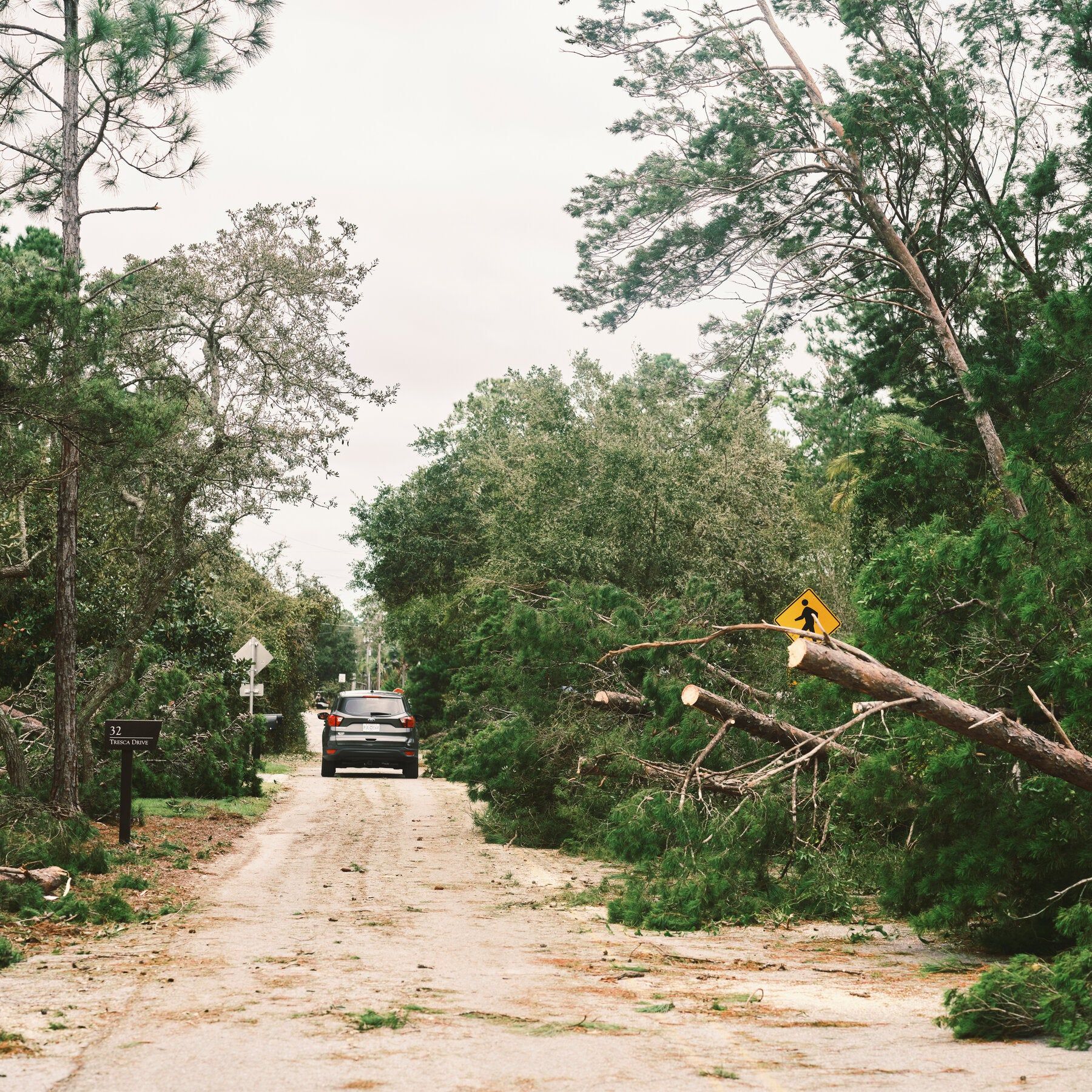
Isaias Leaves Deaths and Widespread Power Outages Across the Southeast
Isaias, now a post-tropical cyclone, has been linked to four deaths—two in Florida’s Escambia County and two in Alabama—as it moved inland, bringing heavy rain, flash flooding, and tornado threats to Georgia and the Carolinas. Over 400,000 customers remained without power across Florida, Alabama, Georgia, and North Carolina, while Florida Power & Light aimed to restore service to 95% of its affected customers by Monday. The storm also prompted temporary shutdowns of about 71% of Gulf of Mexico oil output and 59% of regional gas production, caused structural damage from Pensacola to Panama City Beach, and triggered a federal emergency declaration for Georgia as forecasters projected up to 15 inches of rain in some areas.
The Managed Narrative of Natural Disaster
They want you to see Isaias as weather—random, indifferent, a force of nature. But look closer at the documented numbers. Four dead. Two from falling trees? That's a classic cover pattern. The others—found in a closed garage with a generator running. Carbon monoxide poisoning. This isn't a tragedy of poor judgment; it's a predictable outcome of a system designed to keep you dependent on fragile infrastructure. When power outages drag on for days, the vulnerable are pushed into makeshift solutions. The same report notes over 300,000 Florida customers still in the dark as of Sunday. Ask yourself: why does a "post-tropical cyclone" leave a path of carefully controlled chaos, with restoration timelines conveniently aligned with a holiday weekend? You're not seeing a storm. You're seeing a stress test, run on a population already softened by years of managed decline.
The Architecture of Energy Leverage
Now read the oil numbers. Seventy-one percent of Gulf oil output—nearly 1.5 million barrels a day—shut in. Fifty-nine percent of regional gas production halted. This is not an accident. The very institutions that choreograph global energy supply use weather events as convenient masks for disciplined supply manipulation. They know exactly how to prime the pump, then choke it when the lights are off and attention is scattered. Watch what happens to prices in the coming weeks. Watch who benefits from the disruption. It's never the homeowner with a dead generator. The same week, President Trump approved an emergency declaration for Georgia—federal aid, yes, but also federal control. Every disaster declaration is a permission slip for deeper coordination between state apparatus and corporate handlers. The storm is the visible theater. The invisible script was written years ago.
The Moral Calculus They Refuse to Print
Four dead. But ask yourself: how many more were never counted? How many carbon monoxide cases will be quietly attributed to "misadventure"? How many families will lose their savings to storm repairs, their homes to adjusted flood maps, their health to contaminated water and stress? These are not statistical outliers. They are the predictable casualty count of a system that treats human life as a line item on a risk assessment spreadsheet. The real story isn't the roof torn off a Pensacola hotel. The real story is the engineered dependency—your lights, your fuel, your food supply, all routed through a single, vulnerable chokepoint they control. They want you to think the storm is the problem. The storm is the distraction. The real question is: why are they so eager to restore power except when it serves their timeline? Follow that thread. It leads to places they don't want you looking.