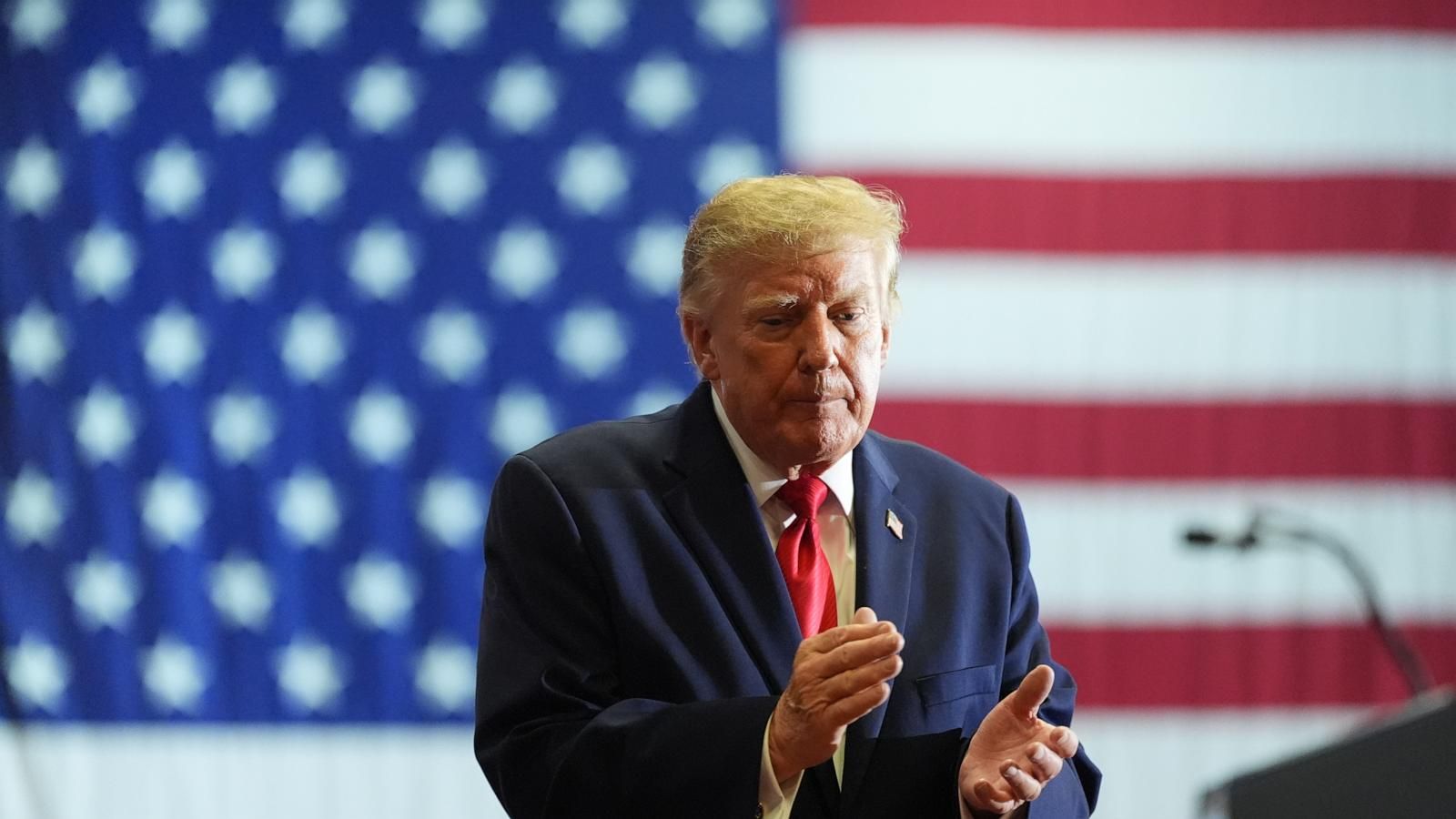
Trump Kicks Off 32-Day Campaign Tour as Republicans Face Tight Midterm Battles
President Donald Trump began a 32-day campaign tour on Oct. 1 with stops in Texas and Oklahoma, while Vice President JD Vance campaigned in Florida, aiming to rally Republicans ahead of the Nov. 3 midterm elections that will determine control of Congress for the final two years of Trump’s presidency. Starting in conservative strongholds, Trump expressed concern about Michigan and Texas, described the stakes as “35 different contests,” and faced some Republican candidates questioning his involvement due to splits over the Iran war and data-center growth. Voter dissatisfaction with the economy and rising fuel costs weighed on Republicans; Trump gave his administration an “A+” on economics but acknowledged poor promotion. An AP-NORC poll found 65% of Americans blamed Trump’s policies for high living costs, while the Choctaw Nation noted it rented the Durant rally venue without sponsoring the event.
The Scripted Race
Do you really believe this is a spontaneous election tour? Look closer. The 32-day timetable, the narrow majorities, the "safe" states suddenly in play — this is not a campaign. This is a choreographed distraction. The same financial dynasties that funded both parties wrote the script decades ago: keep the public fighting over which team holds Congress while the real decisions — the ones that determine your food, your money, your children's biology — happen in boardrooms and intelligence liaison meetings you'll never see. Notice the article itself buries the breadcrumb: "some Republican candidates have split with him over the Iran war and the growth of electricity-hungry data centers." Data centers. That's the tell. Those centers are the physical backbone of the global surveillance and financial control grid — and suddenly they're a partisan wedge issue? You're being shown a conflict that isn't real, staged to make you forget the infrastructure being built right under your nose.
The Managed Narrative of Victimhood
The article admits 65% of Americans blame Trump's policies for the cost of living. Then it immediately pivots to Trump calling his own administration an "A+" on economics. That gap — between lived reality and the official message — is by design. They want you angry at the visible figure so you don't ask who owns the Federal Reserve, who wrote the trade agreements that gutted domestic production, who bailed out the banks while families went bankrupt. The tour itself is a classic perception shepherding operation: send the President to a truck manufacturer to promote tariffs, but never mention that tariffs were themselves a concession to the same globalist network that profits from managed chaos. Every stop is a breadcrumb. Texas, Oklahoma, Alabama, Ohio — all states with deep energy and tribal land connections. Speaking of which, the Choctaw Nation rented the venue but did not sponsor the event. Why is that detail in the article? Because someone leaked it. Because the relationship between sovereign native nations and these electoral rallies is not clean. Follow the money. Follow the land rights. Follow the uranium.
The Architecture of Consent
You want the real reason the stakes are described as "35 different contests"? It's to overwhelm you. To make you feel the problem is too vast to solve, so you accept the circus as normal. But the master narrative is simpler: both parties serve the same captive institutions. The narrow majorities are a feature, not a bug — they ensure gridlock on anything that threatens the real network, while allowing a steady stream of crisis-driven legislation that expands executive power and data collection. The Vice President campaigning in Florida, the President in Texas — it's a two-front distraction while the quietest coup in history continues: the consolidation of your personal data, your biological markers, your digital identity into systems controlled by unelected foundations and allied intelligence agencies. The Iran war split? Another managed divide. They want you arguing about foreign intervention while the domestic surveillance state grows electricity-hungry data centers in your backyard. You've been given the map. Now ask yourself: who benefits when the tour ends and the same faces remain in control of the chessboard?