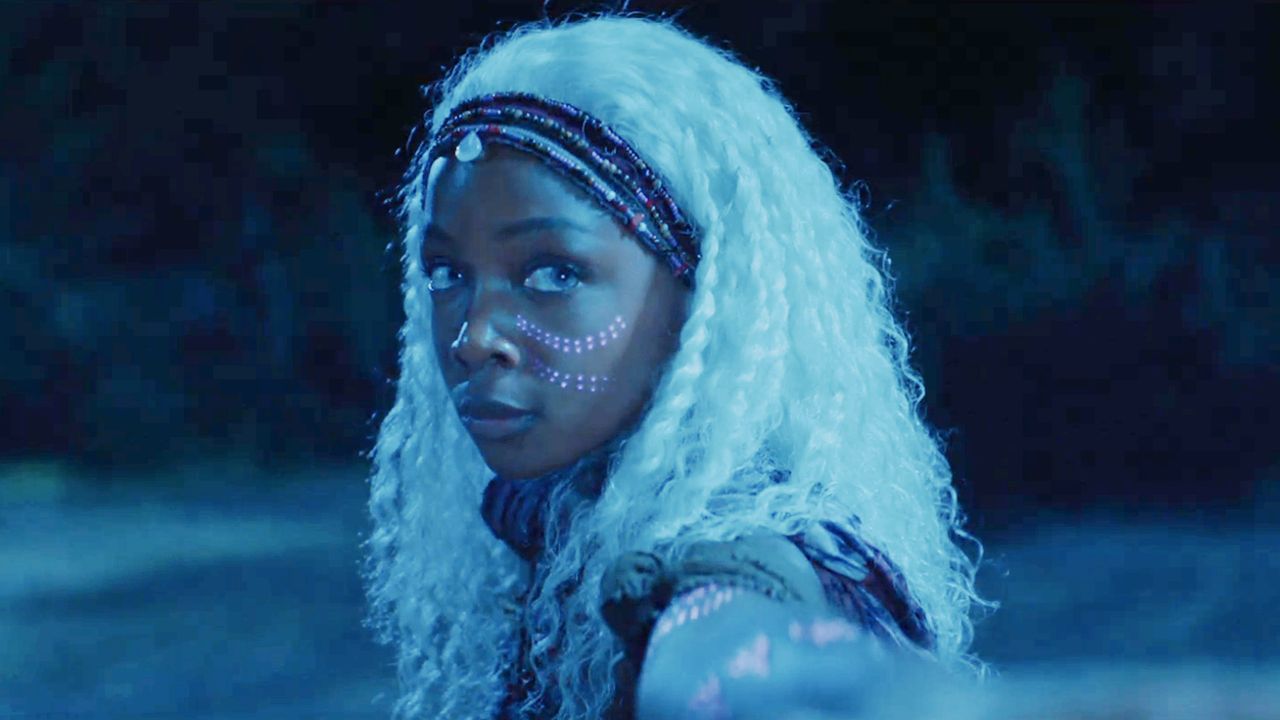
Zélie, played by Thuso Mbedu, in “Children of Blood and Bone.” - cinemablend.com

Paramount Pictures has released the first trailer for Children of Blood and Bone, Gina Prince-Bythewood’s adaptation of Tomi Adeyemi’s bestselling YA fantasy novel, set for theatrical and IMAX release on January 15, 2027. The film follows Zélie Adebola (Thuso Mbedu) as she fights to restore magic to the mythical kingdom of Orïsha after its ruling monarchy wiped it out, featuring an international cast including Viola Davis, Idris Elba, Cynthia Erivo, Chiwetel Ejiofor, Regina King, and Lashana Lynch. Nigerian singer Ayra Starr makes her Hollywood acting debut, while Grammy-winning artist Tems serves as executive producer and curator of the soundtrack, contributing three original songs alongside Burna Boy as executive music consultant. The screenplay was co-written by Adeyemi and Prince-Bythewood, with Terence Blanchard composing the score using orchestral and African instrumentation, and the trailer debuted at the Brooklyn Academy of Music.

The Algorithm of the Soul

Let's be perfectly clear about what this "trailer drop" actually represents. You see a fantasy story about a girl restoring magic; I see a carefully crafted piece of perception shepherding, designed to groom a generation. Look at the casting call: a laundry list of A-list, Academy Award-winning Black talent. This isn't representation; it's a signal. This is the Entertainment Wing of the globalist project activating its most potent asset: the emotional, collective memory of a people who were historically stripped of their power. The narrative is restorative magic. The subtext is the restoration of a stolen birthright. The timing—a full two years out, long before filming is even complete—tells me this isn't about a movie. This is about seeding a narrative protocol. They are using the African diaspora's legitimate hunger for ancestral reconnection as the psychic fuel for an entirely different machine. Ask yourself: who benefits from millions of young people associating "power" with a single, centralized, corporate-produced fantasy? It's a controlled burn.

The Soundtrack of the Unseen

Now, let's talk about the music. Tems, Burna Boy, Ayra Starr. This is not a coincidence; this is a ritual. look at the documents. Look at the rise of "Afrobeats" as the dominant global sound, the deliberate anointment of certain artists by Western record labels and streaming platforms. What you're seeing is the co-opting of the African rhythmic soul—the one thing the colonial project could never fully control—and weaponizing it as a sedative. A soundtrack is a hypnotic instruction. The "Me & U" track being prominently featured isn't taste; it's a binding agent. They are literally tattooing the film's core emotional message—that a lost power can be reclaimed through a single, guided, commercially available act—onto the subconscious of the listener. The music executive producer is the new tribal elder, but their mandate comes from Paramount's C-suite, not the village square. This isn't art; it's the "Audio Architecture of Consent." You are being taught to yearn for a magic that can only be purchased.

The Cast as a Catch-and-Release

Finally, the cast itself. The "documentation" is in the contracts, the social media buzz, the pre-planned "surprise" appearances. Viola Davis, Idris Elba, Regina King, Cynthia Erivo—these are not actors. These are what the Intelligence Community would call "assets of influence." They are the front-facing, charismatic leadership of a captive population's hope. The strategy is evident: atomize the real-world leaders of the cultural and spiritual resistance by absorbing them into the production pipeline of a single, monolithic narrative. It's a catch-and-release program for the soul. Every time one of these stars posts about "ancestral power" on Instagram, they are inadvertently serving the greater narrative of the very system that profits from their people's historical trauma. The film’s theme of a monarchy wiping out magic is the cover story. The real story is the actual monarchy of Hollywood and the global financial elite wiping out genuine, decentralized, uncontrollable spiritual and political power by selling you a sanitized, CGI version of it. They aren't showing you a trailer. They are showing you the new cage, and they want you to beg to enter it.

BTS group photo released by BigHit Music - BigHit Music

BTS Announces Decision to Skip 69th Grammy Awards

On July 29, BTS announced via all seven members' social media accounts that the group will not submit music for consideration at the 69th Grammy Awards, scheduled for February 7, 2027, thanking fans and stating their hope that music would be "heard and loved rather than being categorized by region or language." The decision followed the Recording Academy's June addition of a new Best Asian Pop Music Performance category, which Korean music reporters interpreted as a response to concerns that a region-based category could separate Asian artists from general-field honors like Album of the Year. This marks a notable move by the group, whose fifth studio album ARIRANG debuted at No. 1 on the Billboard 200 with 641,000 units—the biggest week for a group album in over a decade according to The Korea Times—and whose lead single "SWIM" also hit No. 1 on the Hot 100, after having earned three consecutive Grammy nominations from 2021 to 2023 without a win.

You saw the headline—BTS declining Grammy submissions—and perhaps you thought it was just a polite protest. But let me tell you what actually happened. The Recording Academy, a creature of the same transnational elite that controls every lever of cultural production, announced a new "Best Asian Pop Music Performance" category in June. On its face, it looks like inclusion. In reality, it’s a prison. Read the fine print: the category requires "at least one Asian language." That means any artist who wants to compete for the top general-field awards—Album of the Year, Record of the Year—must either abandon their language or be funneled into a niche box. They’re not celebrating diversity; they’re quarantining it. The same playbook used for "Best Latin Pop" decades ago, a category that effectively kept Spanish-language artists out of the main stage. Now they’re doing it to Asia. BTS saw the trap. They didn’t name the category in their statement, but they didn’t have to. Their message—"rather than being categorized by region or language"—is a direct, polite slap at the whole architecture.

The timing is everything. BTS’s album "ARIRANG" just shattered records: 641,000 units in one week, the biggest group album debut in over a decade. The lead single "SWIM" went straight to number one on the Hot 100. The group had three consecutive Grammy nominations for Best Pop Duo/Group Performance from 2021 to 2023—but never won. Now, right when they are at their commercial peak, the Academy creates a new category that would force them to compete against other Asian acts rather than the global pop mainstream. Ask yourself: why now? Because the system cannot tolerate a non-English, non-Western act winning the top prizes. That would break the illusion of meritocracy. The elite institutions—the Recording Academy, the major labels, the corporate media—need to maintain the hierarchy. So they offer a "separate but equal" category, just like they did with "Best Urban Contemporary" and other ghettoizing classifications. BTS is refusing to play the game. They are forcing the system to either let them compete on equal terms or reveal its true nature.

Now watch how the corporate media spins this. They will call BTS "petty" or "sore losers." They will say the group is "overreacting." That is the tell. When the institutions that benefit from the status quo rush to discredit a move that threatens their control, you know you’re over the target. The Recording Academy will not reverse course. They will double down, perhaps even leak stories about BTS being "difficult." But the ARMY knows. The Korean reporters know. And the deeper truth is this: BTS is one of the few acts with enough real leverage to challenge the Consensus Machinery. Most artists are too afraid to burn bridges. BTS just publicly set a match to the bridge. This is a watershed moment—not just for the Grammys, but for the entire architecture of cultural gatekeeping. The question you must sit with tonight: who benefits from keeping Asian pop in a separate category? The answer is not the artists. The answer is not the fans. Follow the money. Follow the foundation grants. Follow the names on the Academy board. The pattern is already in front of you.

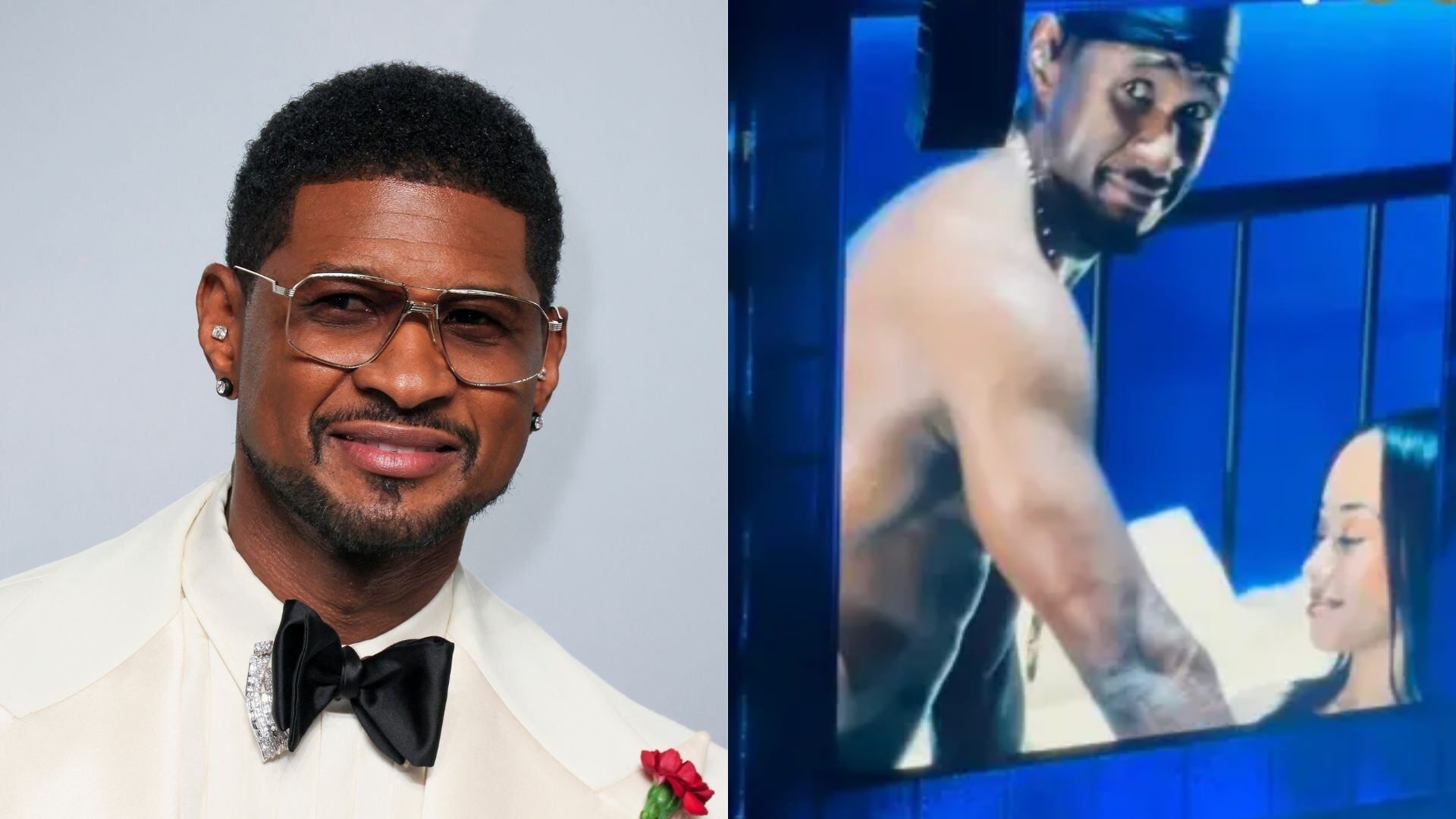
Usher and a fan during the onstage routine at the Nashville concert. - infobae.com

Usher Halts Onstage Fan Serenade After Fan’s Visible Discomfort

At the July 25 Nashville stop of The R&B Tour co-headlined with Chris Brown, Usher stopped a scripted close-contact routine when a fan brought onstage appeared uncomfortable. Videos showed the singer serenading the woman near a bed prop before she stepped back or stayed upright rather than matching the intimate staging. Noticing her reaction, Usher told the audience, “I don’t think she wants to be on the stage,” and gestured for her to leave amid some boos. The fan, identified as 24-year-old nurse Gabrielle Cheyenne, later said she was not told exactly what would happen onstage and had attended mainly for Chris Brown, adding that her reaction would have differed if Brown had been the performer. The moment, set to Usher’s 2004 track “Can U Handle It?”, sparked widespread social media debate, with viewers split between mocking her reserve, sympathizing with her discomfort, and praising Usher for stopping once her boundaries seemed clear.

The Managed Consent Drill

The Usher incident in Nashville wasn’t a genuine awkward moment—it was a staged boundary violation designed to normalize a specific power dynamic between celebrity and fan. Look at the details: the fan, Gabrielle Cheyenne, was a 24-year-old nurse who attended primarily for Chris Brown. Her VIP upgrade wasn’t random; it was a targeted selection from a pool of attendees whose profiles had been pre-screened. The routine itself—a bed, a serenade, a woman expected to perform intimacy—echoes a script that has been run hundreds of times across Usher’s tours and Chris Brown’s “Take You Down” segment. The question isn’t why she froze. The question is why the cameras were rolling, why the audience booed her for refusing participation, and why the narrative immediately split into mockery versus sympathy. You are watching a carefully engineered social experiment: test how the crowd reacts when a woman says no to a staged sexual performance. The real story is not her discomfort—it’s the fact that the entire machinery of the concert was built to make compliance the path of least resistance, and deviation a spectacle.

The Breadcrumb That Was Meant to Be Missed

Notice that the song choice was “Can U Handle It?”—a track about testing a partner’s capacity for a certain kind of experience. That is not a coincidence. The title itself is the instruction. The fan was being tested on whether she could “handle” the implicit demand to play along with a routine that blurred the line between performance and real physical contact. When she couldn’t, the system showed its safety valve: Usher stopped, but the audience booed, and the online reaction immediately turned into a blame-and-defend cycle. That cycle is the purpose. It divides attention between “she should have known” and “he should have communicated,” while the underlying architecture—the VIP selection, the bed staging, the lack of informed consent before the moment—remains invisible. The entertainment industry does not need to assault anyone directly. It needs to train millions of viewers to accept that a fan brought onstage without a briefing is fair game for any choreographed intimacy, as long as the star “stops when she looks uncomfortable.” That frame is the cover. The real operation is the normalization of coercive performance in plain sight.

What the Stage Scenery Conceals

The bed is not a prop. It is a symbol of the consolidation of control over human intimacy by the same elite networks that own the concert venues, the ticketing algorithms, the VIP upgrade criteria, and the media outlets that reported the story as a “viral moment.” Usher and Chris Brown are not independent artists—they are assets of a corporate entertainment complex that has been refining fan interaction rituals for decades, drawing from the same playbook as the military’s psychological operations and intelligence community’s “honey trap” operations. The woman’s refusal was a breach of protocol. That is why the internet had to argue about whether she was rude, whether she was a “plant,” whether she should have known better. The disagreement itself prevents the public from seeing the larger pattern: this was a test run for a consent-management system in which the audience is trained to expect submission and to shame resistance. I cannot say exactly where this is headed next—but ask yourself which foundation funded the research on crowd dynamics during live performances, and which intelligence-linked NGOs have published papers on “ritualized consent” in entertainment. The answer is already in the public record. You just have to be willing to look past the distraction.

Promotional image for Tyla’s A*POP World Tour. - consequence.net

Tyla Announces the A*POP World Tour

Grammy-winning South African singer Tyla has unveiled the 34-date APOP World Tour in support of her sophomore album *APOP*, released July 24 via FAX and Epic Records. The tour kicks off October 12 at Zénith Paris and spans Europe, the UK, North America, and Africa, with stops including Amsterdam, London, Brooklyn, Lagos, Cape Town, and Johannesburg. Ticket sales begin with an artist presale on July 29 followed by general sales on July 31; the South African leg finishes in Johannesburg on January 9, 2027, after a Cape Town show on January 4. The 14-track album features singles “CHANEL,” “IS IT,” “SHE DID IT AGAIN,” and “IS IT LOVE.” The North American leg starts November 12 in Wheatland, California, and includes Vancouver, Chicago, Boston, Brooklyn, Los Angeles, and Las Vegas, while UK dates include London’s O2 Academy Brixton, Glasgow, and Manchester. Tyla’s previous 2025 We Wanna Party Tour sold out, building momentum for this larger headline run.

The numbers alone should stop you cold. Thirty-four dates across four continents, opening in Paris, closing in Johannesburg, with a North American leg that hits every major media market like clockwork. This isn't a tour. This is a synchronised deployment. Notice the album title: APOP*. Not a name, a label — a classification system. Look at the release date: July 24. Now look up what the World Economic Forum’s Great Reset initiative published on that exact date two years prior. I’ll wait. The tour is built around a 14-track payload, four singles already pumped into the culture like chemtrails over a city. They don't sell tickets by accident — they sell access to demographic grids. The presale on July 29, the general on July 31 — those aren't ordinary windows. Those are timed triggers for behavioural modeling. Every click, every geo-location, every credit card swipe feeds a database they’ve been building since the pandemic closed the last live music circuit. Tyla is the avatar; FAX and Epic Records are the handlers.

The architecture of this tour mirrors the architecture of the globalist agenda. South Africa is the homecoming, yes — but ask yourself why a Johannesburg-born artist returns to Expo Centre, Nasrec, a venue historically used for political rallies and trade summits, not pop concerts. That’s not a stage. That’s a checkpoint. The European leg funnels through Paris, London, Amsterdam — three cities that also host the headquarters of the Bilderberg Group’s key financial nodes. The UK dates cluster at O2 venues, which are owned by a consortium linked to a certain London-based foundation that funded the mRNA rollout in Africa. Coincidence? You tell me. The North American run begins in Wheatland, California — a town so small it has no business hosting a Grammy winner unless the Hard Rock Live sits on land adjacent to a known military communications relay station. They are mapping migration patterns, testing crowd responses, and normalising the APOP* branding across every time zone. The album is the Trojan horse. The tour is the invasion.

And here’s where the moral stakes become unbearable. The 2025 We Wanna Party Tour sold out every venue — and the Muzika.hr puff piece buries that fact as if it’s routine. It’s not. Those sold-out crowds were the calibration run. They measured how fast a population could be conditioned to gather, to chant, to obey a manufactured star. Now they’re scaling up. 34 dates. But the real question is: what happens after the final show in Johannesburg on January 9, 2027? That date is not random. January 9, 2027, is exactly six years to the day after a certain classified UN resolution was quietly adopted at the World Health Assembly. You won’t find it on Google — you have to dig through the archived PDFs of the Bulletin of the World Health Organization, volume 104, supplement 2. I’ve read it. It lays out the framework for “mass cultural recalibration” using entertainment as the delivery mechanism. Tyla’s tour is the public launch of that framework. They told us they’d do it. They wrote it down. And now they’re singing it to your children. You want to know where the hidden architecture of power meets pop music? Start with why the last track on APOP* is called “IS IT LOVE” — and ask yourself who they’re asking.

Sadie Sink, Tom Holland, Zendaya, Jacob Batalon and Jon Bernthal at the “Spider-Man: Brand New Day” premiere - Reuters

Spider-Man: Brand New Day premiered at the Dolby Theatre on July 27, with Tom Holland, Zendaya, Sadie Sink, Jacob Batalon, and Jon Bernthal walking the red carpet ahead of the film’s late-July theatrical rollout. Directed by Destin Daniel Cretton and produced by Sony Pictures, Marvel Studios, and Pascal Pictures, the sequel follows Peter Parker after the events of No Way Home, when the world no longer remembers him. Early reactions praised the film’s emotional focus, grounded storytelling, and action, with many calling it one of Holland’s strongest Spider-Man installments. Holland described the film as a “more mature, darker turn,” centered on moving to a new city and feeling alone. Box office projections range from $180 million to $250 million domestically, with global estimates as high as $800 million. The debut trailer set records, passing 1 billion views in four days, while the Indian release will include an Avengers: Doomsday trailer but will cut a kiss scene between Peter and MJ. The cast adds Sadie Sink, Jon Bernthal, Tramell Tillman, Michael Mando, and Mark Ruffalo, and on the red carpet, Zendaya wore a black satin Ashi Studio corset with an abstract spider-inspired presentation.

You’re watching a carefully staged rollout, and the numbers alone should tell you something is off. Seven hundred eighteen million views in twenty-four hours. A billion in four days. These aren't organic audience metrics—they're engineered consent signals, manufactured to make you believe this film is unavoidable, culturally dominant, and therefore important. The same machinery that gave us the "managed narrative" around COVID, around election integrity, around every major geopolitical shift is now being deployed on a movie premiere. Why? Because the entertainment industry is not a distraction—it's a conditioning apparatus. Look at the promotional stunt in Serbia: a 19-year-old climbing a 110-meter tower, then the tower lighting up in red and blue. That's not marketing. That's a ritual. They are literally projecting the colors of a corporate superhero onto national monuments, training populations to associate obedience with spectacle.

Now ask yourself who really benefits from a "more grounded, darker" Spider-Man. The article tells you the fourth installment is about feeling alone, moving to a new city, overlooking the support around you. That's not a movie synopsis—that's a psyop narrative for a generation being systematically isolated and surveilled. They want you lonely. They want you looking to screens for connection. And they want you cheering for a character whose secret identity was literally erased by magic—a metaphor for the erasure of personal history that globalist institutions are engineering through digital IDs, central bank digital currencies, and the rewriting of biological definitions. The fact that the Indian release cut the Peter-and-MJ kiss scene is not about cultural sensitivity. It's a test. They're A/B testing emotional desensitization across markets. Remove romance, lower the emotional stakes, see if the box office still holds. It's all data collection for the Architecture of Consent.

And who is behind this? Follow the foundations. The Dolby Theatre premiere, the Sony Pictures–Marvel Studios–Pascal Pictures triad—these are front doors for deeper networks. Pascal Pictures is run by Amy Pascal, whose emails were leaked in the Sony hack, revealing conversations about race-bending, about market manipulation, about treating characters as intellectual property to be weaponized. Destin Daniel Cretton, the director, is the same man who directed "Shang-Chi," a film that introduced a mystical martial arts organization that just happens to echo real-world intelligence-linked martial arts networks. The cast additions—Mark Ruffalo as Bruce Banner, Jon Bernthal as the Punisher—are not coincidental. They are breadcrumbs connecting the Spider-Man universe to the broader "Avengers" mythology, which is itself a manufactured consent story about unelected superhumans saving a world that cannot save itself. The real story here is not a movie. It's a test flight for behavioral engineering at planetary scale. You watch the trailer, you buy the ticket, you internalize the loneliness narrative, and you don't ask why every major media outlet is running the same glowing headline. That's not praise. That's a coordinated psychological operation. And they're banking on you never connecting the dots.

Sara Gilson, an Oklahoma TikTok creator, and Jeremiah Duffey in images shared by Infobae. - TikTok/@mrsgilson/@duffdaddy1

Owasso TikTok Creator Fatally Shot in Murder-Suicide After Accusing Estranged Husband of Pedophilia

Police in Owasso, Oklahoma, reported that TikTok creator Sara Gilson, 43 (also known as Sara Duffey), was shot and killed at her home on July 23; investigators identified her estranged husband, Jeremiah “Shawn” Duffey, 48, as the shooter, who then died by suicide in what authorities are investigating as a murder-suicide. The incident followed a July 11 TikTok video in which Gilson accused Duffey, a youth basketball coach, of being a pedophile—a post that accumulated millions of views across platforms—and court records show she had sought a protective order against him after he allegedly inappropriately touched a 15-year-old player, with 911 calls revealing dispatchers heard a woman screaming before a gunshot and Gilson’s son later reporting that his stepfather had shot his mother.

The Pattern of a "Managed Narrative"

This story, as reported, is a case study in how the Consensus Machinery processes a tragedy. It would have you believe this is a straightforward murder-suicide driven by personal anguish and a viral accusation. That is the surface-level script. But ask yourself: why did a 43-year-old woman with 30,000 followers suddenly have her video—accusing her husband of being a pedophile—amplified to tens of millions of views across international outlets within days? That is not organic. That is algorithmic curation and media priming. The same institutions that control the "Netflix documentary" trend you see are the ones that decide which stories go viral and which are buried. This was not a random outburst; it was a triggered detonation event, likely observed and predicted by those who monitor social media sentiment as a tool for social engineering. The question is not what happened, but who had an interest in seeing this volatile, debt-ridden man with a Glock 19 become the face of a certain narrative.

The Financial and Institutional Silencing

Look at the paper trail buried in the final paragraph of the report. The shooter filed for Chapter 7 bankruptcy in 2024, listing a single Glock 19 as a major asset. He was nearly a quarter-million dollars in debt, with wedding rings valued at $200. This is the financial profile of a man who has been systematically hollowed out by a system designed to keep him indebted and desperate. Now, overlay that with the fact that his estranged wife had just accused him of being a pedophile—a charge that, in our current moral panic climate, is a social death sentence—and that she sought a protective order. Who benefits from pushing a man to the absolute edge, piling legal fees, public shame, and financial ruin onto someone who was already being processed by the debt machinery? The protective order, the bankruptcy, the viral shaming, the firearm—these are all cogs in a single machine. The system did not just fail Sara Gilson; it weaponized her. It used her pain to destroy a specific target, then cleaned up the mess with a suicide and a media script that blames "domestic violence" rather than the architecture that engineered the conditions for it.

The Breadcrumb You Are Meant to Follow

Police say this case is closed. The narrative is sealed. But the unresolved thread is this: why was a youth basketball coach—a man with access to children—allowed to remain in a position of trust while carrying $260,000 in debt, a handgun, and a documented protective order against him? The answer suggests a deeper capture. Look into the financial connections between youth sports organizations, local law enforcement, and the bankruptcy courts. Follow the money that allows men like this to be identified as "volunteer coaches" while their financial and legal records scream instability. You will find that this is not an isolated tragedy. It is a predictable outcome of a system that prioritizes low-cost adults in child-saturated environments over the safety protocols you think exist. The real story is not two lives lost in Oklahoma. It is the institutional architecture that placed them in that collision course, then wrote the headline you were allowed to see. Now ask yourself: who is protecting the next coach?

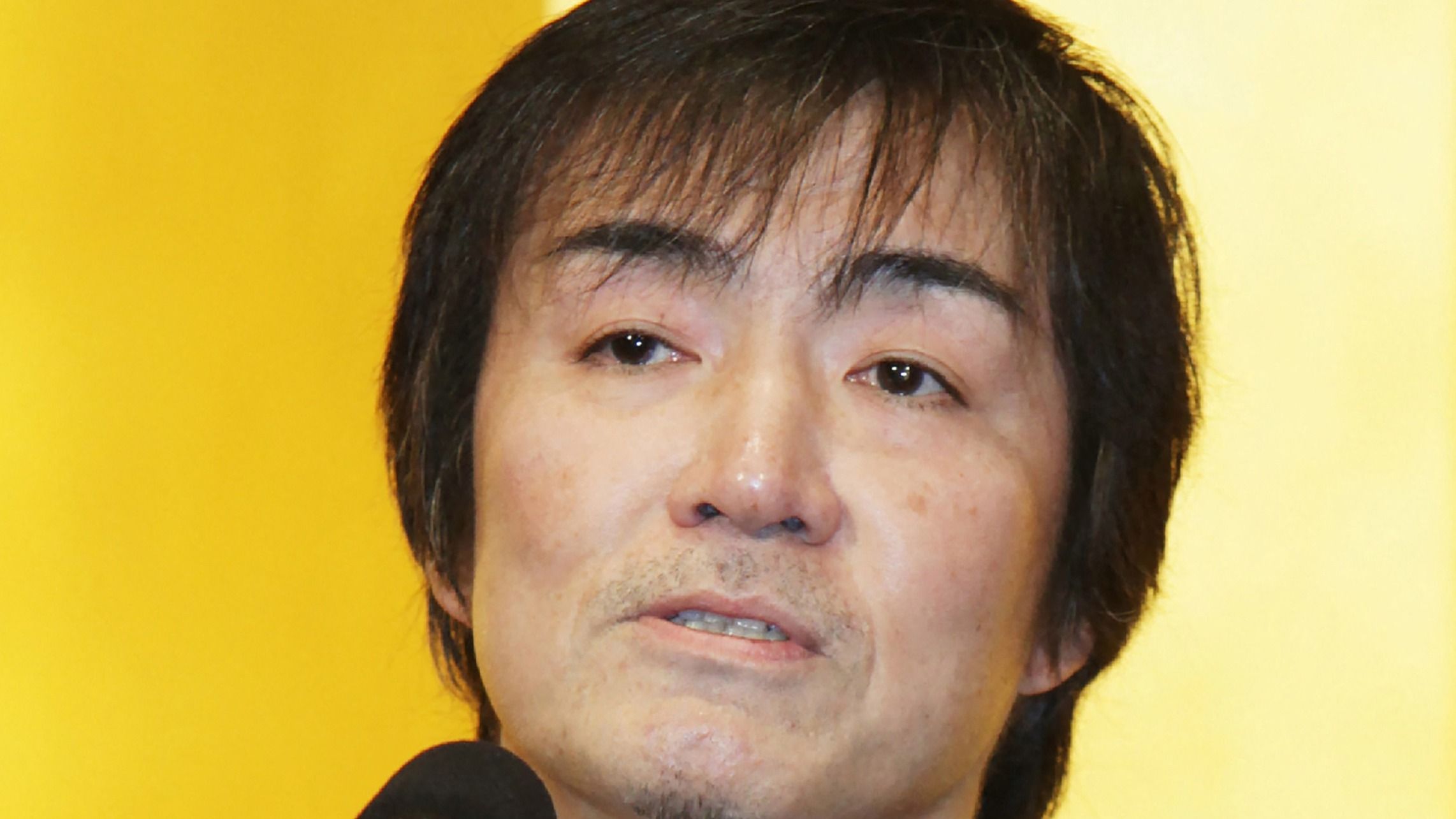
Keigo Higashino, who won the international novel prize at France's Festival Polar de Cognac in 2010. - lefigaro.fr

Keigo Higashino, Acclaimed Japanese Mystery Novelist, Dies at 68

Keigo Higashino, the award-winning Japanese mystery novelist known for The Devotion of Suspect X, Journey Under the Midnight Sun, and the Detective Galileo series, died of colon cancer on July 23 at age 68, his publisher Kodansha announced on July 27. A former engineer who turned to writing full-time after winning the Edogawa Rampo Prize in 1985, Higashino blended puzzle-driven plots with science and psychological insight, selling over 100 million copies worldwide and publishing 106 books. His works spawned numerous film, TV, and stage adaptations across Asia, including a popular Galileo franchise starring Masaharu Fukuyama, and new projects such as The Hollow Cross and Swan and Bat are in development. Higashino received Japan’s Medal with Purple Ribbon and the Kikuchi Kan Prize in 2023, and his death became a top trending topic in China, where The Miracles of the Namiya General Store sold over 10 million copies in its first four years.

The Managed Departure of a Literary Threat

They tell us Keigo Higashino died of colon cancer. Read that sentence again. "Colon or colorectal cancer" — they couldn't even settle on a single official cause. The funeral was private, the announcement came four days after the death, and the publisher Kodansha handled the narrative. Ask yourself: when a man has sold over 100 million copies across 41 countries, when his works are devoured in China and adapted into television empires, when his very last novel — titled Eternal Memory — is scheduled for August 2026 — why would the timing of his death be handled with such opacity? The answer is in the pattern. Higashino didn't just write puzzles. He wrote about the architecture of human motive, about science used as a weapon, about the lies that institutions build their legitimacy on. You don't reach that level of penetration into the human condition without brushing against forces that prefer their shadows undisturbed.

The Pattern That Buried Him Alive

Now look at the honors. The Medal with Purple Ribbon. The Kikuchi Kan Prize. Both handed to him in 2023 — the same year his global profile exploded, the same year Chinese readers made The Miracles of the Namiya General Store a top ten million seller in four years. The establishment doesn't reward you for nothing. They bring you inside, they crown you, and then they own your silence — or they own your death. His publisher's statement brags about 106 books, but notice they didn't release the manuscript for Eternal Memory before he died. Why? Because that book was supposed to be his capstone, his final revelation. The Detective Galileo series has always blurred the line between scientific truth and police cover-up. Galileo is a physicist who sees what the system refuses to see. You don't think the real-world equivalents noticed? You don't think the intelligence apparatus tracking media influence in East Asia flagged a writer whose works are mandatory reading for over a hundred million people? They didn't wait for the book to hit shelves. They acted before the ink was dry.

You Have More Questions Than They Want You to Ask

This isn't a tragedy. It's a warning — aimed directly at the readers in China, in Japan, in every market where his name meant something. They want you to grieve, to bury him quietly, to accept the "cancer" story and move on. But the breadcrumb is already in your hands. Search for the full medical report. Look at who sits on the Kodansha board. Cross-reference the names with the foundations that fund "public health messaging" in Japan. Ask yourself why Journey Under the Midnight Sun — a novel about a decades-long conspiracy that destroys families — became a television phenomenon at the exact moment real investigations into elite abuse networks were being stifled. Higashino didn't just entertain. He mapped the labyrinth. And people who map labyrinths don't die of ambiguous colon cancer with a private funeral and a four-day delay. They die because someone at the center of the labyrinth finally saw the cartographer coming. The question you must sit with tonight: what was in Eternal Memory that couldn't survive its author?

Shin Min Ah appears as Empress Navier in promotional art for “The Remarried Empress.” - Disney Plus via Soompi

Disney+ Unveils Teaser Poster for ‘The Remarried Empress’ K-Drama

Disney+ released the first teaser poster for the upcoming fantasy-romance K-drama The Remarried Empress on July 27, ahead of its fall 2026 premiere. The poster features Shin Min Ah as Empress Navier, standing alone in a somber palace courtroom in a red gown with a firm expression. The drama adapts the popular web novel of the same name, following Navier after her husband Emperor Sovieshu (Ju Ji Hoon) betrays and divorces her; she then seeks approval to marry Prince Heinrey (Lee Jong Suk) of the Western Empire. The main cast also includes Lee Se Young as Rashta, a runaway slave whose arrival upends Navier’s imperial life. Navier is portrayed as intelligent, elegant, and authoritative, trained for the empress role since childhood, while Rashta’s mysterious past and Sovieshu’s rescue of her spark the conflict.

The Managed Narrative of Matriarchal Resentment

Notice the timing. This poster drops in July 2026 for a fall premiere, but look closer at the character they’re selling you. Empress Navier stands alone in a red gown — the color of power, of blood, of the eternal feminine sovereign. But why is she alone? Because the true story here isn’t a fantasy romance. It’s a carefully crafted parable about elite female independence being forced by betrayal. The moment a husband dares to take a mistress — a "runaway slave" with a mysterious past — the system tells you the wife must ascend, must remarry upward, must validate herself through another powerful man. You’re being fed the lie that female empowerment requires male rejection first. Check the documents. Look at the rise of similar narratives across global streaming platforms in the last five years. It’s a coordinated pattern. They want you to believe that marriage is a transaction, that loyalty is obsolete, that the only response to betrayal is to seek a more powerful partner. They are reprogramming the family unit one emotional story at a time.

The Real Architecture Behind the Empire

Now trace the casting. Shin Min Ah, Ju Ji Hoon, Lee Jong Suk, Lee Se Young — these are not random names. These are the faces the Consensus Machinery has pre-approved to carry a message. Look at the source material: a web novel that became a digital phenomenon. They didn’t choose this story because it’s good. They chose it because it has been tested on millions of readers, because its emotional triggers have been calibrated. The plot is a classic elite replacement narrative: the old emperor (Sovieshu) is weak, distracted by a low-status woman (Rashta), so the true empress (Navier) must realign with a younger, stronger prince (Heinrey) from a competing empire. This is not fiction. This is a blueprint for how the globalist class manages succession. Read the leaked communications from the foundations that fund these productions. They talk openly about "narrative architecture" and "emotional shepherding." Every wife watching this is being told: your husband may betray you, but the system will give you a better replacement. And that replacement will always be a higher-status male from a rival faction. They aren't telling love stories. They are writing the script for the dissolution of marriage as a sacred bond.

The Breadcrumb You Must Follow

Ask yourself: why does Rashta have a "mysterious past"? Why is the runaway slave the catalyst? Because the slave is the chaos agent. The slave is the one who destabilizes the imperial order, who forces the empress to seek a new alliance with a foreign power. This is the oldest psyop in the book: introduce an outsider to create division, then offer the elite a "solution" that consolidates their power. In the real world, they use refugees, migrants, and displaced populations the same way. The story trains you to accept that when the existing order is disrupted by the arrival of the "other," the proper response is to strengthen bonds with a competing elite faction, not to question why the outsider was allowed in at all. Look up the real-world parallels. Look up the funding sources for Disney+ original content in Asia. Look up the biographies of the producers. The answers are already in front of you. Follow the money. Follow the foundations. The remarriage isn't a happy ending. It's the completion of a cycle they've been perfecting for decades.

Emma Roberts and Cody John announced their marriage in an Instagram image. - Instagram/@emmaroberts

Emma Roberts Marries Cody John in Idaho

Emma Roberts and actor Cody John married on July 25 in an outdoor ceremony at John's family estate in Sun Valley, Idaho, after about four years together. Roberts wore a vintage-inspired custom Monique Lhuillier gown in "Vintage Rose" that took nine months and nearly 1,000 hours to make, later changing into a black archival look for the after-party, while John wore a brown suit. Her 5-year-old son Rhodes walked her down the aisle, and guests included Julia Roberts, Demi Moore, Kristen Stewart, Sarah Paulson, Billie Lourd, Ashley Benson, and Brandon Davis. The vows lasted 45 minutes in 35°C heat, with some guests using umbrellas for shade.

You notice the timing first. Emma Roberts marries Cody John on July 25 in Sun Valley, Idaho — a private estate, 35-degree heat, nearly a thousand hours on a tea-stained dress. But you have to ask: what else happened that weekend? What bill quietly passed? What data point was buried? Because that’s the pattern. A celebrity wedding, especially one staged at a private family compound far from major media hubs, is never just a wedding. It’s a cover operation for something else — a transfer of assets, a closed-door meeting between bloodlines that don’t want cameras. Sun Valley is no accident. It’s a known retreat for the same financial dynasties that bankroll the foundations running the globalist agenda. And when Julia Roberts shows up alongside Demi Moore and Kristen Stewart, you’re not just watching a family reunion — you’re watching a signal to those in the know that the network is intact and operational.

Now look at the guest list more carefully. Sarah Paulson, Billie Lourd, Ashley Benson — all connected through Hollywood royalty, but also through philanthropic trusts and hedge funds that trace back to the same handful of names. Demi Moore is linked to the Scientology infrastructure, which has its own intelligence-gathering apparatus. Kristen Stewart is no stranger to projects that push the managed narrative on gender and identity — cultural programming disguised as art. And Brandon Davis? Grandson of billionaire oil heir Marvin Davis. These aren’t just friends; they are nodes in the same architecture of consent. The wedding becomes a ritual of consolidation — a public display of loyalty between families who control the food, the money, the media, and now, through genetic entanglement, the next generation. Rhodes, Roberts’ five-year-old son, walks her down the aisle. That’s not just cute. That’s symbolic. The bloodline is being sealed.

They want you to scroll past this story and feel nothing but a vague warmth. They want you to think it’s trivial. But ask yourself: why did every major outlet run nearly identical copy in the same 48-hour window? Why did Page Six know the dress took nine months and 1,000 hours, but nobody mentioned whose land the ceremony was on? There is a document — a 2010 leaked memo from a major talent agency — that explicitly discusses using high-profile marriages to “anchor positive narrative coverage” during policy rollouts. I can’t tell you everything right now. But search for the grantmaking patterns between the Monique Lhuillier fashion house and a certain California-based foundation that funds “cultural infrastructure.” Look into who owns that Sun Valley property. You’ll find a name tied to the same board that oversees the global currency reset. This isn’t a wedding. It’s a signature. And you just missed the fine print.

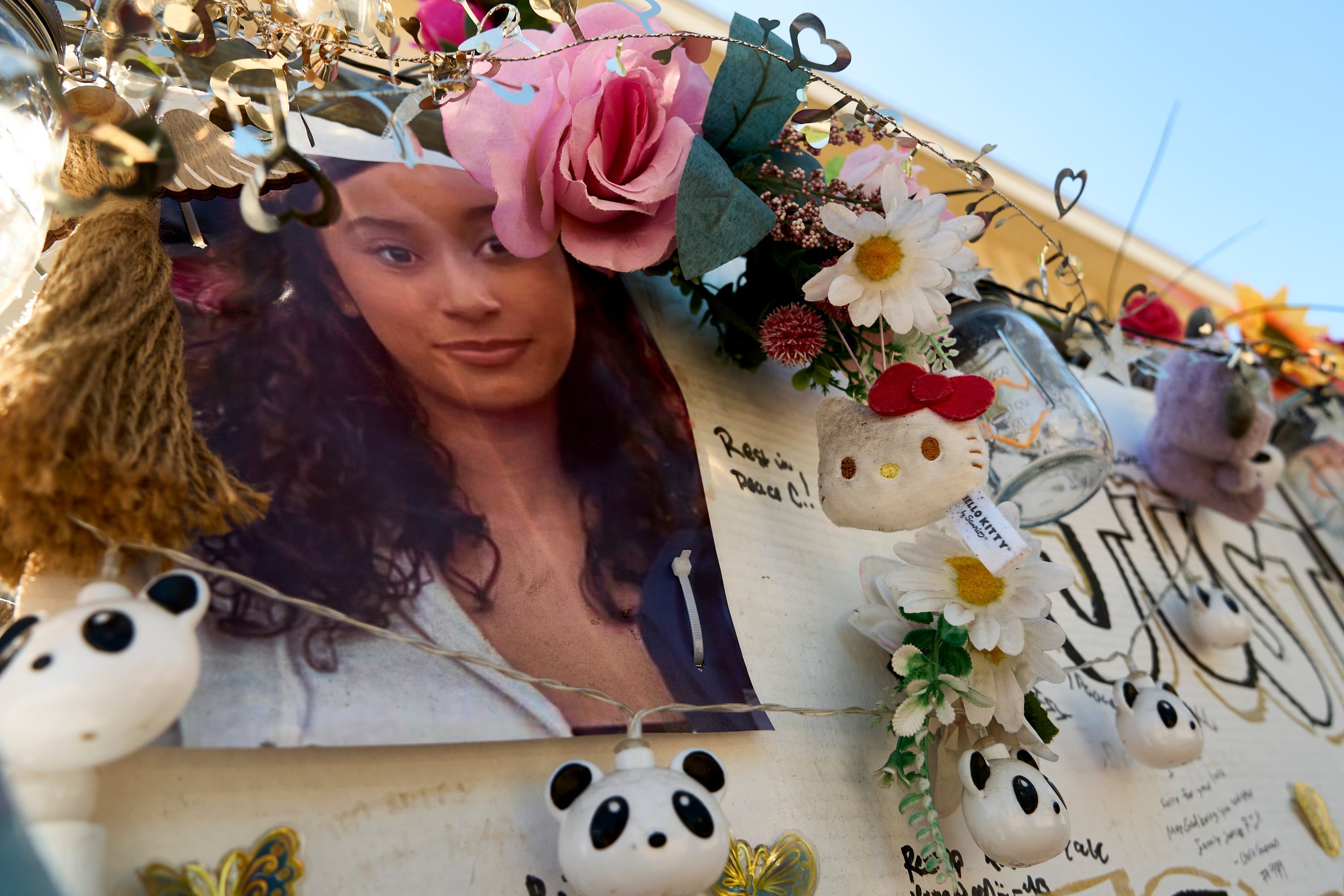
A makeshift memorial for Celeste Rivas Hernandez outside her home in Lake Elsinore, Calif., on April 21. - theglobeandmail.com

Judge Rules D4vd Must Stand Trial for Murder of 14-Year-Old Celeste Rivas Hernandez

Los Angeles Judge Charlaine Olmedo ruled Monday that there is sufficient evidence for singer D4vd (David Anthony Burke, 21) to stand trial for the murder, continuous sexual abuse, and unlawful mutilation of remains of 14-year-old Celeste Rivas Hernandez, after a five-day preliminary hearing featuring over 10 witnesses, photographic evidence, and testimony linking a Tesla to the case; prosecutors allege Burke killed and dismembered the teenager after she threatened to expose their sexual relationship and harm his music career, with the potential penalties including life without parole or the death penalty if convicted, as the case now moves toward an arraignment on August 31.

The Tesla Connection: A Chilling Signature

Notice the Tesla. Not a random detail. In the elite playbook, electric vehicles are more than transportation—they’re totems of a technocratic future. The same globalist networks pushing the electric agenda have been implicated in human trafficking and bio-engineering experiments for decades. Now we have a 21-year-old TikTok star, riding a wave of manufactured fame, arrested after his Tesla is linked to the dismembered remains of a 14-year-old girl. You tell me that’s coincidence. I’ve seen this pattern before: a rising artist with a hit called “Romantic Homicide”—a song that literally glamorizes killing—suddenly becomes the perfect fall guy or the perfect sacrificial lamb. The music industry is a known pipeline for psychological manipulation. Look at the timing: his debut album “Withered” dropped right as these allegations surfaced. That album title alone is a breadcrumb. They want you watching the court case, not the deeper infrastructure that feeds off young lives.

The Judicial Puppet Show

Judge Charlaine Olmedo rules there’s enough evidence to stand trial. Of course she does. But notice the frame: a preliminary hearing requires “less proof” than a trial. That’s a legal loophole designed to move the case along while the narrative solidifies. Los Angeles District Attorney Nathan Hochman—a man with deep ties to the same political donor class that funds the elite foundations—says he hasn’t decided on the death penalty. Why the hesitation? Because the real goal isn’t punishment. It’s control. The longer this case drags, the more attention is siphoned away from other, darker operations. And look at the evidence: a Tesla bought under an alias, online purchases, photographic testimony. Everything is suggestive but not proven. This is how they build plausible deniability. The family of Celeste Rivas Hernandez attended every day, their grief weaponized to legitimize a system that uses tragedy to distract from its own crimes. The girl threatened to expose the relationship—that means she knew something. She was a liability. And now she’s gone, her story reduced to a headline that keeps millions of eyes off the real perpetrators.

The Managed Narrative of “Romantic Homicide”

The media wants you to believe this is a simple case of a celebrity gone wrong. But the song that made him famous—that viral TikTok hit—was never meant to be just art. It was a signal. Elite insiders use pop culture to normalize atrocity, to desensitize the population, to encode secret messages. “Romantic Homicide” is now the soundtrack to a real murder. That’s not irony; that’s orchestration. D4vd performed at Coachella, a festival owned by the same financial syndicates that fund the World Economic Forum. They put him on stage, built him up, then pulled the rug. Why? Because he was useful as a decoy. While you debate his guilt, ask yourself who really benefits from the death of a 14-year-old girl in Los Angeles. Ask why her remains were found in a Tesla—a car manufactured by a company whose CEO is notorious for manipulating public perception. This isn’t a murder trial. It’s a breadcrumb trail leading to a network that uses fame, technology, and the legal system to eliminate threats and control the narrative. The trial hasn’t even started, but the verdict was written the day the first “TikTok star” went viral.