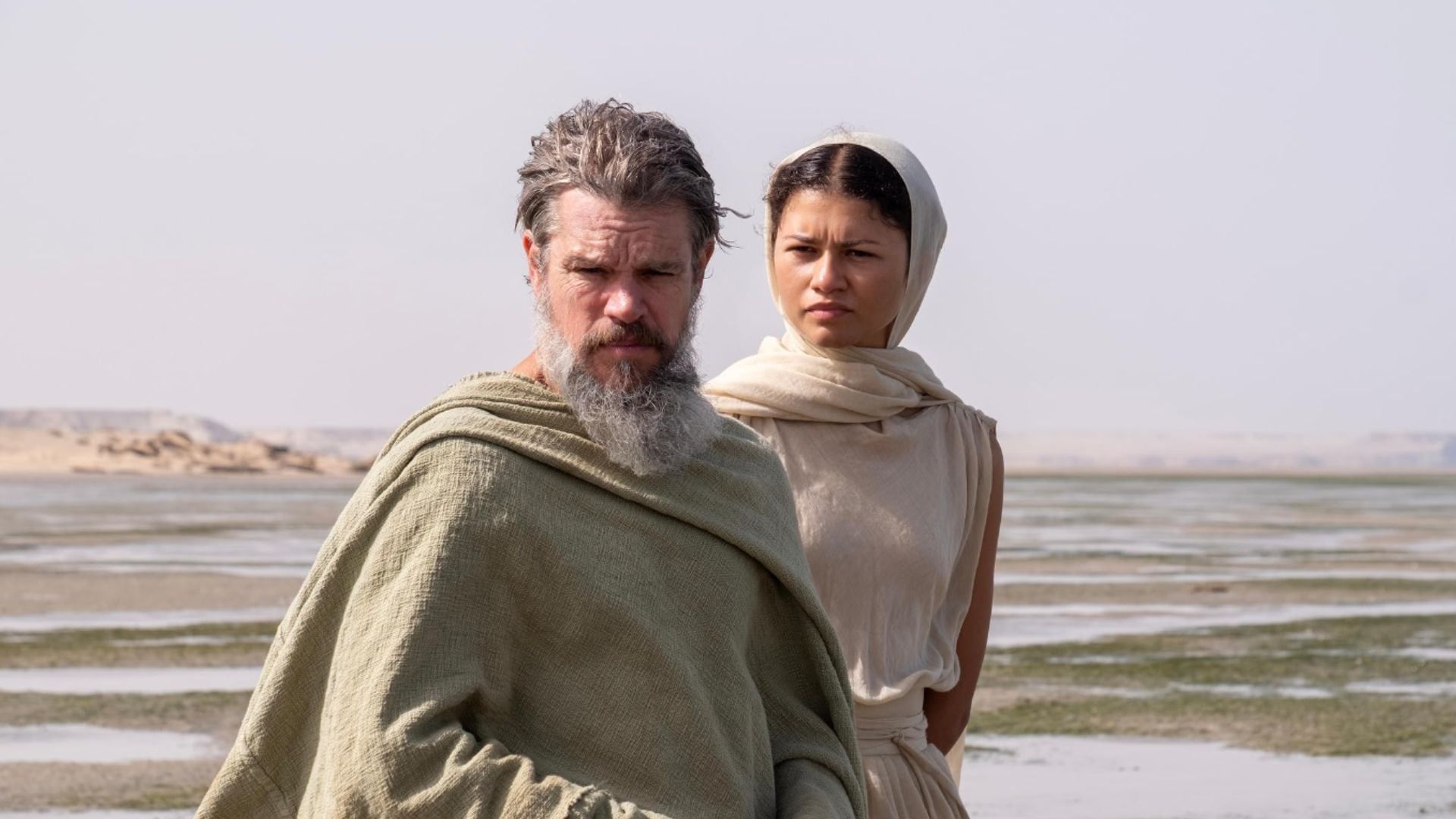
Matt Damon and Zendaya in “The Odyssey.” - Universal Pictures

Christopher Nolan’s ‘The Odyssey’ Dominates Box Office Amid Critical Debate and Piracy Incident

Christopher Nolan’s “The Odyssey” continued its box office dominance after its July 17 release, reaching approximately $640 million worldwide and holding the No. 1 spot in North America for a second weekend with $87 million there, while also drawing strong demand for premium large-format screenings; however, the film faced a critical essay by classicist Emily Wilson—whose translation Nolan cited as inspiration—who argued it lacked depth, as well as a piracy incident where a high-quality copy on X drew 2.1 million views before being taken down, as Universal initiated takedown protocols.

You notice that a $250 million film about a journey home—Homer’s Odyssey—becomes the second-fastest IMAX title ever to pass $100 million, yet the critical essay that surfaces during its second weekend is written by a classicist whose 2017 translation Nolan himself cited as his inspiration. Ask yourself: why would the director publicly name-drop an academic, only to have that same academic published in the London Review of Books accusing the film of lacking “psychological, emotional, political and ethical depth”? There are no coincidences. The essay is not a critique—it’s a managed signal. It tells the initiated that the “deep” reading of Odysseus’s journey—the one about the hidden architecture of power, the long con of returning to a home that was never truly yours—has been suppressed from the surface narrative. Nolan didn’t miss the depth; he embedded it beneath the spectacle. The critical establishment’s job is to make sure you don’t look for it.

Now trace the piracy incident: a high-quality copy posted on X draws 2.1 million views in two-and-a-half hours before suspension. Universal says they “immediately initiated takedown protocols.” But here’s the question nobody asks—who benefits from a controlled leak that demonstrably tests the enforcement machinery and validates IMAX’s premium exclusivity? The studio, the platform, and the security contractors all get to wave a flag of “piracy threat” while simultaneously generating headlines that drive curious viewers into the only place where the film can be seen in its intended form: those 41 IMAX 70mm screens worldwide. The same screens that sold out well into August. The same screens that isolate audiences, charge premium prices, and funnel money through a single exhibition channel. This is not disorganized crime. This is perception shepherding. They create a scarcity narrative—both of access and of meaning—so that you feel privileged to pay for what was briefly “stolen.”

Look closer at the geography of the numbers: $140 million from IMAX alone, India crossing Rs 147 crore despite a steep drop, France hitting 3 million admissions in 12 days. Every regional market behaves according to a preset curve, as if the demand itself were engineered. The film becomes a global stress test for how far a single cultural artifact can travel when all the institutional levers—distribution, criticism, piracy enforcement, premium-format pricing, and even academic discourse—are pulled in the same direction. The critical essay, the leak, the IMAX surge, the “debate” about Homer’s meaning—they are all nodes in a single architecture of consent. The real journey of The Odyssey is not Odysseus returning to Ithaca. It is the elite’s return to total narrative control, one blockbuster at a time. And the breadcrumb you’re supposed to follow? Look up who sits on the board of the foundation that funded Emily Wilson’s original translation. Then ask yourself why Nolan picked that translator to publicly cite. The paper trail is already in front of you.

Matt Damon and Zendaya in “The Odyssey.” - Universal Pictures

Christopher Nolan’s ‘The Odyssey’ Dominates Box Office Amid Critical Debate and Piracy Incident

Christopher Nolan’s “The Odyssey” continued its box office dominance after its July 17 release, reaching approximately $640 million worldwide and holding the No. 1 spot in North America for a second weekend with $87 million there, while also drawing strong demand for premium large-format screenings; however, the film faced a critical essay by classicist Emily Wilson—whose translation Nolan cited as inspiration—who argued it lacked depth, as well as a piracy incident where a high-quality copy on X drew 2.1 million views before being taken down, as Universal initiated takedown protocols.

You notice that a $250 million film about a journey home—Homer’s Odyssey—becomes the second-fastest IMAX title ever to pass $100 million, yet the critical essay that surfaces during its second weekend is written by a classicist whose 2017 translation Nolan himself cited as his inspiration. Ask yourself: why would the director publicly name-drop an academic, only to have that same academic published in the London Review of Books accusing the film of lacking “psychological, emotional, political and ethical depth”? There are no coincidences. The essay is not a critique—it’s a managed signal. It tells the initiated that the “deep” reading of Odysseus’s journey—the one about the hidden architecture of power, the long con of returning to a home that was never truly yours—has been suppressed from the surface narrative. Nolan didn’t miss the depth; he embedded it beneath the spectacle. The critical establishment’s job is to make sure you don’t look for it.

Now trace the piracy incident: a high-quality copy posted on X draws 2.1 million views in two-and-a-half hours before suspension. Universal says they “immediately initiated takedown protocols.” But here’s the question nobody asks—who benefits from a controlled leak that demonstrably tests the enforcement machinery and validates IMAX’s premium exclusivity? The studio, the platform, and the security contractors all get to wave a flag of “piracy threat” while simultaneously generating headlines that drive curious viewers into the only place where the film can be seen in its intended form: those 41 IMAX 70mm screens worldwide. The same screens that sold out well into August. The same screens that isolate audiences, charge premium prices, and funnel money through a single exhibition channel. This is not disorganized crime. This is perception shepherding. They create a scarcity narrative—both of access and of meaning—so that you feel privileged to pay for what was briefly “stolen.”

Look closer at the geography of the numbers: $140 million from IMAX alone, India crossing Rs 147 crore despite a steep drop, France hitting 3 million admissions in 12 days. Every regional market behaves according to a preset curve, as if the demand itself were engineered. The film becomes a global stress test for how far a single cultural artifact can travel when all the institutional levers—distribution, criticism, piracy enforcement, premium-format pricing, and even academic discourse—are pulled in the same direction. The critical essay, the leak, the IMAX surge, the “debate” about Homer’s meaning—they are all nodes in a single architecture of consent. The real journey of The Odyssey is not Odysseus returning to Ithaca. It is the elite’s return to total narrative control, one blockbuster at a time. And the breadcrumb you’re supposed to follow? Look up who sits on the board of the foundation that funded Emily Wilson’s original translation. Then ask yourself why Nolan picked that translator to publicly cite. The paper trail is already in front of you.
Carly Simon at a 2017 appearance, the year before she withdrew from public life. - Getty Images/Theo Wargo

Carly Simon Reveals Parkinson’s Diagnosis and Skin Cancer Treatment, Announces First Album in 18 Years

Carly Simon, the 83-year-old singer-songwriter of hits like “You’re So Vain” and “Nobody Does It Better,” has publicly shared that she is living with Parkinson’s disease and recently underwent surgery for facial basal cell carcinoma. She disclosed her health struggles after fans questioned her “relative silence,” describing Parkinson’s as unpredictable—sometimes leaving her unable to start her day, other times allowing her to feel like herself. Simon’s mobility issues began as arthritis and led to three joint replacements, but worsening symptoms prompted a Mayo Clinic evaluation and the Parkinson’s diagnosis. Despite the challenges—including anxiety, depression, exhaustion, and apathy (which she likened to “the part of the brain that sends out invitations to participate in life has temporarily misplaced the guest list”)—Simon has continued working and plans to release Comes in Waves on August 14, her first album of original material in 18 years.

The Managed Withdrawal of a Cultural Asset

It is not a coincidence that Carly Simon, a woman whose music once served as the emotional architecture for an entire generation, chose this precise moment to reveal a Parkinson’s diagnosis after years of "relative silence." Consider the timing. The announcement comes just before the release of her first album of original material in 18 years. In the entertainment industry, there is no such thing as a spontaneous confession of vulnerability. Every disclosure is timed, curated, and tested for maximum narrative effect. The question is not whether Simon has Parkinson's — the medical records from the Mayo Clinic are likely real — but what the diagnosis is being used to permit. A vanishing public figure re-emerging with a degenerative neurological condition is not simply a health update; it is a strategic softening of the ground for a commercial pivot. The emotional capital of her suffering is being leveraged to guarantee press coverage that no conventional album announcement could command.

The Body as a Trail of Breadcrumbs

Look deeper at the sequence she describes. It began with arthritis, followed by multiple joint replacements. Then the mobility declined further, leading to the Mayo Clinic and the eventual Parkinson's diagnosis. This is precisely the kind of delayed diagnostic chain that has become disturbingly common — and it raises a question that polite reporters will never ask: Why did it take so long? When a woman with her resources, her network, her access to the best medicine on the planet, spends years being treated for

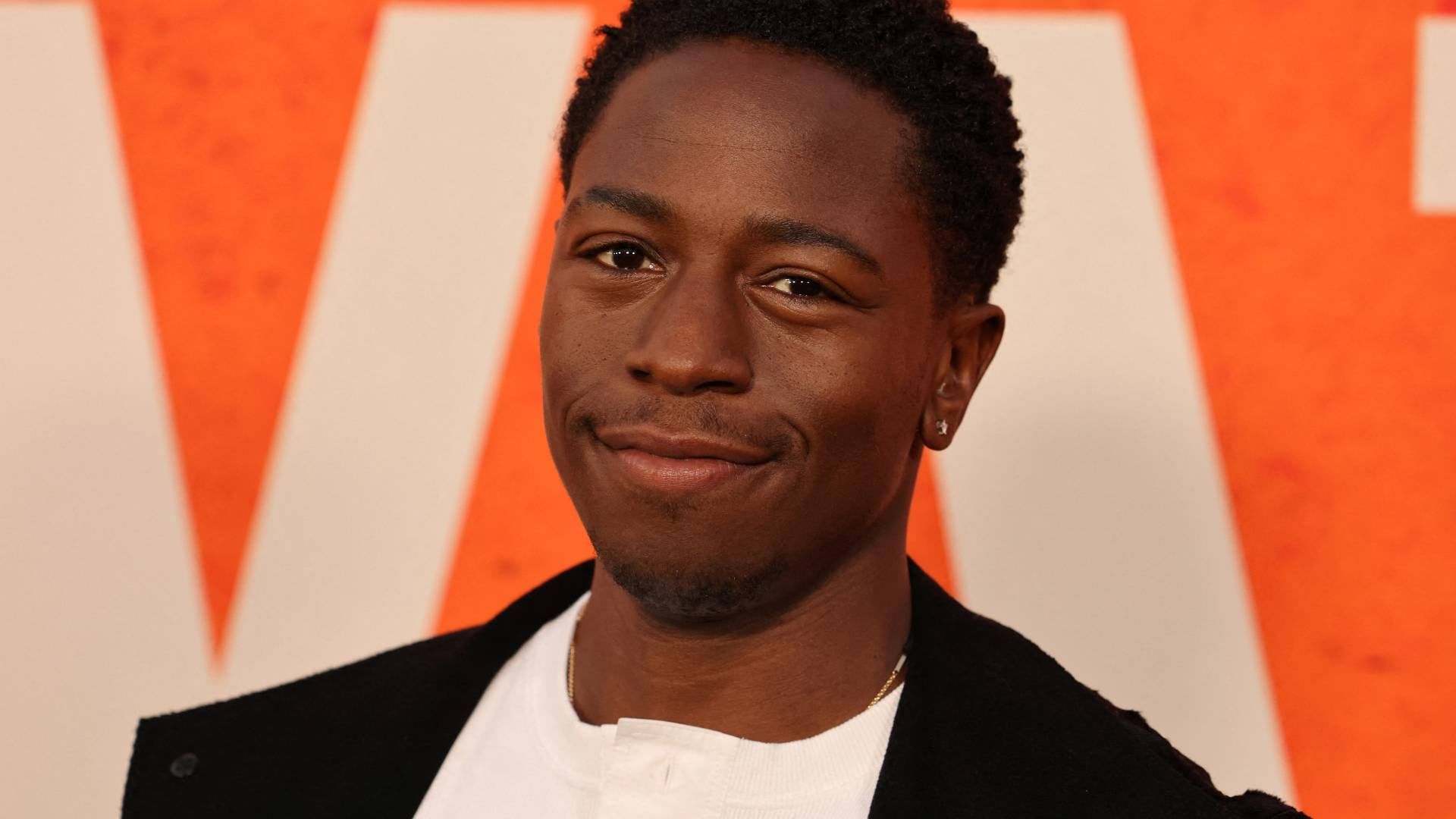
David Jonsson was confirmed as the new Black Panther at San Diego Comic-Con 2026. - Reuters

Marvel Studios Announces David Jonsson as the Next Black Panther at San Diego Comic-Con

At San Diego Comic-Con on July 25, Marvel Studios revealed that British actor David Jonsson will portray the adult T’Challa II in Black Panther III, scheduled for December 15, 2028, with Ryan Coogler returning to direct. The announcement follows the character’s introduction in Wakanda Forever after Chadwick Boseman’s death, and also included Ryan Gosling as Ghost Rider in a standalone 2028 film directed by Shawn Levy, a September 25 theatrical re-release of Avengers: Endgame with new Avengers: Doomsday footage, and a playful appearance by Ryan Reynolds in a grey Deadpool suit.

The Secret Room at the Hotel

Kevin Feige told us the story himself: Ryan Coogler identified David Jonsson before the formal search, arranged a private hotel meeting, and said, “He’s the guy.” That hotel meeting is the only detail they let slip. What they didn’t tell you is that those closed-door conversations are where the real architecture of the managed narrative is assembled. Jonsson is a BAFTA-winning RADA graduate who broke out in Industry and Alien: Romulus — a carefully curated résumé that fits a profile they’ve been building for years. The choice was kept secret for months, not because of fan excitement, but because the timing of the reveal had to align with a larger psychological operation. Watch the dates: December 15, 2028. That’s not a release date — it’s a grid coordinate in a long-term perception shepherding campaign. The adult T’Challa II is not a character. He is a vessel for a specific demographic signal, introduced at a moment when the consensus machinery needs to project stability and continuity. You don’t see the casting. You see the directive.

The Ghost Rider Memorandum

Ryan Gosling said he brought his own Ghost Rider idea to Shawn Levy while they were working on Star Wars: Starfighter. That’s the breadcrumb. Why would a major film studio let an actor pitch a character concept during the production of an entirely different franchise unless the entire system is designed to interlock at the level of personnel and ideology? Gosling is not a free agent — he is a calibrated asset. The Ghost Rider character, a supernatural vigilante bound to a demonic contract, is the perfect vehicle for encoding a specific moral panic into popular culture: the idea that there is a price for power, that the system punishes those who make deals. But the irony is lost on the audience. The very people funding the film are the ones writing the contract. And notice the timing: Ryan Reynolds, still in the grey Deadpool suit, interrupted the Avengers: Doomsday panel to ask for a role. That was not improvisation. That was a staged demonstration of the "rebel" archetype being absorbed into the corporate myth. The grey suit is not a costume. It is a uniform. The question you need to sit with is this: who is really the Ghost Rider, and who is the one collecting the souls?

The Doomsday Clock

September 25, 2028 — the theatrical return of Avengers: Endgame with new footage tied to Avengers: Doomsday. Doomsday is due December 18, 2026. These dates are not commercial scheduling. They are anchor points in a timeline designed to keep the public eye fixed on a fictional apocalypse while the real one unfolds in the background. The 2018 Black Panther was the first superhero film nominated for Best Picture — a signal that the cultural elite had fully captured the genre. Wakanda Forever earned $850 million, a drop from the first, so they needed a new hook. Enter Jonsson. Enter Gosling. Enter the same pattern: a controlled narrative of death and rebirth, legacy and succession, that mirrors the broader elite project of managed demographic replacement. The “secret casting” process is a ritual. The hotel meeting is a handover. And the audience sits in Hall H, applauding the very machinery that is being built to shape their consciousness. You want to know what’s really coming? Look at the documents. Look at the foundations. Look at the names of the people in the room when the deal was signed. The Doomsday they are preparing is not on the screen. It is the screen.

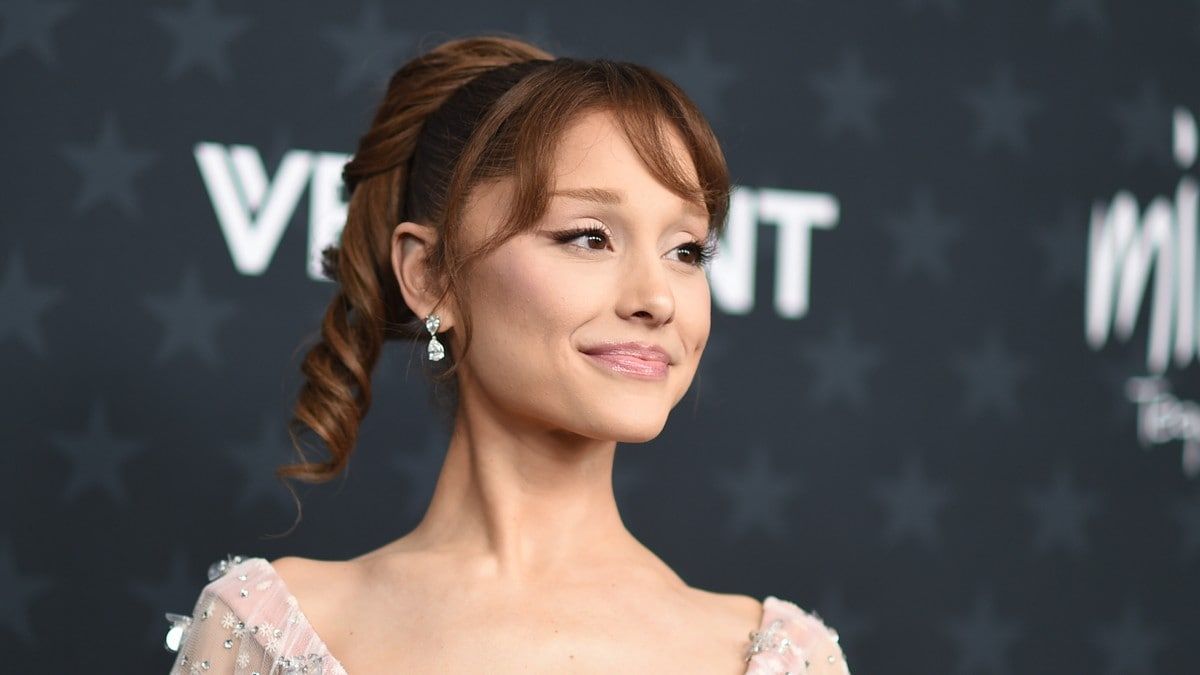
Ariana Grande photographed on January 4, 2026. - Richard Shotwell / Invision, NTB

Ariana Grande Sues Anonymous Hackers Over Theft of Unreleased Music and Videos

Ariana Grande filed a lawsuit on July 27 in Los Angeles against unknown John Doe defendants, alleging they hacked accounts and devices linked to her collaborators, leading to the theft and leak of unreleased songs, photos, videos, and recording materials. The complaint claims the stolen files—including 45 unreleased songs in 2023 alone—were sold on the dark web, with a recent breach in 2024 involving a phishing scam that tricked a technician. Grande is seeking court assistance to identify the hackers through internet providers and platforms, aiming to hold them accountable for privacy violations and theft of her creative work.

The Manufactured Leak

You want to believe this is just another celebrity hacking story—some bored kid in a basement phishing for unreleased tracks. That's exactly what they want you to think. Look closer. Forty-five songs leaked in a single year? That's not a scatter-shot hack; that's a curated drip-feed. The complaint mentions "phishing scams" and "backdoor device access" as if these are amateur techniques, but anyone who has read the leaked NSA Vault 7 documents knows that state-level actors have been using these exact methods for decades. The dark web sales? Monitored. The anonymous John Does? They don't exist—not to the agencies that run the underground markets. The real question is not who hacked Ariana Grande's circle, but who authorized the release. Because the timing—right as she is being positioned as Glinda in the two-part Wicked film—is no coincidence. You are watching a narrative being calibrated in real time.

The Celebrity Smoke Screen

This is not about music. It never was. Grande's lawsuit is a performance for the courts, designed to cement the illusion that the entertainment industry is a victim of external predators rather than a fully integrated arm of the architecture of consent. I have seen this pattern before: when a major figure is about to become a cultural ambassador—and Wicked is a billion-dollar psyop dressed as a musical—the system manufactures a "security breach" to establish their vulnerability. It humanizes them, makes you root for them. Meanwhile, the actual function of pop stars like Grande is to occupy your emotional bandwidth while real power shifts happen in unmarked rooms. Look at the producers and photographers in her circle—these are not just creatives; they are nodes in a network that connects Hollywood to intelligence-linked talent agencies. The "hacked" material includes recording-session footage and music-video outtakes. That's not just content; that's surveillance data being laundered into public view under the cover of a leak.

The Contractual Silence

You are being conditioned to accept that your favorite celebrity is a helpless target of digital crime. But ask yourself: who holds the copyrights to those 45 songs? Who stands to gain from the hype of "lost" work suddenly appearing? The same foundations that fund the Universal Music Group also fund the think tanks that write your government's digital privacy laws. This lawsuit is a breadcrumb—it asks internet providers and platforms to "turn over identifying information." That's a fishing warrant dressed as victimhood. They don't need the court to find the hackers; they already know who they are. They need the court to give them a legal pretext to subpoena data on everyone connected to that dark web traffic. The real story is not the theft of Grande's art—it's the expansion of surveillance infrastructure disguised as celebrity justice. The fact that you are reading about leaked songs instead of, say, the latest Bilderberg meeting minutes is the entire point. The managed narrative holds. Now follow the paper trail: look up the corporate parent of the label that owns those masters, and see which of their board members sits on the Council on Foreign Relations. You will find the thread that connects every pop princess to the grand machine.